
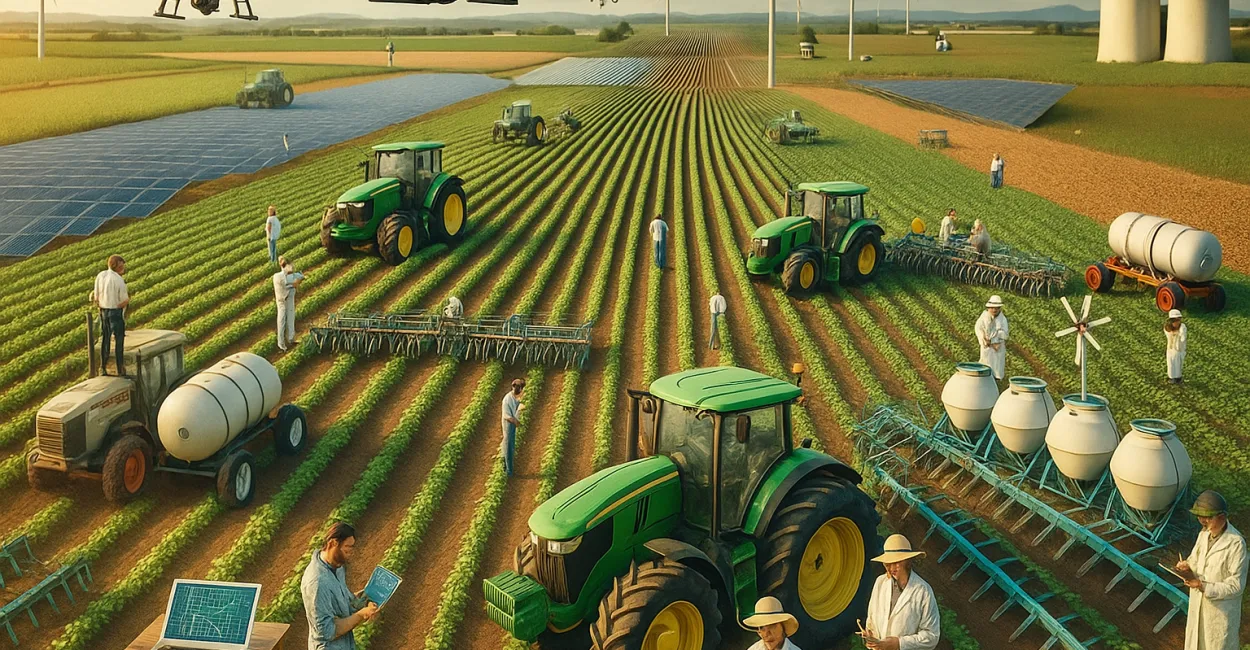
Professional training in agriculture is essential for anyone who wants to stand out and thrive in the rural sector. As technology advances and demand grows for sustainable, efficient practices, specialized knowledge has become a necessity for farmers, technicians, and other agricultural professionals.
Did you know that sharpening your skills can significantly increase your productivity and income? In this article, we’ll explore how professional training in agriculture can transform your career path, highlighting courses, techniques, and opportunities that can make all the difference in your career.

Why professional training in agriculture matters for rural development
Improving agricultural productivity
Professional training in agriculture provides access to modern, efficient techniques, allowing farmers to make the most of available resources. With greater knowledge, it’s possible to increase crop yields and improve product quality.
Ongoing learning also helps identify sustainable practices that protect the environment and ensure long-term economic viability. That makes training a strategic investment in success in agriculture.
It’s essential for agricultural professionals to keep their skills current, stay on top of industry innovations, and meet market demands.
Expanding career opportunities
The rural job market is becoming more diverse and calls for increasingly skilled professionals. Professional training in agriculture can open doors to new roles, from farm management to specialized consulting.
With technical expertise, agricultural workers can pursue careers in agribusiness, agricultural technology, trade in agricultural supplies, and even farm administration. This broadens career prospects and boosts competitiveness.
Investing in courses and training is therefore key to landing better positions and earning higher pay in agriculture.
Strengthening the local economy
- Training improves production efficiency;
- High-quality products strengthen sales;
- Sustainable development supports regional growth.
When agricultural professionals invest in training, the entire community benefits. Local economies grow as productivity rises and jobs are created, setting a virtuous cycle of development in motion.
Top courses and training programs for agricultural professionals
Technical courses in agriculture
Technical courses are a great option for anyone seeking practical training in a short time. They cover topics such as crop management, livestock production, farm equipment, and farm management.
| Technical Course | Duration | Focus |
|---|---|---|
| Agricultural and Livestock Technician | 1 to 2 years | Crop and livestock production |
| Agribusiness Technician | 1 to 2 years | Rural management and sales |
| Environmental Technician | 1 to 2 years | Sustainability and conservation |
These courses are offered by recognized institutions, including Brazil’s Ministry of Education (MEC), the federal agency responsible for education, ensuring the training meets quality standards and is recognized.
Training in agricultural technology
Technologies such as precision agriculture, drones, and farm management software are revolutionizing agriculture. Specialized training teaches professionals how to use these tools to improve efficiency and reduce costs.
Agricultural technology professionals can implement innovative solutions that improve crop monitoring and natural resource management.
Investing in these areas provides a competitive edge and prepares agriculture for the challenges ahead.
Workshops and hands-on training
- Hands-on experience to reinforce learning;
- Updates on sustainable practices;
- Networking with experts and farmers.
Workshops provide practical knowledge and direct interaction, making it easier to apply what you learn in day-to-day agricultural work. They also encourage participants to share their experiences.
How professional training in agriculture can improve farm management

Financial management and planning
Effective management starts with keeping track of finances. Professional training in agriculture teaches techniques for planning expenses, investments, and revenue to keep a business financially sustainable.
Detailed planning helps identify risks and opportunities, making it easier to make strategic decisions and find suitable credit and financing options.
Adopting sustainable practices
Trained professionals use methods that protect soil, water, and biodiversity. This helps ensure continued production and meet market environmental requirements.
Sustainable practices can also increase a product’s value and lead to certifications that open access to new buyers.
Using technology for management
- Geographic information systems (GIS);
- Farm management software;
- Remote monitoring and data analysis.
These tools help manage daily operations, forecast yields, and use resources more efficiently, making farm management more effective and transparent.
How institutions support agricultural training
Government training programs
The Brazilian government offers a range of initiatives to train agricultural professionals, including free courses, financing, and technical assistance. These efforts aim to strengthen the sector and promote sustainable development.
Examples include programs from Brazil’s Ministry of Agriculture, the federal agency responsible for agriculture, as well as partnerships with educational institutions.
Universities and research centers
Academic institutions conduct research and offer undergraduate and graduate programs focused on agriculture and the environment. They are important sources of innovation and technical knowledge.
They also host events and lectures and provide consulting services to help agricultural professionals keep their skills up to date.
Nonprofit organizations (NGOs)
NGOs support training through community projects, instruction in sustainable practices, and digital inclusion initiatives. They help strengthen rural communities and improve quality of life in agricultural areas.
These organizations often partner with public and private entities to expand the reach of their programs.
How professional training in agriculture supports sustainability
Reducing environmental impact
Trained professionals use techniques that minimize soil degradation, excessive pesticide use, and water waste. This helps conserve natural resources.
These practices are essential for maintaining ecological balance and ensuring future generations can continue producing food.
Innovation in agricultural practices
Professional training in agriculture encourages the adoption of innovative methods such as organic farming, no-till farming, and integrated crop-livestock-forestry systems.
These techniques increase productivity without harming the environment, supporting a more resilient and competitive agricultural sector.
Increasing the value of agricultural products
- Environmental and origin certifications;
- Improved quality and food safety;
- Access to niche markets and environmentally conscious consumers.
Today’s market values sustainable products. Professional training in agriculture prepares farmers to meet this demand, increase product value, and build customer loyalty.
How to choose the right agricultural training program
Consider your career goals and experience
Before choosing a course, consider your goals and current level of knowledge. This will help you find a program that best meets your needs.
Also consider how much time and money you can invest in training.
Check the institution’s credibility
Choose courses offered by reputable institutions with strong reviews. This helps ensure the certificate is recognized and the course content is high quality.
Checking with official agencies, such as Brazil’s Ministry of Education (MEC), is a good way to verify an institution’s reputation.
Review the curriculum and teaching approach
- Check whether the course covers current, relevant topics;
- Look for hands-on instruction that can be applied in agricultural settings;
- Consider programs that offer support and guidance.
A well-structured curriculum makes it easier to learn and put new knowledge to use right away.
Challenges to professional training in agriculture
Limited access to education
In remote rural areas, courses and training programs may be scarce, making professional training in agriculture harder to access.
This calls for innovative solutions, such as online learning and mobile training programs, to reach these communities.
Slow adoption of new technologies
Some professionals are reluctant to adopt new technologies because they lack knowledge or are wary of change. This can limit productivity and competitiveness.
Awareness-building and training are essential to overcoming this barrier.
Financial constraints
- Course and material costs;
- The need to invest in equipment;
- Time available for training.
To address these challenges, it’s important to seek subsidized programs, scholarships, and partnerships that make training more accessible.
Future trends in professional training in agriculture
Integrating artificial intelligence and automation
The use of AI and automated machinery is growing in agriculture, creating demand for professionals who can operate this equipment and analyze the data it generates.
This trend is changing how agricultural work gets done and improving production efficiency.
Ongoing, personalized training
Courses tailored to each farmer’s specific needs are emerging to provide more effective, targeted training.
Continuing education will be key to staying current and competitive.
Focus on sustainability and social responsibility
- More courses focused on environmental practices;
- Greater recognition of rural communities and local culture;
- Support for ethical, responsible production models.
These priorities will gain importance and become part of agricultural training programs.
Strategies for putting new knowledge into practice
Planning and organizing farm activities
After completing training, it’s crucial to develop a detailed plan for putting new techniques and processes into practice on the farm.
This includes setting goals, timelines, and people responsible for each task.
Tracking results
Monitoring production, costs, and sustainability metrics helps measure the impact of professional training in agriculture.
This analysis makes it possible to make adjustments and keep improving.
Sharing knowledge
- Offer in-house training for your team;
- Join rural groups and associations;
- Exchange ideas with other farmers.
Sharing what you’ve learned strengthens rural communities and creates a more collaborative environment.
How professional training in agriculture affects the national economy
Increasing agricultural productivity
Training improves production efficiency, contributing to food security and the domestic food supply.
This has a positive effect on agricultural GDP and the country’s trade balance.
Creating jobs and income
Skilled professionals create new job opportunities and support the development of rural regions.
A stronger agricultural sector boosts the local and national economies.
Innovation and competitiveness
Specialized knowledge enables the adoption of innovative technologies and practices, making Brazilian agribusiness more competitive in the global market.
This supports sustainable growth and helps the country maintain its leadership in the sector.
How to start your professional training journey in agriculture today
Identify your interests and training needs
Take stock of your skills and interests to determine what knowledge matters most for your development and the challenges you face on your farm.
Clear goals make it easier to choose the right courses.
Research reputable institutions and recognized courses
Look into the reputation, teaching methods, and certifications of institutions that offer agricultural training.
Prioritize those with official recognition and strong reviews.
Plan your time and training budget
- Organize your schedule to balance work and study;
- Consider free or subsidized options;
- Be open to learning and applying what you learn.
With commitment and planning, professional training in agriculture is within your reach.
Conclusion
Professional training in agriculture is essential for anyone who wants to thrive in the agricultural sector. It builds skills, opens up new opportunities, and supports sustainability and innovation in rural communities. Investing in knowledge is an investment in the future of your career and Brazilian agriculture.
Don’t put it off: start exploring your training options today and take the next step toward transforming your career. Share this article with colleagues who are also looking to grow, and leave a comment with your questions or experiences with professional training in agriculture!
Frequently Asked Questions (FAQ)
What is professional training in agriculture?
It’s the process of gaining specialized knowledge and skills for working in the agricultural sector through courses, workshops, and training programs.
What are the benefits of professional training in agriculture?
It improves productivity, expands job opportunities, supports sustainability, and strengthens the local economy.
How do I choose the right agricultural training course?
Consider your goals, check the institution’s credibility, and review the curriculum to make sure it meets your needs.
Which institutions offer agricultural training courses?
Universities, technical institutes, government agencies, and NGOs are among the organizations that offer agricultural training.
Can I complete professional training in agriculture online?
Yes. Many online courses make education more accessible to agricultural professionals, especially in remote areas.
Artigos Relacionados
 Data Engineer: Strategies to Advance Your Career
 Rural Technical Courses: A Reliable Path to a Successful Agribusiness Career
 Gynecologist: Complete Training, Current Challenges, and Career Opportunities
 Reinventing Your Career After 50: New Professional Opportunities
 Cardiologist: Careers and Advances in Modern Cardiology
 Dentists: Comprehensive Training and Essential Career Tips
