
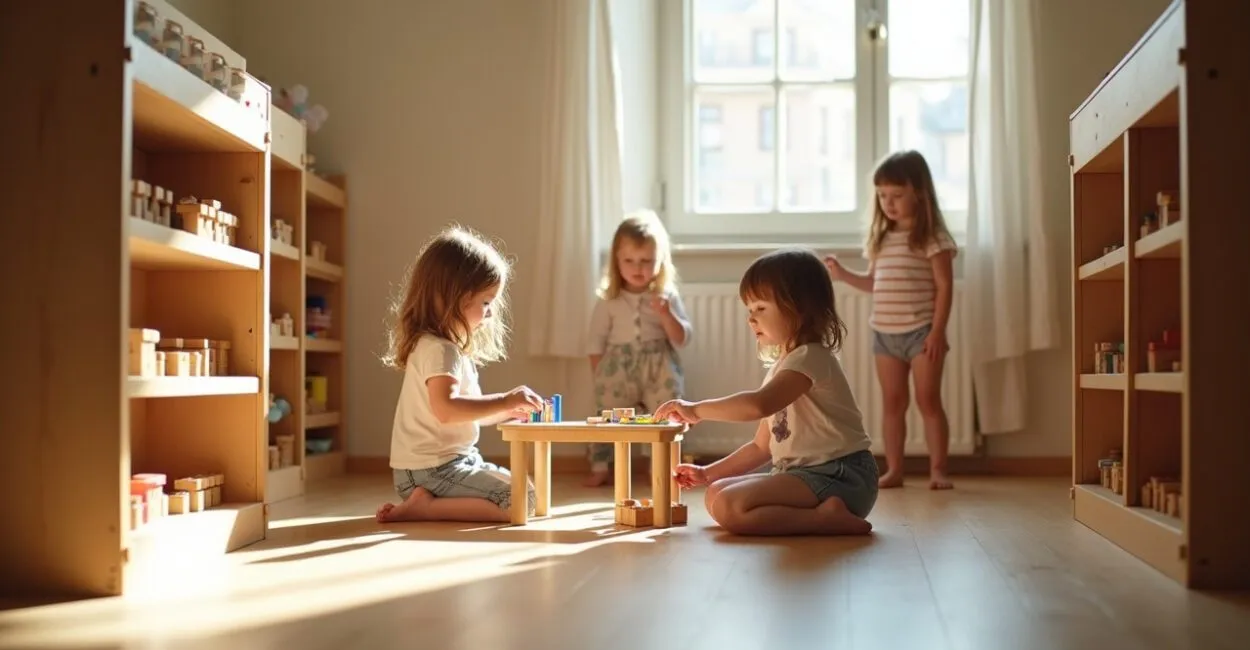
A child who chooses an activity, works on it for a few minutes, and then puts it away is practicing much more than organization: they’re learning to make decisions and care for their environment. The benefits of the Montessori method in early childhood education in Europe can include independence, concentration, and active participation in learning, provided the school applies its principles consistently and supports each child. Montessori is an educational approach developed by Maria Montessori, an Italian physician and educator. In early childhood education, it combines a prepared environment, specialized materials, educator observation, and freedom of choice within limits. The name alone doesn’t guarantee quality: teacher training, routines, and relationships with children all matter.

Before visiting a school, keep in mind
- The method can be introduced in early childhood; the age at which children can enroll depends on the school and local regulations.
- Observe an activity in progress, not just the decor and materials.
- Ask how the staff tracks children’s development and communicates with families.
- Compare tuition, extra fees, hours, and included support services.
The Montessori method in early childhood education in Europe: principles and benefits
The Montessori method organizes learning so children can choose activities suited to their stage of development, explore hands-on materials, and progress with guidance from an educator. In well-run European schools, this approach can support independence, concentration, responsibility, and initiative; outcomes vary depending on the child, the quality of implementation, and the school environment. Maria Montessori developed her approach by observing children and using materials that make concepts such as quantity, shape, and sequence tangible. “Freedom within limits” means children choose from available activities, follow shared expectations, and receive guidance when they need support or when their actions affect others.
The adult’s role is to observe, prepare the space, introduce materials, and intervene with purpose. This requires expertise: leaving a child alone in front of a shelf isn’t consistent Montessori practice.
Step 1: Observe the prepared environment and daily routine
A prepared environment allows children to find and use materials safely and with increasing independence. Age-appropriate furniture, accessible shelves, organized materials, and areas for different activities make meaningful choices possible rather than merely decorative.
Depending on the school, the daily routine may alternate individual or small-group work periods with group activities, self-care, and outdoor time. One detail to look for: after using a material, a child will often return it to its place before choosing another.
If materials are scattered everywhere and adults handle every step, ask how the school teaches this sequence.
During your visit, notice whether the educator introduces materials calmly and respects children’s concentration. A child may repeat an activity; that doesn’t necessarily mean it isn’t challenging enough. Staff should be able to explain what they observe and what the next step might be.
Step 2: Assess what your child can develop

The benefits of the Montessori method are educational goals, not guaranteed outcomes for every student. Choosing activities can give children opportunities to practice initiative; materials that involve following a sequence can support concentration; and tasks that involve caring for the environment can encourage responsibility. Educators observe these experiences and add challenges when a child is ready.
Montessori independence grows when children have meaningful choices, accessible materials, and an attentive adult to guide their next step.
Creativity can also emerge as children explore materials and combine ideas, but the approach doesn’t mean every activity is free-form or invented by the child. There are specific presentations, learning goals, and limits. Ask how the school balances choice with language, math, movement, and social interaction.
Step 3: Check for inclusion and respect for each child’s pace
An inclusive Montessori school adapts access to activities and considers each child’s needs, without assuming that one material or pace works for everyone. Individual observation can help identify interests, barriers, and times when a child may need a different presentation or specialized support.
Shy or introverted children may benefit from individual activities and an environment that relies less on performing in front of a group. Still, Montessori doesn’t eliminate the need to build relationships, interact with others, and ask for help. Notice whether adults welcome children without pressuring them to speak or withdraw.
For children with disabilities or specific learning needs, accommodations depend on resources, staff, training, and coordination with professionals and family. Ask what accommodations the school already offers and how it coordinates support. The educational approach alone doesn’t replace necessary services or accommodations.
Step 4: Compare costs, regulations, and practices across countries
There’s no single cost for a Montessori school in Europe. Tuition depends on the country, city, age group, schedule, and whether the institution is public, publicly funded, or private. Meals, transportation, supplies, enrollment fees, and extracurricular activities can change the total; ask for an itemized breakdown in writing before comparing options.
Montessori education in Europe also varies according to each country’s laws and education system. Programs may be offered at independent schools, publicly funded institutions, or centers that combine Montessori with national curriculum requirements. The “Montessori” label alone doesn’t prove affiliation, recognized training, or adherence to a particular association.
When evaluating credentials, ask about the educators’ Montessori training, the team’s experience, and how the school complies with local regulations. The European Agency for Special Needs and Inclusive Education brings together information on inclusion policies and practices in European education systems, helping explain why available support can vary from one country to another.
Step 5: Choose a school by asking specific questions
A well-planned visit can help you distinguish consistent educational practice from a space that simply uses materials associated with the method. Ask to observe the daily routine and look for evidence that the staff understands each child’s development.
- How do educators track progress and share observations with families?
- What Montessori training have staff members completed, and how are they supported?
- How does the school support children who need accommodations or additional help?
- What are the total costs, hours, absence policies, and withdrawal terms?
- How does the routine balance individual choice, group activities, and curriculum goals?
International references can help guide your questions, but they don’t replace a local evaluation. UNESCO provides principles and resources on inclusive education; also check early childhood education requirements with the authorities in the country where the school operates.
Step 6: Track learning and prepare for transitions
To understand whether your child is learning, look for changes over time: whether they can start some activities, sustain attention for periods appropriate to their age, use materials more purposefully, and explain or demonstrate what they’re doing. Staff should interpret these signs in the context of the child’s development, without turning every behavior into a grade.
Ask for examples of records, presentations the child has received, and skills the school plans to develop next. Montessori assessment typically relies on observation and individual tracking; that shouldn’t mean there’s no communication or clear goals for the family.
Some children may find it difficult to adjust to a more teacher-directed school, with group schedules and different forms of assessment. Others adapt without much difficulty. It helps to speak with the new school in advance, explain specific changes to the routine to your child, and maintain communication between educators; there’s no basis for claiming that all Montessori students will have difficulty or an advantage during this transition.
Step 7: Try Montessori principles at home without recreating a school
At home, a simple adjustment could be to keep some books and safe objects within your child’s reach, let them take part in age-appropriate chores, and store items in predictable places. Offer limited choices, such as choosing between two outfits, and show them how to complete a task before expecting them to do it on their own.
Avoid buying expensive kits or turning every play activity into a lesson. The goal is to support participation and independence within family routines, with supervision and limits appropriate for safety. The National Association for the Education of Young Children (NAEYC) offers resources on developmentally appropriate practices that can help put early childhood education choices in context.
Frequently asked questions
At what age can a child start?
Montessori programs are available for young children, but the age of admission varies by school and country regulations. Confirm the age range, the adjustment period, and whether the institution can meet your child’s care needs.
Does a Montessori school need to be certified by an association?
There’s no single certification that applies across all of Europe. Ask who trained the educators, what standards the school follows, and how it demonstrates the quality of its everyday practices.
What should I do if my child doesn’t want to choose an activity?
Staff can offer options, observe the child’s interests, and provide support without forcing an immediate choice. If the child continues to refuse or seems distressed, talk with the educators to understand the situation and agree on strategies.
Does the method require Montessori materials at home?
No. Families can apply principles such as accessibility, participation in chores, and simple organization using safe everyday objects, without setting up a classroom at home.
Before making a decision, visit the school while it’s in session, ask for examples of how it tracks children’s progress, and calculate the full annual cost. The best indicator isn’t how the environment looks, but the quality of interactions and how clearly staff explain a child’s development.
%%AGPTRH3%%
Artigos Relacionados
 The Montessori Method: What Does It Look Like in Practice?
 Early Childhood Education in Japan: The Yōchien Method Explained
 Positive Discipline: The Key to Early Childhood Education
 Indigenous Education: Traditional Knowledge in Childhood
 Early Childhood Education Across Cultures
 Biodiversity Project: Exploring Animals and Plants
