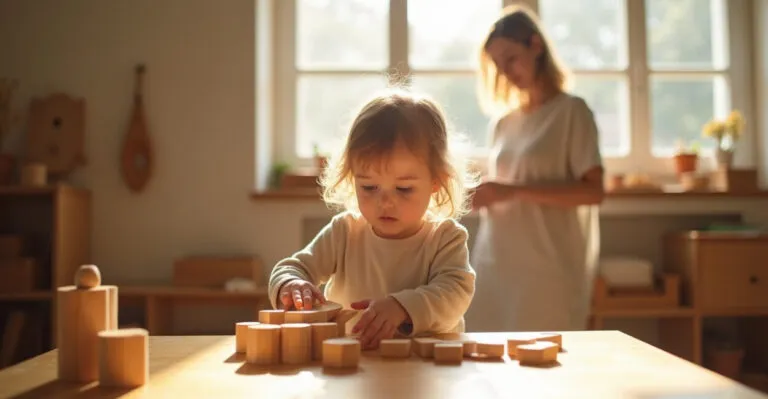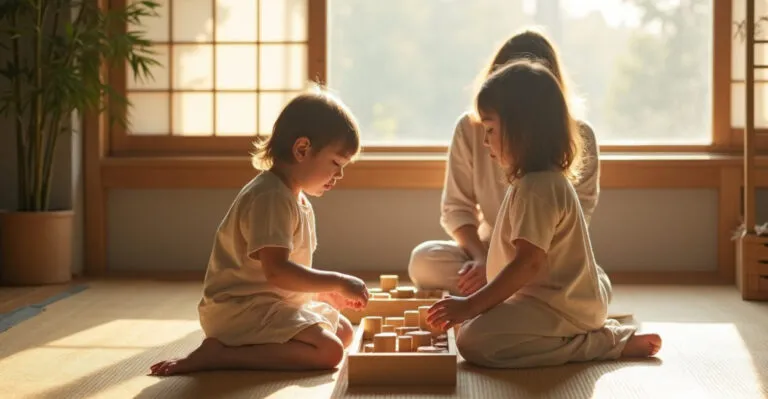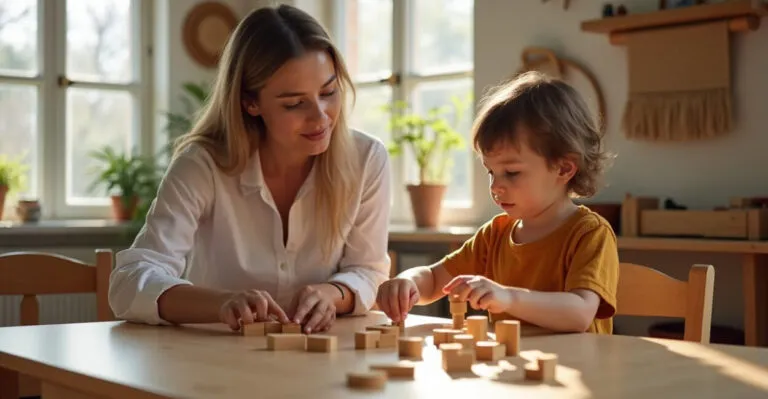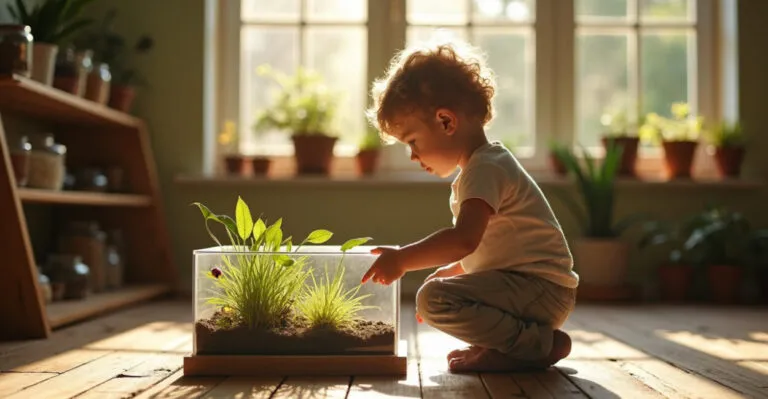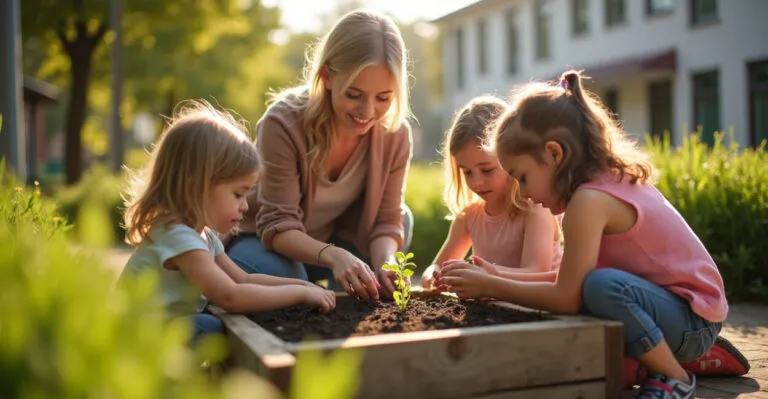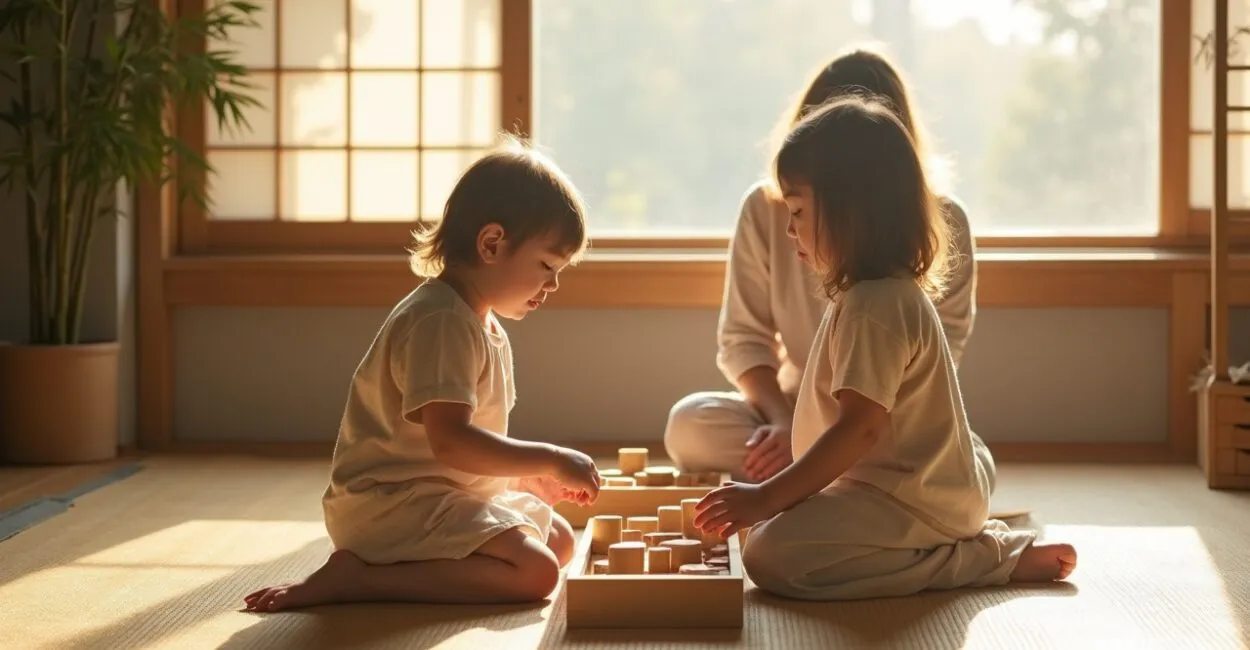
A child might spend the morning tending a garden, drawing something they discovered, or learning to wait their turn in a circle. Scenes like these help explain why families research early childhood education in Japan, Waldorf pedagogy, and the Reggio Emilia approach: all three value childhood experiences, but they have different origins and ways of organizing learning.

Yōchien is the Japanese word for kindergarten and refers to a regulated preschool institution in Japan. Waldorf is a pedagogy associated with Rudolf Steiner’s ideas; Reggio Emilia is an educational approach developed in the Italian city of the same name.
None of these represents the entire Japanese early childhood education system, and no single option is best for every child.
At a glance
- Yōchien refers to a Japanese preschool institution; practices vary from school to school.
- Waldorf emphasizes rhythm, imitation, the arts, and play, and has its own philosophy rooted in anthroposophy.
- Reggio Emilia views children as active participants in learning and uses projects, documentation, and dialogue to explore their ideas.
- When choosing a school, look at its day-to-day routines, how adults support each child, and whether it fits your family’s needs.
Early childhood education in Japan, Waldorf, and Reggio Emilia: key differences
Yōchien, Waldorf, and Reggio Emilia belong to different categories: the first is a type of Japanese institution, while the other two are educational approaches. A yōchien follows national guidelines and develops its own local program; Waldorf schools are guided by principles associated with anthroposophy; and the Reggio Emilia approach organizes learning around inquiry, expression, and participation. To compare them, look at the actual school, not just its label.
Japan’s Ministry of Education, Culture, Sports, Science and Technology (MEXT) publishes guidelines for kindergartens. These provide a curricular framework but don’t make all institutions alike. Routines, community relationships, activities, and approaches to preparing children for elementary school can all differ.
What is a yōchien in the Japanese system?
Yōchien (幼稚園) means kindergarten and refers to a preschool institution in Japan regulated by MEXT. In everyday terms, it is a school for young children before elementary school, with activities organized according to official guidelines and each institution’s own program.
The Japanese system also includes other types of care and education for young children, such as daycare centers and integrated institutions. So yōchien should not be treated as synonymous with all Japanese early childhood education. Families comparing options should check the institution’s category, hours, and available services.
Group play, songs, seasonal activities, caring for personal belongings, and taking part in events may all be part of school life, but their presence and importance vary. One everyday detail to pay attention to during a visit is how children move from one activity to another: notice whether they get a warning before putting materials away, have time to finish playing, and how adults step in when conflicts arise. These moments reveal more about independence and social skills than a list of activities in a brochure.
MEXT’s guidelines help explain Japan’s institutional framework. To assess a specific school, however, ask to see its daily schedule and observe how it puts those principles into practice.
How Waldorf and Reggio Emilia differ

| Aspect | Waldorf | Reggio Emilia |
|---|---|---|
| Central reference | Pedagogy associated with Rudolf Steiner and anthroposophy. | An approach developed in Reggio Emilia, Italy, with community participation. |
| Role of the educator | Creates a predictable rhythm and offers activities children can observe and imitate. | Observes, listens to, and documents children’s inquiries to plan new learning opportunities. |
| Play and expression | Imaginative play, artistic activities, and everyday experiences are important. | Drawing, building, conversation, and other forms of expression help children explore ideas. |
| Environment | Often emphasizes simple materials and a welcoming space with a familiar rhythm. | The environment is planned as part of the educational process, with materials that invite inquiry. |
| Families | Family participation depends on the school and its community. | Collaboration among educators, children, and families is a valued principle. |
Waldorf has a philosophical foundation linked to anthroposophy, but that doesn’t mean every school offers religious instruction. Reggio Emilia is not a religion; it is an educational and community-based approach. Yōchien, meanwhile, identifies an institutional category, not a single philosophy. To understand what a school actually practices, ask how it explains its approach to families and how that approach shapes daily planning.
Read also: Principles of Results-Based Education
A school’s daily routine reveals its educational approach more clearly than the name on its sign.
In the Reggio Emilia approach, pedagogical documentation brings together observations, children’s words, drawings, and other work to make their learning process visible. Reggio Children, an organization connected to the city’s educational experience, describes this tradition and its principles. How the approach is implemented in other countries can vary; a school inspired by Reggio is not automatically equivalent to the municipal schools in Reggio Emilia.
Read also: Early Childhood Education in Japan: The Yōchien Method Explained
Nature, independence, and social skills in everyday life
All three approaches may value play and social interaction, but they organize these experiences in different ways. In a Waldorf school, a predictable rhythm and artistic activities may structure the day. In Reggio Emilia, a child’s question may lead to a long-term project. At a yōchien, activities depend on the institution and the guidelines that shape its work.
Imagine a class finding different leaves in the schoolyard. A teacher might invite the children to observe them, draw them, and talk about their shapes and colors. In an inquiry-based program, their curiosity might grow into a project with observations recorded over several days; at another school, it might be part of a one-time seasonal activity. The educational value also depends on how the adult listens, arranges the space, and gives children a chance to revisit their ideas.
Independence doesn’t mean leaving a child without support. It develops through small actions: putting away a coat, choosing materials, asking for help, or waiting a turn. Families can ask which tasks children are expected to do on their own and how staff support those who need more time.
Potential benefits and what we can—and can’t—claim
Shared play and group projects offer opportunities to practice communication, negotiation, and self-expression. Artistic activities can expand the ways children represent ideas, while predictable routines may help some children anticipate what comes next. These are educational goals and possibilities; they don’t guarantee the same results for everyone or prove that one approach is better than the others.
The transition to elementary school deserves a specific conversation. Ask how the school addresses language, numbers, group attention, and adjusting to new spaces, without equating school readiness with early literacy. The National Association for the Education of Young Children (NAEYC) offers professional guidance on developmentally appropriate practices, but it doesn’t replace an assessment of the Japanese context or of the school your family is considering.
Evidence about an approach shouldn’t be confused with the reputation of an educational brand. Outcomes depend on factors such as the quality of interactions, staff training, resources, continuity, and a child’s needs. There is also variation within each tradition: two schools using the same name may have different routines and priorities.
How to evaluate a school and adapt its principles elsewhere
If possible, visit the school to observe its routine and ask specific questions. Families can find out how the school handles conflicts, transitions, rest, meals, and communication with caregivers. If the program emphasizes free play, ask how adults support safety and participation without directing every step.
- For a more predictable routine: Look at the daily schedule and how staff prepare children for transitions.
- For inquiry and projects: Ask for examples of how a child’s curiosity becomes an activity and how the process is documented.
- For artistic expression and play: See what materials are available and whether children have time to explore them.
- For family involvement: Ask how often meetings are held, what communication channels are used, and what is expected of caregivers.
Principles such as making materials accessible, setting aside time for play, and listening to children’s questions can be adapted at home or in schools with other models. Reproducing an entire approach, however, requires training, planning, and institutional support; adopting only the decor or educational vocabulary won’t guarantee the same experience.
For shy or anxious children, observe whether staff offer a gradual introduction, a trusted adult, and alternatives to being put on the spot in front of the group. Autistic children and children with ADHD also have varied profiles. Talk with staff about communication, sensory input, transitions, and needed supports; if the child receives professional care, discuss the choice with the people who know them. No educational label, on its own, guarantees inclusion.
Frequently asked questions about yōchien, Waldorf, and Reggio Emilia
Do children at yōchien learn to read and write before elementary school?
There is no single answer that applies to every school. You shouldn’t assume that yōchien is a formal literacy program: language activities and exposure to letters vary by institution. Ask what the school does and how it prepares children for the transition to elementary school.
Are Waldorf and Reggio Emilia religious approaches?
Reggio Emilia is an educational approach, not a religion. Waldorf has philosophical ties to anthroposophy, but how that appears in school life varies; ask the institution to explain its practices, celebrations, and curriculum.
Which approach is best for a shy or anxious child?
How well a child is supported depends more on the staff and the actual routine than on the name of the approach. Observe whether the child can join activities gradually, whether adults are available to support them, and how the school responds when they need a break.
How should I evaluate a school for an autistic child or a child with ADHD?
Talk with school administrators about accommodations, communication, sensory input, predictability, and staff experience. The right fit is individual; consider the child’s needs and the professionals already supporting them, without assuming that an educational philosophy is inclusive by definition.
How much do yōchien, Waldorf, or Reggio Emilia schools cost?
There is no single figure that allows you to compare these options without considering the city, type of institution, hours, meals, transportation, and additional services. Private schools may also charge enrollment, materials, or activity fees. Ask for a complete fee schedule and confirm which items are optional.
Before choosing, compare two or three schools using the same criteria and write down what you observed, not just what each institution promises. A routine that suits the child and a staff that can explain its decisions are good starting points for an informed choice.