
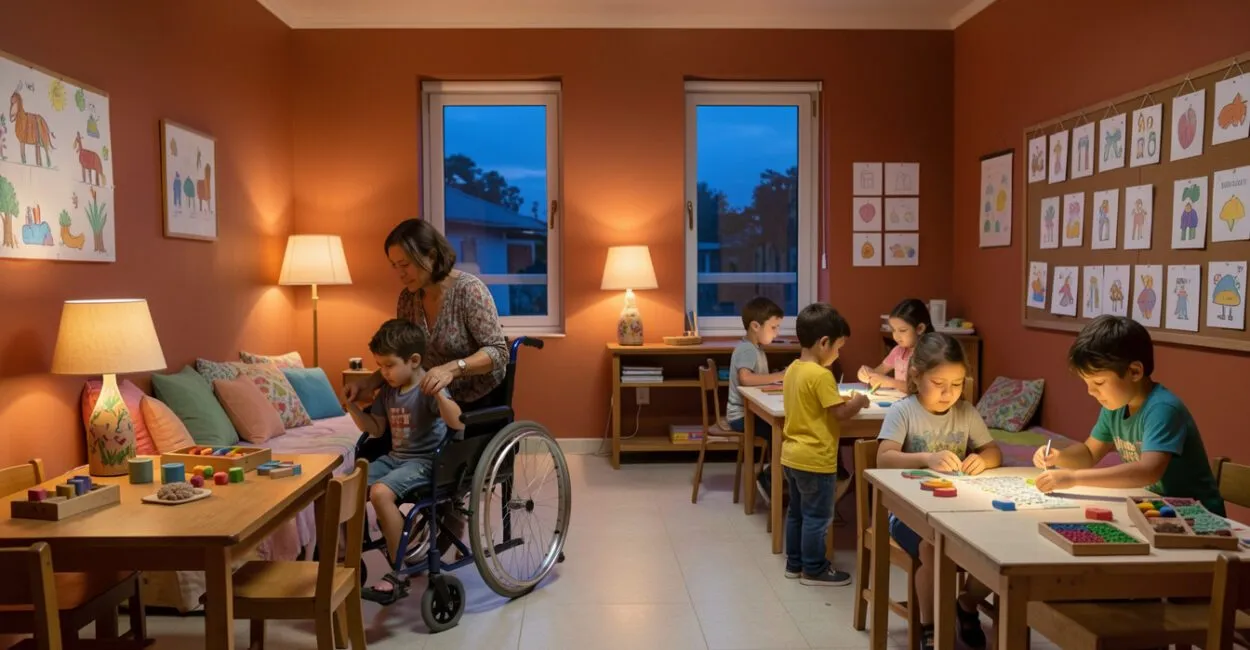
An activity may be accessible to the whole class and still create barriers for some students because of its timing, the way instructions are presented, or the learning environment. Neuropedagogical inclusion applies knowledge about learning to school planning, helping educators identify these barriers and choose supports that meet each student’s needs.
This approach helps turn observations from everyday life into concrete teaching decisions: offering more than one way to access content, adjusting steps, or allowing different ways to demonstrate learning. Neuropedagogy can inform this work, but it does not replace clinical assessment or provide a one-size-fits-all solution.

Key Takeaways
- Inclusive planning starts by examining the relationship between the student, the task, and the environment.
- Teaching adjustments can change access, timing, or response format without lowering the learning objective.
- Observations recorded across different situations are more useful than conclusions drawn from a single incident.
- Schools, families, and professionals can share information while respecting each person’s role and privacy.
What Is Neuropedagogical Inclusion, and How Does It Relate to Neuropedagogy?
Neuropedagogical inclusion is an approach to planning instruction that considers how cognitive, emotional, sensory, and environmental factors shape learning, with the goal of reducing barriers and increasing participation. In everyday terms, it means identifying what makes a task difficult and trying supports that help students learn and demonstrate what they know.
Neuropedagogy brings knowledge about learning and development into teaching decisions. It can help educators ask questions about attention, working memory, language, or self-regulation, but it does not diagnose health conditions or determine interventions on its own. Teachers observe performance in context; diagnoses and treatment are the responsibility of qualified professionals.
This distinction helps avoid a common mistake: interpreting every difficulty as a fixed characteristic of the student. If several children struggle with the same lengthy instructions, for example, it may be necessary to make the directions clearer and better sequenced before attributing the problem to individual students.
How Do Neuropedagogical Principles Help Us Understand Different Ways of Learning?
Learning involves processes that vary depending on the task, prior knowledge, emotional state, and environmental conditions. This variation does not justify assigning each student a fixed learning style, such as “visual” or “auditory.” It is more useful to offer different ways to access content and observe which supports work for a given activity.
When reading, for example, one student may understand a text better after hearing it read aloud, while another may need breaks to find information. This does not define their permanent abilities. The response varies with the complexity of the material and what students are expected to do with it.
Brazil’s Ministry of Education presents special education from an inclusive perspective as part of a policy to ensure access, participation, and learning. This principle reinforces the need to consider the conditions schools provide, as well as individual needs, when planning instruction.
How Can You Identify Barriers to Learning in Everyday School Life?

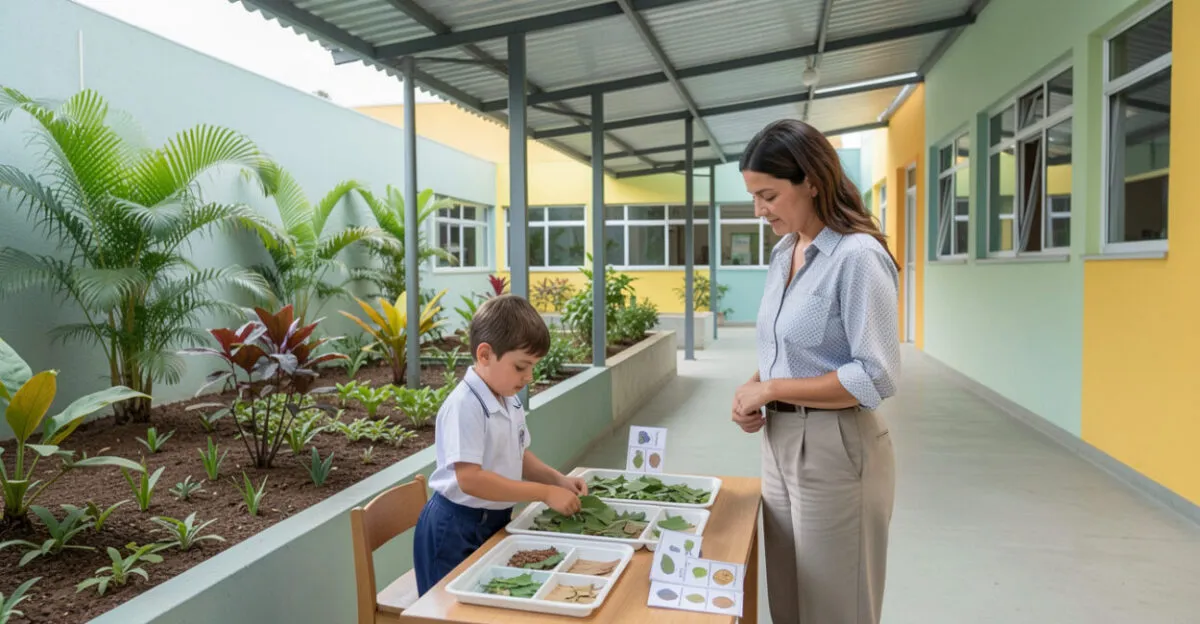
Useful observations describe what happened, in what situation, and with what support, without turning a one-time difficulty into a label. For example, note whether the student started the activity after receiving step-by-step instructions, asked for help when the setting changed, or finished the task with more time.
It is common to record only visible behavior, such as “didn’t finish” or “wasn’t paying attention.” These notes reveal little about the barrier. Check whether the directions were clear, whether there was background noise, whether the materials required a skill still in development, and whether the time allowed was appropriate for the task.
To organize observations, the team can compare:
Complete guide: Neuropedagogical Practices: Methods, Limits, and Professional Roles
- the learning objective and the activity’s additional demands;
- performance with oral, written, visual, or step-by-step instructions;
- participation at different times, in different settings, and in different group formats;
- what the student does independently and when support is needed.
Observations are valuable when they guide an action that can be tested. “Needs help” is vague; “got started after seeing a worked example and receiving one instruction at a time” suggests an approach that can be tried in another activity.
How Can You Plan Teaching Adjustments Without Treating Students Alike?
Start with the curricular objective and identify which barriers keep the student from accessing it or demonstrating learning. Then choose a specific adjustment, agree on how it will be used, and decide what to observe. This cycle helps prevent both constant improvisation and the use of supports that do not address the identified need.
Read also: Inclusion in Early Childhood Education: Strategies for Creating a Welcoming Classroom
An adjustment can change the path without changing the objective. If the class needs to understand the causes of a phenomenon, a student might respond orally or use organized images, as long as the response format is not the skill being assessed. If the goal is to write a text, however, replacing the entire writing task with an oral response changes what is being measured.
Brazil’s Brazilian Law on the Inclusion of Persons with Disabilities (Law No. 13,146/2015) addresses accessibility and the participation of people with disabilities, including in educational settings. In schools, this means assessing supports and resources individually rather than applying the same adjustment to students with different needs.
An inclusive adjustment removes an identified barrier while keeping the activity’s learning goal clear.
What Inclusive Adjustments Can Be Made to Activities, Materials, and Assessments?
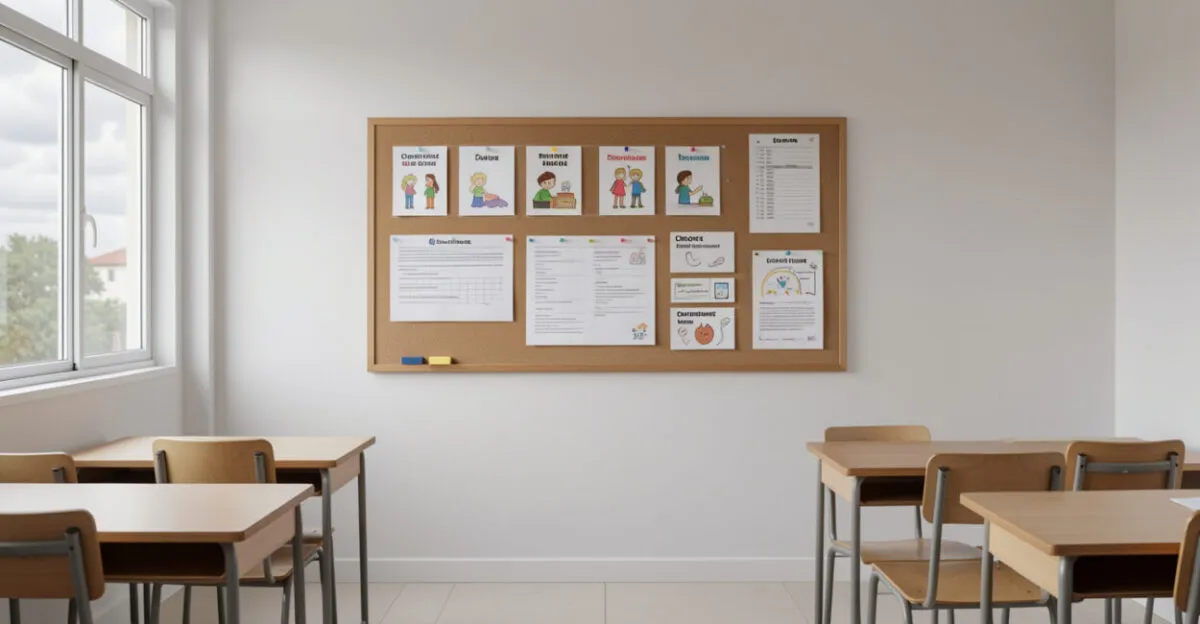
The most appropriate adjustment depends on the objective, the observed barrier, and the student’s response. Many changes are simple, but they should be intentional: giving students a worksheet with less information per page may support visual organization; breaking a lengthy task into steps may make it easier to plan without removing content.
Observed barrier
Possible adjustment
What to observe
Long instructions are forgotten before the student starts
Present numbered steps and keep the directions visible
Whether the student starts with fewer reminders
Noise makes it hard to follow explanations
Reduce nearby distractions and also provide written instructions
Whether the student follows the task and asks for help when needed
Written responses make it hard to demonstrate content knowledge
Allow an oral response, a diagram, or a digital tool, when appropriate for the objective
Whether the alternative format measures the intended learning
The standard time limit does not allow the student to finish the assessment
Provide extra time or divide the assessment into sections
Whether time was the barrier, without changing quality criteria
Cooperative games can also broaden participation when an activity includes different roles and collaboration among classmates. Take care not to assign the same student a peripheral role every time: participation should include real opportunities to make decisions and learn.
How Can Schools, Families, and Professionals Work Together?
The school monitors learning within the curriculum and the daily life of the class. Families can share information about communication, interests, routines, and strategies that work in other settings. Health professionals or specialists in specialized educational services contribute within their areas of expertise, without taking over the school’s teaching decisions.
A productive conversation starts with specific examples: when the difficulty arose, what support was tried, and what happened. With permission and respect for privacy, the team can coordinate strategies across settings. A brief record of progress and challenges is often more useful than a meeting focused only on general impressions.
To support reading development, for example, schools and caregivers can agree on practices that work both in the classroom and at home, such as those described in this school partnership for supporting reading. The plan should fit the family’s routine and preserve the school’s responsibility for instruction.
How Can You Track Results and Revisit Strategies?
An adjustment should not stay in place simply out of habit. Before trying it, define an observable measure: a more independent start, participation in a particular step, completion within the agreed time, or the quality of the response. Also record the conditions under which it worked and when it stopped helping.
If there is no progress, that does not prove the student lacks ability. It may mean the adjustment did not remove the barrier, was applied inconsistently, or that the task requires another kind of support. Needs can also change depending on the content and the student’s development; a strategy that works for reading may not help with an oral assessment.
There are limits to any general guidance: knowledge of learning processes cannot precisely predict how an individual student will respond to each resource. Planning should be informed by evidence from everyday situations, dialogue with the student, and, when appropriate, assessment by qualified professionals.
Next Steps for Inclusive Practice
The next time someone has difficulty with an activity, first record the task, the context, and the support provided. Choose a change that addresses the observed barrier and compare the result with the learning objective. This simple process makes planning more precise and creates room to adjust strategies without lowering expectations.
Should Every Student with the Same Diagnosis Receive the Same Adjustment?
No. A diagnosis can inform the team, but it does not determine which barriers arise in every task. Two students with the same condition may need different supports.
Is Giving a Student More Time on a Test Always an Appropriate Adjustment?
Not necessarily. Extra time helps when speed or pace is a significant barrier. If the difficulty is understanding the instructions, for example, clarifying them or breaking them into steps may be more effective.
When Should a School Seek Support from Other Professionals?
When difficulties persist despite monitored teaching adjustments, or when concerns arise beyond the school’s expertise, the school should talk with the family about a specialized assessment. The school can share objective observations without attempting to make a diagnosis.
Artigos Relacionados
 Inclusive Education in Schools: Transformative Paths for Every Student
 Inclusion in Early Childhood Education: Welcoming Every Child
 Executive Functions in Learning: How to Support Students
 Neuropedagogical Assessment: Steps, Goals, and Considerations
 School Organization: 9 Changes Parents and Students Can Make in 2026
 Social-Emotional Skills: Educating the Whole Child
