
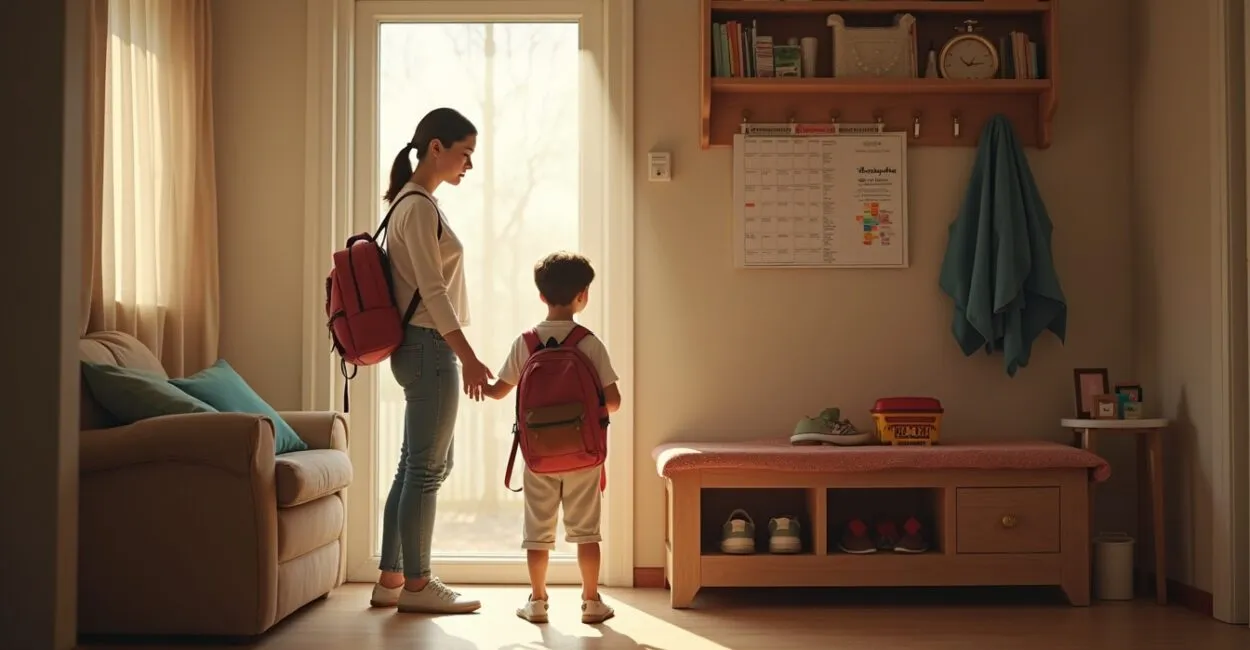
A simple routine, the right supplies, and a visible calendar can cut down on tardiness, forgotten items, and back-to-school arguments.
In 2026, school organization for parents and students has gone from a nice-to-have to a household survival skill: less rushing, fewer lost notes, and fewer backpacks packed at the last minute. The thing is, the problem is rarely a lack of effort. It’s too much improvising.

When the household has a short routine, supplies ready to go, and clear expectations, mornings feel different. The results show up fast: less time looking for shoes, fewer forgotten passwords, and fewer arguments over a notebook that “disappeared.”
1. What Changes When You Stop Relying on Memory
The technical definition here is simple: a school routine is a set of repeated actions with specific times and responsibilities that reduces day-to-day variation. In other words, you stop making every decision from scratch each morning.
In practice, school organization for parents and students works best when three things no longer depend on the mood of the day: waking up, getting out the door, and checking the backpack. It may sound minor. It isn’t. That repetition is exactly what takes the mental load off the whole household.
Anyone who works with families knows that chaos rarely starts with one big mistake. It starts with seven small delays in a row. A shoe out of place here, an unread note there, and just like that, the day is already off to a bad start.
2. The 9 Changes That Really Make a Difference in 2026
This year, the answer is clearer: less clutter, more visibility. Good school organization for parents and students doesn’t require a sophisticated system. It takes consistency.
- 1. A consistent bedtime — without it, the morning always catches up with you.
- 2. Pack the backpack the night before — prevents half the forgotten-item mishaps.
- 3. One dedicated spot for supplies — pencils, planner, uniform, and water bottle all in the same place.
- 4. A short checklist — ten items or fewer.
- 5. A large, visible calendar — tests, meetings, and field trips all on one board.
- 6. A small supply stash at home — glue, pencil sharpener, notebooks, and extra paper.
- 7. Check the planner at the same time each day — not “whenever you get around to it.”
- 8. Share responsibilities — adults guide; students do what they can.
- 9. A five-minute weekly review — keeps small tasks from piling up unnoticed.
The contrast is huge: before, the family reacts to problems; afterward, it prevents them before they happen. It’s a small change with a big payoff.
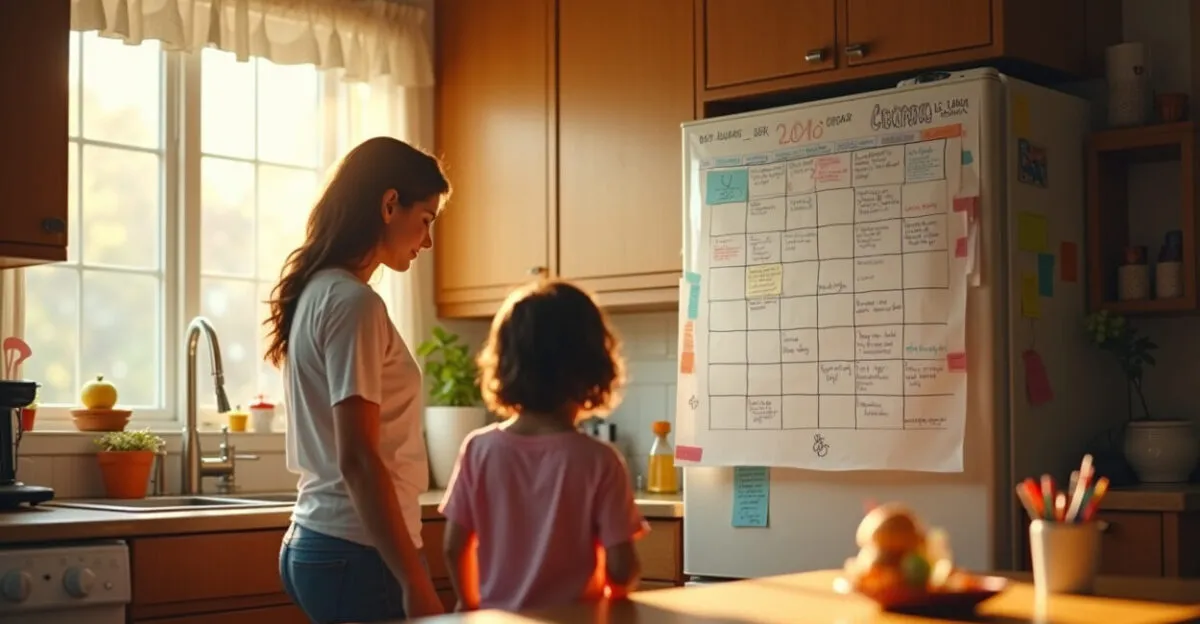
3. A Visible Calendar Is Worth More Than Good Intentions

The calendar is the household’s control panel. Without one, school organization for parents and students turns into a string of guesses: “I think there’s a test,” “I think it’s Tuesday,” “I think they were supposed to bring something.” You can’t build a routine on “I think.”
Use a physical calendar on the fridge or near the table. Mark tests, assignment due dates, meetings, and gym days. If the school sends a digital notice, add it to the household calendar. The goal isn’t to store information; it’s to make that information impossible to miss.
If you can’t see it, it won’t become part of the routine. That sums up half the school-related things I see families forget at the start of the year.
Read also: Attention Teachers: Changes to the School Routine for Students with ADHD
4. The Mistake That Throws Back-to-School Season Off Track
The most common mistake is trying to solve school organization for parents and students by buying too many supplies while creating too little structure. The house fills up with new items, but nothing has a designated place. Then the pencil case goes missing, the ruler breaks, and the lunchbox gets left in the kitchen.
In fact, too many supplies can become disorganization in disguise. A simple, standardized, easy-to-reach kit is worth more than three “pretty” notebooks no one can find on Monday morning.
Read also: Hybrid Learning: How It Works and When It Can Be Used
More supplies won’t solve the mess. A designated place will.
That’s what many families realize too late. Back-to-school season doesn’t go off the rails because they didn’t buy enough; it goes off the rails because there’s no system.
5. How to Share Responsibilities Without Turning Home into a Battleground
The best school organization for parents and students combines independence with light supervision. Adults don’t have to do everything, but they can’t leave everything up to a child or teenager, either.
A division of responsibilities that works well:
- the adult checks the calendar;
- the student gets the supplies ready;
- the adult checks anything new;
- the student puts away the items they use every day.
A realistic example: one mom made her 11-year-old “responsible for the backpack.” It worked for two days. On the third, the homework sheet was missing, the pencil case had no glue, and the gym clothes were left behind. When she put a permanent checklist on the closet door, the conflict was cut in half. The turning point wasn’t strict discipline. It was structure.
6. What the School Expects and What the Household Can Sustain
Not every school expectation needs to become an elaborate ritual at home. Experts disagree on how much children should manage on their own at each age, and it depends on maturity, not just grade level. The principle that doesn’t change is this: a sustainable routine beats a perfect one.
According to data from IBGE, Brazil’s national statistics agency, household organization directly affects families’ time, travel, and ability to plan ahead. And when a household cuts down on improvising, students gain more than punctuality: they have more mental space to learn.
For a deeper look at the educational side of planning, it’s also worth checking the Ministry of Education portal, which brings together guidance and calendars for the public school system. Of course, not every situation is the same. Full-day school, shorter school days, and hybrid learning call for different adjustments.
7. The Cheapest Change Is the One That Saves the Most Time
If you can choose just one place to start, choose visibility. A wall calendar, a short checklist, and a dedicated spot for supplies do more for school organization for parents and students than an entire afternoon of shopping.
The best-case scenario is easy to recognize: fewer late arrivals, fewer “where is it?” questions, less crying at the door, and fewer last-minute messages. It’s not magic. It’s a well-designed routine.
A school-ready household doesn’t look perfect; it looks predictable. And predictability is worth its weight in gold for families and students.
Frequently Asked Questions: School Organization for Parents and Students
1. What’s the First Step to Organizing a School Routine?
Start with bedtime and packing the backpack the night before. These two steps eliminate much of the morning rush and create an easy-to-maintain pattern. Then put up a visible calendar for tests, meetings, and assignments. School organization for parents and students gets much easier when the next day is already halfway prepared.
2. Can Young Children Help with Staying Organized?
Yes, as long as the task is short and concrete. They can put away the pencil case, choose the outfit you’ve set out, or check the water bottle. An adult needs to guide and review, because independence doesn’t happen overnight. Instead of expecting them to take full responsibility, focus on small, repeated wins. That’s how habits form without stress.
3. Can a Digital Calendar Replace a Wall Calendar?
Not as effectively as you might think. Digital calendars help with reminders, but a physical calendar works better for household routines because it’s visible all the time. Using both together greatly reduces the chance of forgetting something. In practice, a wall calendar keeps everyone on the same page without relying on notifications.
4. How Can You Avoid Buying Too Much at the Start of the Year?
Take inventory before you go shopping. Sort out what’s still usable, what’s actually missing, and what you already have duplicates of. School organization for parents and students works better when supplies have designated places, not when there are too many of them. Buying less and choosing carefully usually saves money and space.
5. What If the Routine Works for a Week and Then Falls Apart?
That’s normal at first. New routines tend to slip when they rely on willpower alone. The fix is to simplify: fewer steps, fewer decisions, and more visibility. If the family can stick to the basics for a few weeks, the system starts to run on its own. The key is repetition, not perfection.
Artigos Relacionados
 Fun Middle School Activities to Engage Students and Make Learning Stick
 Attention Teachers: Changes to the School Routine for Students with ADHD
 Parent Involvement and Teacher Training on ADHD: Communication Protocols, School-Family Partnerships, and Progress-Monitoring Strategies
 Individualized Planning for Students With ADHD: How to Create Goals, Accommodations, and Differentiated Assessments for Elementary School
 Inclusive Strategies for Students with ADHD: Practical Accommodations and Academic Outcomes for Elementary School Teachers
 Creative Icebreakers: 7 Innovative Activities to Help Middle School Students Connect
