

A nearly new notebook at the back of a drawer and another just like it in your shopping cart: this kind of duplication often happens when you start shopping before checking what you already have. A school supply list that avoids waste starts with a simple inventory that separates what is still usable, what needs replacing, what can wait, and what should be confirmed with the school. The process works best when you check each item in three ways: how many you have, its condition, and when it will be used. This helps families avoid buying “just in case” while still making it easy to replace anything they run out of during the year.
Requirements vary by grade level, school, and school year. A general list can help you organize your review, but it doesn’t replace the list provided by the school.

How to make a school supply list without waste
To make a school supply list without waste, label each item “already have,” “need to replace,” “buy later,” or “confirm with the school.” Before buying anything, check how many you have at home and what condition they’re in. Then decide whether each item is needed now or later in the year. This process prevents duplicate purchases while making sure you meet the school’s requirements.
Sorting items this way is more useful than buying everything at once because not every supply will be used on the first day. A box of colored pencils may last for months, while notebooks or paper may run out faster. When to replace each item depends on how quickly each student uses it.
When deciding what to buy, consider what you have at home, the condition of each item, and when it’s expected to be used.
Which basic school supplies might be on the list?
Basic school supplies depend on the grade and each school’s guidelines. The list below includes 20 common items as a starting point, not as a required list for every student.
- Writing and correction: pencils, mechanical pencils, erasers, pencil sharpeners, ballpoint pens, and highlighters.
- Organization: notebooks, binders, loose-leaf paper, and pencil cases.
- Drawing and art: colored pencils, crayons, markers, tempera paint, paintbrushes, and glue.
- Cutting and geometry: safety scissors, rulers, compasses, and protractors.
Some items may appear on a school supply list only for certain subjects or grade levels. Check the guidelines for each class and see whether the school specifies quantities. For example, a request for “art supplies” needs more detail before you shop.
How the school organizes its curriculum may help explain why certain supplies are requested in some grades. Still, the official list for your student’s class should guide your purchases for that year.
How do you compare the list with what you already have at home?

Check each item and record both the quantity and its condition. A short pencil may still be usable; scissors that don’t cut well may need to be replaced. An item’s condition matters just as much as how many you have.
Gather everything from pencil cases, drawers, and backpacks before you shop. A common source of mistakes: supplies scattered around the house can seem used up even when there are still good ones available. Put everything in one place and count only what can actually be used.
For items that can be shared, such as a ruler or scissors, consider where and who will use them. A supply may work for more than one child at home, but that doesn’t mean it can be in two students’ backpacks at the same time. Use these four categories to decide:
- Already have: enough on hand, and the item is in usable condition.
- Need to replace: there isn’t enough, or the item is damaged.
- Buy later: it will be needed, but not right away.
- Confirm with the school: the request is vague, repeated, or doesn’t specify a quantity.
Reusing school supplies works when an item is clean, complete, and suitable for its intended use. A notebook with only a few pages left may not be enough for a whole subject, while a pencil case in good condition may last another year. Learning can also involve activities that emphasize hands-on materials and practical solutions, such as approaches associated with constructivist practice. That doesn’t mean you can assume what each teacher will request: the school’s guidance remains the deciding factor.
What signs point to duplicate items or a request worth confirming?
Unspecified quantities, items that serve the same purpose, too many backup supplies, and requests that mix individual and shared use are all signs that the list may need a second look. They don’t prove the request is wrong, but they can help you spot where a question might prevent an unnecessary purchase. Be careful not to turn something that happened last year into a rule. If you ran out of glue once, buying several bottles without checking this year’s quantity may leave you with extras. If you still have usable colored pencils, a new set may be able to wait.
If the list seems long, flag any items without a quantity, purpose, or instructions for use. Ask the school whether the supplies are for individual use, will stay in the classroom, or can be sent in over time. A clear question about how and when an item will be used is more likely to clarify the request than making assumptions at the store.
Read also: Basic Geometry Concepts
It’s also worth distinguishing needs from preferences. Color, characters, packaging, or freebies may influence your choice, but they don’t change what the supply is for. If the requested item is still in good condition and suitable for its purpose, appearance alone isn’t a reason to replace it.
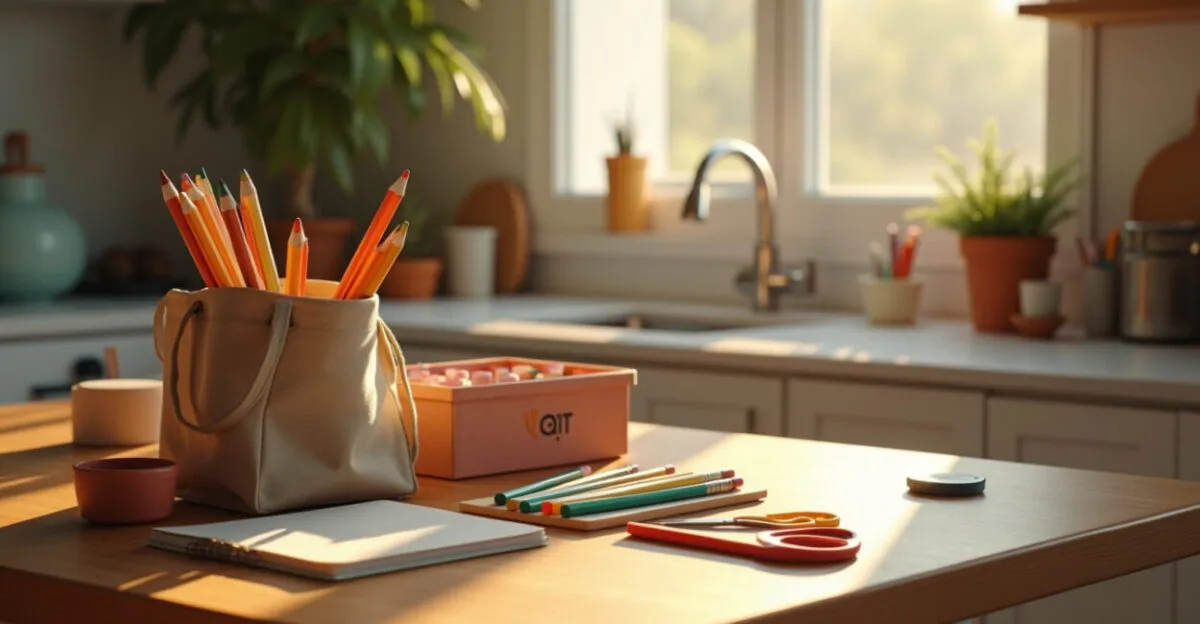
What can schools request on a 2026 school supply list?
In 2026, schools can request supplies related to students’ educational activities, but the specific list depends on the school and grade level. To assess a request, check the official list, confirm the purpose of each item, and contact your local Procon—the Brazilian consumer protection agency—if you have questions about a specific requirement.
Law No. 12,886/2013 added a prohibition to Brazil’s education laws against requiring students or their guardians to provide supplies for shared use, under the rule set out in Law No. 9,870/1999. How the rule applies depends on the circumstances and how the request was presented, so a long list alone isn’t enough to conclude that anything is improper. The text of Law No. 12,886/2013 is available on the Planalto government website.
If the school requests large quantities or supplies without explaining what they are, ask for clarification in writing: the quantity per student, the purpose, and how the items should be delivered. You can also consult the Consumer Defense Code for consumer-related questions. To assess your specific situation, contact the Procon in your city or state.
General guidance has its limits: school system rules, contracts, educational activities, and the circumstances of a request can all affect how it should be evaluated. A request shouldn’t be judged by an item’s name alone; its stated purpose and requested quantity matter.
How can you save on supplies without compromising quality?
Start with what you already have and buy first the items that will be used when classes begin. For everything else, compare products with similar features, such as size, quantity, and durability. Unit pricing can help you compare different package sizes, as long as the quality and specifications meet your needs.
Buying in stages keeps you from building up a stockpile before you know how much you’ll actually use. If a supply is needed for a later activity, note when it will be needed and wait to replace it until closer to that date, as long as you’ll still have time to find it.
Taking care of supplies also reduces the need to replace them: keep pencils and pens together, label items, and close art supplies after use. For specific activities, reused paper can work for drafts, as long as the school hasn’t requested new paper for a particular assignment.
When comparing deals and payment options, treat your budget as something to plan: small purchases can add up. Reading about the role of the education funding fund can help distinguish public school funding from individual family expenses. They’re related topics within the education system, but neither replaces checking the supply list.
What checklist should you fill out before making your purchases?
Write down what the school requested and what you have at home before heading to the store. The table turns your review into a clear decision: if you have enough of an item and it’s in good condition, there’s no reason to buy another one right away.
Item
Quantity requested
On hand at home
Condition
Purchase decision
Notebook
As listed for the class
Record the usable quantity
Check the pages and cover
Replace only what’s missing
Colored pencils
As listed for the class
Count the colors available
Check that they can still be sharpened and used for coloring
Fill in the missing colors or buy later
Scissors
One pair, if requested
Check whether you already have a suitable pair
Test the cutting action and safety
Reuse or replace
Glue
As listed for the class
Count sealed and opened bottles
Check the expiration date and whether it still works
Buy only the quantity needed
Unspecified supply
Not provided
Not applicable
Request needs clarification
Confirm with the school
The table works best when you fill it out using the actual school list instead of estimating quantities. First gather everything you already have at home, then mark what’s missing. That way, you start shopping with an inventory, not a cart.
For more on topics related to school organization, explore resources on management and planning. Reading about budgeting on a tight budget can also help with household planning, but it doesn’t replace comparing equivalent items.
People who carefully review choices with risk in mind can apply that same habit before making purchases. For school supplies, though, the most direct criteria are need, quantity, and condition.
For more information about school and educational resources, consult references based on the subject of each article.
Frequently asked questions
How can you keep track of supplies in a backpack?
Do a quick check when organizing the backpack and return each item to its pencil case or storage spot. Keeping a note of what needs replacing can help you avoid buying another pencil just because the first one ended up at the bottom of a bag.
Do you need to choose supplies from a specific brand?
Only treat a brand as a requirement if the school explains why it’s needed, such as compatibility with an activity. If you’re unsure, ask whether an equivalent product will work.
How should you organize supplies for siblings who study at the same school?
Keep each student’s personal supplies separate and set aside items they can share. Labeling each item prevents mix-ups and makes it easier to tell when something has been taken to school or put away somewhere else.
What should you do with leftover supplies at the end of the year?
Store items that are in good condition together and check them before receiving or buying the new list. Unused supplies can be given to another child or an organization, as long as they’re clean and suitable for use.
Is it worth buying larger packages to pay less per item?
Compare the cost per item and estimate whether you’ll use the full quantity before it loses quality or gets forgotten. A larger package is worthwhile only if it meets the school’s requirements and you expect to use the extra supplies.
Artigos Relacionados
 School Supply List Apps Are Taking Off: Why Parents and Public School Leaders Use Apps to Organize Purchases
 City Guidance on the Rise: New First-Grade Supply List Recommendations Affecting Teachers and Families
 Sustainable School Supplies Are on the Rise: Why Public Schools Are Adopting Eco-Friendly Items—and What It Means for Families
 Collective Buying on the Rise: How Parent Groups Cut Costs and Streamline Purchases for Municipal Schools
 School Organization: 9 Changes Parents and Students Can Make in 2026
 Financial Education in Schools: Real-World Results
