

A child may read the words on a page and still be unable to explain what they understood. Neuropedagogical assessment explores how cognitive, educational, and emotional factors may relate to learning difficulties and helps guide educational strategies.
The process brings together information from different sources; its findings are not equivalent to a clinical diagnosis.

The process varies depending on the student’s age, concerns, and school setting. Questions about steps, timelines, and tools should therefore be answered on a case-by-case basis, without promising an immediate solution.
The value of the process lies in turning observations into working hypotheses and recommendations that can be monitored.
Quick Facts
- Purpose: understand aspects of learning and guide educational interventions.
- Who it’s for: children, adolescents, and, depending on the professional’s scope of practice, people of other ages.
- Format: may combine interviews, record reviews, observation, and assessment activities.
- Duration: depends on the concern, the availability of information, and the plan developed by the person conducting the process.
- Outcome: educational recommendations and, when needed, referrals to other professionals.
What Is Neuropedagogical Assessment and What Is It For?
Neuropedagogical assessment is an educational investigative process that examines learning in light of cognitive skills, school experiences, and contextual factors. It helps identify barriers, develop hypotheses about difficulties, and guide educational strategies; on its own, it does not confirm disorders or clinical conditions.
In everyday terms, it aims to understand how a person learns, which tasks they find challenging, and what supports may help them participate. It may consider attention, working memory, language, reading, writing, mathematical reasoning, organization, and problem-solving strategies. These areas need to be interpreted together, taking into account age, schooling, language of instruction, and learning opportunities.
The term “neuropedagogical” does not, by itself, refer to a single protocol or clinical credential. The scope depends on the training and professional responsibilities of the person conducting the assessment. A well-defined assessment explains what was examined, what its limitations are, and which educational decisions can be made based on the information available.
An educational assessment is useful when it turns observed difficulties into concrete supports that can be monitored in the school routine.
When Should You Consider an Assessment of Learning Difficulties?
It may be worth considering when a difficulty persists despite appropriate teaching opportunities, appears in more than one situation, or interferes with a student’s participation and independence. A single low grade does not, on its own, explain the cause: absences, school changes, inaccessible instruction, emotional distress, and health conditions can also affect performance.
Families and schools can start by gathering specific examples. Instead of simply noting “doesn’t pay attention,” it’s helpful to record which activities bring this on, how long the child can stay engaged, and what kind of prompt helps them return to the task. For reading difficulties, this article on when to seek an assessment for slow reading can help organize observations.
- Does the student understand spoken instructions but get lost when reading directions?
- Can they complete a task with support but struggle to do it again without guidance?
- Do the challenges appear across different subjects or only in one specific skill?
These questions are not a substitute for an assessment. They can help describe the problem more precisely and determine whether teaching strategies need to be revised, an educational assessment is warranted, or another professional should be consulted.
Complete guide: Neuropedagogical Practices: Methods, Limitations, and Scope
What Steps Might the Process Include?

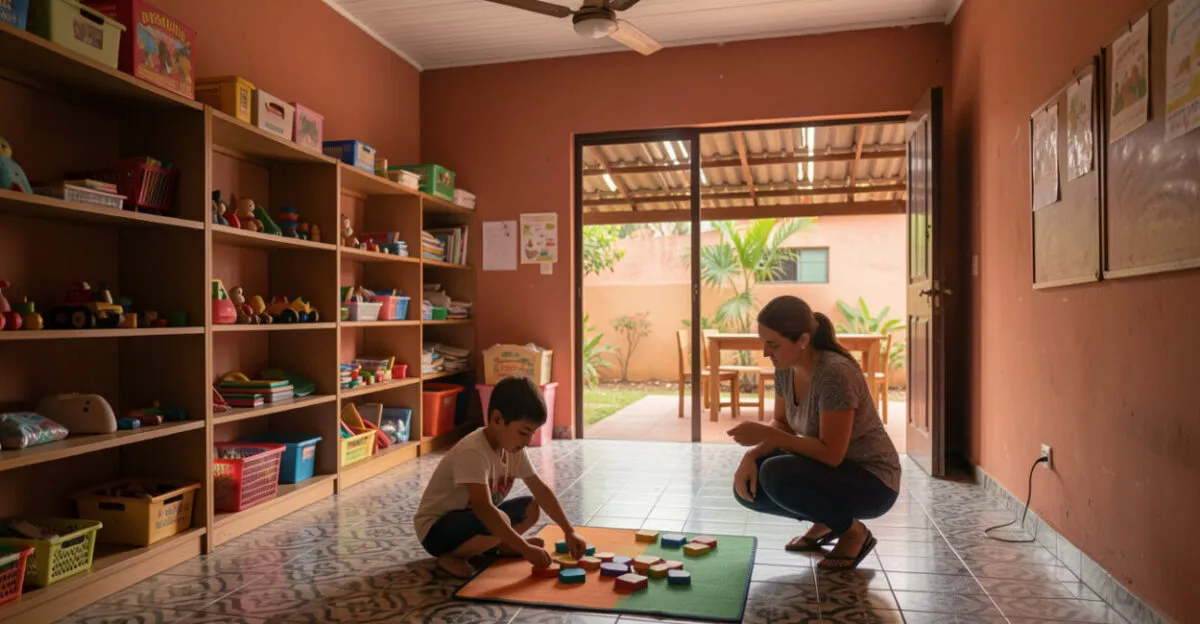
The steps in neuropedagogical assessment vary. The process usually begins by defining the concern and may include an interview with caregivers, a conversation with the student, a review of school materials, observation, and activities focused on the skills in question. Not every situation requires all of these procedures, and no single tool should be treated as a definitive answer.
- Define the question: clarify the difficulty and what the assessment needs to determine.
- Gather information: collect school history, family input, and relevant details about development and daily routines.
- Observation and activities: examine how the student approaches tasks related to the concern, noting strategies, errors, and needed supports.
- Integrated analysis: compare information from different sources, taking context and the limitations of the procedures used into account.
- Feedback and referrals: explain findings in clear language and recommend educational steps or additional consultations when appropriate.
One detail worth noting is how the student responds to different kinds of help. If a child makes mistakes when following a series of instructions but does better when given one direction at a time, that offers insight into how to structure the task; by itself, it does not prove a clinical condition. It’s also important to distinguish what was observed from what is only a hypothesis.
Read also: Creative Assessment: 6 Ways to Monitor Learning
What Can Be Observed During Activities?
It’s important to look beyond whether the student gets an answer right or wrong and consider how they arrive at it. A professional may assess understanding of instructions, planning, pace, self-correction, frustration tolerance, and the need for cues. Interpretation depends on the activity and should not turn a one-time behavior into a fixed trait.
Consider a child who takes a long time to copy directions and leaves exercises unfinished. If observation shows they understand better when given a printed copy and allowed to start with the first question, the team has a clue to use when testing accommodations. Slowness alone does not identify the cause: it may involve reading, writing, attention, organizing materials, or more than one factor.
To observe more at home, a relaxed reading routine can show which formats encourage interest and comprehension. This isn’t a test, but it can provide useful information to discuss with the school and help plan support.
How Should You Interpret the Findings and Recommendations?
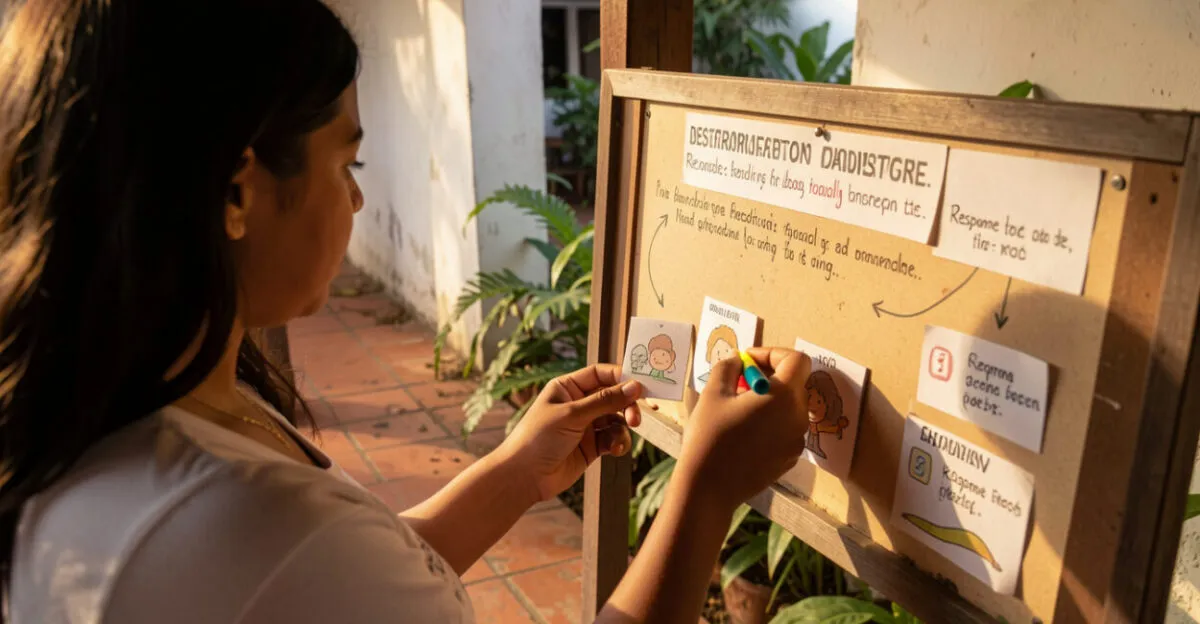
The findings describe observed patterns and educational hypotheses; they are not a definitive label of a child’s abilities. They should explain which skills seem more established, where barriers arise, and which strategies might be tried. They should also note when the available information is not enough to answer the original question.
A useful recommendation is specific and measurable. “Support reading” is broad; breaking directions into smaller parts and checking for understanding before the student begins makes it possible for the school to see whether the strategy helps. The team can record what was tried and how the student responded, then revise the plan if the difficulty persists.
Educational follow-up should also be clear: who will do what, in which setting, and how the impact will be monitored. The Ministry of Education website provides institutional information about education; decisions about an individual case should take the school’s educational approach and the student’s needs into account.
A finding becomes meaningful when the school can turn it into an observable strategy and assess how the student responds.
How Does Neuropedagogical Assessment Differ From Clinical Assessment?
Educational assessment focuses on the learning process and guides teaching practices. Clinical assessments address health-related questions and follow the legal and technical limits of the professions involved; for example, psychological assessment is regulated by the Federal Council of Psychology (Conselho Federal de Psicologia, Brazil’s federal psychology council). These goals can complement each other, but they are not interchangeable.
Aspect Neuropedagogical assessment Clinical assessment Focus Learning, task performance, and educational supports. Clinical questions within the responsible professional’s scope of practice. Outcome Description of educational findings, strategies, and possible referrals. Clinical conclusions appropriate to the profession, methods, and purpose of the assessment. Use at school Guide teaching adjustments and follow-up. Contribute clinical information while respecting confidentiality and consent.
For information about the rules governing psychological assessment in Brazil, consult the Federal Council of Psychology (Conselho Federal de Psicologia). The distinction between neuropedagogical and neuropsychological assessment also depends on purpose and credentials: neuropsychology is a clinical field, while the term neuropedagogical may be used with varying scopes.
What Are the Limitations, and When Should You Seek Other Professionals?
An educational assessment does not confirm medical, psychological, or neuropsychological diagnoses. If signs emerge that warrant clinical assessment, such as significant distress, loss of previously acquired skills, or difficulties that persist across settings, the family can speak with a pediatrician, psychologist, speech-language pathologist, or another qualified professional, depending on the concern.
Limitations also arise when reliable information is lacking, school attendance has been inconsistent, or the student has not had consistent access to the material being assessed. In these cases, firm conclusions may be premature. Brazil’s National Education Guidelines and Framework Law (Lei de Diretrizes e Bases da Educação Nacional), available through the Planalto Legislation Portal, provides a point of reference for the educational context but does not replace an individual assessment.
Before seeking an assessment, note specific situations, gather examples of schoolwork, and talk with the educational team about what has already been tried. If reading is a primary concern, combining these observations with family-school partnership practices to support reading can make the next steps more focused.
Frequently Asked Questions
Can a Child Receive Neuropedagogical Assessment at School?
Yes. The school can contribute observations, records, and information about activities, as long as this follows the institution’s procedures and protects the child’s privacy. The location and professional responsible vary depending on the purpose and context.
Do the Findings Indicate Dyslexia, ADHD, or Another Condition?
Not on their own. An assessment can describe difficulties and recommend clinical evaluation, but diagnosis depends on an assessment conducted by a qualified professional within their area of practice.
How Long Does the Process Take?
There is no standard timeline. The duration depends on the question being investigated, the amount of information needed, and the availability of the student, family, and school for the planned steps.
.Artigos Relacionados
 Individualized Planning for Students With ADHD: How to Create Goals, Accommodations, and Differentiated Assessments for Elementary School
 Early Childhood Assessment: Methods Without Tests
 The Pomodoro Technique for Studying: 5 Steps to Get More Done in High School
 School Routine: 7 Steps to Study Without Arguments at Home
 Middle School and High School: Criteria for a Diagnostic Assessment
 Early Elementary Grades: Ready-to-Use Diagnostic Assessment Template
