
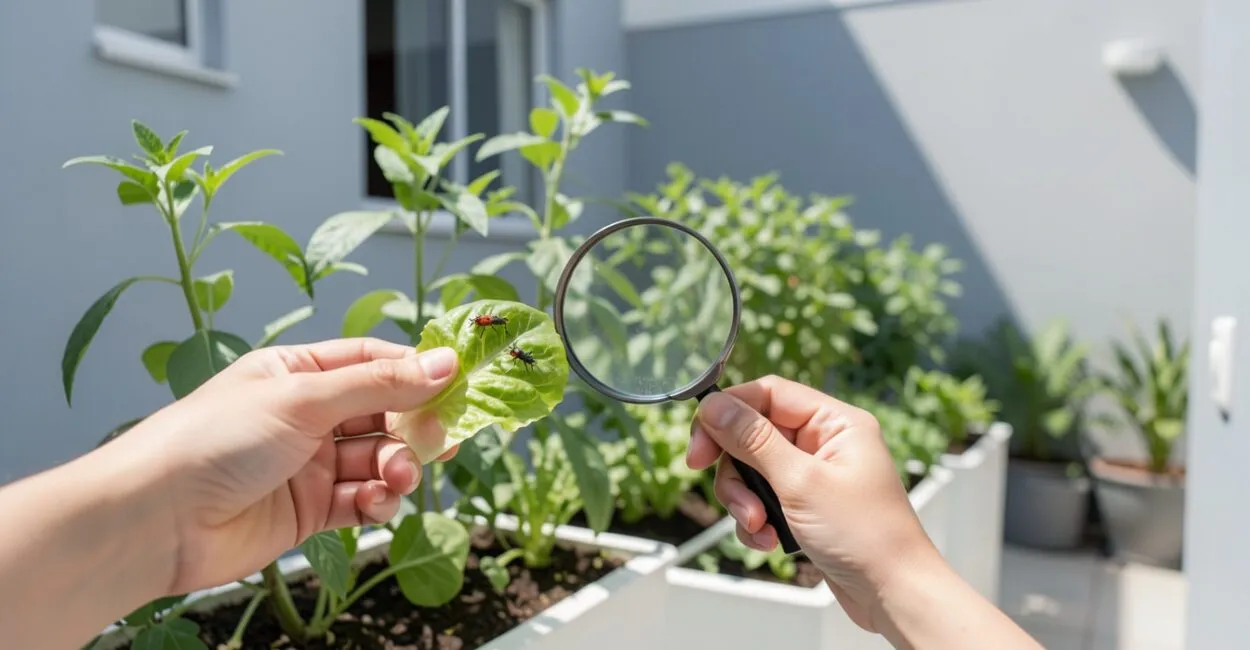
A curled or speckled leaf can be a sign of pests, but it doesn’t tell you which treatment will work. Biological pest control uses living organisms or their products to reduce pest populations.
In a small garden, start by correctly identifying the problem and choosing a response that suits the plant, the space, and beneficial organisms.

This approach can help avoid harsh treatments and protect useful insects, but it won’t eliminate an infestation overnight. Regularly checking your plants and acting early is usually more helpful than applying any product without confirming the cause of the damage.
Before choosing a treatment, distinguish pests from similar symptoms, such as sunscald, underwatering, or disease. Integrated pest management combines monitoring, prevention, and control methods, including biological ones.
Before You Begin
- Have good lighting or a magnifying glass to inspect leaves, shoots, and the undersides of leaves.
- Note which plants show damage and when it began.
- If possible, identify the pest or type of damage before choosing a method.
- Check that the recommended product or organism is suitable for the crop and home environment.
What Is Biological Pest Control, and How Does It Work?
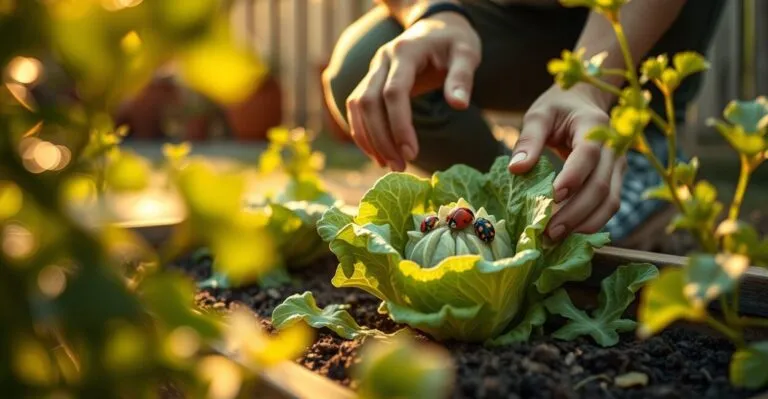
Biological pest control uses natural enemies, such as predators, parasitoids, and microorganisms, to reduce populations of organisms that damage plants. Put simply, it means using natural relationships to keep a pest in check. Results depend on accurate identification, environmental conditions, and compatibility between the control agent and the pest. A predator eats the pest; a parasitoid develops in association with it and eventually kills it; and microorganisms such as certain bacteria and fungi can infect specific organisms. Not every insect found on a plant is an enemy: ladybugs, for example, may eat aphids, while other insects may be pollinators or harmless visitors.
In a vertical garden, limited space makes plants easier to inspect, but it can also mean they’re packed closely together. An infestation can spread from one pot to another, especially when leaves touch.
That’s why it’s worth checking your plants while watering rather than waiting for the damage to become obvious.
Step 1: Identify the Signs Before Taking Action
The most useful clues are the pattern of damage and where the pest is located. Check the undersides of leaves, growing tips, stems, and the surface of the potting mix. A simple magnifying glass can help distinguish tiny insects from spots caused by other factors.
- Aphids: Small insects clustered on shoots and new leaves; they may leave a sticky substance and cause leaves to become distorted.
- Whiteflies: Tiny white insects that take flight when the plant is moved; nymphs may cling to the undersides of leaves.
- Mites: Pale stippling, dull-looking leaves, and, in heavier infestations, fine webbing. They’re hard to see without a magnifying glass.
- Caterpillars: Holes and chewed edges, sometimes accompanied by small droppings on leaves or potting mix.
- Slugs and snails: Irregular bite marks and sometimes slime trails; they’re more common in damp areas.
Isolated spots don’t confirm an infestation. Overwatering, strong sunlight after moving a plant, and nutrient deficiencies can also change how leaves look. Look for organisms, eggs, honeydew, or fresh damage before concluding that pests are present.
If plants are crowded, air circulation is limited, and humidity stays high, the conditions may favor certain problems. Adjusting watering and spacing can help distinguish pest damage from growing stress; see also how to prevent waterlogged roots in a vertical garden.
Step 2: Understand the Types of Biological Pest Control

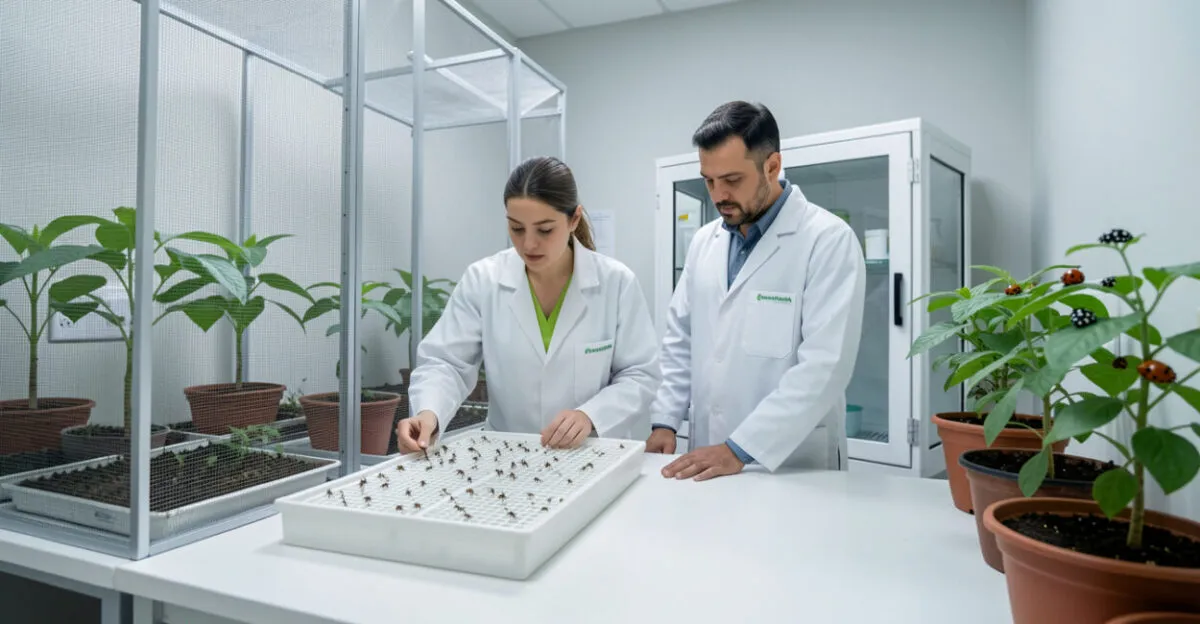
The main types are natural, classical, and applied, also called augmentative. They differ in the origin and use of control agents, not in any promise of fast results or complete eradication.
Type How it works Example Natural or conservative Protects natural enemies already present in the environment. Avoid killing ladybugs that prey on aphids. Classical Introduces a natural enemy to establish long-term control, generally after a technical assessment. Management programs at an agricultural scale, not an improvised release at home. Applied or augmentative Releases organisms bred to reduce a pest that is already present. Guided use of predators or parasitoids suited to the crop.
Classical biological control requires caution because an introduced species could affect nontarget organisms or become established beyond the intended area. It’s not something to try on your own on a balcony. Embrapa, Brazil’s agricultural research corporation, provides technical information about agricultural production and management that can help explain how these methods are used on a larger scale.
Read also: Vertical Supports: Compare Materials and Install Them Safely
Step 3: Choose Examples That Suit Your Garden
In compact spaces, the safest approach is usually to start with conservative control: preserve natural enemies already present and reduce conditions that favor pests. Releasing commercial control agents may make sense, but only when the pest has been reliably identified and the instructions clearly apply to the crop and setting.
Example: Aphids appear on a plant’s new shoots, and ladybugs are nearby. First, confirm that aphids are present and check whether the damage is spreading. Avoid applying a broad-spectrum product that could also harm the ladybugs. If the infestation continues, look for an approved option recommended for that pest.
Read also: Recycled Pots for a Vertical Garden: How to Choose
For caterpillars, some biological products containing Bacillus thuringiensis are formulated to target specific groups of larvae, but they don’t work against every insect or at every stage of development. Effectiveness depends on correctly identifying the caterpillar, using a registered product, and applying it according to the label. The microorganism’s name alone isn’t enough to choose a treatment.
Commercial control agents are also available for mites, whiteflies, and other pests, each for specific uses. Suitability depends on factors such as temperature, humidity, host plant, and pest species. In Brazil, consult guidance from the Ministry of Agriculture and Livestock and official product information before using any control agent or input.
Step 4: Prevent Infestations and Protect Beneficial Organisms
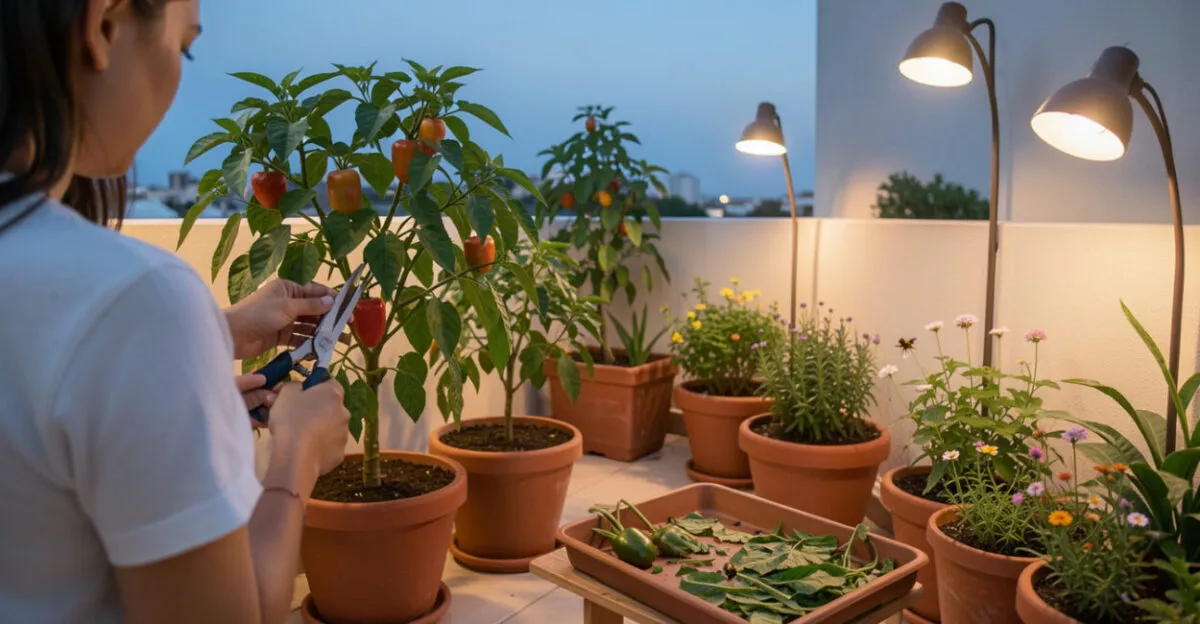
Prevention means making growing conditions less favorable to pests and making early detection easier. Remove badly damaged leaves, clean tools between plants, and inspect new seedlings before placing them near the others. A newly purchased plant may carry eggs or insects that aren’t yet visible from a distance.
Avoid spraying broad-spectrum insecticides as a precaution: they can kill predators and parasitoids that help control pests. Also, don’t confuse homemade remedies with biological pest control. Garlic, dish soap, and other household mixtures aren’t control organisms and can cause phytotoxicity—that is, damage to the plant itself.
Garden care depends on growing conditions. Plants weakened by improper watering may suffer more damage, so adjust watering frequency to the potting mix and climate instead of keeping the pot constantly damp. To plan your space and plant layout, see these tips on how to set up a vertical garden in an apartment.
Step 5: Apply the Treatment Safely and Monitor Results
Before using a product or releasing an organism, confirm the pest, the recommended crop, how the treatment works, and its storage requirements. Follow the label and instructions, use only products authorized for the intended purpose, and keep people and pets away as directed. In a home food garden, observe any specified preharvest interval after applying a product.
Start by checking a few leaves rather than treating the entire garden blindly. Then monitor damage and pest activity at regular intervals. Success may show up as a reduction in new damage or a stable pest population, not necessarily the complete disappearance of the organisms.
A common mistake is repeatedly applying a product because insects are still visible on the plant. Some agents work on a specific life stage of the pest, and results may take time; in other cases, the diagnosis was wrong. Reapplying without checking the instructions can harm natural enemies and the plant itself.
Step 6: Understand the Limitations and Know When to Ask for Help
The method may fail if the pest was misidentified, the chosen agent isn’t suited to the environment, or the infestation is already severe. On balconies, temperature and airflow can change considerably throughout the day, which may affect the survival of released organisms. Results also vary depending on the plant species and how it’s cared for.
Seek technical guidance if the damage spreads quickly, the identification remains uncertain, or your garden includes edible plants and you don’t know whether a product is permitted. Help from agronomists, agricultural extension services, and agricultural regulatory agencies can help prevent the improper use of organisms or products.
For a small home garden, the initial decision can be simple: if there are only a few insects and natural enemies are present, monitor the plants and protect those organisms; if damage increases and the pest has been identified, consider a specific control agent recommended for that case; if you can’t confidently identify the problem, don’t apply anything yet. Those growing herbs in a small space can also pair inspections with an arrangement that makes leaves easy to reach, such as the one described for growing herbs on a wall.
Frequently Asked Questions
Can Beneficial Insects Appear in an Apartment Garden?
Yes. Ladybugs and other predators may arrive naturally, although their presence varies by location and season. Avoid applying broad-spectrum products when you find organisms that may be feeding on pests.
Should an Infested Plant Be Separated From the Others?
If pests can move between plants or leaves are touching nearby plants, moving the pot away may limit the spread while you confirm the diagnosis. Don’t discard the plant automatically: first assess how extensive the damage is and whether you can manage it without spreading the infestation.
Are Biological Products Always Safe for People and Pets?
No. “Biological” doesn’t mean risk-free, nor does it guarantee that a product is suitable for every crop or setting. Read the label and instructions, follow the precautions, and check that the product is authorized for its intended use.
Artigos Relacionados
 Biological Pest Control: Beneficial Insects That Save Your Garden
 Sustainable Vertical Garden: Build One in a Small Space
 Vertical Garden Supports: Compare 5 Models for Your Home
 Small Vertical Garden, Made Easy: A Step-by-Step Guide That Works
 Build a Vertical Garden Today: A 20-Minute Beginner’s Guide
 Sustainable E-Commerce Packaging: 7 Options That Protect Products, Reduce Waste, and Control Costs
