
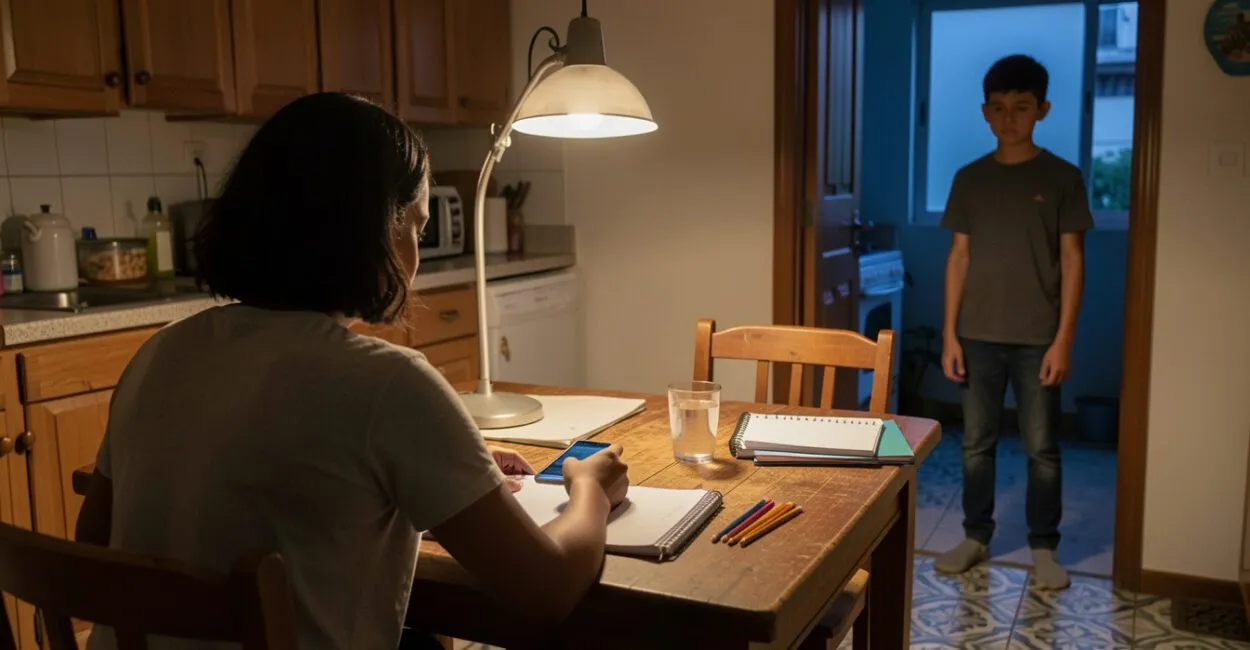
Your phone buzzes, someone asks where an item is, and the dishes in the sink seem to demand attention just as you open your study materials. Distractions at home come from stimuli in your surroundings that pull your attention away from studying. To reduce them, identify your main triggers, set boundaries with the people you share your space with, and get your study area ready before you begin.
You don’t need a room of your own or complete silence. A shared corner can work, too, when everyone understands the ground rules, there are fewer visual distractions, and you have a simple plan for getting back to your studies after an interruption.

How Can You Identify the Distractions at Home That Get in Your Way?
To avoid distractions at home, keep track for a few days of what interrupts your studies, then adjust your environment to address the most frequent triggers. Pay attention to noise, household chores, conversations, notifications, and the urge to look for things. Writing down what happened and when helps you distinguish recurring problems from one-off disruptions. In the context of studying, a distraction is an internal or external stimulus that competes with the attention you give to a task and can break your concentration. Put simply, it’s anything that makes you leave a text, lesson, or exercise before you’ve finished what you were doing.
One easy-to-miss detail: an interruption doesn’t always start when someone speaks to you. Seeing a pile of laundry, remembering an unanswered message, or noticing a full sink can prompt you to switch tasks without even getting out of your chair. Record the trigger and your reaction. For example, “I heard the washer and went to check it” reveals a pattern that a generic list of distractions wouldn’t catch.
Paying attention also helps you distinguish background noise from social interruptions. The steady hum of a fan may be tolerable, while a nearby conversation demands that you follow the words and meaning. Each situation calls for a different response.
How Can You Ask Family and Roommates Not to Interrupt You?
Ask for a specific agreement: explain when you need uninterrupted time, tell people how to reach you in an emergency, and agree on a visual signal to show that you’re studying. A specific request is more likely to work than “don’t bother me” because it makes clear what to do and when an exception applies.
You could say, “I’m going to study until I finish this chapter. If the door is closed or this note is on the table, please only interrupt me if it’s urgent.” In a shared space, a card on the table, visible headphones, or a message in your household group chat can serve as a signal. The agreement should account for children, people who depend on you, and household tasks that can’t wait.
Tone matters, too. Assertive communication can help you set boundaries without turning the conversation into a complaint: explain how interruptions affect you and suggest a workable alternative, such as saving questions for a break or setting a time to talk.
A boundary works best when everyone knows how to recognize it and which situations genuinely warrant an interruption.
What to Do When Noise Makes It Hard to Concentrate

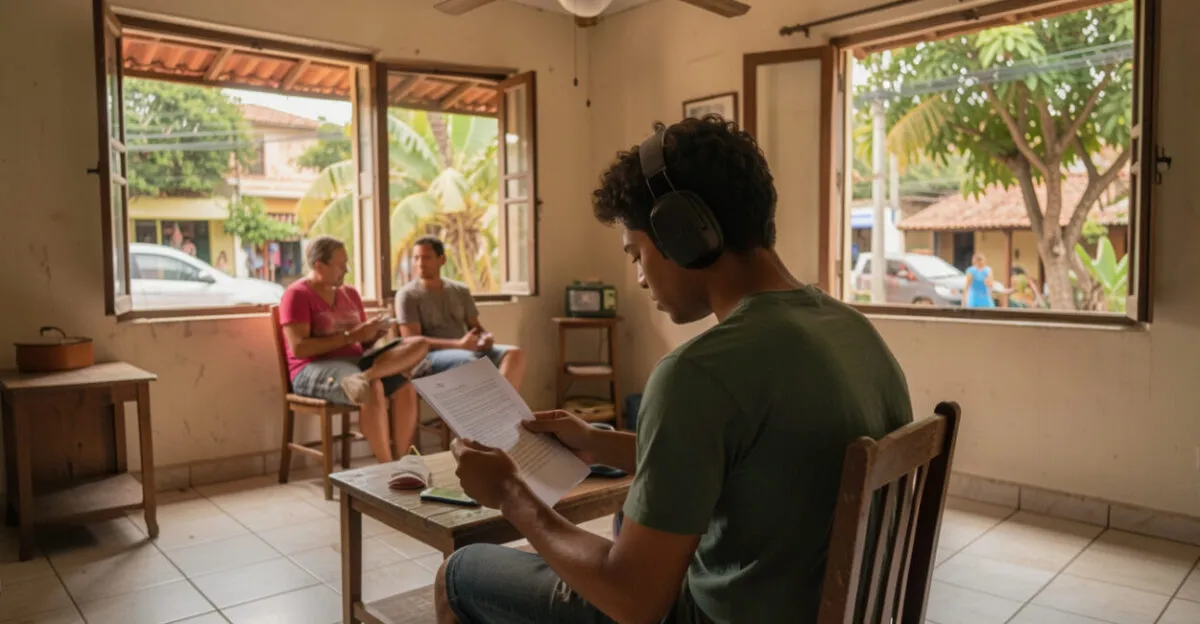
If noise is disrupting your studies, first try moving to a different spot or reducing your exposure to sound. Noise-canceling headphones or white noise may help, as long as you can still hear important alerts. Complete silence isn’t necessary for every task, and the best solution depends on the type of noise and what you’re studying.
A nearby conversation often competes with reading and writing more than a steady sound does because the words can capture your attention. If there’s no quiet room, try sitting with your back to the busy area, choosing the quietest time available, or using earplugs. For video lessons, check that you can still understand the audio with whatever you use.
Read also: Procrastination in Your Studies: How to Get Started When You Don’t Feel Like It
The World Health Organization offers guidance on noise and health. This doesn’t mean every household sound is harmful, but it does underscore that exposure, volume, and context matter. Headphones have limits, too: listening at high volume for long periods can damage your hearing, so keep the audio at a comfortable level and take breaks when needed.
How Can You Avoid Breaks to Get Supplies or Water?
Before you start, keep everything you’ll need for the task within reach: reading materials, a notebook, a charger, water, and any specialized tools. This cuts down on predictable trips away from your desk, which can easily turn into a conversation, a household chore, or a phone check.
Complete guide: Study Habits: How to Stay Focused at Home
Do a quick check without trying to plan for every possibility:
- Open the file, book, or platform you’ll be using.
- Set out a pen, paper, calculator, or headphones, depending on the activity.
- Fill a water bottle and leave your phone charging out of reach.
You don’t need to keep everything on your desk. A cluttered surface can create visual distractions and make it harder to find what you need. The goal is to have what you need for the next step on hand, not to turn your space into a storage area.

How Can You Put Your Phone Away and Manage Notifications?
To reduce digital interruptions, keep your phone out of sight, turn on Focus or Silent mode, and disable notifications you don’t need while studying. If you need to receive important calls, allow exceptions for specific contacts instead of leaving all alerts on.
Sound isn’t the only trigger: a lit screen on your desk can draw your eye even when there’s no notification. Putting your phone in another room, inside a drawer, or face down creates a physical barrier between the urge to check it and the task at hand. If you need your phone to study, block apps you won’t be using and keep only the necessary tool open.
Focus mode won’t solve everything if the interruption comes from an automatic habit, like unlocking your phone when you hit a difficult question. In that case, write down the question and keep working. Check your phone at a set time for that purpose, without opening other notifications along the way.
Can You Study Effectively at Home Without a Dedicated Space?
Yes. A study space at home can be a shared desk, a corner of the living room, or a surface you set up and clear away afterward, as long as everyone in the household respects the agreed-upon signal and essential materials are organized.
Define your space with just a few things: a notebook, computer, and the materials for your task. A box or folder makes it easy to put everything away when the table is also used for meals or work. If people will inevitably be moving around the room, sit facing a wall or use a visual divider. This won’t block the sound, but it will reduce distractions in your field of vision.
Research on attention and the environment doesn’t offer one solution that works for everyone. Whether you choose silence, steady background noise, or headphones depends on the task, your individual sensitivities, and whether you need to hear what’s happening at home. For general information on attention and behavior, the National Institute of Mental Health’s health library offers information from a U.S. government agency, but it isn’t a substitute for professional evaluation if attention difficulties persist across different settings.
How Can You Get Back to Studying After an Interruption?
When you return, identify the last action you completed and write down the next specific step, such as “solve problem 4” or “summarize this paragraph.” This brief instruction cuts down on the time you spend trying to remember where you left off and makes it easier to get back into the task.
If someone interrupts you, jot down a keyword or a line on paper before responding, if the situation allows. When you return, read the note and review the previous section. If you had to handle something urgent, accept that it may take a little while to get back into your rhythm. Getting back to work doesn’t mean instantly regaining the same level of concentration.
For study sessions with planned breaks, time blocks can help you set aside time for studying and household demands. Here, the goal is to protect your surroundings during each block, not to build a rigid routine.
Start with just one trigger: the one that comes up most often or costs you the most time. Make one change at a time and see whether interruptions decrease. If it doesn’t help, reconsider the agreement or the location instead of blaming the problem entirely on a lack of discipline.
Question Practical answer What interrupts me most? Track triggers and reactions for a few days. How can I prevent other people from interrupting? Agree on a signal, a time period, and exceptions for emergencies. Is noise a problem? Try another location, headphones, or steady background noise at a comfortable volume. Do I need my own room? No. Set aside a corner and organize materials you can put away. How do I get back to my task? Write down the next step before you step away.
Frequently Asked Questions
Does White Noise Work for Every Type of Studying?
Not necessarily. Some people find steady sound useful for masking changing noises, while others find it distracting. Try it during a short task and keep the volume low.
What Should I Do if My Family Doesn’t Respect the Signal?
Talk outside your study time and explain which interruptions are most disruptive. Revisit the agreement with a more visible signal and a clear rule for emergencies. If you share the space, suggest an alternative that works for the other people in your household, too.
Should I Study with Headphones All the Time?
No. Headphones may reduce some noise, but they can also make it harder to hear alerts and may become uncomfortable during extended use. Use them when they’re helpful for the task, take breaks, and keep the volume at a comfortable level.
How Can I Keep a Household Chore from Distracting Me?
Write the chore on a list outside your field of vision, then get back to your materials. If it can’t wait or has an immediate deadline, take care of it. Otherwise, leave yourself a reminder for after your study session. Knowing the task is written down is usually enough to keep you from interrupting your reading just so you “don’t forget.”
When Should I Seek Professional Help for Trouble Concentrating?
If the difficulty persists, occurs in different settings, and affects activities beyond studying, consider talking with a healthcare professional. Changing your environment may help, but it doesn’t explain every attention problem.
.Artigos Relacionados
 School Routine: 7 Steps to Study Without Arguments at Home
 An At-Home Study Routine: Schedules That Actually Work
 12-Week Daily Study Plan: How to Balance Subjects, Study Time, and Breaks to Stay Focused and Review Effectively
 Study Time for Civil Service Exams: A Complete Guide to Managing and Improving Your Preparation
 Study Discipline: How to Stay Focused at Home
 Time Blocking: The Method That Cuts Distractions in Your First Month
