
Vertical Garden Watering: How to Prevent Waterlogged Roots
In a vertical garden, two pots side by side can dry at different rates—and water from one can change the moisture level in another.

It’s tempting to water every pot at once, using the same amount. But placement, plant type, and season all affect how quickly the soil dries. Pots near the top tend to lose water faster in heat and wind, while those below may catch runoff from above.
Before watering, check the potting mix a few inches below the surface. The top layer may be dry while the root zone is still moist.
With Vertical Garden Watering, One Amount Won’t Work for Every Pot
Watering each pot according to the moisture level of its potting mix is the safest way to prevent both waterlogged roots and thirsty plants. Placement affects exposure to heat and wind, while drainage determines where excess water goes. That’s why you should check watering needs pot by pot, rather than following a fixed schedule.
Read also: Educational School Garden: How to Get Students Involved in Gardening
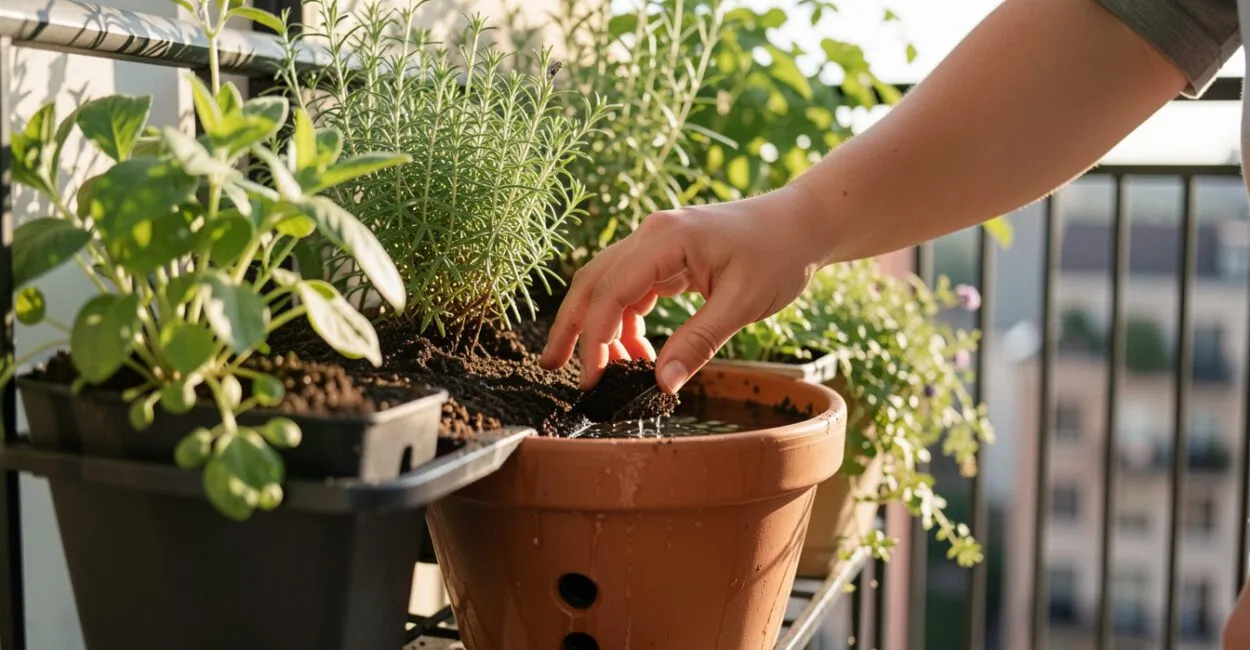
Potting mix is the growing medium around the roots that holds water and air. To check it, push a finger a few inches into the soil or use a wooden skewer. If it comes out damp with particles stuck to it, wait before watering. If it’s dry at that depth, water slowly and watch for water to begin draining through the holes.
Picture a garden mounted on a wall, with wilted leaves at the top and damp soil in the containers below. Watering everything again may seem like a quick fix, but it can make the excess moisture at the bottom worse. Check each level, and you’ll see that different pots need different care.
Read also: Small Garden: A Quick, Easy Way to Get Started
Plants with delicate leaves may need more frequent attention than varieties adapted to dry spells. Heat and wind speed up water loss; in cold or rainy weather, potting mix tends to take longer to dry. Growing guides from Embrapa Hortaliças, Brazil’s agricultural research agency for vegetable crops, can help you account for each plant’s needs.
Water Flow Depends on Height and Drainage
In many vertical garden supports, upper pots are more exposed to sun and wind. Lower pots, in turn, may catch drips from above. This creates a chain reaction: overwatering a pot near the top can saturate the one below, even if you didn’t pour water directly into it.
In a vertical garden, check each pot where it sits, including after watering.
Water slowly, directing the flow onto the potting mix, and stop when water begins draining through the holes. A catch container or tray can collect excess water, but empty it afterward: standing water can leave the soil waterlogged. Also make sure the drainage holes are clear. The University of Minnesota recommends checking soil moisture and ensuring proper drainage when caring for plants in containers.
- Watering every level out of habit without checking below the surface.
- Leaving water standing in saucers or trays.
- Ignoring wilted leaves: they may signal that a plant needs water, but they can also indicate root damage from excess moisture.
If you’re building or rearranging the structure, repurposed materials can be an option, as long as the containers drain properly. Ideas for using recycled pallets and creative recycling may inspire solutions for small spaces.
A Simple Routine Prevents Standing Water and Watering on Impulse

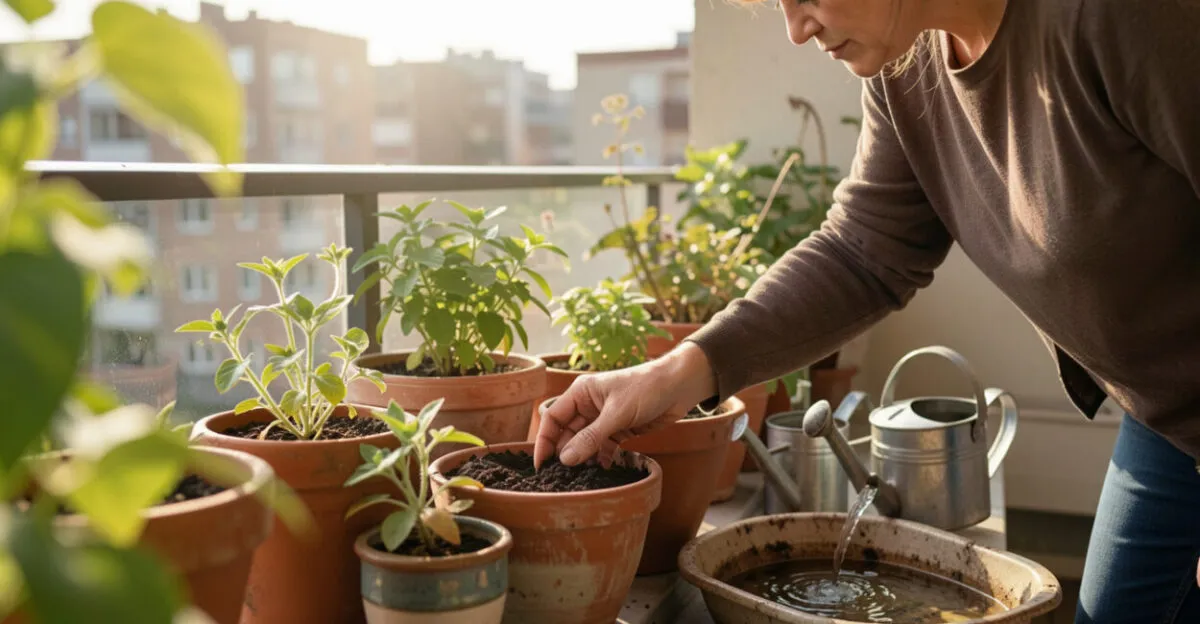
Before watering, check the pots from top to bottom. Feel the potting mix a few inches below the surface, consider the plant type, and look for water dripping from the levels above. Water only the pots that need it, then check that excess water is draining freely.
There are limits to this rule: potting mixes, pot sizes, climate, and sun exposure all vary, so there’s no universal interval between waterings. For a few days, note which pots dry out first. With that information, your routine can adapt to the garden instead of making every plant follow the same schedule.
Does a Pot Near the Top Always Dry Out Faster?
Not necessarily. Sun and wind can speed up drying, but the plant type, container, and potting mix also make a difference.
Can I Water When the Surface Looks Dry?
Check a few inches below the surface first. The top layer may be dry while the root zone still holds moisture.
What Should I Do with Runoff?
Use catch trays to protect the levels below, then empty them. Also make sure the drainage holes are clear to prevent water from collecting.
Artigos Relacionados
 Vertical Garden Supports: Compare 5 Models for Your Home
 Plants for a Vertical Garden: 9 Options for Apartments
 Small Vertical Garden, Made Easy: A Step-by-Step Guide That Works
 Build a Vertical Garden Today: A 20-Minute Beginner’s Guide
 Apartment Vertical Garden: A Beginner’s Guide
 Sustainable School Garden: How to Start One From Scratch
