
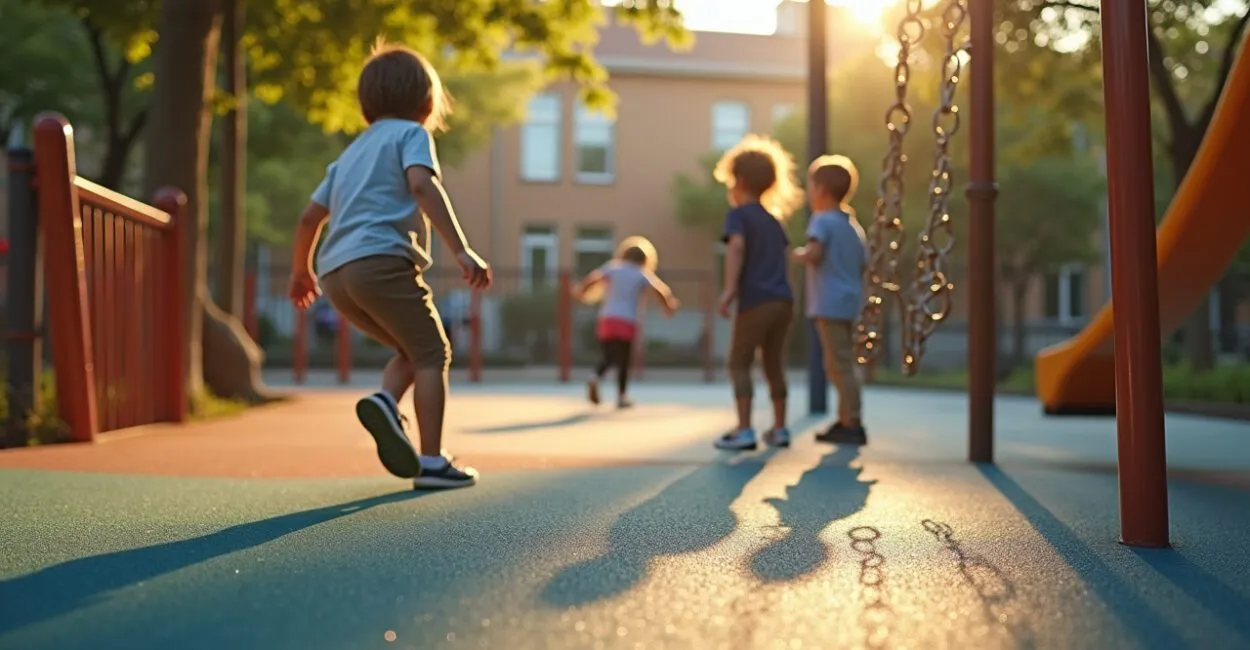
Most playground incidents don’t start with “a major accident.” They start with an overlooked detail: worn flooring, a loose bolt, distracted supervision, or equipment that isn’t suited to the children’s age group. When we talk about school play area safety, we mean a set of measures to reduce falls, crushing injuries, collisions, entrapments, and unauthorized access to hazards that may seem small in a school’s day-to-day routine—until they aren’t.
In practice, what separates a safe play area from one that’s “only apparently safe” is the combination of good design, maintenance, inspections, and qualified adult supervision. This article covers the 7 key points that can make all the difference: how to assess the flooring, the condition of play equipment, supervision, technical standards, usage protocols, and practices that prevent on-the-fly fixes in the school routine.

The Essentials
- A safe play area depends on more than the equipment: the surrounding space, flooring, and supervision account for many real-world risks.
- Falls are the most common type of incident on school playgrounds, so ground cushioning and fall height matter just as much as the equipment itself.
- Daily visual checks can catch obvious problems; periodic technical inspections can uncover issues a trained eye looks for, such as corrosion, fatigue, and compromised fasteners.
- ABNT standards and accessibility criteria aren’t just red tape: they reduce exposure to hazards and establish a clear minimum standard.
- Effective supervision is active, with strategic positioning and simple rules, because “keeping an eye on things from a distance” doesn’t work when activity picks up.
School Play Area Safety: What Should Be at the Center of Management
The technical definition is straightforward: school play area safety means the physical, operational, and human controls applied to a play space to reduce the likelihood and severity of injuries. Put simply, it means making sure the playground is a place to play—not a source of predictable hazards.
This may seem obvious, but many schools still treat recess as “unstructured time.” That’s when problems arise.
Anyone who works in this area knows that most preventable incidents stem from three failures: equipment that isn’t appropriate for the age group, unprotected flooring, and supervision without a fixed vantage point.
Playground risks don’t come only from broken equipment; they arise when design, use, and oversight fail to work together.
The Most Common Risks and Why They Keep Happening
The most frequent incidents include falls from elevated structures, children colliding in narrow walkways, cuts from surfaces with sharp edges, finger entrapment, and entanglement in ropes, chains, or openings that aren’t properly sized. At smaller schools, makeshift solutions are often the culprit: a bench becomes a climbing aid, a corner with poor visibility becomes a blind spot, and a hard surface becomes a “walkway” where no one notices the risk until the first incident occurs.
Where General Rules Fall Short
Not every situation is the same. A covered playground requires special attention to ventilation, lighting, and glare from the floor; an outdoor play area depends much more on drainage, sun exposure, and weather-related wear. The same equipment may be acceptable for one age group and unsuitable for another. That’s why assessments need to reflect the school’s actual setting, not a generic checklist found online.
For regulatory guidance, consult the MEC website (Brazil’s Ministry of Education) and the technical guidance available from ABNT (the Brazilian Association of Technical Standards), which can help align design, accessibility, and safe use of school equipment and spaces.
Space Design: Flooring, Distances, Heights, and Fall Zones
If a school gets the play area design wrong, maintenance can only put out fires later. Flooring is the first line of defense: bare concrete, slick tile, and uneven surfaces make falls more serious. Impact-absorbing materials, when properly installed and maintained, reduce the force transferred to the body.
Protective Flooring and Impact Absorption
Flooring choices should account for fall height, drainage, traction, and ease of cleaning. In children’s play areas, cushioning loses effectiveness when dirt builds up, the surface becomes uneven, or the material ages without being replaced. It’s not enough for a surface to “feel soft”; what matters is how it performs under repeated use.
Spacing Between Equipment and Walkways
Equipment placed too close together increases collisions and competition for space. Be sure to check the clear zones around slides, swings, and climbing structures. At schools with limited playground space, the answer isn’t to add more equipment—it’s to use fewer pieces and leave more open space. Walkways are part of safety, not leftover space in the design.
- Leave clear space for children to get on and off equipment.
- Keep walkways out of impact zones.
- Separate activities by age group when possible.
Accessibility Isn’t Optional
Ramps, handrails, pathway widths, and accessible routes need to be planned as part of the play area. A space can look “beautiful” and still exclude students with limited mobility or create additional hazards as they move around. Accessibility improves overall circulation and helps prevent collisions and falls during busy periods.
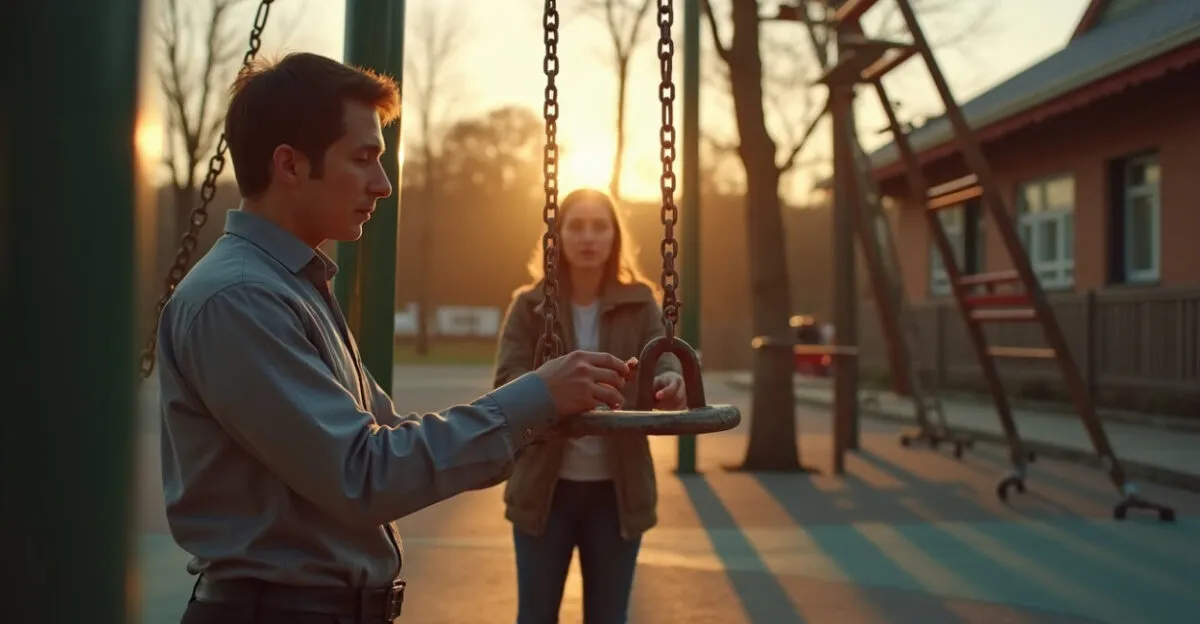
Play Equipment and Structures: What to Inspect Before Opening

School play equipment isn’t decoration. It bears weight, twists, faces the elements, and gets heavy use. Inspections should check fasteners, structural integrity, edges, hardware, welds, chains, bolts, anchors, and signs of fatigue.
Component
Typical failure
Associated risk
Bolts and nuts
Loose or missing locking hardware
Partial disassembly and instability
Chains and swings
Wear, corrosion, or deformed links
Falls and entrapment
Equipment surfaces
Rough edges, splinters, and cracks
Cuts and impact injuries
Anchoring
Compromised fastening
Tipping
A proper technical assessment helps avoid a common pitfall: replacing the visibly broken part while ignoring what caused the wear. If an assembly keeps coming loose, the problem may be vibration, the base, or the equipment specifications themselves.
Read also: Rubber Flooring for School Play Areas: Is It Worth the Investment?
Safe maintenance isn’t about fixing what has fallen apart; it’s about finding out why the failure started before it becomes an accident.
A useful resource on school environments and accident prevention is the CDC, which provides guidance on injuries in recreational settings and preventing them through thoughtful space design.
Recess Supervision: Adult Presence, Blind Spots, and Simple Rules
Effective supervision isn’t passive monitoring. It means positioning, reading behavior, and responding quickly. In practice, adults need to see the entire space, identify blind spots, and move around enough to stop unsafe climbing, pushing, and play that gets out of hand.
Read also: School Play Areas: What to Plan For
The Costliest Mistake: Assuming “Everyone Knows Each Other”
That assumption can easily fail. Children move between groups, class sizes vary, and behavior at recess is more impulsive than in the classroom. I’ve seen seemingly calm spaces become hazardous in two minutes because a group started fighting over a swing without an adult nearby. The problem wasn’t a lack of good intentions; it was a lack of strategic adult presence.
How to Organize the Team
- Assign fixed observation areas to prevent uncovered zones.
- Set up brief signals for calling for help quickly.
- Assign adults based on student traffic, not just habit.
- Train the team to respond to conflicts, climbing on structures, and improper equipment use.
Supervision also requires consistency. If each adult sets different rules, children will keep testing limits until they find a loophole. Short, repeated, visible rules work better than long speeches.
Standards, Records, and Responsibility: What Schools Need to Document
A good technical standard is one that’s put into practice. In Brazil, schools should follow applicable ABNT requirements and, where relevant, guidance from public agencies on accessibility, accident prevention, and building maintenance. This applies both to installation and to routine inspections.
Documentation isn’t red tape; it creates a record. If an incident occurs, the records show what was checked, when action was taken, and what corrective steps were completed. Without that history, the school is left relying on verbal accounts, which tend to fail just when they matter most.
What to Record
- the date and person responsible for daily visual inspections;
- technical reports or periodic inspection records;
- incidents, described objectively;
- work orders for repairs and replacements;
- internal training for the recess team.
There’s also a legal and ethical component: when an institution documents its routines and corrective actions, it demonstrates due diligence. This doesn’t eliminate risk, but it reduces improvisation and helps show that the school managed the environment carefully.
Preventive Maintenance and a Daily Checklist That Works in Everyday School Life
Preventive maintenance is the operational backbone of a play area. It catches wear before something fails and keeps schools from relying on luck. A simple checklist completed every school day often accomplishes more than an impressive plan left in a drawer.
Practical Opening Checklist
- Check for loose parts, exposed sharp edges, or cracks.
- Look for moisture, trash, excessive sand, or obstacles on the ground.
- Test the stability of fixed structures.
- Make sure the area is secured against unauthorized access.
- Check that signs are visible and legible.
What works well for a small school may not work for a large district, because heavier use changes the rate of wear. That’s why, in addition to daily checklists, it makes sense to schedule more thorough inspections at intervals determined by risk, manufacturer guidance, and intensity of use. In areas heavily exposed to sun and rain, corrosion can advance quickly; indoors, improper cleaning can create other problems.
For regulatory context and child injury prevention, it’s also worth consulting resources from the University of North Carolina on safe environment design and preventing falls in children’s play areas.
A Culture of Prevention: How to Involve Students, Families, and School Leaders
Safety can’t be maintained with good equipment alone. It depends on culture. Incidents decline consistently when students understand the rules, teachers recognize warning signs, and school leaders treat recess as a process—not just a break.
A good approach is to use visual reminders and simple language. Young children respond better to short, repeated instructions; older students are more receptive to straightforward explanations of why a rule exists. This helps move beyond the old debate between “rules” and “freedom”—the real goal is to let children play without turning the space into a hazard zone.
A Snapshot of a School Day
At a mid-sized school, most incidents happened near the slide at the end of recess. The problem wasn’t the equipment itself, but the crowded line and slick flooring around it. After the school rerouted foot traffic, expanded the open area, and assigned an adult to the busiest spot, pushing decreased noticeably. The change was simple; the diagnosis wasn’t.
Recess becomes safer when schools stop treating accidents as random and start treating risks as observable, measurable, and correctable.
Next Steps for Establishing a Safe Routine
If the priority is to take action now, start with quick wins: daily inspections, fixing slippery flooring, checking fasteners, and clearly assigning supervision zones. Then move on to meeting standards, obtaining inspection reports, and purchasing equipment suited to the age group. The improvement doesn’t come from a single solution, but from a combination of small measures that reinforce one another.
The best next step is to make recess a managed routine: conduct a visual audit of the space, compare what’s there with the standards and manufacturer requirements, and address obvious risks first. Then review the maintenance plan and supervision schedule. Schools that get these basics right are already ahead.
Frequently Asked Questions
What Is the Leading Cause of Accidents in School Play Areas?
Falls remain among the most common incidents, but the problem is rarely isolated. A fall usually happens because several aspects of the space failed at once: unsuitable flooring, an unprotected fall height, worn equipment, or inadequate supervision. If a school examines only the “moment of the accident,” it misses the real cause. The focus should be on preventing the combination of conditions that leads to an incident, not just addressing the outcome.
How Often Should a Play Area Be Inspected?
A visual inspection should take place before daily use to identify obvious problems such as loose parts, dirt, moisture, and obstacles. Schools should also schedule periodic technical inspections, with intervals based on wear, intensity of use, and manufacturer guidance. Areas heavily exposed to the elements need closer attention. Schools should never rely solely on repairs after something has already broken.
Is Any Soft Surface Enough to Protect Children?
No. The flooring needs to perform appropriately for the fall height, type of equipment, and installation conditions. A material that feels comfortable may still fail if it’s poorly installed, degraded, or dirty. There’s also a difference between absorbing impact and simply feeling pleasant to the touch. Real protection depends on the right specifications, maintenance, and appropriate use in the school’s setting.
How Should Recess Supervision Be Organized?
Ideally, adults should be assigned to high-risk areas rather than simply “being present” on the playground. Swings, slides, and busy walkways need special attention because they’re where collisions and disputes are most likely. Simple, visible rules that are repeated to students also help. When adults supervise from a distance, they notice problems too late; when they’re positioned strategically, they can step in before an incident occurs.
What Standards or Resources Should Schools Consult?
Schools should consult applicable ABNT standards for equipment and the play area, as well as guidance from public agencies and recognized institutions focused on accident prevention. The MEC (Brazil’s Ministry of Education) is an important resource for the education sector, and technical resources from organizations such as the CDC and universities can help schools understand injury prevention and play area design. The point isn’t to collect documents, but to apply consistent technical criteria to the actual space.
Artigos Relacionados
 Play-Based Learning in Elementary School: Learning Through Play
 Play at School: Bringing Free Play Into the Early Childhood Curriculum
 School Recess Areas: A Planning Guide
 Assessing School Interdisciplinary Projects: Criteria
 Interdisciplinary Projects in Elementary School: A Guide
 Diagnostic Assessment in Physical Education: How to Apply It
