
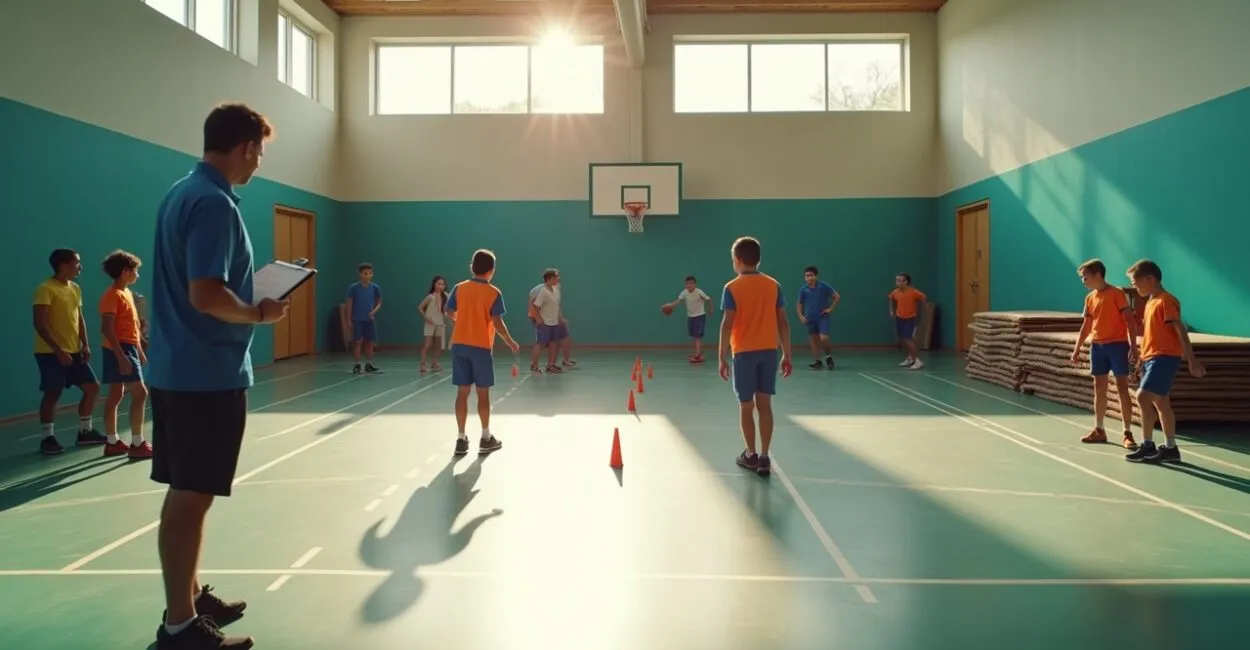
A diagnostic assessment in school physical education isn’t meant to “assign grades” at the start of a term. Its purpose is to quickly and thoughtfully identify where the class is starting from. When teachers assess coordination, motor skills, participation, tactical awareness, and social habits before planning instruction, lessons become more relevant to the needs of that specific group.
In practice, classes in the same grade can start out at very different levels. Some students already have a strong grasp of moving around, throwing, and reading space; others still need to develop balance, laterality, and basic social skills. Teachers know that giving everyone the same sequence without an initial assessment often leads to frustration at both ends: advanced students get bored, while those who need more support fall behind. This article explains how to identify a class’s skill level at the start of a term using simple tools, clear indicators, and useful records to guide instruction.

What You Need to Know
- Diagnostic assessment in physical education is an initial assessment that guides instruction, not a screening test.
- The most effective tools are structured observation, short tasks, simple rubrics, and quick notes in a spreadsheet or form.
- Assessment should go beyond motor skills: participation, cooperation, safety, and understanding of rules matter, too.
- A good assessment compares students with their own starting point, not against a single performance standard.
- Results have educational value only when they inform teaching decisions, such as grouping, adaptations, and content progression.
Diagnostic Assessment in School Physical Education: Definition, Purpose, and Limitations
Technically, diagnostic assessment is the initial process of gathering information to identify students’ knowledge, skills, attitudes, and learning needs before instruction begins. In school physical education, this means observing how students move, interact, understand rules, and respond to motor challenges at the start of a learning cycle.
The practical takeaway is simple: you’re not trying to figure out “who’s good” and “who’s bad.” You’re identifying students’ starting points so you can teach more effectively. This assessment helps you choose content, adjust task difficulty, and anticipate where students may need support. The Brazilian Ministry of Education (MEC) website and the BNCC (Brazil’s national curriculum framework) emphasize that instruction should consider progression, competencies, and the class context—not just isolated performance.
What It Looks Like in Practice
In the gym, a teacher sees more than whether a movement is “right” or “wrong.” They can tell whether a student controls their force, recognizes direction, stays focused during an activity, and cooperates with the group. In elementary grades, for example, a simple obstacle course can reveal challenges with balance, laterality, and rhythm. In middle and high school, small-sided games can show spatial awareness, decision-making, and tactical understanding.
That combination is what makes diagnostic assessment useful.
The value of diagnostic assessment isn’t in measuring everything. It’s in identifying what will actually change next week’s lesson.
Where Assessment Falls Short
This approach works well when teachers want to organize a unit, but it falls short when it becomes a checklist with no impact on instruction. If the results don’t inform the next lesson, the process is just paperwork. There’s another important limitation: a single activity can’t capture the full complexity of a student. A child might miss a dribble while still having excellent overall coordination and a strong understanding of the game.
Objective Indicators That Matter at the Start of the Term
The most common mistake is assessing only how well students perform a skill. In school physical education, assessment is more reliable when it combines motor, cognitive, and social-emotional indicators. This helps teachers make fairer decisions and see each student more fully.
Essential Motor Indicators
- Static and dynamic balance.
- Gross and fine motor coordination.
- Moving, jumping, turning, and changing direction.
- Object manipulation: throwing, catching, kicking, bouncing, and striking.
- Control of force and accuracy.
Behavioral and Learning Indicators
- Listening to instructions and responding to guidance.
- Participating without shutting down or relying excessively on the teacher.
- Respecting rules and classmates.
- Working independently to start, continue, and finish tasks.
- Adjusting strategies during games and challenges.
To keep assessments objective, use a simple scale: beginning, developing, and proficient. This quick assessment gives you a useful snapshot as long as you describe each level clearly. Instead of writing “doing well,” note “jumps with good balance but loses control on landing.” The second description actually informs your planning.
Read also: Physical Education Lesson Planning
Simple Tools That Work Without Complicating the Lesson

You don’t need to invent a sophisticated system to get off to a good start. Teachers who need quick, actionable insights tend to get more from short, consistent, repeatable tools than from lengthy tests. The key is to observe a few things carefully, using consistent criteria from one class to another.
Tool
What it measures
When to use it
Main advantage
Observation form
Behavior, participation, and performance
During class
Quick and low-cost
Simple rubric
Performance levels for each criterion
At the end of a task
Enables consistent comparisons
Short diagnostic task
Specific motor skills
At the start of the term
Shows students’ starting points
Guided self-assessment
Students’ perceptions of their own performance
After practice
Builds body awareness
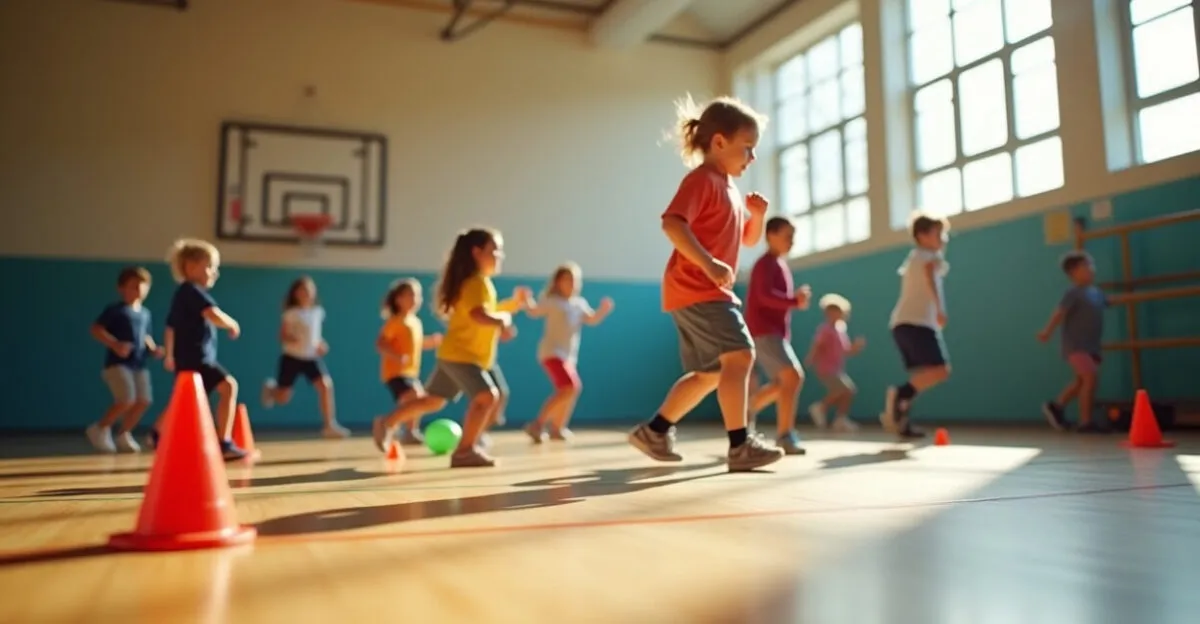
A good example is a four-station circuit: balancing on a line, throwing at a target, moving and changing direction, and playing a small-sided game in pairs. In 15 minutes, the teacher can gather enough evidence to identify different student profiles. A simple spreadsheet can then show who needs motor support, who needs help understanding the rules, and who is ready for more complex challenges.
The best assessment tool for school is one that fits a teacher’s real routine and informs an instructional decision the same day.
How to Keep Accurate Records Without Losing Time
A good record isn’t a long one; it’s a useful one. If teachers spend too much time filling out unnecessary fields, the tool stops serving the lesson. Ideally, they should note a few variables using objective language and a consistent format. This makes it easier to track progress throughout the term and reduces the chance of remembering a student only by a fleeting impression.
A Simple Record-Keeping Template
- Student’s name or class code.
- Activity used.
- Criteria observed.
- Level assigned for each criterion.
- Suggested next instructional step.
Example: “Maria — motor skills circuit — balance developing, coordination proficient, understanding of rules developing — next step: a task with visual support at a slower pace.” This kind of note is valuable because it already points to the next action. UNESCO emphasizes the importance of inclusive learning and ongoing progress monitoring to ensure no one is left behind because of a lack of instructional support.
A Snapshot of a Typical Class
In a sixth-grade class, the teacher started the term with passing and movement games. At first, it seemed like half the class “didn’t know how to play.” But when the teacher used a simple observation form, a different picture emerged: several students understood the rules but froze when they had to turn their bodies and reposition themselves. Based on that finding, the plan changed the following week. The teacher added spatial awareness exercises before the game, and participation visibly increased.
Interpreting Results and Making Instructional Decisions
Assessment only matters if it informs planning. Interpreting the results should answer three questions: What can the class already do? What can’t they do yet? What should they learn first? This may seem obvious, but many teachers skip this step and continue with the original content without making any adjustments. The result is predictable: instruction no longer matches the class’s needs.
Three Decisions Assessment Can Inform
- Grouping: Form pairs or groups based on students’ needs, not just who they get along with.
- Adaptation: Make a task less or more complex.
- Progression: Choose the next skill based on what you’ve observed so far.
There’s an important nuance: low performance doesn’t always point to an ongoing difficulty. Sometimes the issue is fear of making mistakes, limited experience with that type of game, or even a student’s emotional state that day. That’s why specialists caution against turning an assessment into a permanent label. Teachers should compare students with their own progress over time, not use a single class as a final judgment.
Common Mistakes That Distort Assessment
The first mistake is turning an initial assessment into a screening test. The second is observing only the most skilled students because they draw more attention. The third is keeping records without clear criteria and using vague language that doesn’t help with decision-making. These missteps may seem minor, but they can undermine the entire term’s planning.
What to Avoid
- Using only a grade or final rating without a description.
- Assigning a task that takes too long for the time available.
- Ignoring participation, cooperation, and understanding of rules.
- Comparing students against unrealistic athletic performance standards.
- Repeating the same tool without adapting it to the students’ age group.
It’s also important to consider the school context. In diverse classes, the same activity can yield very different results depending on students’ prior access to physical activities, opportunities to play, and past sports experience. Teachers should interpret results carefully and avoid jumping to conclusions. Social and educational research from IBGE (Brazil’s national statistics agency) is a reminder that differences in students’ backgrounds shape the skills and experiences they bring to class.
How to Turn Assessment Results into a Term Plan
After collecting the data, the key question changes: What should this class learn first? The answer comes not from the textbook, but from the group’s actual needs. If the assessment shows that students struggle with balance and movement, it makes sense to start with games that build foundational motor skills. If the group already has those skills, the teacher can move on to decision-making, more complex rules, and cooperation.
Good planning combines evidence with clear instructional goals. Instead of following the same fixed sequence across the whole school, teachers can create a path that works for their class. That’s when diagnostic assessment in school physical education stops being a formality and becomes a teaching tool. Teachers who do this regularly see stronger engagement, less off-task behavior, and activities that better match the class’s skill level.
The next practical step is to assign a short activity at the start of the term, record three to five objective criteria, and revise the first unit based on what you observe. If the tool doesn’t change your next lesson, it isn’t doing enough. If it changes your decision, it’s serving its instructional purpose.
Frequently Asked Questions
What’s the Difference Between Diagnostic and Formative Assessment in Physical Education?
Diagnostic assessment takes place at the start of a learning cycle and identifies the class’s starting point. Formative assessment happens throughout the process and tracks changes over the course of lessons. In practice, diagnostic assessment informs initial planning, while formative assessment helps teachers adjust instruction based on how students respond. The two approaches complement each other, but they serve different instructional purposes.
Which Criteria Are Most Useful for Assessing a Class at the Start of the Term?
The most useful criteria combine motor and behavioral factors. Balance, coordination, movement, object manipulation, understanding of rules, participation, and cooperation can reveal a lot about a group. If you assess only technical performance, you miss part of the instructional picture. The best criteria clearly show what needs to be taught first and are quick to record.
Do I Need to Give a Fitness Test to Assess Students in School Physical Education?
Not necessarily. In many classes, carefully observing a motor task provides enough information for planning. Standardized tests can be useful in specific contexts, but they aren’t required for a sound instructional assessment. What matters is having clear observation criteria and a way to record what you see. Without those, a test produces numbers with no impact on the lesson.
How Can I Record Results Without Turning Everything into Paperwork?
The most efficient approach is to use a short form with just a few fields: activity, criteria, performance level, and next instructional step. Clear, concise notes work better than long, generic descriptions. A record like “balance developing, understanding of rules proficient” can already inform the next lesson. The more useful the record is for instructional decisions, the less it feels like paperwork—and the more worthwhile the time spent on it.
Can Assessment Results Be Used to Compare Students With One Another?
Not as the main criterion. Comparing students with one another can distort the picture because each student has different experiences, opportunities, and learning pace. It’s better to compare students with their own progress over time and note what they can do with support, independently, or still with difficulty. In school physical education, the focus is on development, not rankings.
Artigos Relacionados
 Individualized Planning for Students With ADHD: How to Create Goals, Accommodations, and Differentiated Assessments for Elementary School
 Neuroscience in Early Childhood Education: How Children’s Brains Learn and How to Apply This Knowledge to Maximize Learning
 Women’s Leadership in Education: Strategies and Challenges for Inspiring Women Transforming Schools and Communities Around the World
 Original Work Assessment: Tools and Criteria for the School Year
 Neuroeducational Assessment: Useful Protocols for Schools
 Entrepreneurship Education Transforms Schools and Communities
