
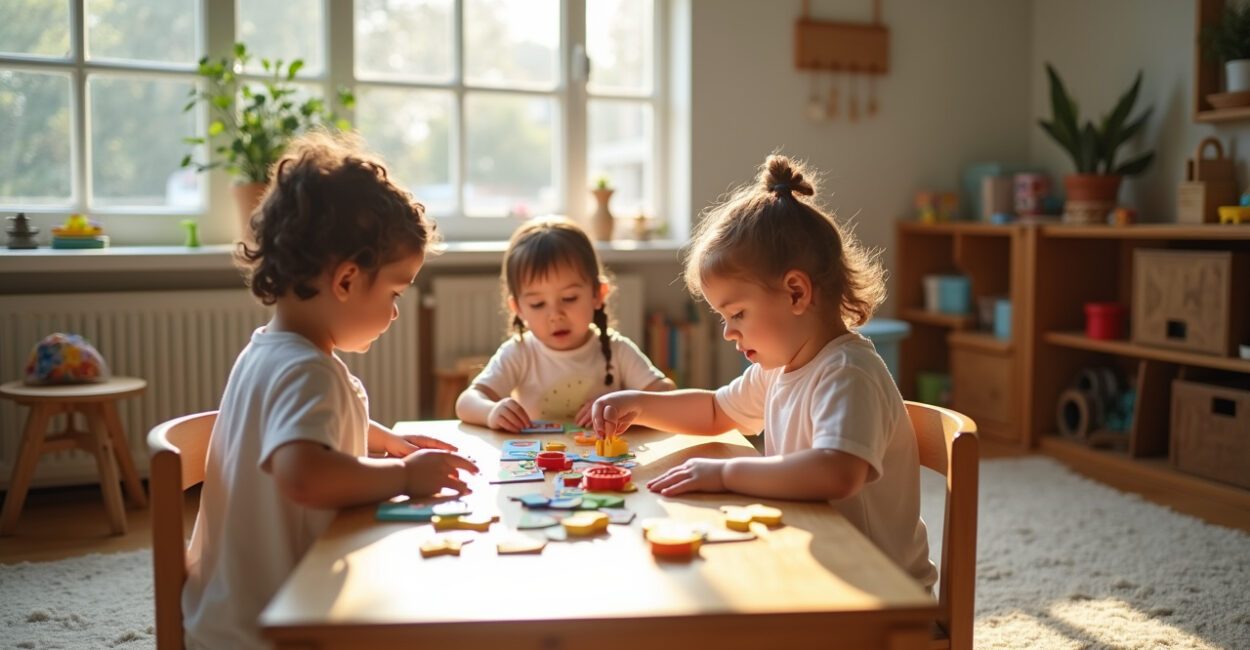
Play isn’t “free time” away from development; it’s one of the most powerful settings for children’s brains to learn how to organize themselves. When children play with rules, language, imagination, and social interaction, they practice attention, working memory, cognitive flexibility, and self-regulation all at once.
That’s exactly where play-based activities and child neuroscience intersect.

In practice, this means that a good play activity does more than entertain: it offers just the right level of challenge, reinforces useful neural pathways, and gives adults a tangible way to support learning without turning everything into an assignment. Below, you’ll learn how this works and find examples that can be used at home, at school, and in therapeutic settings.
The Essentials
- Play supports neural plasticity in children because it combines novelty, repetition, and emotion—three elements that help the brain consolidate learning.
- Not all play activities have the same impact. Activities involving rules, role-switching, language, and problem-solving tend to engage executive functions more.
- Educational play doesn’t replace schoolwork, but it can improve learning by building attention, working memory, and inhibitory control.
- The type of stimulation needs to change for babies, toddlers, and school-age children; the same activity won’t work for every stage.
- The clearest sign that play is working is that the child stays engaged, makes mistakes, tries again, and adjusts their behavior with little adult intervention.
How Play-Based Activities and Child Neuroscience Connect Through Play
Child neuroscience shows that play is a form of learning that depends on neural circuits: a child’s brain strengthens connections through interaction, emotion, repetition, and an appropriate level of challenge. Put simply, play-based activities create opportunities for neural networks involved in cognition, language, and behavior to work together.
That doesn’t mean every kind of play “teaches” the same thing. Building with blocks, pretending to be a doctor, playing a memory game, and chasing a target all engage different processes.
Anyone who works with children knows that a child can be very active during play and still learn very little if the activity lacks a goal, interaction, and adjustments to the level of difficulty.
What Neuroscience Means by Neural Plasticity
Neural plasticity is the nervous system’s ability to change through experience. In childhood, this ability is especially strong because the brain is refining its connections, pruning those it rarely uses and strengthening those it uses often. Repeated play that isn’t mechanical helps because it offers enough variation to consolidate learning without becoming monotonous.
What makes play meaningful for learning isn’t the toy—it’s the quality of the challenge, interaction, and repetition it provides.
Why Emotion and Movement Matter
Learning through emotion tends to leave a stronger impression than learning in a neutral setting. You can see this in imitation games, pretend play, and games with simple rules, where children have to remember, anticipate, and adjust in real time. Movement matters, too: the body helps the brain organize space, sequence, rhythm, and planning.
One important point: too much stimulation can get in the way. Excessive light, noise, and frequent switching between screens make it harder for children to sustain deep attention. That’s why “more stimulation” doesn’t mean “better stimulation.”
How Play Affects Neural Plasticity, Attention, and Memory
Well-chosen play activities make it more likely that children will sustain attention, update information in working memory, and learn from mistakes. These three processes support reading, math, writing, and social adjustment. They get more practice when children actively participate than when they simply watch.
Sustained Attention and Inhibitory Control
Games that involve taking turns, waiting, and following simple rules help children inhibit impulsive responses. Examples include freeze dance, “Simon Says,” turn-based card games, and activities where they have to wait their turn. Children aren’t just learning to follow directions; they’re learning to pause before acting so they can choose a better response.
Working Memory in Practice
Working memory is the ability to hold and manipulate information for a few seconds. Sequencing activities, such as copying patterns with blocks, remembering multistep directions, or repeating gestures, strengthen this skill. It’s a small but valuable exercise, because school constantly asks children to listen, remember, and apply what they’ve learned.
A real-life example helps illustrate this: in a class of 5-year-olds, a teacher introduced an obstacle course with three short directions—jump, touch the cone, and walk back. During the first few rounds, half the class forgot one step. After a few days, they did better without any pressure, because the game repeated the same structure with small variations.
When Play Becomes Cognitive Practice
Play works best when children have to make decisions, not just repeat movements. If the adult solves everything, the cognitive benefit decreases. If the activity is too difficult, the child gives up. The sweet spot is a manageable challenge: new enough to require effort, but familiar enough to avoid frustration.
For a deeper look at the science, explore resources from the Center on the Developing Child at Harvard University, which discusses brain development and executive function in childhood.
Learning through play is more effective when children have to remember, make decisions, and adjust their actions without relying on constant adult direction.
The Connection Between Play, Language, and Self-Regulation

Play and language reinforce each other as children name objects, negotiate rules, invent roles, and describe what they’re doing. At the same time, children’s self-regulation improves when activities require them to wait, take turns, handle change, and cope with small setbacks without losing control of their behavior.
Language Grows Through Interaction, Not Just Rehearsed Speech
Pretend play, shared reading, and rhyming games expand vocabulary, sentence structure, and understanding of context. Simply giving children individual words isn’t enough; they need to use them in meaningful situations. That’s why playing grocery store, doctor’s office, restaurant, or post office often builds more language skills than using isolated worksheets.
The developmental milestones described by the CDC through its “Learn the Signs. Act Early.” program help families and educators observe whether communication, social responses, and pretend play are progressing as expected.
Self-Regulation Isn’t “Obeying”—It’s Being Able to Regroup
In practice, children show self-regulation when they notice a mistake, accept a pause, try another strategy, and return to the task. Games with simple rules, such as simplified dominoes, scavenger hunts with clues, and cooperative games, are helpful because they build self-control without turning everything into a lecture.
There’s an important limit: if a child is tired, hungry, or emotionally overwhelmed, even the best play activity won’t sustain self-regulation for long. In that case, adults need to lower the demands before expecting the child to perform.
Benefits by Age: Babies, Toddlers, and School-Age Children
The same principle applies at every age—play helps organize the brain—but the type of stimulation changes with neurological maturity. Babies need sensory exploration and connection; toddlers need repetition, language, and turn-taking; school-age children need rules, strategy, and flexibility.
Age group
What the brain needs most
Useful examples
Babies
Connection, sensory experiences, predictability
singing, simple peekaboo, large blocks, different textures
Toddlers
Language, repetition, coordination, and turn-taking
pretend play, blocks, action songs, imitation games
School-age children
Planning, working memory, self-control
games with rules, cooperative challenges, puzzles, strategy games
Babies: Less Focus on “Teaching,” More on Connecting
In the first few months, the brain learns a great deal through repeated exposure to voices, eye contact, touch, and safe changes in the environment. Rattles, short songs, peekaboo, and high-contrast objects help build predictability and shared attention.
Toddlers: Language in Action
Between ages 2 and 4, children benefit greatly from pretend and imitation games. This is when playing house, doctor, cars, or kitchen becomes especially powerful for language and social understanding. Adults make a real difference by naming actions and expanding on what children say.
School-Age Children: Don’t Underestimate the Challenge
At school, the most common mistake is thinking that play is “just for recess.” Strategy games, group challenges, and activities with clear rules help reinforce academic learning by building persistence, planning, and the ability to monitor one’s own performance.
Practical Play Activities That Stimulate the Brain
The best educational games combine a clear goal, active participation, and a small amount of unpredictability. If children just press buttons without thinking, the benefit is limited. When an activity requires a response, adjustment, and repetition, the brain gets more of a workout.
1. Following a Sequence of Directions
Ask the child to do two or three things in order: “Pick up the red block, put it in the box, and clap your hands.” This kind of activity practices attention, working memory, and verbal comprehension. Use a short sequence for younger children and gradually add complexity for older ones.
2. Pretend Play with Defined Roles
Playing grocery store, doctor’s office, or restaurant builds language, theory of mind, and social negotiation skills. An adult can join as a customer or patient and introduce simple scenarios: “We’re out of this item,” “The patient wants a different medicine,” or “It’s your turn to help someone.” This adds flexibility without disrupting the game.
3. Games with Simple Rules
“Simon Says,” freeze dance, dominoes, and memory games are useful because they require inhibitory control and shifts in attention. They work especially well for preschool and school-age children when the rules are explained visually and repeated without too much talking.
4. Building and Puzzles
Blocks, LEGO, and puzzles develop visual-spatial planning, persistence, and tolerance for mistakes. Children test hypotheses constantly: they fit pieces together, make mistakes, adjust, and try again. That’s more valuable than simply handing them the solution.
5. Interactive Storytime
Shared reading becomes more powerful when adults pause, ask questions, make predictions, and invite children to retell the story. Instead of just reading, try asking: “What do you think will happen?”, “Why did that character get sad?”, or “What clue did they miss?” Children’s language grows when they take part in the story.
Reports and guides from ZERO TO THREE are useful for understanding how simple, repeated, and responsive play supports social-emotional and cognitive development in the early years.
How to Use Play at School and at Home
Using play-based activities effectively doesn’t mean turning the daily routine into a festival of stimulation. It means choosing activities carefully, reducing interruptions, and using play to encourage active participation. At school, that means integrating play-based learning into the curriculum; at home, it means being present during play, not just supervising.
At School, Play Isn’t a “Break from Learning”
Play can teach academic content when an activity has a clear instructional goal. A card game can teach categorization; an obstacle course can teach sequencing and left-right awareness; a role-play activity can explore writing, reading, and speaking. The mistake is using play without purpose, as if the activity justified itself.
At Home, Less New Stuff and More Meaningful Interaction
Children don’t always need more toys. Often, they need an adult who pays attention, names things, waits, and asks questions in return. Short, frequent play sessions tend to work better than occasional long ones because the brain learns through spaced repetition.
- Set a simple goal for each activity: language, attention, rules, or coordination.
- Start with a few rules and add complexity only when the child has mastered the basics.
- Watch for genuine participation, not just excitement and activity.
- Treat mistakes as part of the game, not a reason to stop.
When Play-Based Learning Falls Short
This approach falls short when play becomes an empty reward, constant noise, or a disguised drill that fails to engage the child. It also falls short when adults take too much control or the activity is far beyond the child’s ability. Experts disagree on how much structure play should have, but they agree on one point: without active participation from the child, the cognitive benefits drop considerably.
At school, play stops being “a waste of time” when teachers can identify the cognitive skill each activity is meant to build.
Signs That Play-Based Activities Are Being Used Effectively
A good play activity builds engagement, adjustment, and follow-through. If a child stays interested, tries to solve problems, and accepts small corrections without losing the fun, the activity is doing its job. If it leads to frustration, passivity, or distraction, it’s time to rethink the format.
Practical Signs That an Activity Is Worth Keeping
- The child sustains attention longer than they would during a purely verbal task.
- They begin to anticipate rules and suggest variations.
- They use more words and gestures and do more negotiating during interactions.
- They get better at waiting their turn and correcting their own responses.
When to Adjust Your Approach
If the child abandons the activity right away, the goal may be too difficult. If they do it without thinking, it may be too easy. And if the adult is doing more talking than the child is doing, it’s time to give fewer directions. The best sign of a well-designed activity is a balance between challenge and flow.
UNICEF also recognizes play as a central part of early childhood development, especially when children have secure relationships, feel safe, and have opportunities to explore.
Frequently Asked Questions About Play-Based Activities and Child Neuroscience
How Does Play Help Children’s Brains Develop?
Play helps because it activates language, emotion, attention, memory, and behavioral control at the same time. Children’s brains learn through repetition, novelty, and connection; play brings all three together in one setting. That’s why it’s so effective for reinforcing learning.
Which Cognitive Skills Do Play-Based Activities Stimulate?
The main ones are sustained attention, working memory, cognitive flexibility, planning, and problem-solving. Depending on the activity, language, spatial awareness, and inhibitory control may also come into play. The impact is greater when children actively participate rather than passively consume content.
Does All Play Help Children Learn?
No. Play has the greatest impact when it has a goal, involves interaction, and offers a challenge suited to the child’s age. Activities that are overly repetitive, too open-ended, or controlled by adults tend to produce fewer cognitive benefits.
How Can You Use Play at School Without Losing Class Time?
Connect the activity to a specific skill: reading, counting, sequencing, oral language, or self-regulation. Instead of treating play as a break, use it to practice the content in a more engaging way. This often improves retention and reduces resistance.
Which Activities Support Attention, Language, and Self-Regulation?
Games with simple rules, pretend play, shared reading, sequences of directions, memory games, and cooperative activities are especially useful. They involve listening, waiting, taking turns, and adjusting behavior. That combination is what makes learning through play so effective.
Do Educational Play Activities Work for Every Child?
They work for most children, but they need to be adapted to the child’s age, developmental level, and emotional state. The same approach won’t work in every situation: a tired or anxious child, or one with significant language difficulties, may need different support. The principle stays the same; the approach changes.
Next steps: Choose one skill—attention, language, or self-regulation—and try a play activity with simple rules, a clear beginning, and daily repetition for a week. If the child becomes more engaged, makes mistakes with less distress, and starts adjusting their own actions, you’ve found a useful strategy for home or the classroom.
Artigos Relacionados
 A Guide to Early Childhood Education: Best Practices, Play-Based Activities, and Innovative Approaches to Whole-Child Development
 Play-Based Activities for Elementary Education
 Neuroscience and Child Learning: 7 Practical Strategies
 Neuroscience-Based Study Strategies for Better Focus
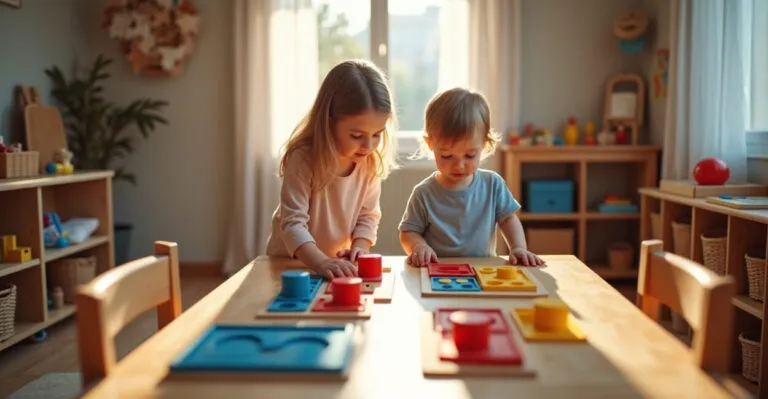 Colors and Shapes Activities: Learning Through Play
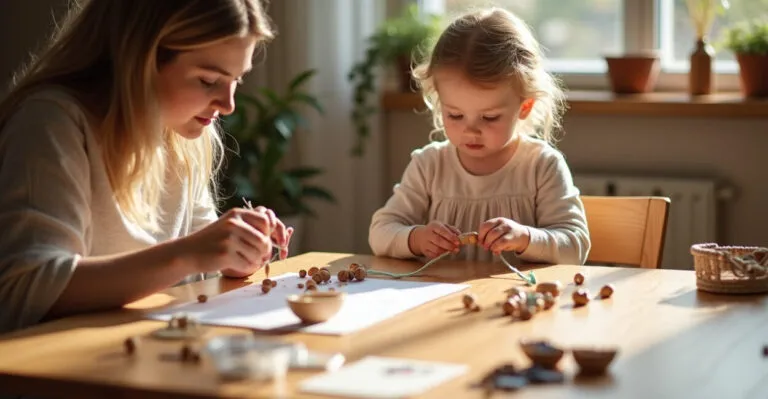 Fine Motor Coordination Activities: 12 Easy Ideas
