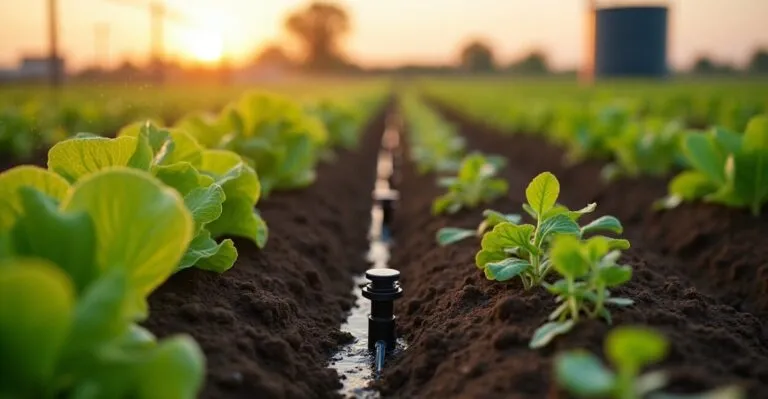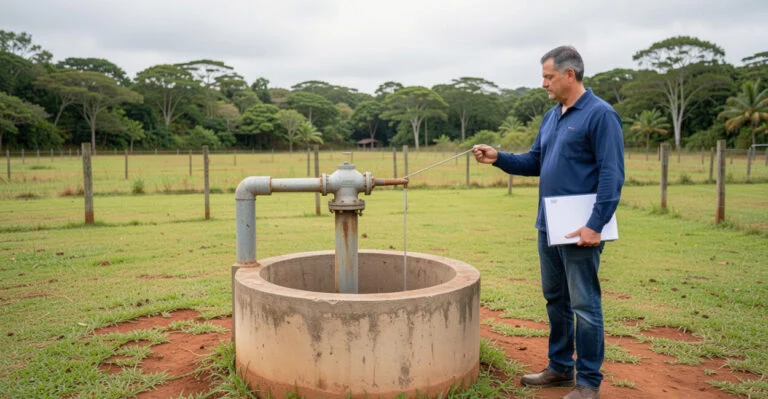
A field can receive water every day and still experience water stress: the problem may lie in the timing or distribution of the application, or in the soil’s ability to store water. Planning efficient farm irrigation means matching water applications to crop needs and controlling losses while accounting for soil, climate, equipment, and water availability.
The process starts with an assessment of the field, moves on to estimating crop water demand, and ends with measurements that show whether the system is working as expected. No single application depth or piece of equipment suits every farm; the decision depends on the conditions in each field.

Planning also needs to fit the operation: available flow, energy costs, maintenance, and water-use rules can all limit what is practical. The relationship between soil conservation and climate is part of the picture, too, as explained in this article on sustainable farming practices for soil and climate.
Before you start: what to assess
- Crops, varieties, planting dates, and growth stages.
- Soil texture and depth, topography, and signs of compaction or poor drainage.
- Rainfall, temperature, wind, and other climate data available for the area.
- Water flow rate and quality, as well as the status of any water-use permits.
- Installed equipment, operating pressure, energy use, and maintenance capacity.
What makes farm irrigation efficient
Efficient irrigation applies water in amounts, at times, and with a distribution pattern that match crop needs, while reducing losses from runoff, evaporation, deep percolation, and leaks. Put simply, water needs to reach the root zone, where plants can use it, without exceeding the soil’s water-holding capacity.
System efficiency and good irrigation management are not the same thing. Properly sized equipment can waste water if it runs at the wrong pressure or during high winds; careful management alone also cannot fix clogged emitters or uneven distribution.
Irrigation is efficient when the amount of water applied matches crop needs and is distributed evenly throughout the root zone.
How to assess the field before planning
Start planning by dividing the farm into areas with similar characteristics. Fields with different soils, slopes, or crops may need different strategies, even when they receive water from the same system.
Record the following data before you compare equipment or set irrigation schedules:
- Crop and growth stage: species, variety, planting system, and stage of development.
- Soil and topography: texture, effective depth, infiltration, drainage, and elevation changes.
- Climate: observed and forecast rainfall, temperature, relative humidity, solar radiation, and wind.
- Water and infrastructure: source, available flow rate, quality, pumping, filters, and distribution lines.
- Operations: energy, labor, maintenance schedule, and ability to monitor each zone.
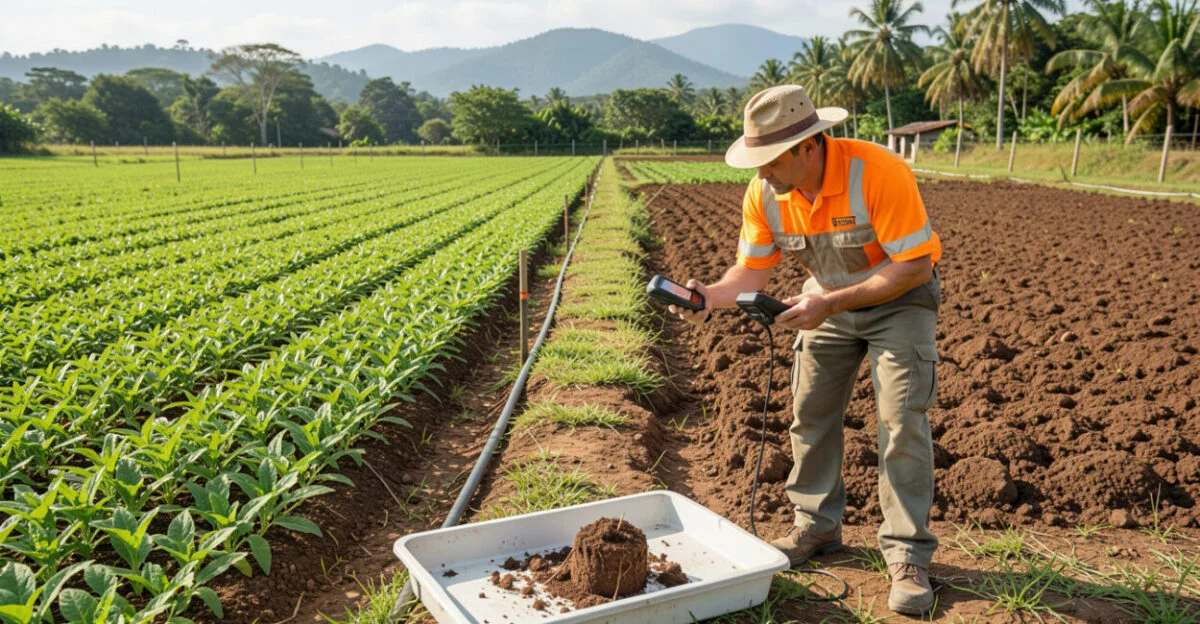
Soil analysis can help explain why the same application depth behaves differently across fields: sandy soil tends to hold less plant-available water per unit of depth than more clay-rich soil, while compacted layers can restrict roots and infiltration. To organize field records and decisions, digital tools described in agtech solutions for farms can complement—but not replace—field observations.
How to estimate crop water needs

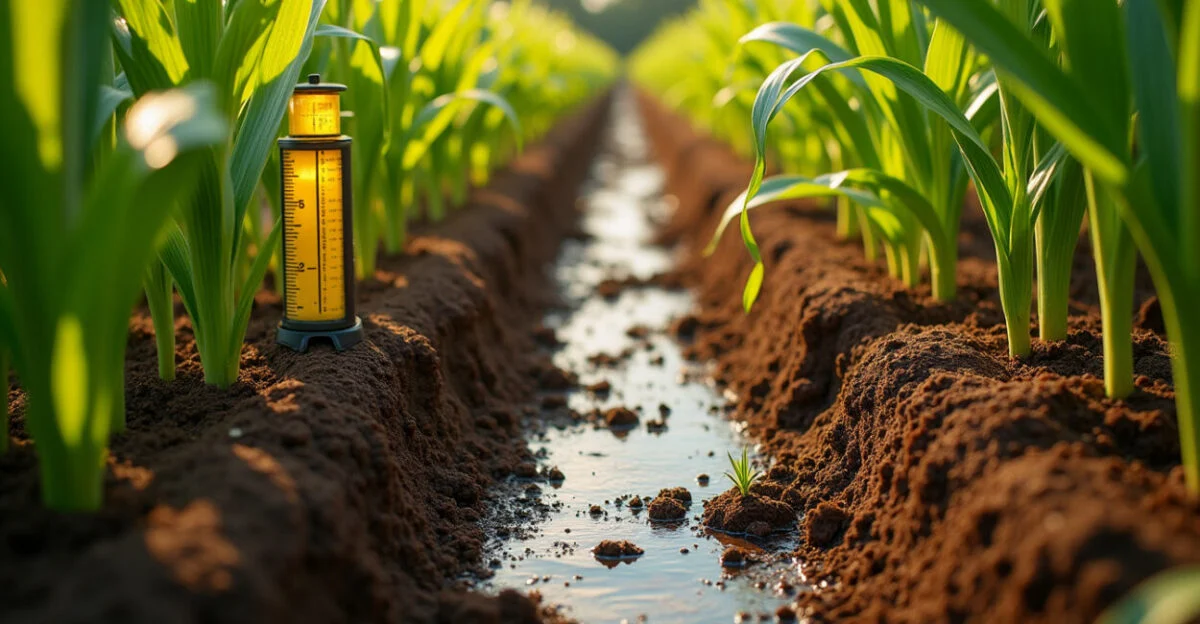
Crop water needs are estimated using crop evapotranspiration, which represents water lost through soil evaporation and plant transpiration. The calculation uses reference evapotranspiration, estimated from weather data, and a crop coefficient that changes with the species and growth stage.
Effective rainfall is the portion of precipitation that remains available to the roots. Some rain may run off, evaporate, or move below the root zone, so you should not automatically subtract all measured rainfall from the planned irrigation amount.
To determine how much water the crop needs at each stage, combine estimated demand with the water already stored in the soil and effective rainfall. Flowering, fruit set, or grain fill may be more sensitive to water shortages in some crops, but critical stages and tolerance levels vary by species, variety, and growing conditions.
INMET, Brazil’s National Institute of Meteorology, provides weather observations and information that can help track local conditions; the data should represent the field as closely as possible. In areas with microclimates or located far from weather stations, estimates may need to be adjusted and validated with field observations.
How to choose between sprinkler, drip, and surface irrigation
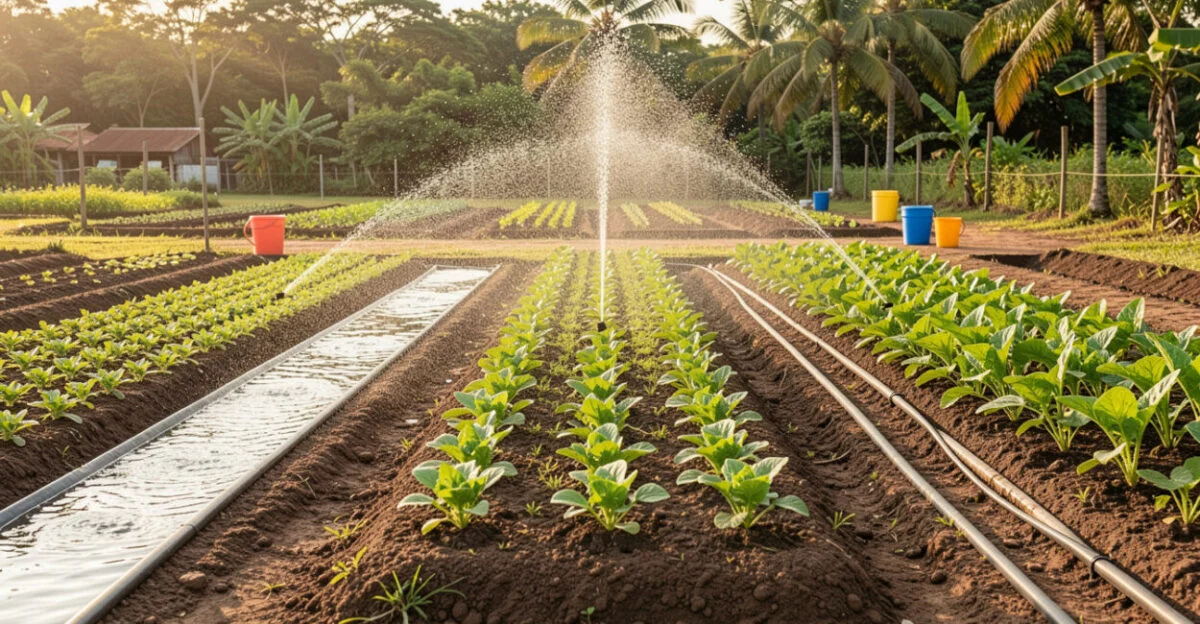
The best system is one that can deliver the required water with a distribution pattern suited to the soil, topography, crop, and available infrastructure. Drip, sprinkler, and surface irrigation each have different uses; none guarantees good management on its own.
Read also: Fish Farming: How to Plan Ponds and Raise Fish
System When it may be a good fit Limitations and requirements Drip Row crops or perennials where water needs to be directed to the root zone. Requires filtration and emitter inspections; clogs can go unnoticed and cause localized failures. Sprinkler Fields and crops where sprinkler distribution is compatible with the topography and planting layout. Wind and incorrect pressure affect uniformity; sprinkler selection and spacing need to be evaluated. Surface Fields with suitable topography, soil, and infrastructure for moving water across the surface. Depends on leveling and controlling water advance; poor management can cause runoff or uneven application.
A practical rule of thumb: if water is limited and the crop is suited to localized application, consider drip irrigation along with its costs, filtration requirements, and maintenance needs. If the area is often windy, carefully evaluate sprinkler irrigation and operating times. When topography or infiltration varies widely, assess each zone before adopting one solution for the entire farm.
Surface irrigation may also be appropriate in specific contexts; ruling it out without considering soil, topography, and infrastructure would be as hasty as installing drip irrigation without assessing water quality. The choice should account for both the investment and the ability to keep the equipment running.
Read also: Solar Energy on the Farm: Uses and Installation Planning
How to decide when and how long to irrigate
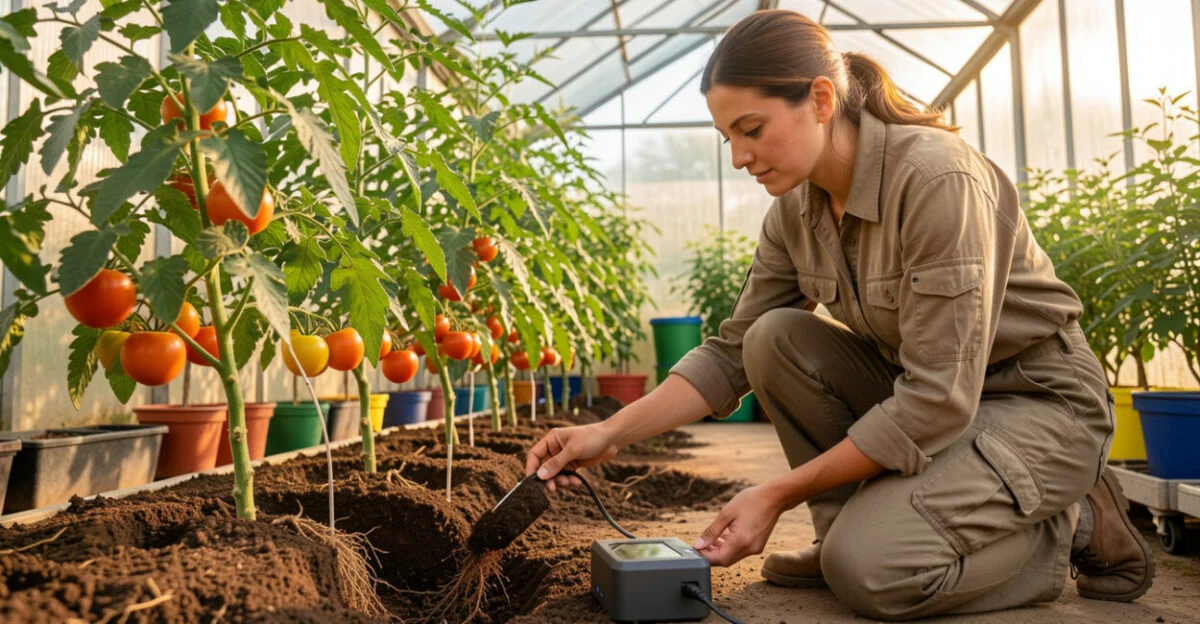
Decide when to irrigate based on available soil water, crop demand, and the weather forecast—not just a fixed calendar. Frequency refers to the interval between applications; run time depends on the actual flow rate and the amount of water needed to replenish the root zone.
Soil moisture sensors can show how water levels vary at different depths. Install them in representative locations, including drier areas or areas with different soils, and interpret the readings based on soil texture and rooting depth. A single reading, without knowing the sensor’s position and the soil profile, can lead to the wrong decision.
Simple observations help, too: check the soil at more than one depth, record rainfall and irrigation, and monitor how the plants respond. Crop appearance often reveals stress only after it has begun, so it should not be the only criterion for turning on the system.
Example: in a vegetable field, the topsoil may dry out while deeper soil still holds water.
If you base your decision only on the surface, you may irrigate too soon.
Readings at two depths, combined with recent rainfall and the crop’s growth stage, can help distinguish this situation from actual drying of the root zone.
Run time still needs to be checked against the flow rate and the soil’s response after application.How to monitor distribution and reduce losses
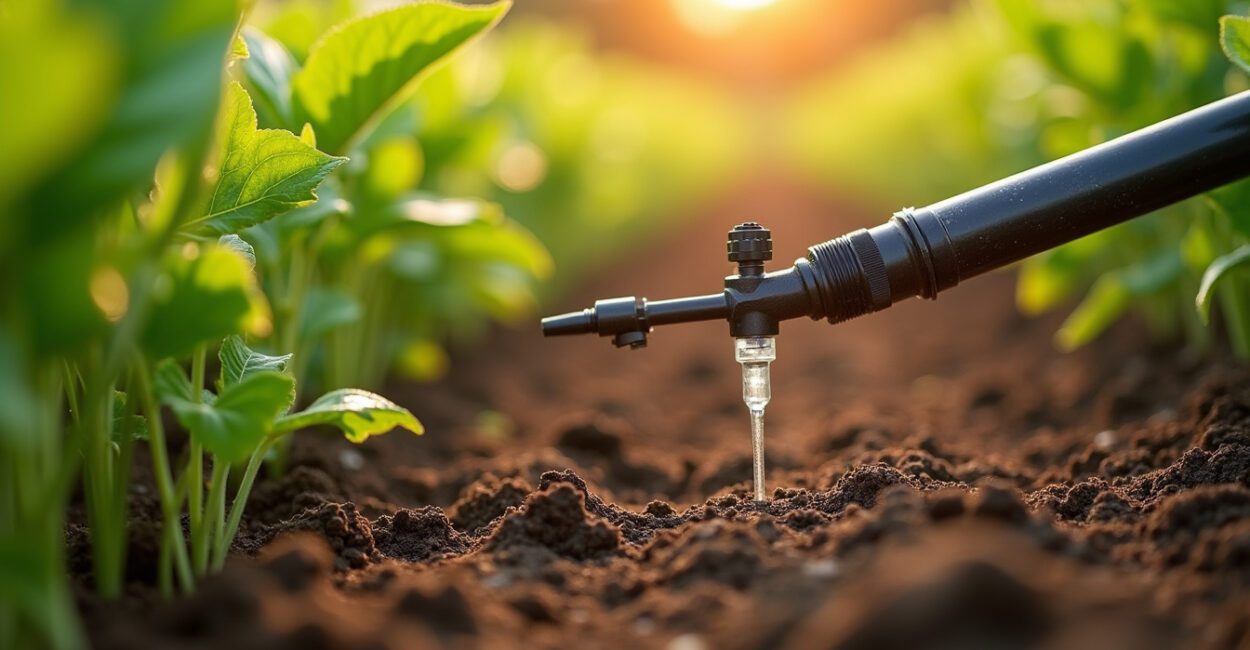
To check whether water is distributed evenly, compare application at different points in the irrigated zone and monitor pressure and flow rate. In sprinkler systems, catch cans placed throughout the field during an operating cycle can help identify variations; with drip irrigation, check emitters at the beginning, middle, and end of the lines.
A good assessment looks beyond the average collected. Large differences in catch-can volumes indicate that some parts of the field may be under-irrigated while others receive too much water. Take measurements while the system is operating under normal conditions, and interpret the results with attention to the location of each measurement point and the pressure.
What to monitor Warning sign First step Application uniformity Visible differences between catch cans or areas of the field. Check spacing, pressure, nozzles, emitters, and blockages. Pressure A reading that differs from the equipment’s expected operating conditions. Inspect the pump, regulators, valves, and lines for possible leaks. Filters and emitters Debris buildup in a filter or uneven emitter flow rates. Clean according to the manufacturer’s instructions and review water filtration. Leaks Saturated spots, unusual jets, or a drop in pressure. Locate and repair the line, then check the area again.
One operational detail that can be confusing: a small leak at a connection may go unnoticed, while the end of the line receives less water because of pressure loss. Cleaning the filter without checking pressure and flow at the line ends is not enough to find the cause. Record the area, time, and readings before and after making a correction.
How to incorporate water, energy, and sustainability into planning
Water availability and pumping capacity need to be considered before expanding irrigated acreage. A water source may provide enough flow at certain times but not meet the demand of all zones simultaneously; staggering operations can reduce peak pumping demand, as long as crop needs are met.
You also need to determine whether water use requires an outorga, a Brazilian water-use permit, or another authorization. Jurisdiction depends on who controls the water resource: water under federal jurisdiction is regulated by the Agência Nacional de Águas e Saneamento Básico (ANA), Brazil’s National Water and Basic Sanitation Agency, while water under state jurisdiction should be addressed with the state water resources agency. ANA’s page on water-use permits and enforcement explains the agency’s federal role; confirm which procedures apply to your water source and location before withdrawing water.
Energy costs depend on pumping head, the efficiency of the pump and motor, the pressure required by the system, and operating time. Compare these factors with the flow rate actually delivered to the field. Changing equipment may reduce one requirement while increasing another—for example, by requiring more careful filtration or longer operating hours.
The plan should also account for soil conservation. Vegetative cover, infiltration, and runoff control affect how well rainfall and irrigation water are used; these considerations work together with sustainable soil management practices on the farm. Reassess the plan whenever the crop, planted area, water source, or system conditions change.
A reliable irrigation plan changes when the crop, climate, soil, or water supply capacity changes.
Start by gathering data from one field and comparing estimated demand with observed soil moisture and actual equipment performance. Then confirm with the appropriate water resources agency that water use is authorized, and record any adjustments made during the growing season. That is the limit of any general recommendation: coefficients, sensors, and schedules need to be tailored to the crop, location, and equipment.
Frequently asked questions
How often should I review my irrigation plan?
Review it when the crop enters a new growth stage, the weather changes significantly, or actual application differs from what you expected. Also check the plan after maintenance, a change in irrigation zone, or a change in available flow rate.
Can I subtract forecast rainfall from the next irrigation?
Use the forecast to adjust operations, but do not assume the expected amount of rain will fall. After the rain, check how much actually fell and assess how much water remains available in the root zone before deciding when to irrigate again.
What should I do if a sensor shows adequate moisture but plants appear stressed?
Check the sensor’s location and depth, root condition, and application uniformity in the zone. The sensor may be in a spot that does not represent the field, or the water may not be reaching the roots despite the reading at that location.