
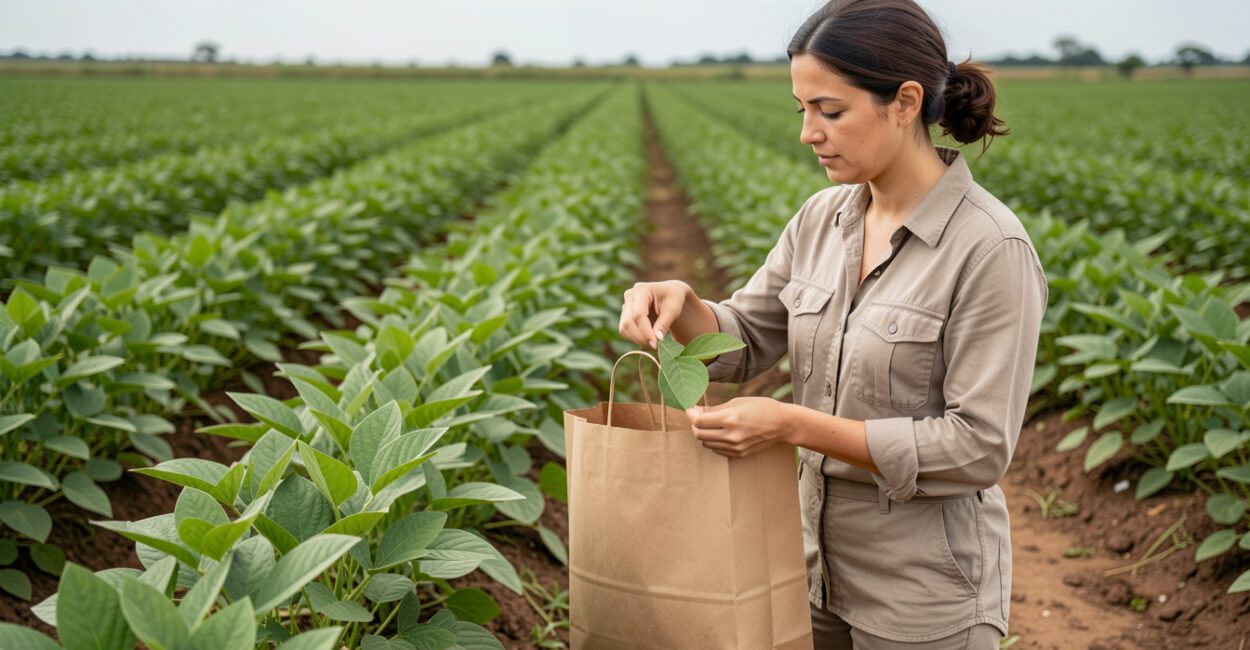
A yellowing leaf can indicate a nutrient deficiency, excess, or even a root problem. Leaf analysis helps assess a plant’s nutritional status by measuring nutrients in tissue collected according to a specific protocol. To guide a corrective action, however, the results must be interpreted in light of the crop, its growth stage, and soil conditions.
This test should not be confused with foliar fertilization: the first analyzes plant tissue; the second applies fertilizer to leaves. Understanding the difference helps avoid a common source of confusion in management recommendations.

What is leaf analysis, and what is it used for?
Leaf analysis measures the concentration of mineral nutrients in a plant tissue sample and compares the results with references appropriate for the crop and analytical method. In practical terms, it helps determine whether the plant has absorbed nutrients at levels consistent with its development.
The results can support the diagnosis of a deficiency or excess and help evaluate a fertilization strategy. They may also reveal an imbalance before visual symptoms become conclusive. Still, the test cannot identify the cause on its own: damaged roots, for example, can limit nutrient uptake even when nutrients are available in the soil.
The report describes the composition of the tissue collected; diagnosis depends on knowing which plant, plant part, and growth stage the sample came from.
When should you conduct leaf analysis, and which plants should you assess?
Collect samples at the time recommended for the crop and the diagnostic goal, since nutrient concentrations change with growth, leaf age, and environmental conditions.
There are two common uses. For routine diagnosis, growers collect plants that appear representative to monitor nutrition at a specific growth stage. When investigating symptoms, they can compare affected and healthy areas, as long as each group is collected and labeled separately. Mixing leaves from plants in different conditions can dilute the very signal you are trying to detect.
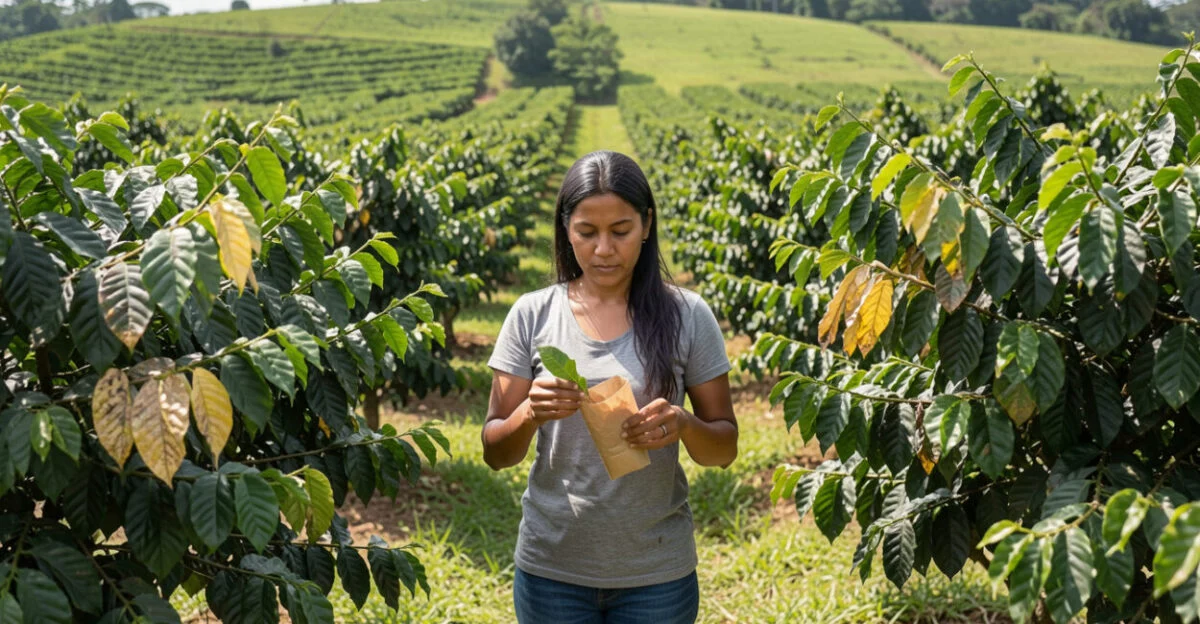
For perennial crops such as coffee, the protocol usually specifies the type and position of the leaves, as well as the sampling time. Guidelines vary by crop and even by diagnostic objective within the same crop. For coffee fields, consult the technical diagnostic recommendations from Embrapa Café, Brazil’s agricultural research organization’s coffee research unit, and confirm with the laboratory which reference it will use.
How do you collect leaves for leaf analysis?

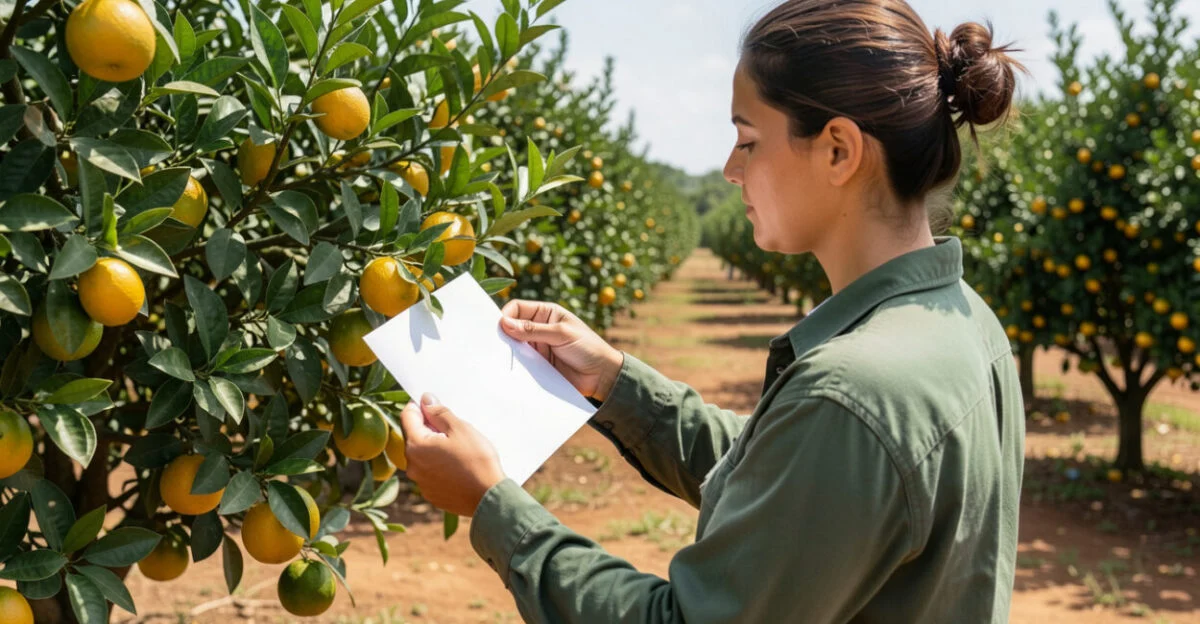
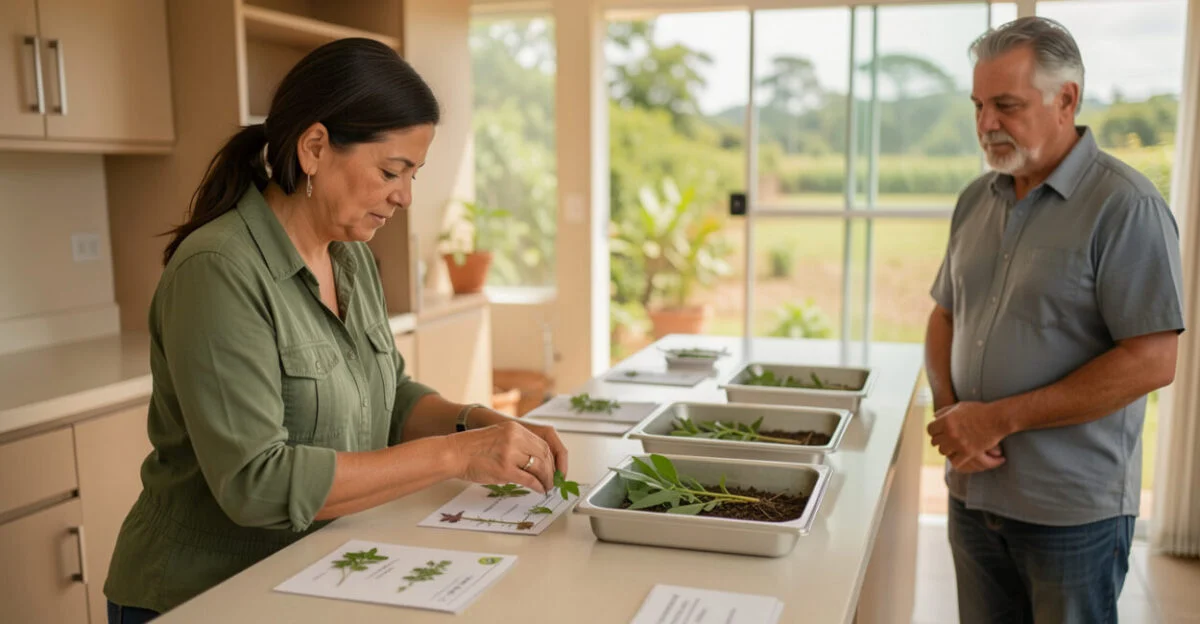
Collecting leaves for analysis starts with defining the field or block and checking the laboratory’s protocol; there is no single number or position of leaves that works for every crop.
Select plants representative of a uniform area and follow the guidance on plant part, leaf age, and position. Avoid border plants, leaves damaged by pests or disease, excessively dusty material, and plants that have recently received a foliar spray unless you are specifically assessing that condition. Fertilizer residue can contaminate the sample and artificially raise certain nutrient levels in the report.
Before heading to the field, confirm with the laboratory how much material is needed, what type of packaging to use, and whether the leaves should be sent fresh or dried. Label each sample with the crop, field or block, date, and observed condition; do not use packaging that has previously held fertilizer or chemicals.
- Divide the field into uniform areas and sample them separately.
- Confirm with the laboratory which leaf or plant part to sample.
- Avoid diseased, contaminated, or recently sprayed leaves unless specifically instructed otherwise.
- Use clean packaging that meets the protocol requirements.
- Record the crop, field or block, date, and observed symptoms.
- Ship the material according to the laboratory’s storage instructions.
Wet leaves, bags left sealed for too long, and heat during transport can lead to deterioration. If the sample cannot be shipped right away, ask the laboratory how to store it; the right approach depends on the type of analysis and shipping logistics.
How do you measure leaf area and prepare samples?
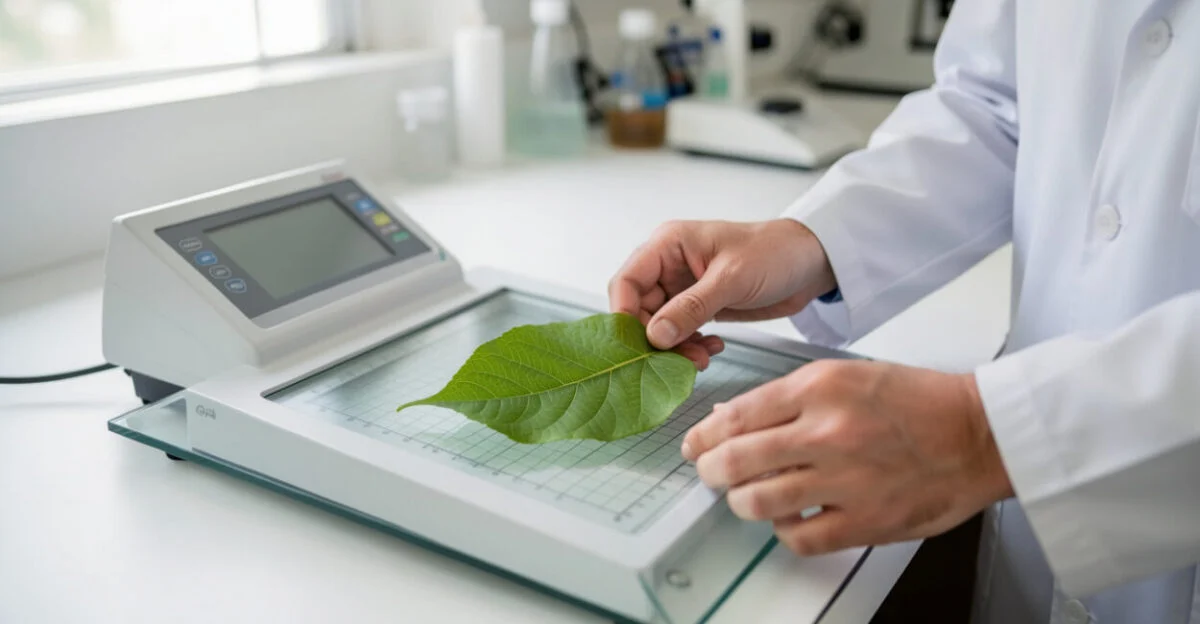
Measuring leaf area is necessary when a study requires quantifying leaf size, calculating indices, or relating growth to the area available to intercept light; it is not usually a required step in routine chemical leaf analysis.
You can measure leaf area with an electronic leaf area meter, photograph the leaf next to a scale and process the image with software, or use indirect methods validated for the species. Some studies use leaf length and width in a crop-specific equation; this estimate must be calibrated because leaf shape affects the relationship between dimensions and actual area.
Read also: Plant Diseases: How to Identify Them and Prevent Losses
For chemical analysis, sample preparation should follow the laboratory’s instructions. Some procedures include controlled washing to remove contaminants; others avoid washing, which can remove elements from the tissue surface. Do not wash or dry the sample on your own without instructions, as this can alter the results.
How do you interpret leaf analysis results?
Check the unit listed for each concentration and compare it only with a reference range appropriate for the crop, sampled plant part, sampling time, and analytical method.
Macronutrients are usually reported as a percentage or in g/kg; micronutrients, in mg/kg. These units are not interchangeable without conversion. “Low,” “adequate,” and “high” are not universal labels either: ranges vary by species and by the conditions used to establish the reference.
For example, a coffee leaf analysis interpretation table must specify whether the values apply to the leaves recommended for sampling and the timing specified in the protocol. The table below is only a guide to the groups and units: it does not provide sufficiency ranges or replace laboratory limits or local technical recommendations.
Group analyzed in coffee How it usually appears in the report What to check before interpreting N, P, K, Ca, Mg, and S % or g/kg Reference for the leaf, sampling time, and method used B, Cu, Fe, Mn, and Zn mg/kg Unit, crop-specific range, and potential surface contamination
For this reason, a coffee leaf analysis interpretation table is useful only when accompanied by the corresponding technical reference. Embrapa, the Agronomic Institute of Campinas (IAC), and publications on plant diagnosis and nutrition offer resources to guide your review; the final recommendation should follow the protocol used in the report.
A sufficiency range is meaningful only when it matches the crop, tissue, sampling time, and method used for the result being evaluated.
How do you relate leaf analysis, soil analysis, and nutrient management?
Use leaf analysis to assess the plant’s nutritional status and soil analysis to understand conditions in the root zone, such as acidity and nutrient availability; the tests answer different questions and complement each other.
To read a soil report, first check the sampled soil depth, units, and methods listed. Then review pH, the need for soil amendments, organic matter, available nutrients, and other indicators specified for the region and crop. Follow the regional recommendation system: the Agronomic Institute of Campinas (IAC) publishes guidance for crops and conditions in the state of São Paulo, while the CQFS-RS/SC Liming and Fertilization Manual serves the southern states.
Having an adequate level of a nutrient in the soil does not guarantee that the plant will absorb it. Insufficient moisture, damaged roots, unfavorable pH, or competition between ions can interfere with uptake. If the soil indicates that the nutrient is available but the leaf shows a low concentration, investigate these conditions before increasing the fertilizer rate.
To guide your decision, compare reports from the same field or block and period, confirm that the samples represent the same management conditions, and record recent fertilization and spraying. This routine works well with sustainable soil and crop management, which considers soil fertility as part of the overall production system.
What errors can compromise a sample, and how much does the test cost?
The most damaging errors are mixing different areas, collecting the wrong plant part, sending leaves contaminated by spraying, and comparing the report with a table for a different crop or sampling time.
A common example is collecting leaves with foliar fertilizer residue and interpreting an elevated level of an element as a reflection of the plant’s internal nutritional status. The cause is surface contamination; to avoid this problem, follow the laboratory’s recommended waiting period after spraying and report which products were applied.
Prices vary by region, crop, number of nutrients tested, sample preparation, and services included. Request quotes from more than one laboratory and confirm what each package covers, turnaround time, shipping method, and whether the report includes interpretation. Don’t compare price alone: different methods and test panels may produce results that are not directly comparable.
When you receive the report, check that the field and sample identification is correct and that the laboratory lists the method, units, and reference used for interpretation. If this information is unclear, ask for clarification before changing your fertilizer program.
Question Short answer What is it used for? It measures nutrient concentrations in plant tissue and supports nutritional diagnosis. How should I collect samples? Follow the crop and laboratory protocol, sampling areas with different conditions separately. How do I read the report? Check the unit, plant part, sampling time, method, and appropriate reference range. Does it replace soil testing? No; each analysis describes a different part of the plant-soil system. How much does it cost? Contact laboratories in your area and compare package scopes and services.
Next steps
Before collecting samples, define the diagnostic objective and ask the laboratory for the crop-specific protocol. Then label samples by field or block and gather soil results, fertilization history, and field observations to discuss a recommendation suited to the regional system.
Frequently asked questions
Can leaf analysis detect any plant disease?
No. It measures the mineral composition of tissue and can help investigate nutritional disorders, but it cannot identify fungi, bacteria, viruses, or pests on its own.
Can I combine leaves from different fields or blocks in one sample?
Only if the areas have comparable conditions and the protocol allows it. If they differ in soil, management, plant age, or symptoms, keep the samples separate to avoid masking differences.
Is a symptomatic leaf always the best sample?
Not necessarily. When investigating symptoms, comparing affected and healthy plants sampled separately according to technical guidance is usually more informative than sending only severely damaged leaves.
Can spraying change the results?
It can if residue remains on the leaf surface and contaminates the sample. Tell the laboratory which product was applied and follow its recommended waiting period before sampling.
Can I use a table I found online for any crop?
No. The table must match the species, plant part sampled, growth stage or sampling time, and method used. A range published for a different protocol can lead to a misinterpretation.
Who can help interpret the report?
The laboratory, an agronomist, or an agricultural extension service can evaluate the results alongside the field’s history. To learn about the work of field professionals, also see the article on what an agricultural technician does.
Artigos Relacionados
 Competitive Analysis for Opportunities: A Practical Guide
 Nutrition Degree: A Complete Career Analysis
 Coffee Cultivation: How to Plan Your Farm and Care for Plants
 Hydroponics: How to Start Growing Without Soil
 How to Grow Strawberries: Climate, Plants, and Essential Care
 Soil Liming: When to Apply and How to Guide Application
