
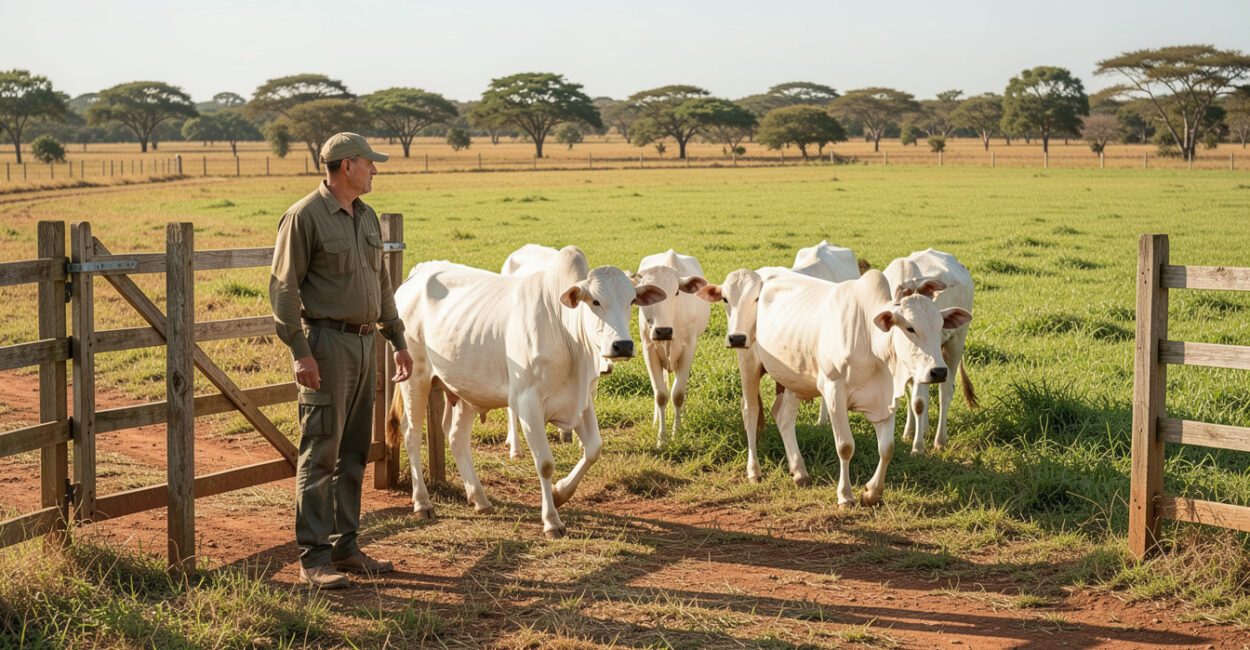
A group of cattle entering the dry season with limited pasture and no plan can lose body condition before the feed shortage becomes obvious. Beef cattle management organizes decisions about breeding, nutrition, herd health, and moving animals to produce beef efficiently while protecting the herd’s well-being.
The plan varies by region, cattle class, pasture, and available facilities. So the first step isn’t choosing a ready-made diet; it’s identifying the farm’s production system and the factors that may be limiting performance.

What to define before organizing the farm
- Which cattle classes are in the herd: cows, calves, growing cattle, and finishing cattle.
- How much pasture is available throughout the year and when forage shortages typically occur.
- The production target and expected timeline for each group.
- Available facilities, labor, and financial resources.
What is beef cattle management, and what results does it aim for?
Beef cattle management is the planned set of feeding, breeding, herd health, identification, and handling practices for cattle raised for meat. Its goal is to balance animal performance, farm resources, and animal welfare across the cow-calf, growing, and finishing stages. Put simply, it means deciding what to do with each group, when to do it, and which records to use.
Embrapa Beef Cattle, a Brazilian agricultural research organization, provides technical information on production systems and applied livestock research. To make use of this material, compare its recommendations with your climate, soil, forage, and cattle class: guidance developed for one set of conditions may not work for another.
Weight gain isn’t the only sign that a plan is working. It’s also important to keep cows in suitable breeding condition, prevent disease losses, and use pasture, water, and labor without creating bottlenecks.
How do you choose between extensive, semi-intensive, and intensive systems?
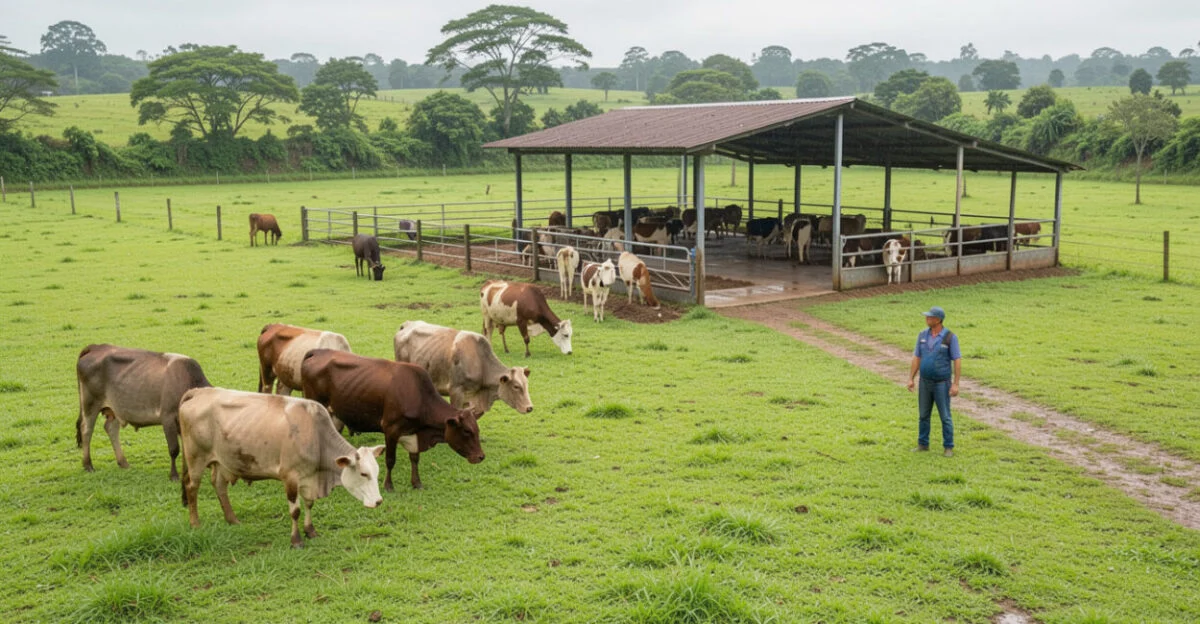
The right system is one that matches the farm’s investment capacity with feed availability, labor, and production goals. In an extensive system, cattle rely mainly on pasture; in a semi-intensive system, planned support, such as supplementation, is added to grazing; in an intensive system, the diet and feeding setup are more closely managed and may include feedlots.
System Feed base and management Farm requirements Key consideration Extensive Pasture as the primary feed source Pastureland, water, and stocking rates matched to forage availability The dry season can reduce forage quantity and quality Semi-intensive Pasture supplemented according to a plan Supplement purchases or production, feed bunks, and monitoring of cattle groups Supplementation should address an identified limitation Intensive Closer control of the diet and feed delivery Facilities, feed logistics, staff, and working capital Problems with ration formulation, adaptation, or delivery can affect the group
To choose between extensive and semi-intensive systems, start with the most challenging season: if pasture supports the herd for most of the year but declines during the dry season, assess whether supplementing priority groups is practical. If forage is inadequate for long periods or the farm can’t maintain supplementation and a consistent feed-bunk routine, intensification may increase costs without addressing the underlying problem. An intensive system is also a poor fit without a reliable feed supply and the ability to monitor intake and health.
The Embrapa Beef Cattle publications library can help inform this analysis. For professional resources in the field, the Brazilian Society of Animal Science also publishes research on animal production and beef cattle.
How do you organize management during the cow-calf, growing, and finishing stages?

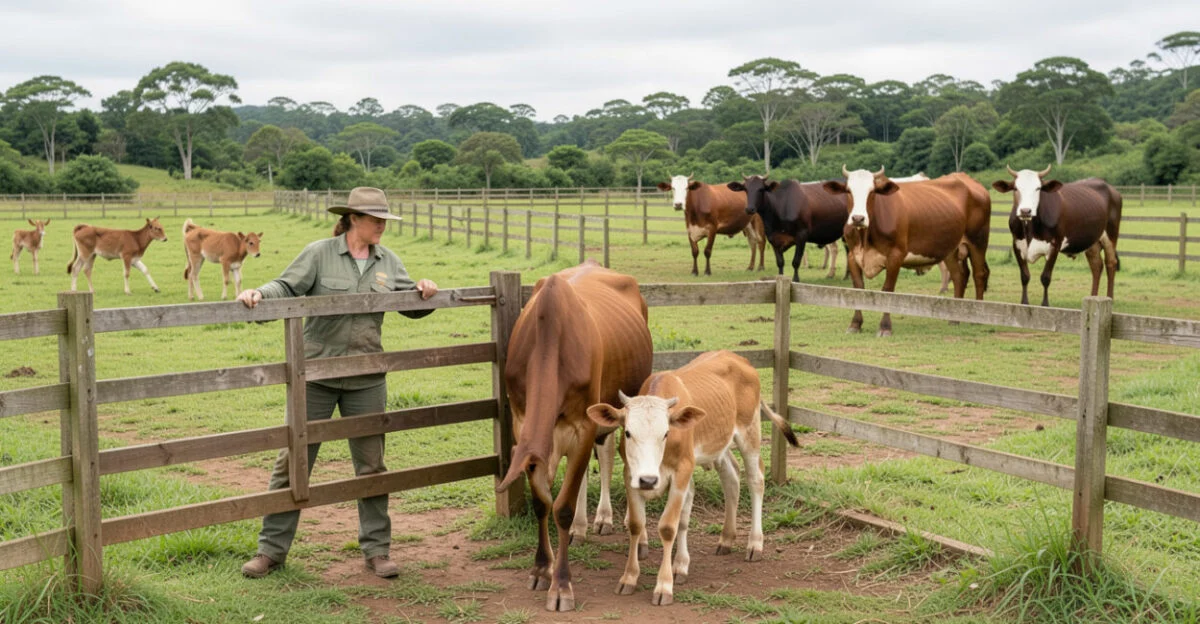
Organize the herd by stage and need. A cow nursing a calf, a growing animal, and a finishing animal shouldn’t all be managed the same way. Grouping cattle by class makes it easier to adjust feeding, breeding, and herd health practices and to interpret results.
Cow-calf: care for the cow and calf
In the cow-calf stage, monitor cows’ body condition, the farm’s breeding calendar, and calf development. A cow that loses condition during lactation may have trouble resuming reproductive activity. That’s why pasture and feed availability should be monitored before the problem shows up in breeding-season results.
Growing stage: keep growth on track
During the growing stage, cattle are still developing. If pasture quality declines and supplementation doesn’t keep pace, the group may gain weight more slowly or develop unevenly. Weigh a representative sample or use another consistent monitoring method; comparing animals on different dates and under different conditions can lead to unreliable conclusions.
Finishing: plan for market readiness and sale
During finishing, coordinate feed availability, body condition, and the expected sale date. In a feedlot, monitor diet adaptation and consistent feed delivery closely. On pasture, assess whether there’s enough forage to reach the desired finish, rather than keeping the group longer without checking performance.
Read also: Rural Land Regularization: How to Organize Your Paperwork
A common mistake is mixing cattle classes with different needs and expecting supplements to solve every problem. This makes it harder to identify which group is underperforming and can result in feed going to animals that aren’t the priority.
How do you plan feeding and supplementation throughout the year?
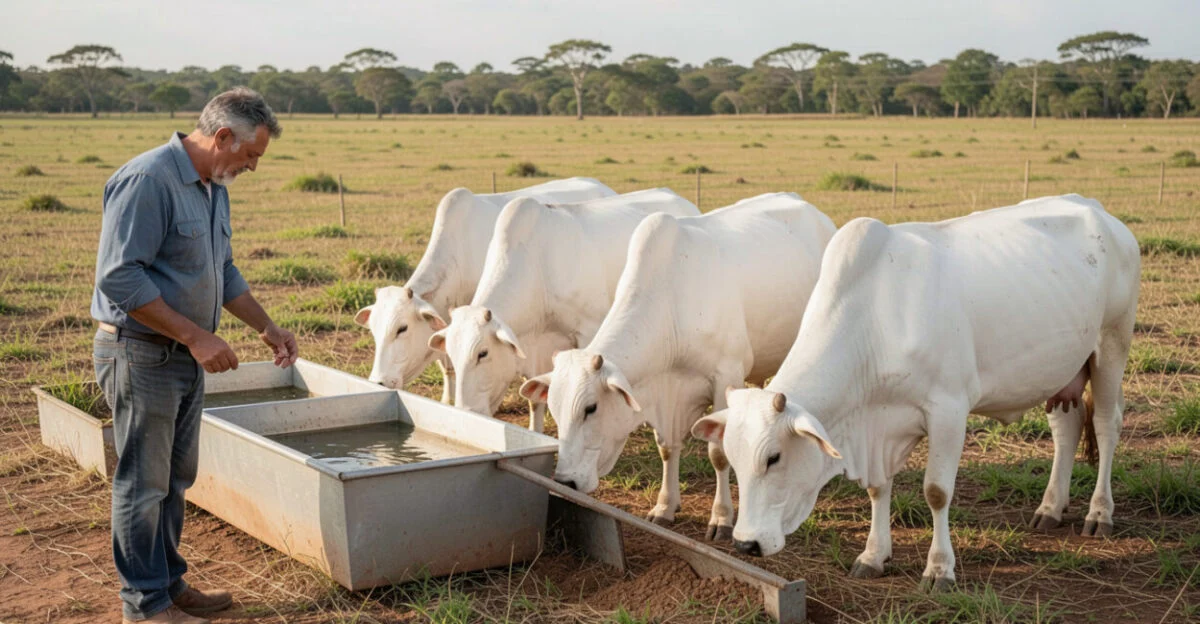
Plan feeding based on pasture availability and quality at different times of year, cattle class, and group goals. Dry-season supplementation should address a specific limitation identified from forage conditions and cattle needs. Seek professional guidance when formulating or adjusting a diet.
Before buying supplements, assess how much pasture is available and its condition, which animals should be prioritized, and how the product will be stored and delivered. Also consider access to water and feed bunks: good-quality feed can’t make up for inconsistent delivery or too few access points.
Tip
Record when the group started receiving supplements, how much was provided, and any changes in intake. If the feed bunk is empty before the next refill or food is consistently left over, investigate management and feed availability before changing the diet.
There’s no single supplement amount that works for every farm. The decision depends on pasture analysis, cattle class, and production goals; a recommendation developed for another region or system may not suit your conditions. The Brazilian Society of Animal Science is a useful source for technical research, while ration formulation should be based on herd data and professional guidance.
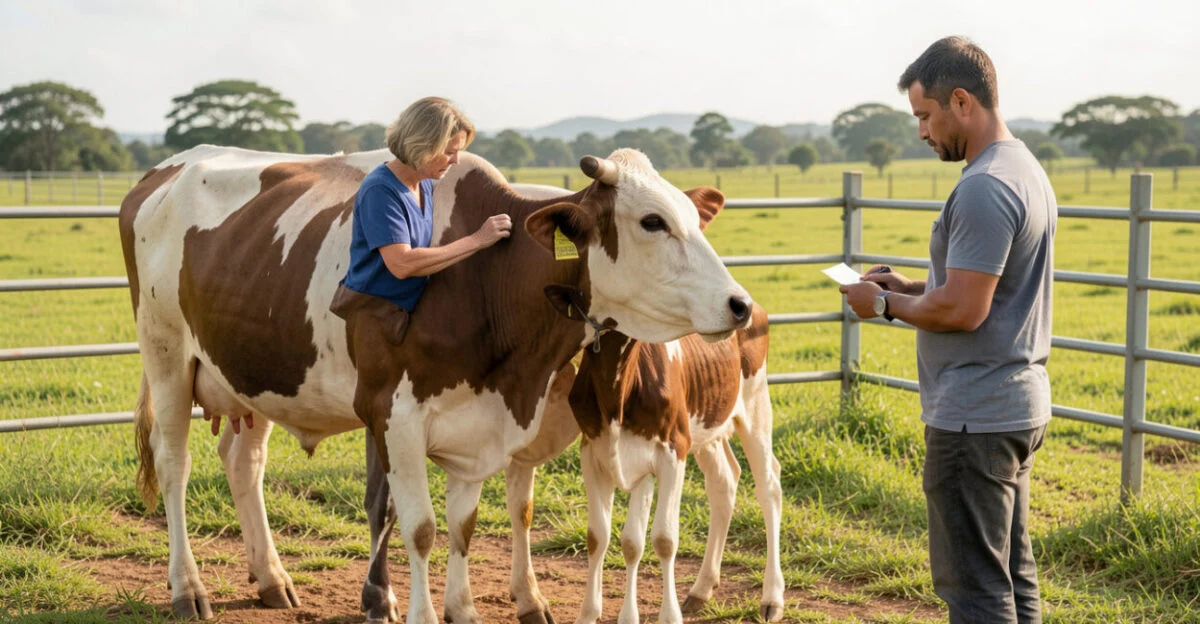
How do you structure herd health and breeding routines?
Build a routine around preventive measures, animal identification, incident records, and a health calendar tailored to the region and current requirements. Vaccinations, tests, and treatments depend on health risks, cattle class, and official regulations. A veterinarian should develop the calendar; don’t copy one from another farm.
For breeding management, record breeding or insemination dates, births, losses, and cow identification. These records help identify fertility problems and carefully assess their possible links to body condition, nutrition, and breeding season.
For animal health procedures, transportation, and handling, consult the good agricultural practices guidance from Brazil’s Ministry of Agriculture and Livestock (MAPA) and applicable official regulations. Requirements may vary by activity and region, so confirm current rules with the relevant authorities.
How can you reduce risks with facilities and low-stress handling?
Proper facilities make it possible to handle cattle with less pressure, reduce the risk of accidents, and make weighing and other procedures easier. One practical detail that’s easy to overlook: a poorly placed shade area or water trough can cause cattle to bunch up and impede movement, especially when the group is being handled.
- Check that fences and gates are secure and free of sharp edges or objects that could injure cattle.
- Make sure waterers work and water points are clean.
- Check that feed bunks provide adequate access for the group and are in good condition.
- Clear obstacles and distractions from the route to the working pens.
- Plan cattle handling without yelling, striking, or sudden movements.
- Inspect the squeeze chute, alley, and other facilities before starting procedures.
Also consider training for the people handling the herd. Someone who understands cattle behavior can recognize when noise, shadows, excessive pressure, or a poorly planned route is upsetting the group. An agricultural technician’s work on the farm may include supporting production routines, within the scope of their training and professional responsibilities.
Well-planned facilities and calm handling make the work easier and reduce risks for both the herd and the crew.
Which indicators should you track to adjust herd management?
Track indicators that help connect outcomes to causes: weight or weight gain by group, cows’ body condition, pregnancy, births, deaths, weaning, and production losses. Feed intake and supplementation records can help show whether a change in performance coincided with a change in diet or pasture availability.
To make the data useful, record the cattle class, group identification, measurement date, and conditions at the time. Compare equivalent periods and groups: a single weigh-in doesn’t show whether management is working, and differences in age or pasture can skew the results.
How can you tell if management is hurting performance?
Suspect a management problem when weight gain falls below the group’s own historical performance, cows lose condition, feed intake changes, or health problems increase. Then investigate forage availability and quality, water, consistency of supplementation, stocking rate, and disease. A single indicator provides a warning sign; farm records can help reveal the cause when considered together.
A simple spreadsheet can help: record the group, number of animals, weights, supplementation, health events, and breeding dates. Agricultural technology on the farm can also help organize this data, as long as the tool fits the team’s routine and ability to use it.
Frequently asked questions
Where can I find Embrapa resources on beef cattle?
Visit the Embrapa Beef Cattle website and its publications library. Use specific search terms, such as cow-calf, growing, pasture, or supplementation, and check which production system and region each resource was developed for.
How can I find a book on beef cattle?
Look for technical books from university presses, research institutions, and recognized industry organizations. Check the author, edition, and topics covered before using a book as guidance for your farm.
Is there a beef cattle nutrition PDF that works for every farm?
A PDF can provide concepts and methods, but it can’t replace an assessment of the pasture, cattle, and farm goals. Check who published the resource and when; supplementation tables depend on the conditions described in the publication.
What should I record in herd management records?
Record animal identification and class, weights, breeding events, health issues, supplementation, and movement between groups. Notes with dates and context make it possible to compare results and investigate changes in performance.
Artigos Relacionados
 Agricultural Input Inventory Management: Best Practices for Farms
 Coffee Cultivation: How to Plan Your Farm and Care for Plants
 Rotational Grazing: How to Plan Pasture Paddocks
 Food Traceability: How to Organize Records
 Integrated Pest Management: How to Protect Crops
 Pasture Management: How to Restore Degraded Land
