
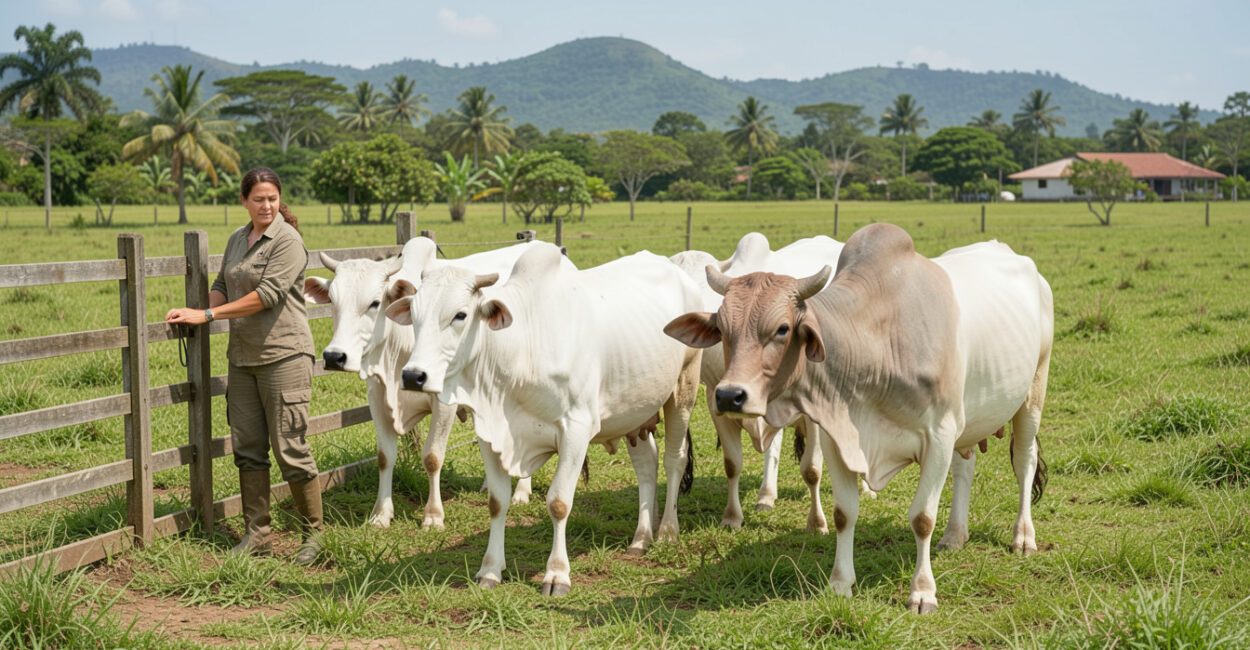
A breeding season that is poorly timed with forage availability can compromise cows’ condition just when they need to conceive and raise a calf. Cattle reproduction involves the management decisions that organize mating, insemination, and monitoring of females to produce offspring in line with herd goals. Efficiency depends on choosing a suitable system, preparing cows and bulls, and measuring results. The schedule needs to follow the region, climate, and type of production.
There is no single breeding method or season that works for every operation. Beef herds can generally concentrate breeding within a defined season; in dairy herds, the routine is often more continuous and tied to individual monitoring of cows. The choice is easier to make when you consider available feed, labor, facilities, and technical support.

Management details also vary between pasture-based and confined systems. For those building experience in the field, learning about the day-to-day work of an agricultural technician in the field can help explain how production decisions connect to daily work on the farm.
What does cattle reproduction mean, and which metrics should you track?
Cattle reproduction is the management of mating, fertilization, pregnancy, and birth, with the goal of producing offspring according to plan. For producers, this means tracking whether females conceive within the expected period, how many carry to term, and how long it takes them to produce another calf. Metrics should be considered together, because a single figure can conceal losses over the course of the cycle.
The pregnancy rate is the proportion of females that become pregnant among those bred during the period and group being assessed. The calving interval measures the time between two consecutive calvings by the same cow. It is also worth tracking pregnancy losses, births, and weaning: a confirmed pregnancy alone does not guarantee that a calf will reach weaning.
Record data by group, category, and period. If mature cows perform adequately but heifers lag behind, the cause may be their weight at the start of the breeding season, their age, or their adjustment to the diet—not the bull used across the entire herd.
What are the types of cattle reproduction, and how do you choose?
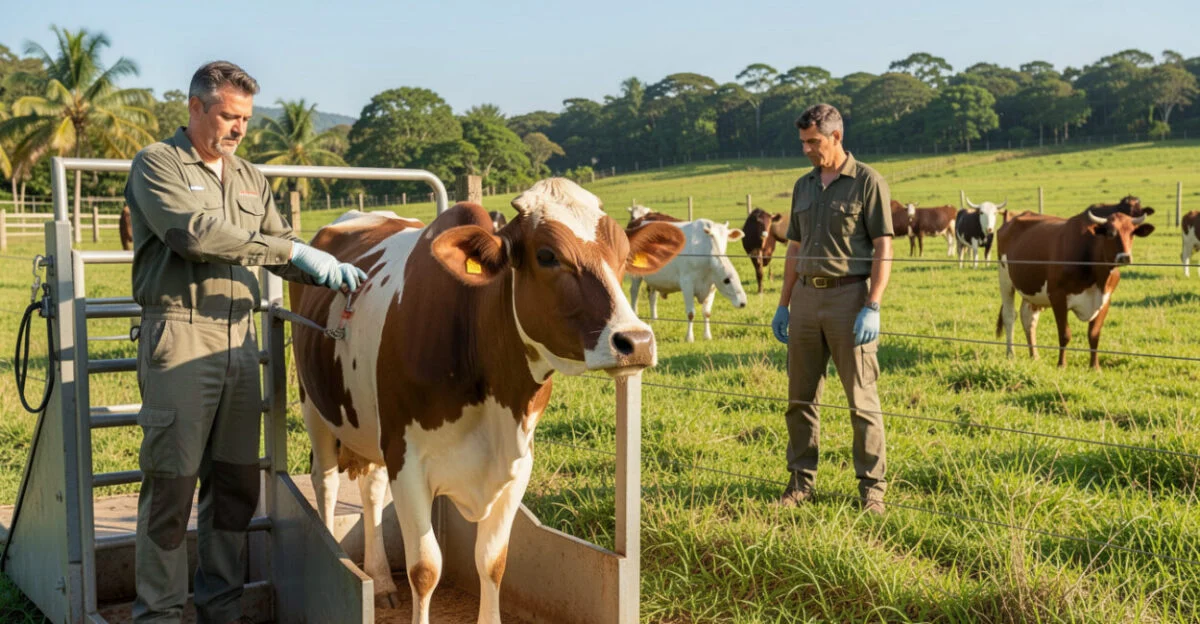
The main systems are natural mating and artificial insemination. The choice depends on facilities, labor, genetic goals, and management capacity. With natural mating, the bull breeds cows in the group. With artificial insemination, a trained professional deposits semen in the reproductive tract, without the bull needing to remain with the females.
System When it may make sense What to watch for Natural mating When suitable bulls are available and facilities can accommodate group management. A bull may breed females at different times; his soundness and condition need to be monitored. Artificial insemination When the goal is to use semen from selected sires and the team and management routine can support the process. Requires heat detection or a protocol set by a professional, as well as the logistics to inseminate at the right time.
A practical consideration: if the operation cannot detect heat, gather cows, and meet insemination schedules, starting with artificial insemination can lead to execution problems. With a trained team and appropriate facilities, it can expand genetic options. Natural mating is not automatic either: it requires evaluated bulls, well-organized groups, and monitoring of breeding activity. Embrapa Gado de Corte (Brazil’s agricultural research agency’s beef cattle division) provides technical resources to support beef production planning.
The most efficient breeding system is the one the farm can carry out and monitor consistently.
How does natural mating work in cattle?

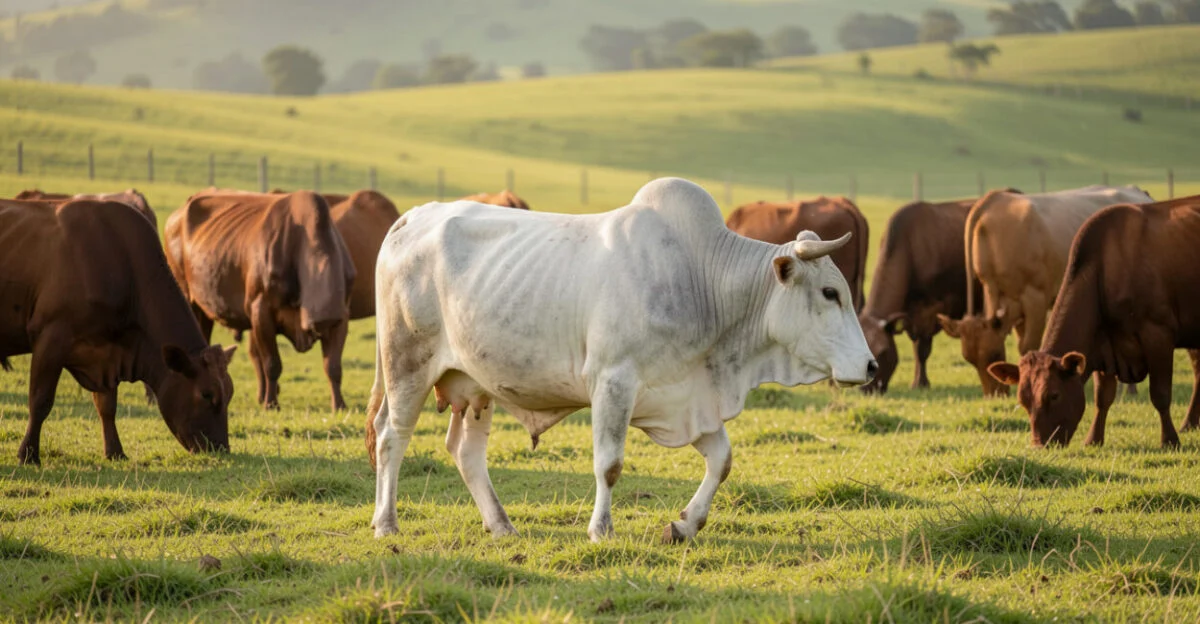
With natural mating, bulls and cows stay together for a set period or year-round, depending on the system. The bull-to-cow ratio should not be based on a universal rule: it depends on the bulls’ age and condition, terrain, group size, season length, and the ability to observe the animals. A veterinarian or animal scientist can assess these factors before determining group composition.
Before the breeding season, have a qualified professional perform a breeding soundness exam on the bulls. The evaluation considers, among other things, the reproductive tract and semen quality; results can identify animals that are not fit to breed at that time. Passing the exam does not eliminate the need to check body condition, feet and legs, health, and mobility. A fertile bull that cannot reach the cows because of a leg problem still cannot do his job.
During breeding, make sure animals are distributed evenly. One detail that often goes unnoticed is repeated heat activity in part of the group: this may indicate that some cows have not conceived or that the bull is not breeding effectively. Record what you observe and investigate rather than simply adding another bull without a diagnosis.
Read also: Growing Grapes: Climate, Training, and Vine Care
How do you choose the timing and create a breeding season calendar?
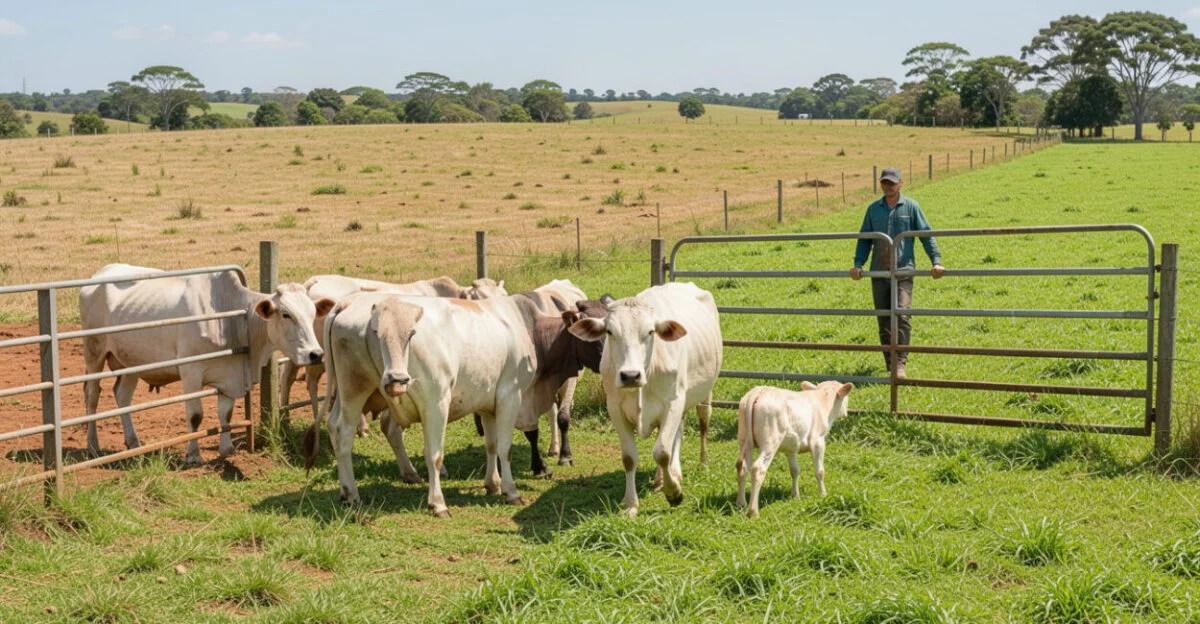
The breeding season should align with conditions that support conception and calf rearing, taking into account climate, forage availability, the calving calendar, and the farm’s management capacity. In regions with pronounced seasonal rainfall, producers may plan breeding so that late pregnancy and the start of lactation better match feed availability. The best timing varies by region and system.
The table below is a template, not a recommendation of specific months for all of Brazil. It uses stages relative to the start of the breeding season; convert them into calendar months after considering local rainfall patterns, the forage calendar, and the desired calving period.
Timing Planning activity Before the season Review females’ body condition and health; evaluate bulls; organize groups, pastures, and records. During the season Monitor breeding activity or perform inseminations; record events and management issues. After the season ends Schedule pregnancy diagnosis with veterinary guidance and separate open females to determine next steps. Before expected calving Prepare pastures or facilities and plan to monitor calving and respond to complications.
A concentrated breeding season makes it easier to manage groups with more uniform ages and plan calving. However, shortening the season without preparing nutrition, body condition, and bull fertility can increase the number of open cows. Embrapa Gado de Leite (Brazil’s agricultural research agency’s dairy cattle division) offers references on dairy herd management, which should be adapted to the system and local conditions.
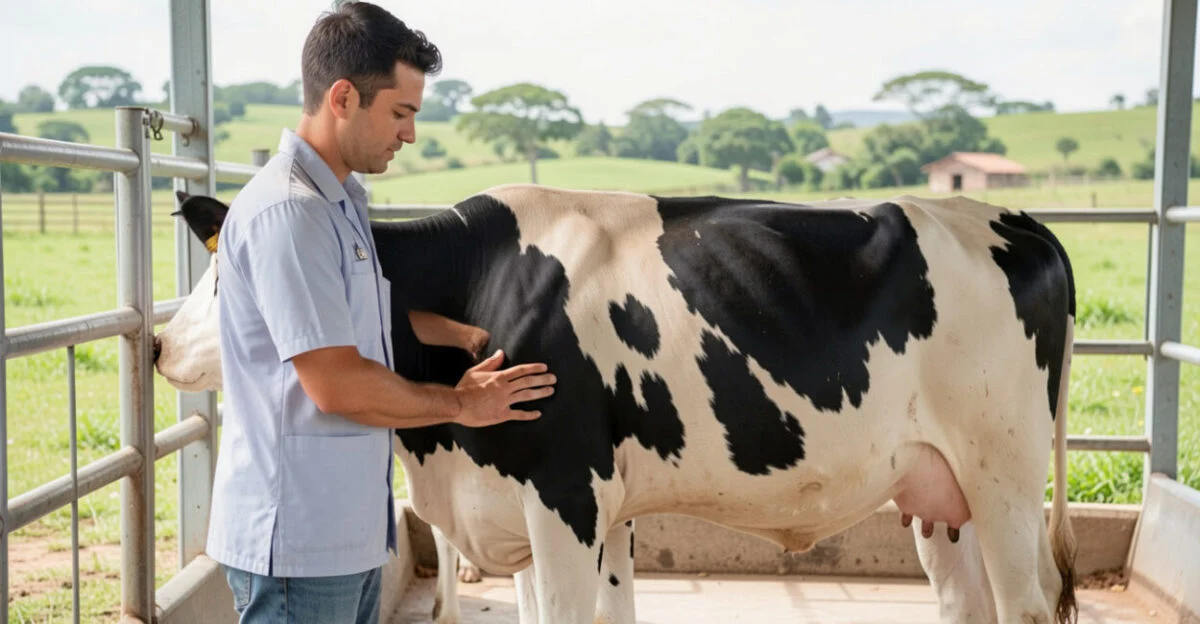
What care do cows need before and during breeding?
Cows should enter the breeding period in appropriate body condition for their category and free of health problems that could interfere with the estrous cycle, conception, or pregnancy. Body condition is a visual and hands-on assessment of an animal’s energy reserves; very thin cows may have trouble resuming ovarian activity after calving. Diet adjustments should take available forage, supplementation, and technical guidance into account.
In beef cows, the time since calving, nursing, and nutrition affect the return to estrus. Heifers need specific attention: they should reach adequate development before breeding, and age alone should not determine readiness. In dairy herds, milk production, energy balance, and the milking routine also affect heat detection and individual monitoring.
Watch for signs of heat according to the management routine and production system. Restlessness, attempting to mount other females, and standing to be mounted can help with detection, but heat, slippery floors, large groups, and short observation periods make detection harder. A common mistake is to blame every failure on semen fertility when the observation schedule makes it difficult to identify cows in heat.
Vaccination, parasite control, and prevention of reproductive diseases should follow the local health schedule and veterinary guidance. Do not use hormones or medications for synchronization without an evaluation: the protocol, dose, and timing depend on the females’ history, category, and reproductive status.
When should you diagnose pregnancy, and how should you monitor bulls?
Pregnancy diagnosis should be scheduled after breeding or insemination, at a time determined by the method used and the professional responsible. Ultrasound can detect pregnancy earlier than rectal palpation, but the right timing depends on the equipment, the examiner’s experience, and the group’s history. Confirm the timing with your veterinarian rather than applying a fixed date to every herd.
In addition to confirming pregnancies, the exam helps identify open females and guide decisions about feeding, culling, or another breeding opportunity. Recording the breeding date, method, and diagnosis result makes it possible to determine whether a problem is tied to a heat window, a particular group, or a sire’s condition.
For bulls, combine a breeding soundness exam before the season with observation during breeding. Loss of body condition, injuries, lameness, and difficulty mounting warrant investigation. Digital tools on the farm can also help record breeding activity, exams, and results, provided the data are entered consistently.
What differs between beef and dairy herds, and what should you check before getting started?
Beef operations often plan to concentrate calving and match the cows’ nutritional needs to forage availability. In dairy production, reproduction is monitored cow by cow alongside milking, production, and days open. In both cases, effective decisions start with the herd’s history and the actual capacity to carry out the planned management.
- Set a goal: beef production, milk production, or replacement females.
- Review records of pregnancies, calvings, and losses.
- Assess females’ body condition and category.
- Check the bulls’ soundness and health before the season.
- Review pastures, facilities, staff, and observation routines.
- Plan pregnancy diagnosis with veterinary guidance.
There is no one-size-fits-all approach to reproduction: climate, breed, feeding system, and labor all affect herd performance. To learn more about organizing work on a farm, the article on careers in agriculture explains the technical roles involved in management.
As a next step, gather records from the last cycle and identify where losses are concentrated: cows that do not conceive, pregnancies that do not result in a birth, or calves that do not survive. Share this information with the person responsible for technical support to adjust the calendar, breeding system, and management instead of adopting generic protocols.
Question Short answer Which system should you choose? The one that fits the farm’s goals, facilities, and management capacity. When should the breeding season take place? When the climate, forage, and calving calendar align with regional conditions. How should you determine the bull-to-cow ratio? Based on a technical assessment of the animals, groups, terrain, and breeding period. When should you diagnose pregnancy? At the time recommended for the method by the responsible veterinarian.
Frequently asked questions
What can reduce a herd’s reproductive efficiency?
Poor body condition, disease, unfit bulls, missed heats, and inadequate group management can reduce conception rates. Incomplete records also make it harder to identify where losses occur.
Can bulls stay with the cows year-round?
Yes, but year-round breeding can spread calving throughout the year and make feed and labor planning more difficult. The decision depends on the production system and the ability to monitor each group.
Does artificial insemination require heat detection?
With conventional insemination, heat detection is part of the management process. Fixed-time artificial insemination protocols eliminate the need to observe each cow in heat to determine insemination timing, but they require professional planning and oversight.
Should an open cow be culled?
Not necessarily. Age, reproductive history, body condition, the likely cause of failure, and herd goals all factor into the decision. Diagnose the issue before deciding whether to cull.
Where can I find technical resources on cattle reproduction?
Consult publications from Embrapa Gado de Corte, Embrapa Gado de Leite, and the Brazilian College of Animal Reproduction (CBRA). When looking for a guide or PDF resource, check the author, responsible institution, and publication date, and confirm recommendations with local technical support.
Artigos Relacionados
 Sustainable Cultivation: Practices That Boost Profits
 5 Sustainable Practices That Transform Small Farms
 Rural Sustainability: 9 Practices That Can Fail
 Building Reading Fluency in Children: Daily Routines and Activities to Improve Speed, Expression, and Comprehension in Elementary Students
 Task Delegation at Events: Agile vs. Traditional Methods to Reduce Errors and Improve Team Efficiency
 Active Learning Methods: 7 Practices That Are Transforming Education
