
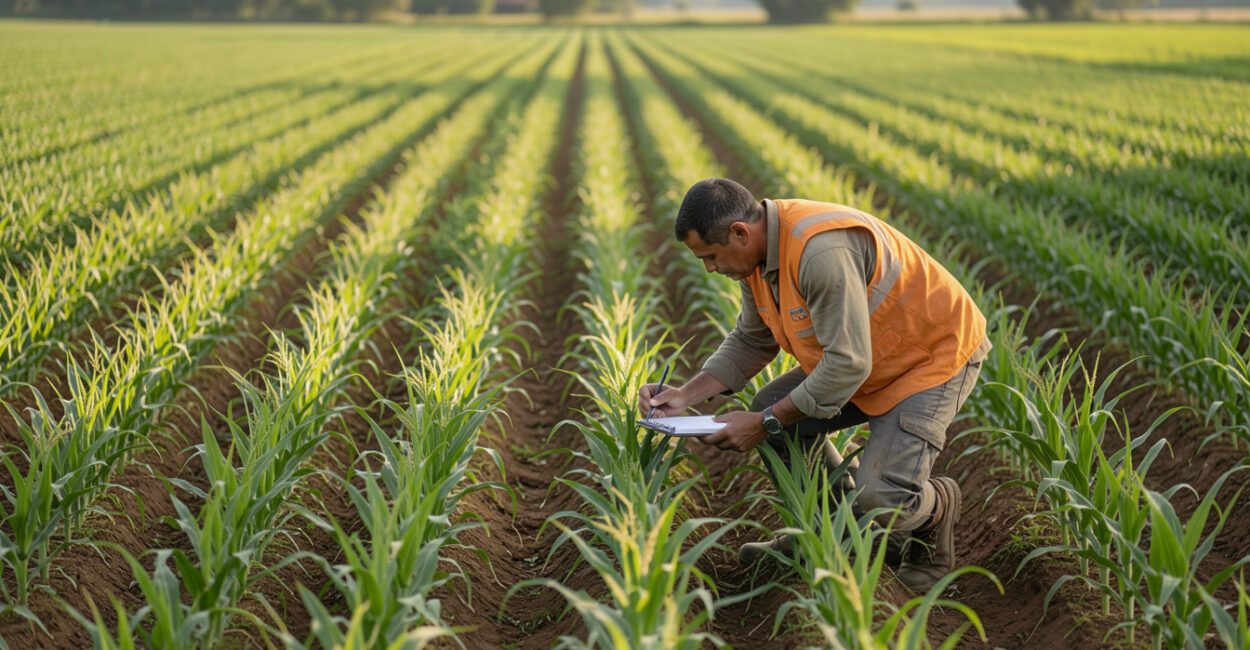
A field with few insects and no significant damage calls for a different decision than one where pest numbers are rising and the crop is vulnerable. Agricultural pest control starts with monitoring: identify the organism, measure its presence and the damage it causes, and compare the findings with crop-specific technical guidelines. Only then should you choose a control measure and track its effects.
This process helps prevent unnecessary interventions and ensures action is taken at the right time. Since the crop, pest, region, and growth stage all affect the assessment, there is no universal count that applies to every field.

Before you start monitoring
- Identify the crop, field, and plant growth stage.
- Review the history of pest occurrences and technical recommendations for your region.
- Decide how to record pests, damage, and beneficial organisms.
- Have a reliable reference for confirming uncertain identifications.
Quick summary
- Inspect representative areas, not just damaged plants.
- Record pests, symptoms, and beneficial organisms separately.
- Compare findings with criteria specific to the crop and pest.
- After taking action, monitor the field to check its response.
1. Understand monitoring in agricultural pest control
Pest monitoring is the planned observation of pests, beneficial organisms, and damage throughout the crop cycle, using repeated inspections and sampling. Simply put, it’s an organized way to find out what’s happening in the field and decide whether action is needed. Finding an insect or other organism does not, by itself, mean the crop is at risk. Its presence may be incidental, it may not be causing significant damage, or it may be a beneficial organism that helps keep pest populations in check.
Monitoring is part of Integrated Pest Management (IPM), an approach that combines prevention, information, and different management tactics. The United Nations Food and Agriculture Organization (FAO) describes IPM as a strategy that takes the agricultural ecosystem into account and combines compatible measures to keep pests under control. Keeping a record also makes it possible to assess whether a decision worked. Without an earlier observation made using a comparable method, it’s hard to tell whether the population declined, the damage spread, or the change resulted from another factor.
2. Decide what to look for before inspecting
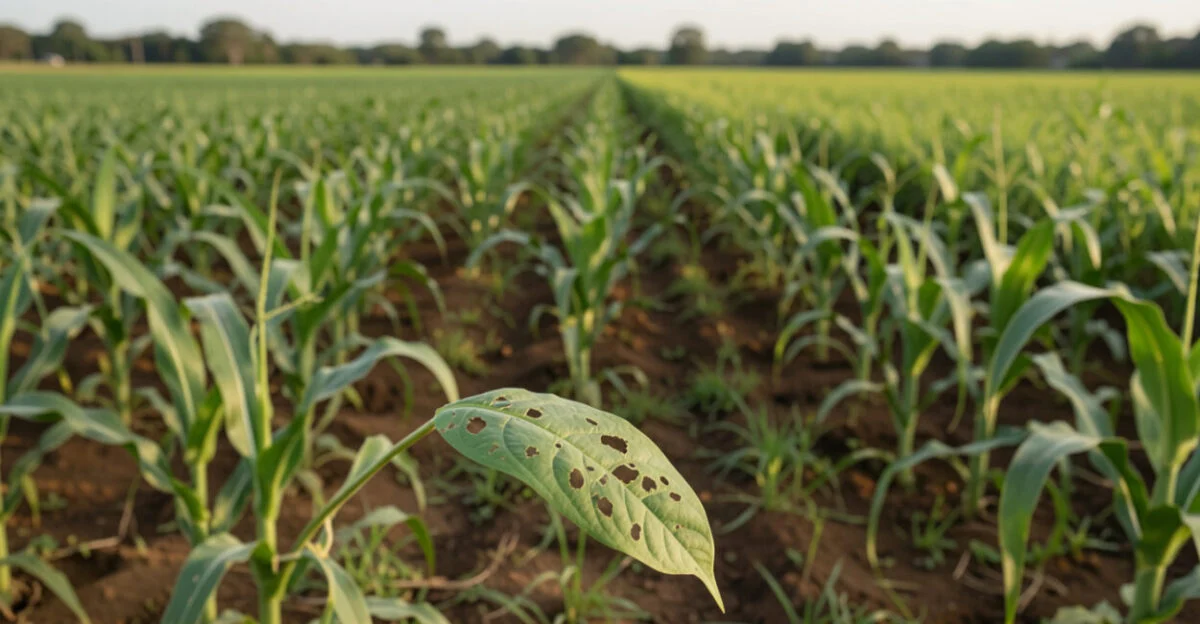
Before walking the field, note the crop, its growth stage, the history of pest occurrences, and conditions that could affect risk. For example, a plant in its reproductive stage may require you to check structures that aren’t relevant early in the growing season. Separate three types of information: the organism found, the damage observed, and how the problem is distributed. Holes in leaves may indicate insect feeding, but similar symptoms can also result from disease, nutrient deficiencies, herbicide injury, or environmental conditions. Treat a visual identification as a hypothesis when there aren’t enough signs to confirm it.
Check whether occurrences are concentrated along field edges, appear in patches, or are spread throughout the field. This distinction guides sampling: don’t assume a localized infestation affects the entire area without checking other locations. If the diagnosis is still uncertain, consult an agricultural advisor or Embrapa identification resources. Integrated management may also include soil conservation practices, but their relevance to a specific problem should be assessed for each production system. See our article on soil conservation on the farm.
3. Sample representative areas

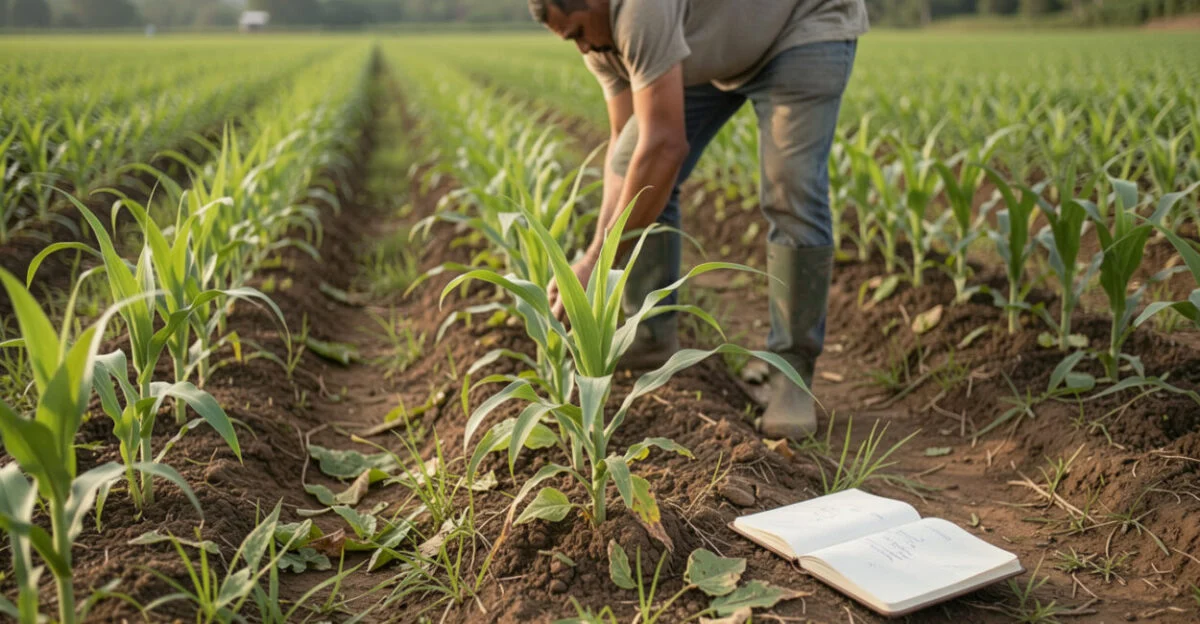
Divide the farm into monitoring units that are sufficiently similar in crop, growth stage, and history. If two areas have different conditions, combining their counts can hide a localized hotspot or lead to an unsuitable decision for part of the field. Follow a consistent route that covers representative areas, including places without visible symptoms. The sampling unit and method depend on the crop-pest combination: inspections may cover plants, leaves, reproductive structures, traps, or signs of damage. The number of sampling points and inspection frequency should follow crop-specific technical recommendations, not a generic protocol.
What to observe How to sample What to record Keep in mind Pests present Inspect the sampling unit specified for the crop and pest. Type of organism and number observed. Confirm the identification; not every organism is a pest. Damage and symptoms Examine affected and unaffected plants and structures. Type, severity, and location of symptoms. Similar symptoms can have different causes. Beneficial organisms Look for them along the same sampling route. Beneficial organisms found and where they occurred. Consider them when interpreting pest populations. Distribution across the field Compare field edges, patches, and interior areas. Areas with and without significant occurrences. The method and sampling unit vary by crop and pest.
- Define monitoring units.
- Choose an appropriate route and method.
- Inspect representative areas.
- Look for pests, damage, and beneficial organisms.
- Record the date and location.
- Repeat inspections using a comparable method.
Traps can help detect pests and track trends, but a single catch does not necessarily indicate the level of crop damage. Combine trap results with plant inspections and the method recommended for that pest.

4. Record and interpret your findings
Record the date, field, crop growth stage, method used, number of organisms observed, signs of damage, and presence of beneficial organisms. Also note areas without significant occurrences: they add context to changes and help distinguish a localized hotspot from a wider problem. Keep pest counts separate from damage assessments. A pest may be present without causing significant damage; in another situation, even a small number of pests may be cause for concern because of the crop’s growth stage or the type of structure being attacked.
Compare results obtained using the same method over time. Counts of organisms per plant and trap catches, for example, are not directly comparable. Don’t apply a reference value to another crop, region, or production system without validation.
Embrapa publications on IPM and crop-specific monitoring can help you choose a method. The appropriate criterion depends on the pest and the production context; the reference you use must match the situation being observed.
5. Decide whether action is needed
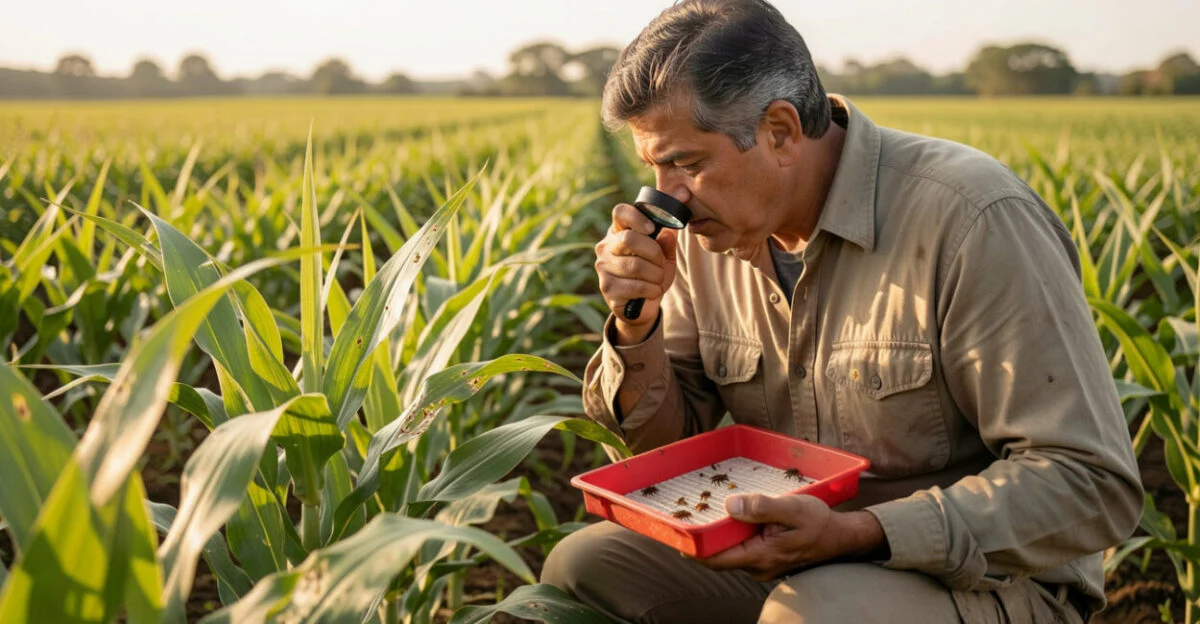
Base your decision on sampling results, damage, crop growth stage, and the technical criterion recommended for that crop-pest combination. Detection confirms presence; risk assessment estimates the potential for damage; intervention depends on a technical decision informed by this information. The action threshold is the criterion indicating when a measure should be taken to prevent the pest from causing greater losses, according to specific recommendations. There is no universal value: the sampling method and local conditions are part of the assessment.
Monitoring result Possible interpretation Next step Pest present, with no significant damage observed The occurrence may not warrant immediate intervention. Continue monitoring according to recommendations for the crop and pest. Damage or pest population is increasing Risk may be changing; trends and crop stage matter. Repeat the assessment and consult the specific technical criterion. Technical intervention threshold reached A management measure may need to be considered. Consider options compatible with IPM and seek professional guidance. Diagnosis is uncertain There isn’t enough evidence to attribute the damage to a specific pest. Confirm the cause before choosing a measure.
Before using pesticides, consider preventive, cultural, and biological measures compatible with your production system. If your decision involves a crop protection product, check its registration and authorized uses in the Agrofit system of Brazil’s Ministry of Agriculture and Livestock (MAPA), read the label, and follow guidance from a qualified professional. Don’t choose a product or dose based solely on the presence of an organism.
6. Track results and adjust your management approach
After taking action, reassess at the interval appropriate for the method and technical guidance. Observe the pest population, damage, and crop development. Applying a treatment does not, by itself, prove that the problem has been resolved.
Record what you did and the results you observed. If the problem persists, review the identification, whether the sample was representative, the timing of the decision, and the suitability of the method with an agricultural advisor.
A field may change between inspections as the crop grows, the weather shifts, or organisms move. Monitoring only after damage appears means missing information that could have helped inform an earlier decision.
For farms with a variety of crops, keeping records separate by unit and activity makes them easier to follow. Similar recordkeeping is used to organize food traceability, though the goals of these records differ.
7. Avoid mistakes that distort your assessment of the field
The most common mistake is inspecting only symptomatic plants or field edges and extrapolating the findings to the entire field. Since this route selects higher-risk areas, it can overestimate the overall occurrence. To avoid this, include representative areas and record where each observation was made.
Other mistakes that can undermine a decision include attributing symptoms to a pest without confirmation, ignoring beneficial organisms, or applying action thresholds from another crop. Each shortcut removes some of the context needed to apply the technical criterion.
Applying pesticides on a calendar schedule or simply because an organism is present skips the step of assessing whether treatment is needed. When the identification or sampling results aren’t reliable, the prudent choice is to confirm the diagnosis before treating. To learn how different tactics work together, see our article on Integrated Pest Management in the field.
As a next step, choose a monitoring unit, record the crop’s growth stage, and consult the technical recommendation specific to the suspected pest. Use the same method consistently in future inspections, and decide whether to intervene only after comparing pest presence, damage, and the applicable criterion.
Frequently asked questions
How often should I monitor my fields?
Frequency depends on the crop, pest, growth stage, and local conditions. Follow the applicable technical recommendation and increase monitoring when risk changes. Don’t treat a general interval as a rule for every situation.
Are traps alone enough to decide whether to control pests?
Generally, no. Traps can indicate pest presence or capture trends, but decisions also require assessing the crop, damage, and the technical criterion recommended for the pest.
How can I tell pest damage from symptoms caused by other factors?
Look for signs associated with the organism, the distribution of symptoms, and the crop’s condition. No single clue always confirms the cause. If the identification remains uncertain, seek a technical assessment before choosing a measure.
What should I do if I can’t identify the organism or the damage?
Record where the sign appears and which part of the plant is affected, take useful close-up photos, and preserve a sample if appropriate. Consult an agricultural advisor or reliable identification resource before taking action.
Do beneficial organisms eliminate the need for pest management?
Not necessarily. Their presence should be part of your assessment, but it doesn’t guarantee the pest population will stay below the intervention threshold. Track changes over time and consider all the information from the field.
Can I use the action threshold from a similar crop?
Not without technical validation. Even similar crops or pests may require different methods and criteria depending on the region, plant growth stage, and production system.
Artigos Relacionados
 Biological Pest Control: Beneficial Insects That Save Your Garden
 Integrated Pest Management: Sustainable Practices for Pest Control
 Agricultural Technical Training: Boost Productivity and Stand Out in the Field
 Biological Pest Control: Protect Your Vertical Garden Naturally
 Agricultural Input Inventory Management: Best Practices for Farms
 Integrated Pest Management: 7 Practical Techniques for Organic Gardens
