
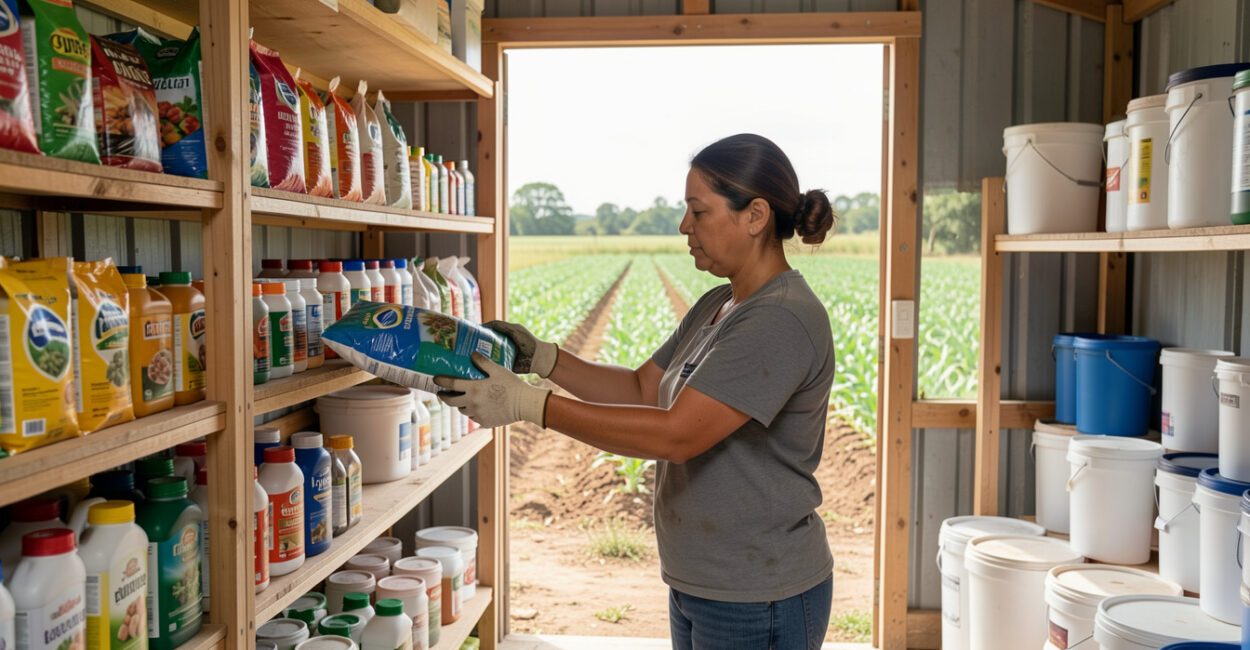
A poorly organized inventory can leave your team without a product when it’s time for fieldwork, or leave materials sitting unused until they expire. Inventory management connects what the farm buys with what it uses, stores, and needs to replenish.
The steps below cover everything from defining and classifying inputs to recordkeeping, storage, and purchasing routines. The goal is to organize inventory around the production calendar, without applying the same quantities or storage conditions to different products.

1. What Are Agricultural Inputs, and Why Manage Inventory?
Agricultural inputs are goods and materials used in agricultural production, such as seeds, fertilizers, pesticides, soil amendments, and fuel. Inventory management means recording and tracking receipts, withdrawals, on-hand quantities, locations, and storage conditions so the farm knows what is available and when to reorder.
This tracking helps coordinate purchasing and operations: the team can check whether enough product is available before an application or identify materials with no planned use. Inventory records can also help track lots and check expiration dates, as long as they’re kept up to date and match the physical inventory.
You can use a spreadsheet, inventory management system, or organized paper records. The right choice depends on transaction volume, the farm’s setup, and who will enter the data. What matters is regularly comparing recorded quantities with what’s actually in storage.
2. How to Organize Inventory by Input Type and Intended Use
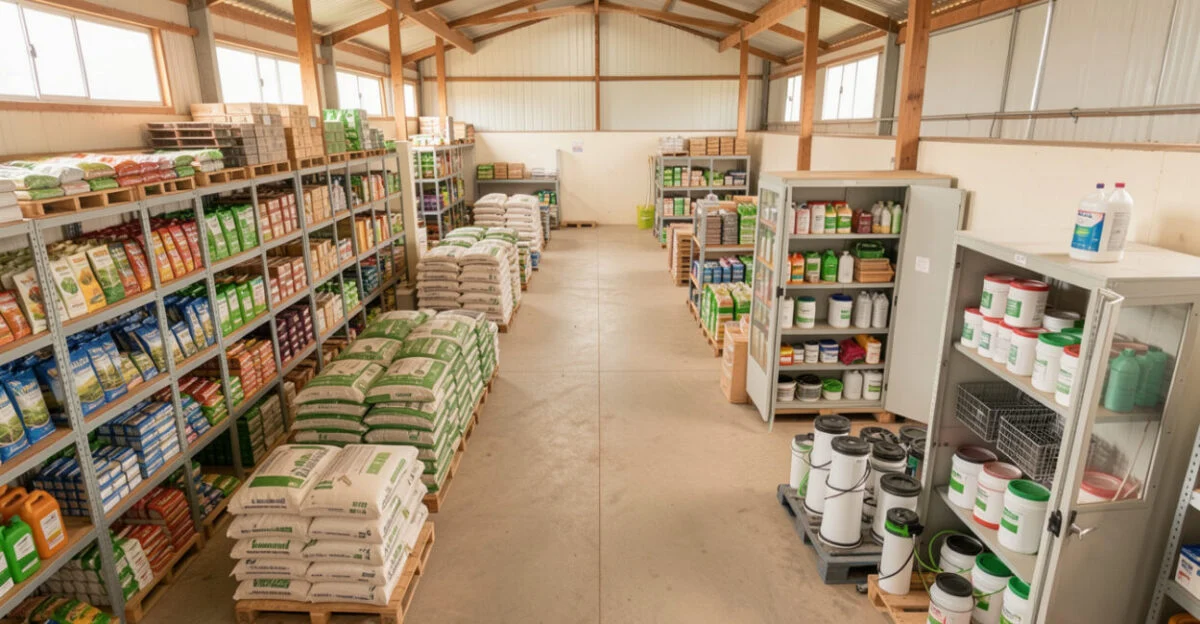
Grouping products by category makes them easier to find and helps determine storage requirements. This classification describes types of inputs, not types of inventory: for example, a farm may have fertilizers with different purchasing cycles and still group them all under the fertilizer category.
Category Examples Storage considerations Seeds and seedlings Commercial seeds, seedlings Follow each product’s specified humidity, temperature, and ventilation requirements; protect packaging and label lots. Fertilizers and soil amendments Fertilizers, lime Keep away from moisture and separate products according to compatibility and manufacturer instructions. Crop protection products Herbicides, fungicides, insecticides Store in an appropriate area, with clear identification and separation according to the label, safety data sheet, and applicable regulations. Fuels and lubricants Diesel, oils Follow applicable safety, spill containment, and fire prevention requirements; do not store with incompatible products. Parts and support materials Filters, PPE, irrigation supplies Organize by equipment or operation and protect against dust, moisture, and damage.
Grouping inputs by operation, such as planting, fertilizing, and pest control, can complement these categories. This is useful when different crews take supplies for different tasks. To learn how technology and digital records can support farm management, see how agricultural technology can support farm management.
3. What Are the 4 Types of Inventory, and How Do They Apply to Farms?

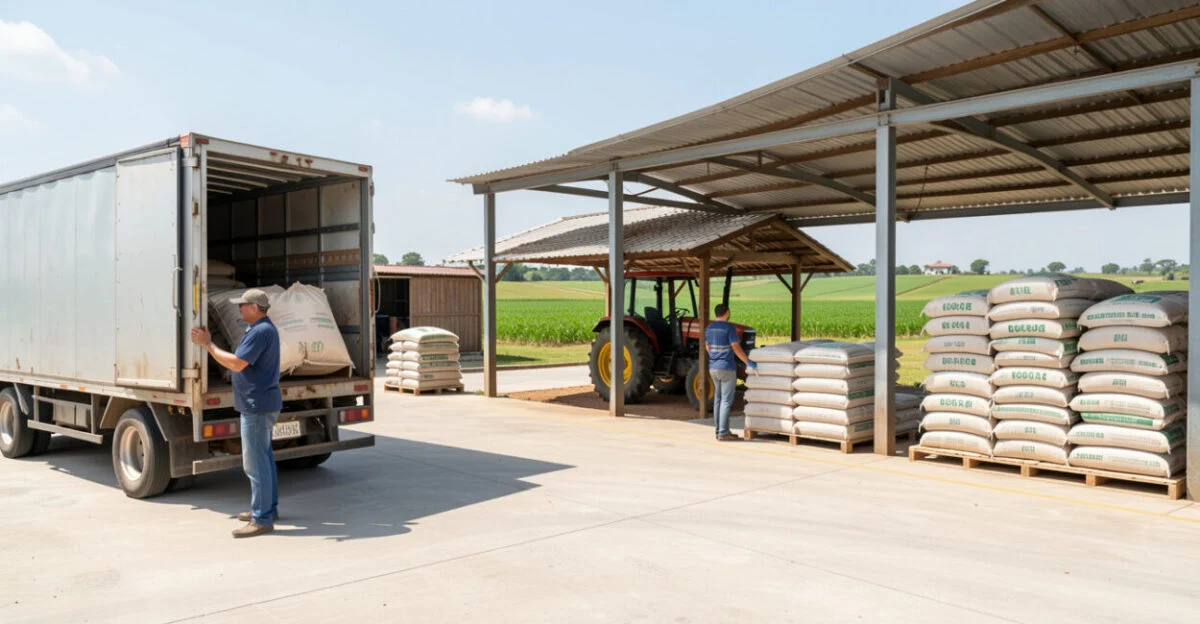
A common inventory management framework distinguishes four types: cycle stock, safety stock, anticipation stock, and in-transit stock. Definitions and criteria may vary depending on the management model, so it’s a good idea to document how the farm defines each type.
- Cycle stock: The quantity expected to cover use between replenishments. On a farm, it may cover the needs of a planned stage of fieldwork.
- Safety stock: A reserve to absorb changes in use or supplier delays. The amount depends on the risk of a shortage, local availability, and delivery time.
- Anticipation stock: Products purchased ahead of an expected need, such as a growing season or period of higher demand. Consider expiration dates, storage capacity, and purchasing terms.
- In-transit stock: Products already purchased that are still being shipped or awaiting receipt. Track them, but keep them separate from quantities available for use.
These categories help explain why a product may appear in the plan without being physically in storage. The team should distinguish between available quantities, quantities reserved for operations, and products that have not yet arrived to avoid counting the same unit twice.
4. How to Record Receipts, Withdrawals, and On-Hand Quantities
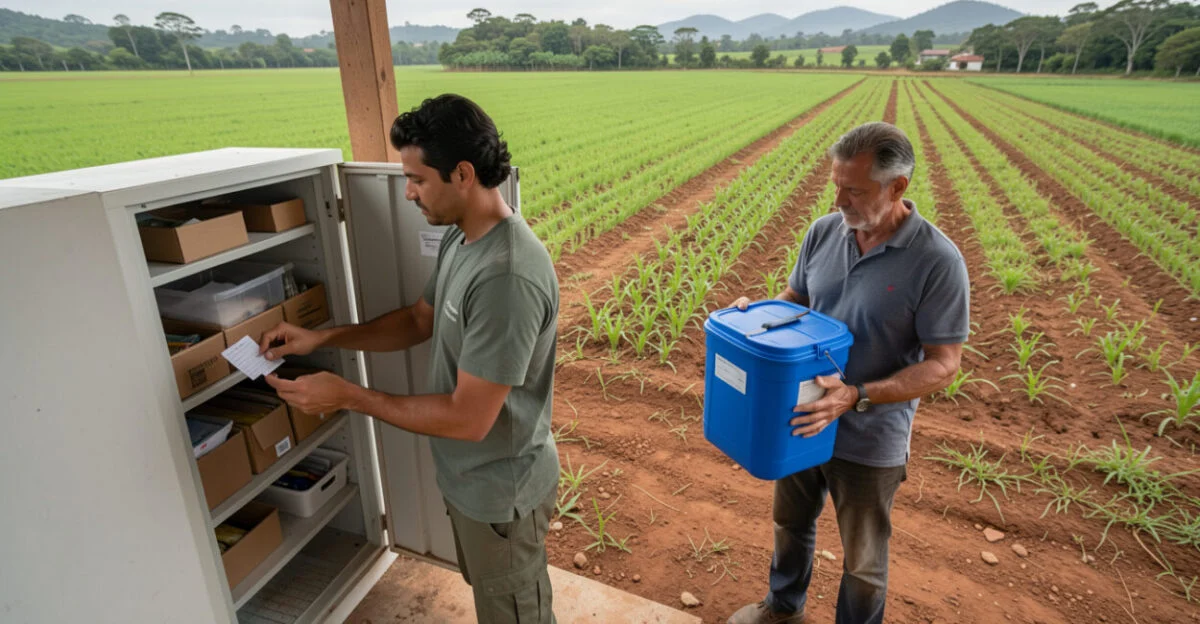
A useful record identifies each transaction and lets you check quantities by product and lot. When receiving products, note the delivery and any discrepancies. When withdrawing products, record the transaction as it happens and specify the operation or field where the product will be used.
A record card or spreadsheet can include these fields:
- Product name, category, and unit of measure;
- Date and transaction type: receipt, withdrawal, return, or adjustment;
- Quantity moved and balance after entry;
- Supplier or purchase document;
- Lot and expiration date, when applicable;
- Storage location;
- Person entering the record and reason for the withdrawal or adjustment;
- Area, crop, or operation the input was assigned to.
A common mistake is recording withdrawals only at the end of the day or week. When several people take products, this can lead to discrepancies and hide a shortage before an operation. Assign someone to record each withdrawal and periodically check physical quantities. Document the reason for adjustments instead of simply erasing the discrepancy.
Read also: How to Plan the Purchase of Used Farm Equipment
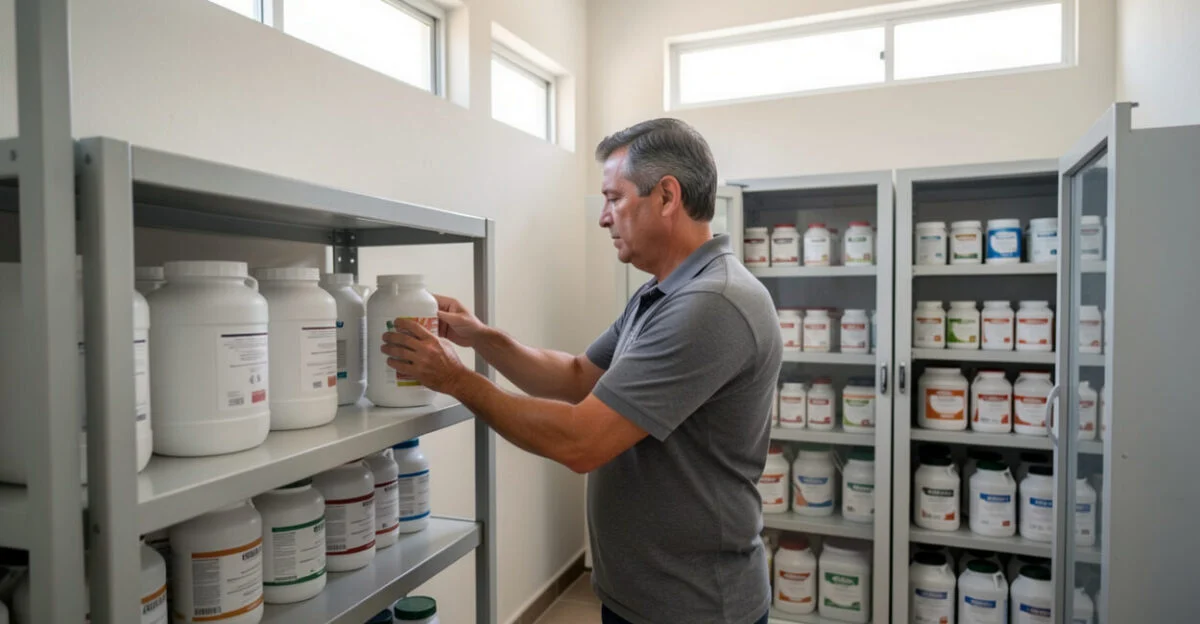
5. How to Store Agricultural Inputs Safely and Prevent Losses
Storage requirements vary based on a product’s composition and intended use. Check the label, safety data sheet, manufacturer instructions, and applicable regulations. Regulatory Standard No. 31, issued by Brazil’s Ministry of Labor and Employment, addresses occupational safety and health in agriculture, including measures related to handling and storing chemical products.
Keep packages intact and clearly labeled, organize lots so expiration dates are easy to check, and prevent unauthorized access. Separate products according to their characteristics and specific requirements; one temperature or ventilation rule won’t work for every category.
Read also: Crop Pest Control: How to Monitor Your Fields
It’s also useful to follow a first-expiring, first-out approach, as long as the product is still within its expiration date and suitable for use. Expired products, damaged packaging, or unidentified materials should be evaluated according to manufacturer instructions and applicable disposal rules. Don’t dispose of packaging or leftover products in makeshift locations.
Caution
Crop protection products require specific storage and handling precautions. General guidance does not replace the product label, safety data sheet, or applicable legal requirements.
6. How to Plan Purchases, Reordering, and Suppliers
The reorder point is the inventory level that triggers a new purchase so the product arrives before supplies run out. To set it, consider expected use through the next delivery, the supplier’s stated lead time, possible delays, and a reserve suited to the risk of late delivery. There is no single number that works for every farm.
When making a decision, check physical quantities, orders already in transit, the use calendar, lot expiration dates, and available storage conditions. If expected use changes, revise the planned quantity before submitting a new order. This way, the calculation isn’t based only on the current balance.
Major suppliers of agricultural inputs include manufacturers, cooperatives, distributors, and retailers. When choosing one, consider availability, delivery time, product documentation, transportation conditions, and technical support, as well as price. To assess operational and labor needs related to these decisions, see the overview of a farm technician’s daily work.
7. How to Align Inventory with Farm Operations and the Production Calendar
Farm management consists of the practices and decisions used to guide production, such as soil preparation, planting, irrigation, fertilizing, and pest and disease control. The schedule for these operations determines which inputs are needed, in what quantities, and when they must be available.
To prepare a forecast, connect each crop, field area, planned operation, and product specified in the technical plan. Then compare that demand with usable quantities on hand, orders in transit, and supplier lead times. Changes in weather, planted acreage, or pest pressure may affect the schedule, so revise the purchasing plan when conditions change.
This tracking also helps allocate products for each stage of the growing season. For example, a planned application should be consistent with the crop management plan; by itself, it does not authorize product use. To explore production decisions related to soil and climate, see the article on sustainable farming practices.
How to Choose the Right Inventory Management Method for Your Farm
The right method depends on the scale of the operation and the team’s ability to keep data current. Before choosing a tool, consider:
- How many products and transactions need to be tracked?
- Who records receipts, withdrawals, and adjustments?
- Do you need to track lot numbers, expiration dates, and field destinations?
- Is a computer or phone available where products are stored?
- How often will physical quantities be checked?
- Which products have specific safety and storage requirements?
A spreadsheet may work for an operation with few items and a manageable number of transactions. If you have multiple storage areas, crews, or products with traceability requirements, a system can make it easier to search records and set alerts, as long as someone verifies entries and keeps product records up to date.
Conclusion
Reliable inventory starts with clear categories, records entered as transactions happen, and storage conditions suited to each product. With this information, the farm can plan replenishment based on expected use and scheduled operations instead of relying only on memory or a rushed count.
Frequently Asked Questions
How often should I check physical inventory?
How often depends on transaction volume and the risk of shortages or losses. Products used regularly or subject to stricter traceability requirements may need more frequent checks. The key is to maintain a routine and investigate differences between physical and recorded quantities.
Can I store all inputs in the same storage area?
There’s no one-size-fits-all answer. It depends on product characteristics, storage instructions, safety requirements, and applicable regulations. Storage arrangements and conditions must meet those requirements.
How do I calculate the reorder point?
Estimate use during the supplier’s lead time and add a reserve that accounts for the risk of changes in demand or supply. Account for confirmed orders that are still on the way, but keep them separate from quantities already available.
What information is most important for tracking an input?
Product, quantity, transaction date, lot, expiration date, storage location, and intended use provide a useful baseline. The level of detail depends on the input type and the requirements that apply to the operation.
Artigos Relacionados
 5 Sustainable Practices That Transform Small Farms
 Integrated Pest Management: Sustainable Practices for Pest Control
 Digital Certificates and Data Security: Best Practices for Protecting Identities, Ensuring Compliance, and Reducing Risk in Modern Businesses
 A Guide to Early Childhood Education: Best Practices, Play-Based Activities, and Innovative Approaches to Whole-Child Development
 Agricultural Education: Teaching Practices and Sustainability
 Effective School Management: Practices for Students and Staff
