
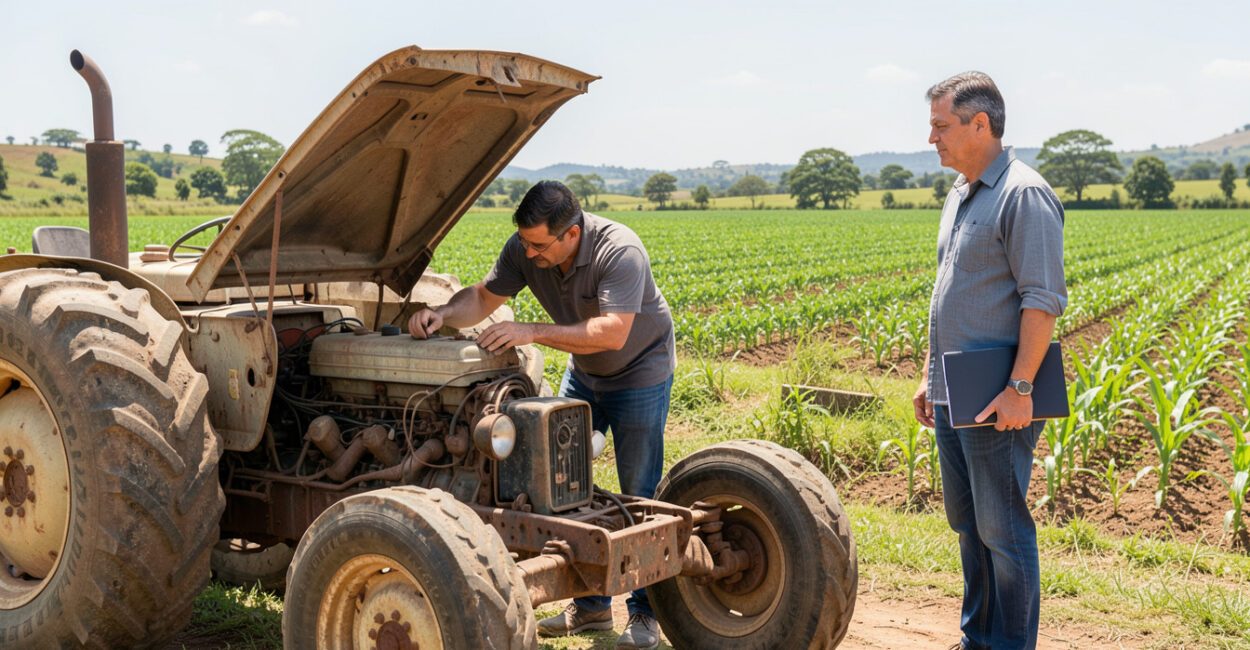
Buying used farm equipment takes more than comparing asking prices. The right choice depends on the work the machine will do, its mechanical condition, its history, and the costs of getting it up and running. The buying process also differs depending on whether you buy from a private seller or a dealer, with trade-offs in price, support, and the ability to verify the machine’s history.
Used equipment from a private seller or dealer: which should you choose?
If you prioritize price and can arrange an independent inspection, buying from a private seller may offer more room to negotiate. If you value help with your choice, access to service, and a more structured sales process, a dealer may be a better fit. In either case, your decision should depend on the machine’s condition, its paperwork, and the total cost—not just the listing.

The biggest difference is the buying process: a private seller may offer less structure and support, while a dealer may provide additional information and services that vary from business to business. Neither option, by itself, guarantees that the machine is in good condition.
Factor Private seller Dealer Asking price May allow for direct negotiation May include services or preparation History and information Depends on the seller and available records Inspection records may be available; confirm which ones Independent inspection Recommended before you commit Also recommended, even if the dealer inspected it Post-purchase support Generally limited to what you agree on May be available, depending on the dealer’s policy Negotiation Directly with the owner Terms set by the business Risk of incomplete information Depends on the seller’s transparency Depends on the quality of the records and the listing
How to choose the right used farm equipment for your operation
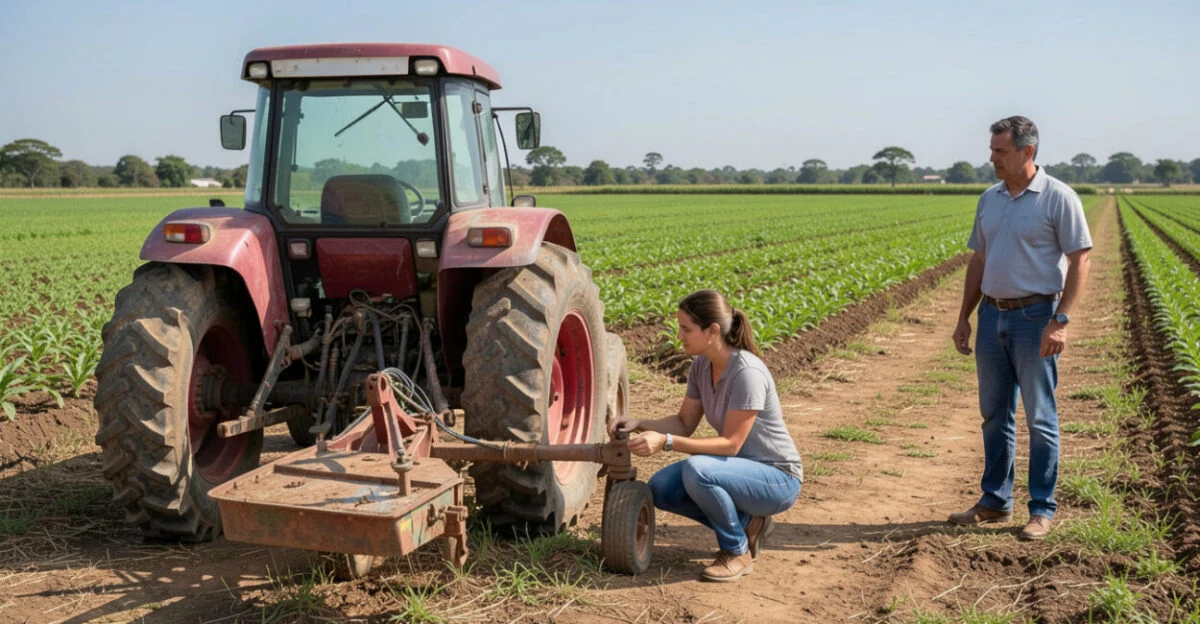
Start with the job: the crop, acreage, soil type, terrain, and planned tasks. Horsepower, drivetrain, working width, and compatibility with your implements must match the work you actually need to do. An inexpensive used compact tractor may be enough for maintenance, light hauling, or a smaller operation, but underpowered for heavy tillage.
Farm equipment includes tractors, combines, planters, sprayers, spreaders, and tillage equipment. When researching equipment by brand or model, treat manufacturers as a starting point for comparing models, parts availability, and local service—not as a guarantee of quality. The operator’s experience can also help define your requirements; an agricultural technician can help assess the operation and its equipment.
Make a list of the implements you plan to use and check their width, hitch, hydraulic flow, and manufacturer-recommended horsepower. A common mistake is choosing based on engine power, only to find later that the hydraulic system or transmission can’t handle the implement. For more on planning farm activities, see our content on sustainable farming practices.
How to inspect a used tractor before you buy

A pre-purchase inspection is a technical assessment of the machine’s condition and operation to identify defects, risks, and potential repairs before you take ownership. In simple terms, it checks whether the equipment works as it should and whether its wear is consistent with the seller’s account of its use.
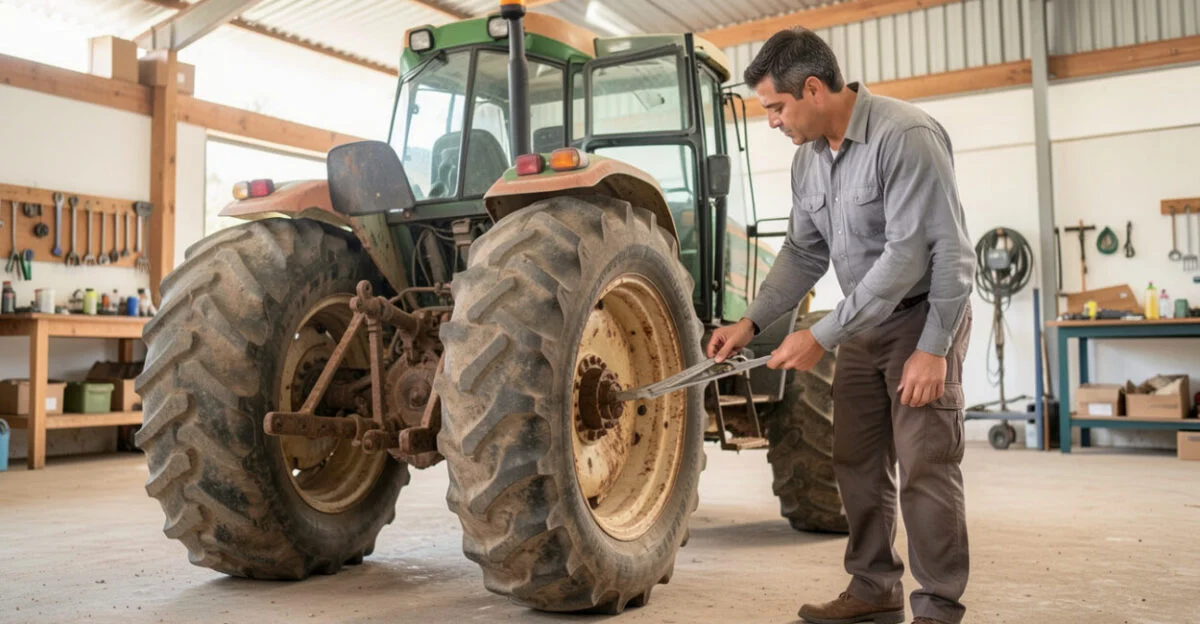
Inspect the engine when it’s cold, looking for leaks, unusual smoke, noise, and difficulty starting. Check fluid levels and condition, but don’t assume the engine is sound just because it’s clean: a recent wash can hide leaks. Test every gear and watch for noise, jerking, or difficulty shifting.
Operate the hydraulic system with a compatible load and check that it lifts and holds the implement without dropping quickly. Check for play in the steering, axles, and hitch, as well as cracks or welds on the frame. Heavily worn tires can mean a significant expense; compare wear from side to side and look for cuts, bulges, and repairs.
Hour-meter readings are a clue, not definitive proof of use: the meter may have been replaced or may not work properly. Ask for service records and compare them with wear on the pedals, steering wheel, seat, and controls. Test the machine, including driving it and operating the hydraulics, preferably with a mechanic or professional familiar with the model. The experience of farm professionals can help determine whether the machine fits your operation’s routine.
Embrapa, Brazil’s agricultural research agency, and SENAR, Brazil’s National Rural Learning Service, offer resources on farming practices and safe equipment operation. For workplace safety and health in farm work, consult Regulatory Standard NR-31, Brazil’s workplace safety standard for agriculture, issued by the Ministry of Labor and Employment. The condition of a specific machine, however, depends on its model, use history, and inspection; general guidance is no substitute for an in-person mechanical assessment.
Read also: Farm Input Inventory Management: Best Practices
How to tell whether a used tractor is priced in line with the market
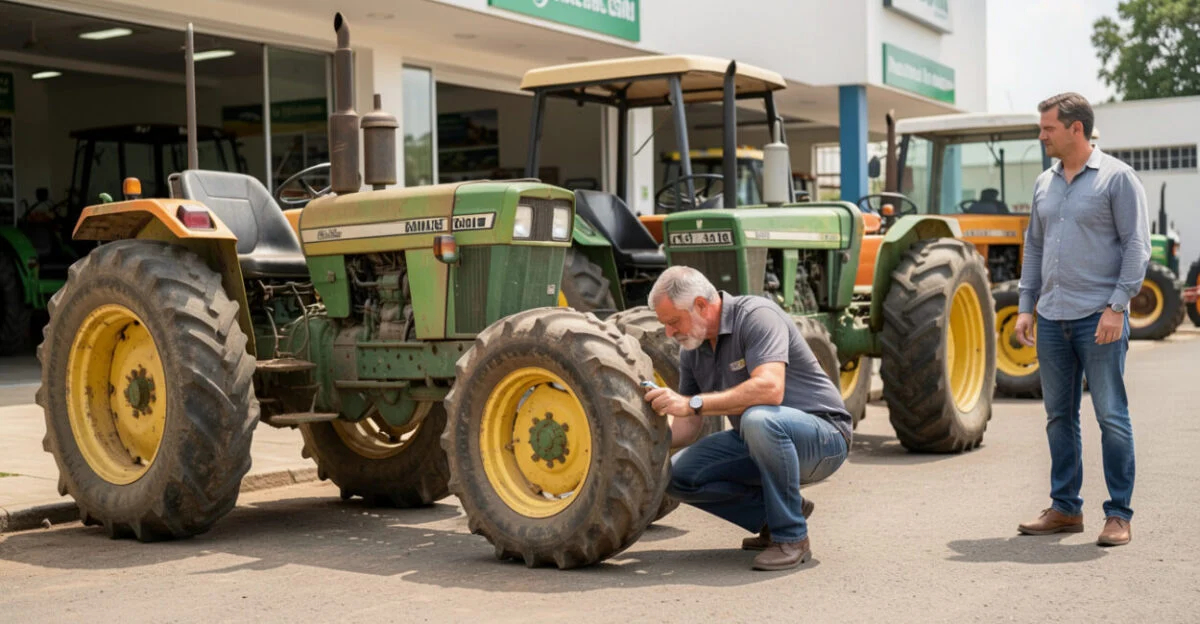
An asking price is reasonable when it compares favorably with similar machines in model, year, configuration, and condition, after accounting for repairs and transportation. Check multiple listings and ask dealers or professionals in your area for estimates; a listing price doesn’t confirm the price the seller will actually accept.
Brazil’s FIPE price guide should not be treated as a general reference for tractors and other farm equipment: it covers specific vehicles and is not a universal price guide for farm machinery. As a result, searches for a FIPE price guide for used farm equipment or tractors may not return an applicable value. Check the official FIPE service to see whether it covers the model, and compare local references as well.
Read also: Soybean Planting: Planning the Season and Managing the Crop
Work out the total cost before negotiating. Your budget should include the purchase price, transportation, inspection, immediate repairs, parts, and initial maintenance. Repair costs vary depending on the model, region, and parts availability.
Cost item How to estimate it Asking price Price requested by the seller Transportation Get a quote to your operation Inspection Get an estimate from an independent professional Repairs and parts List the defects found and get quotes Initial maintenance Include fluids, filters, and services recommended for the model
Hypothetical example: If a machine costs R$ 80,000, transportation costs R$ 3,000, the inspection costs R$ 1,000, estimated repairs total R$ 6,000, and initial maintenance costs R$ 2,000, the estimated total comes to R$ 92,000. These figures are for illustration only; get local quotes before making a decision.
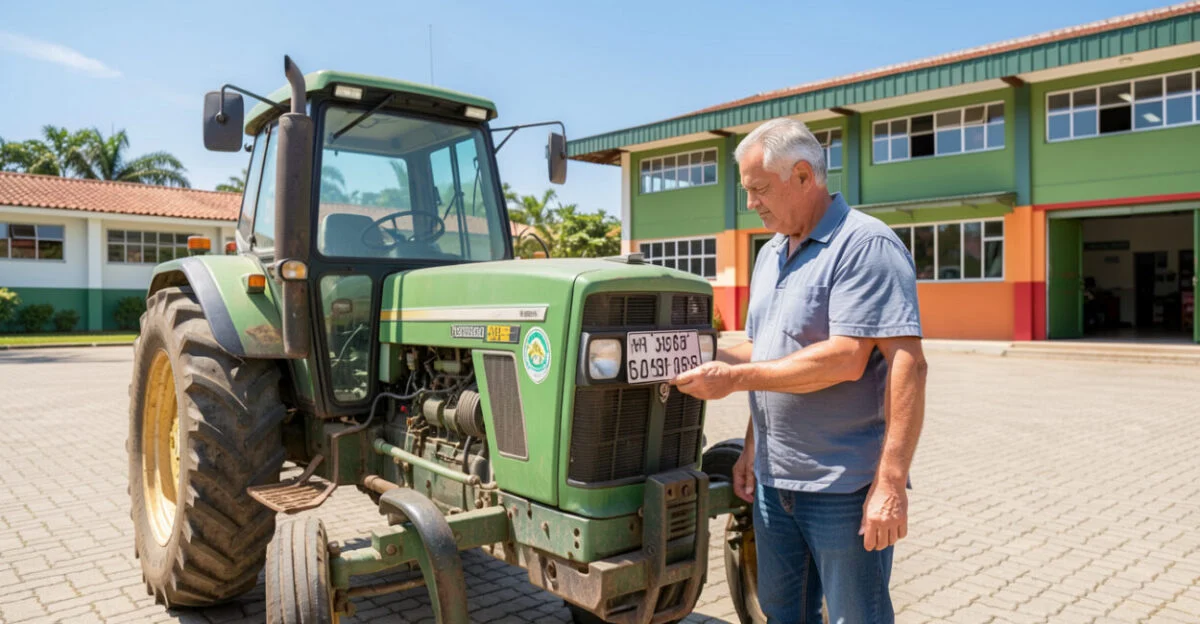
Where to find used farm equipment and how to assess listings
You can look for used farm equipment on platforms such as OLX and Mercado Livre, as well as at dealerships, cooperatives, and from regional sellers. A cheap used tractor listing on OLX or Mercado Livre is a starting point for comparing specifications, not proof of the machine’s history or condition.
Search by model and region, but make sure the photos show the same machine and that the seller will allow an in-person visit and inspection. Phrases such as “cheap tractor for sale, urgent” may reflect a legitimate need to sell quickly, but they also appear in listings designed to pressure buyers into paying. Be wary if the seller refuses an inspection, the price is far below that of comparable equipment, or they ask for a deposit before you confirm who is selling it.
Specific searches, such as “used Valmet tractors in Rio Grande do Sul” or “cheap used tractor OLX Jaguariúna, São Paulo,” can help you find local listings when available. They don’t confirm that an active or suitable offer exists. Compare distance, transportation costs, and access to local service—not just the asking price.
What should you check in the paperwork and history before paying?
Before paying, verify the machine’s identity, the seller’s identity, and the documents proving ownership or authorization to sell. Make sure the serial number and other identifiers match the equipment, and check for any applicable restrictions, debts, or liens.
Ask for previous purchase receipts, available invoices, and maintenance records. If the seller isn’t the owner named in the documents, ask for verifiable authorization. Requirements may vary depending on the type of equipment and its registration status; confirm the requirements with the relevant authorities and, if needed, a qualified professional.
Put the model, machine identification, price, payment method, included items, and agreed terms in writing. Note known defects and agree on the delivery of documents and implements. When buying from a private seller, don’t transfer money to a third party with no proven connection to the sale. When buying from a dealer, request a contract and receipt in the name of the responsible business.
Final checklist for a safer purchase
- Define the tasks, implements, and horsepower and hydraulic requirements.
- Compare equivalent machines by model, configuration, condition, and region.
- Inspect the engine, transmission, hydraulics, tires, frame, and controls.
- Consider hour-meter readings and wear alongside maintenance records.
- Test the machine and, if possible, get an independent assessment.
- Add transportation, inspection, repairs, parts, and initial maintenance to the price.
- Verify the seller’s identity, the machine’s history, and its identifiers.
- Put the terms and items included in the sale in writing.
Negotiate when an inspection identifies a specific defect and you have an estimate for fixing it. Walk away if the identifiers don’t match, the seller pressures you to pay without an inspection, refuses to show documents, or can’t explain the machine’s history. To learn more about farm operations and farm work, resources on agricultural technology can complement your research.
Frequently asked questions
Is buying a cheap used tractor worthwhile for a small farm?
It can be worthwhile if the horsepower and implements suit the work and the total cost fits your budget. If the machine is underpowered or needs expensive repairs, the low price is no longer an advantage.
What should I do when a listing says “cheap tractor for sale, urgent”?
Treat the urgency as information, not as a reason to pay early. Ask for the machine’s identification and documents, and arrange an in-person inspection. Don’t send a deposit before verifying the machine and the seller.
Can I find courses on farm equipment?
Yes. SENAR, Brazil’s National Rural Learning Service, offers farm training resources and programs, and local institutions may offer equipment operation and safety courses. Check the content, requirements, and availability directly with the organization.
How do I compare used tractors from different brands?
Compare models suited to the same work, looking at implement compatibility, mechanical condition, parts availability, and service options near your operation. The brand alone doesn’t tell you which machine is in better condition.
Prices, document requirements, and regulations can vary, so confirm costs with local sellers and professionals and check with the relevant official authorities before completing the purchase.
Artigos Relacionados
 Coffee Cultivation: How to Plan Your Farm and Care for Plants
 Efficient Irrigation: How to Plan Water Use on the Farm
 Crop Rotation: How to Plan Planting on Your Farm
 Fish Farming: How to Plan Ponds and Raise Fish
 Rural Tourism: How to Create a Farm Experience
 Rotational Grazing: How to Plan Pasture Paddocks
