
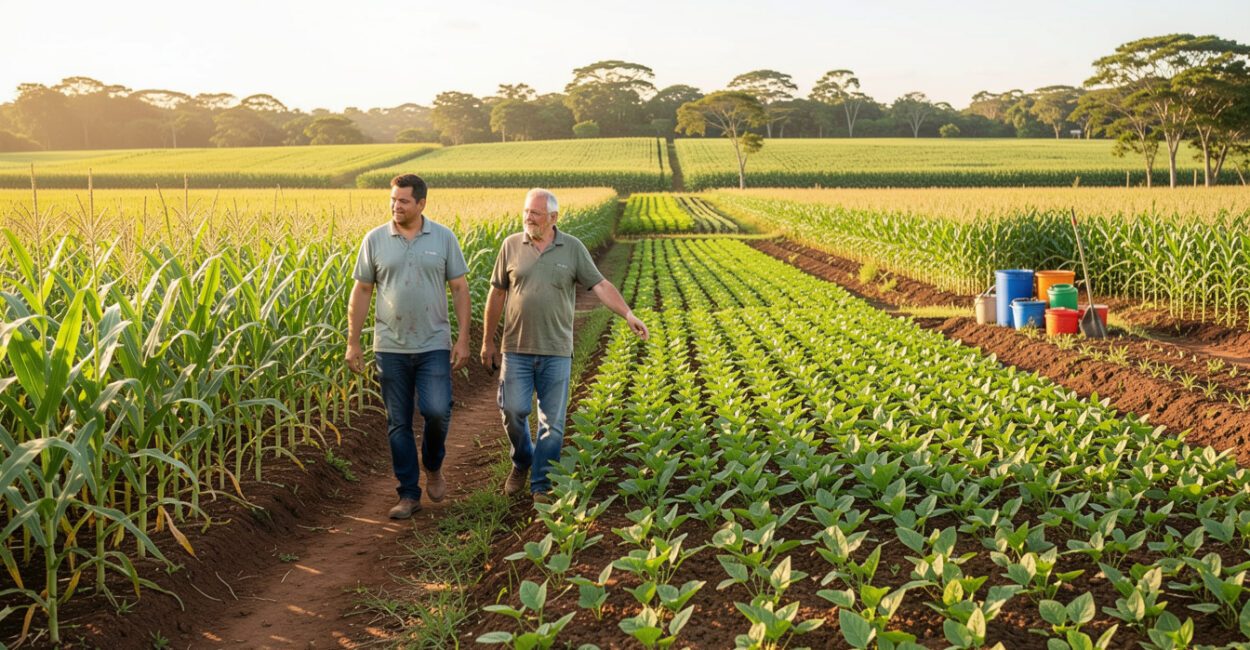
A field can produce well for several growing seasons and still develop problems when the same plant family is grown there repeatedly. Planning crop rotation helps break this cycle and organize what will be grown in each area over time. The challenge is to build a sequence that works with the farm’s soil and climate without overlooking planting windows, markets, or available resources. A combination that makes sense in one region may fail in another.
What is crop rotation, and how does it work in agriculture?
Crop rotation is the planned alternation of plant species or botanical families in the same area over successive growing seasons. In agriculture, this change aims to diversify how the soil is used and reduce the repeated conditions that favor pests, diseases, and weeds. Simply put, growers decide what to plant next before sowing each crop.

Alternation works because crops differ in their root systems, nutrient needs, the amount and type of residue they leave behind, and their relationships with organisms living in the soil. A grass, a legume, and a crop from another family can serve different purposes, provided the choices suit the region and the agricultural calendar. Crop rotation is not the same as crop sequencing. In a sequence, one crop follows another, often repeating the same arrangement each year, such as soybeans in the summer and corn as a second crop. In a rotation, the planned sequence varies over time and may include cover crops, such as brachiaria or legume cover crops.
A well-planned rotation assigns different roles to crops and growing seasons instead of relying on a single species to solve every problem in a field.
What benefits and limitations can arise in a field?
The benefits of crop rotation depend on the sequence selected and how management is carried out. Diversification can improve soil cover, support nutrient cycling, and make it harder for certain pests, diseases, and weeds adapted to repeated host crops to persist. Roots of different depths also explore different layers of the soil profile. Residue from species with varied characteristics can help protect the surface from the impact of rainfall and reduce the time the soil remains bare. Embrapa, Brazil’s agricultural research agency, considers diversification and soil cover important elements of conservation systems, but results depend on local conditions.
There are practical limitations: an alternative crop may not have a nearby market; planting may require equipment or expertise the farm does not yet have; and a cover crop may compete for water if management and termination timing are unsuitable. Crop rotation alone also cannot correct severe compaction, established erosion, or nutrient imbalances. To make decisions about soil amendments and fertilizer, start with a soil test to guide management decisions.
A common challenge arises when cover crops are planted late: they may produce little biomass before the next crop. The calendar needs to allow time for establishment and termination, rather than treating cover crops as a step that can fit into any gap.
Are no-till farming and crop rotation the same practice?

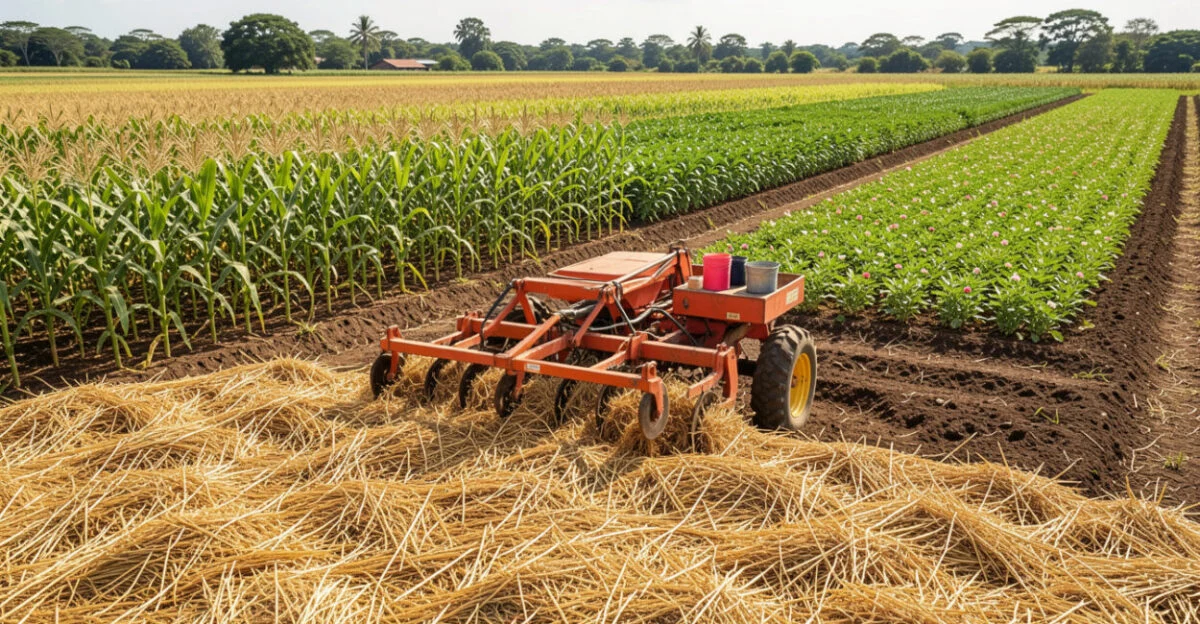
No. No-till farming is a management system that keeps the soil covered, minimizes soil disturbance, and uses direct seeding; crop rotation is the planned alternation of species. The practices can complement each other, but neither replaces the other.
A field can be managed without tillage and still repeat a narrow crop sequence. In that case, residue helps protect the soil, but it does not ensure planned diversification of plant families and functions. The FAO describes conservation agriculture as being based on principles such as minimal soil disturbance, permanent soil cover, and crop diversification.
When evaluating a system, consider both how the soil is managed and what will be planted each season. Embrapa’s page on no-till farming can provide additional information about the system; for guidance suited to your operation, you can also seek local technical assistance.
Read also: Growing Soybeans: From Planting to Harvest
What should you consider before choosing crops?
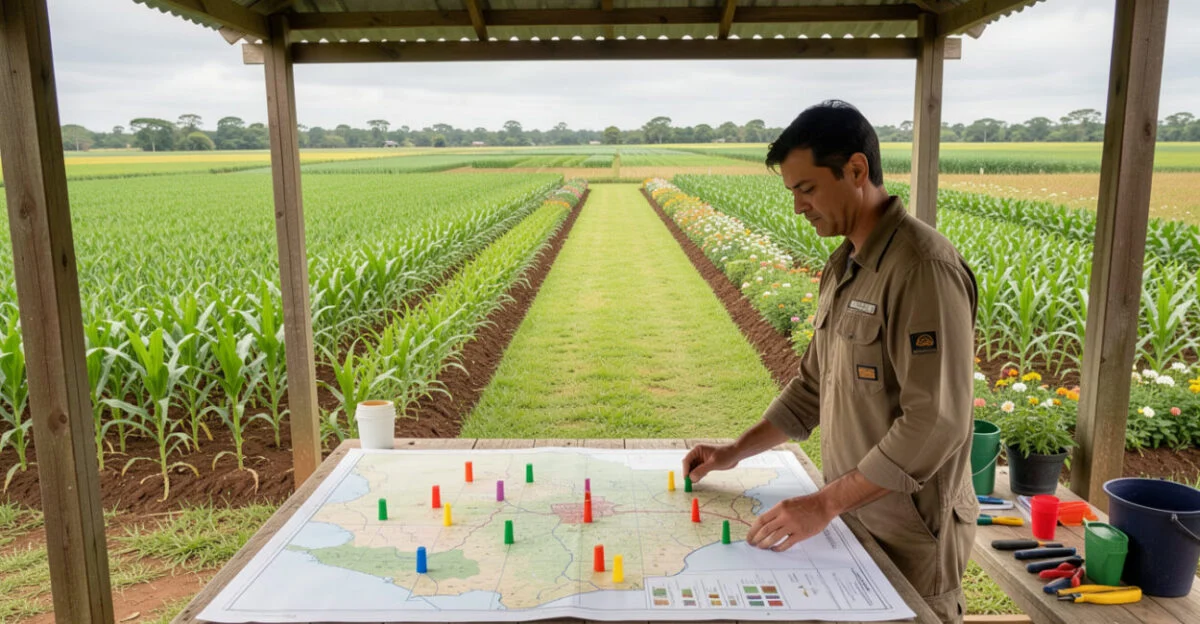
Start by assessing the field and reviewing its cropping history. A simple field map showing crops, pest and disease issues, establishment failures, and completed operations can help prevent decisions based solely on whichever crop is most profitable that year. MAPA, Brazil’s Ministry of Agriculture and Livestock, publishes information and guidance related to agricultural production; recommendations for varieties, planting dates, and management should be checked for your region and production system. At the farm level, weigh this information against the following criteria:
Read also: Beekeeping: How to Get Started on Your Farm
- Climate and planting window: Make sure there is enough time and moisture to establish the crop and cover crop before the next growing season.
- Soil and water: Consider texture, drainage, fertility, compaction, and the risk of water stress. A species that produces a lot of residue may not suit every situation.
- Plant families and crop health: Avoid repeating hosts of significant pests and diseases. Changing crops needs to interrupt the cycle of the problem present in the field.
- Operations and markets: Check seed, machinery, labor, storage, and options for selling or using the crop.
If the farm cannot establish or market a planned crop, revise the sequence before planting. Diversification cannot make up for an operational bottleneck that puts the main crop’s planting window at risk.
How do you create a crop rotation plan, step by step?
Planning works best when it is done by field and covers more than one growing season. Before finalizing the sequence, confirm the calendar with a professional who knows the region, especially when there are pest or disease risks or planting restrictions.
- Divide the area into manageable fields. Separate areas with differences in soil, topography, drainage, or problem history.
- Record what happened. Note previous crops, weeds, diseases, pests, observed yields, and completed operations. Don’t rely only on the memory of the person who manages the field.
- Set the main cash crop and available planting window. The sequence must fit the actual calendar, including harvest, operational preparation, and establishment of the next crop.
- Choose crops with different functions. Combine different families and root systems. Include a cover crop when a suitable species, seed, and enough time for establishment are available.
- Map the sequence and check the risks. Review shared host plants, water needs, equipment, establishment costs, and the intended use or market for the crop.
- Review the plan before planting. Rain delays, market changes, or harvest problems may require a workable alternative without abandoning management goals.
To map out the rotation, list the fields in rows and growing seasons in columns. Fill each cell with the crop and, if needed, add the cover crop’s purpose or a crop health note. For example: “corn, residue” or “cover crop, weed control.” This layout makes repeated patterns easier to spot than a simple list of crops.
Checklist before approving the calendar: Is there enough time between crops? Is the species suited to the field’s climate and soil? Are seed and equipment available to establish it? Is there a plan for selling or using the crop? Has the history of pests and diseases been considered?
What are three examples of crop rotation?
The examples below illustrate planning approaches, not ready-made prescriptions. The feasibility of each sequence depends on the region, planting date, water availability, varieties, market, and occurrence of pests and diseases.
Sample sequence
Possible goal
Considerations
Soybeans → corn → brachiaria cover crop
Alternate species and maintain cover after the cash crop.
Check the establishment window, water availability, and brachiaria management before the next crop.
Corn → legume cover crop → soybeans
Introduce a species from another family and diversify crop residue.
The cover crop needs enough time to establish; assess termination timing and the risk of competition for water.
Wheat → soybeans → adapted winter cover crop
Spread crops across seasons and use the time between cash crops.
Choose a cover crop suited to the climate, regional calendar, drainage, and disease risks.
These three combinations address the search for crop rotation examples, but your farm may call for a different solution. In fields with a history of a specific disease, for example, the botanical family of the next crop matters as much as the species itself.
An agricultural sequence is practical only when the planting window, field history, and the farm’s operational capacity all fit the same calendar.
Planning also needs to account for what happens to the harvest. If the crop will be stored, storage capacity and postharvest infrastructure are part of the equation; this article on grain storage and loss prevention helps connect the agricultural calendar with that stage.
How do you monitor and adjust the plan between growing seasons?
Record what was planted, when, which variety was used, and the soil moisture conditions. Then monitor emergence, soil cover, residue levels, and the presence of weeds, pests, or diseases. These records help distinguish a planning problem from a weather event or operational failure.
If a crop is delayed or the planting window closes, don’t force a species into conditions where it cannot establish. Compare alternatives with technical support, considering the effect on the next crop and the field’s pest and disease history. Market changes may also require adjustments, but don’t switch to a host crop associated with a recurring problem without first evaluating the risk.
Crop rotation has limits: its effects on soil structure and pest pressure depend on time, execution, and field conditions. Monitoring does not guarantee a particular increase in yield or reduction in costs; it helps identify what is working and adjust the calendar based on evidence from your own farm.
Before the next planting, gather field maps, soil test results, and field notes. Review the sequence field by field, and confirm technical recommendations and the regional planting window before buying seed or scheduling machinery.
Frequently Asked Questions
Can a cover crop be part of a rotation even if it doesn’t generate direct income?
Yes. It can help cover the soil or diversify the system, although it comes with costs and requires management. The decision depends on the expected benefit to the system and whether it can be established within the available planting window.
Can you change the planned sequence midway through the cycle?
Yes, for example, if weather delays fieldwork or the crop’s market destination changes. Before switching, check that the alternative fits the planting window and won’t favor pests, diseases, or weeds present in the field.
Where can I find planting recommendations for my region?
Consult publications from Embrapa and technical guidance from research and agricultural extension organizations serving your region. For decisions about planting dates, varieties, and pest and disease management, use recommendations specific to the crop and county.
Artigos Relacionados
 Marketing Channels: From Farm to Store Shelf
 Fruit Farming: Profitable Crops Adapted to Brazil’s Northeastern Semi-Arid Region
 5 Sustainable Practices That Transform Small Farms
 Agrotechnology: Digital Solutions to Modernize Farms
 Livestock and Technology: Innovations Transforming the Farm
 African Mahogany Planting: A Complete Guide to Profitable, Sustainable Growing
