Agrotechnology is the combination of digital solutions, sensors, software, and integrated practices that improve efficiency, sustainability, and decision-making in agricultural operations.
In recent years, agrotechnology has advanced through the Internet of Things, big data, satellite imagery, and automation, transforming production models and risk management in agriculture. This shift is driven by demand for higher productivity, environmental constraints, and global markets, making collaboration among researchers, public policymakers, and private investors essential.

Key Takeaways
- Agrotechnology speeds up decision-making with real-time data.
- Integrating sensors and analytics reduces costs and environmental impact.
- Digital models and automation boost productivity and predictability.
Agrotechnology: An Overview of Opportunities
Innovation in Agriculture
Agrotechnology offers integrated platforms that connect sensors, drones, and software to continuously monitor crops and livestock, enabling preventive actions. These solutions generate time-series data for predictive analysis, helping farmers schedule irrigation, input applications, and harvest logistics while reducing waste.
Adoption Trends
Cloud-based systems and subscription models are being adopted gradually, lowering upfront barriers and making advanced tools more accessible to mid-sized farms. Public-private partnerships and agricultural credit programs support modernization, while technical training is critical to maximizing return on investment.
Agrotechnology Platforms and Tools
Farm Management Software
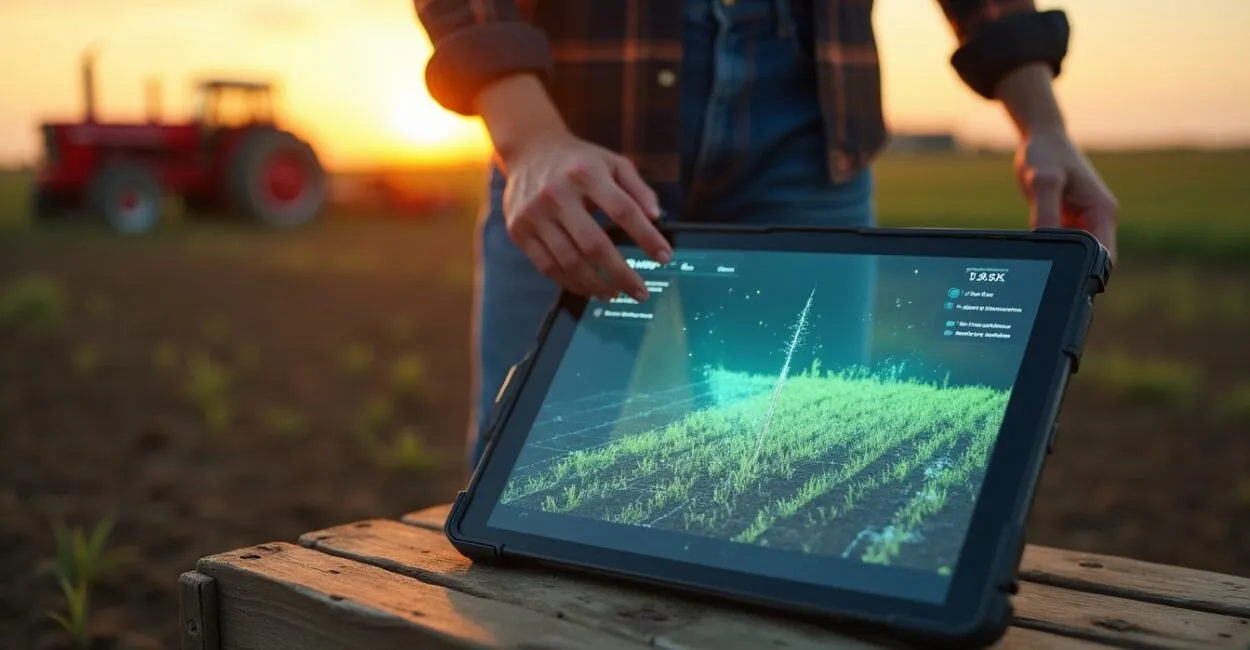
ERP systems and management platforms collect operational data, track costs, and generate productivity metrics by field, helping managers make informed decisions. Mapping spatial variability and reviewing agronomic history make it possible to tailor management and apply precision agriculture strategies while using fewer inputs per acre.
Hardware and Sensors
Soil sensors, weather stations, and optical detectors connected through IoT provide continuous readings, enabling precise, real-time adjustments to fertilization and irrigation. Equipment installed on tractors and harvesters and connected through telemetry improves operational efficiency while reducing logistics and maintenance costs.
- Cloud platforms for data integration.
- Remote sensors and on-site weather stations.
- Predictive analytics tools and dashboards.
The lists above highlight the core ecosystem: software, hardware, and analytics. Each layer must be integrated using consistent standards to deliver lasting value.

Economics and Business Models

Profitability and Costs
Revenue models include subscriptions (SaaS), hardware sales, and consulting services, with pay-per-use options emerging for small-scale producers. Return on investment depends on scale, technology intensity, and training; financial analyses should also account for climate risk and commodity prices.
Financing and Policies
Government programs and development agencies offer loans and subsidies to support agrotechnology adoption, lowering entry costs and initial risks. Public policies that promote data interoperability and cybersecurity build trust and encourage larger private investments.
Environmental Impact and Sustainability
Reducing Inputs
Precision applications reduce fertilizer and pesticide use by applying only what is needed, lowering runoff, costs, and the environmental footprint of production. Continuous monitoring enables adaptive management, protects water resources, and supports more sustainable crop rotation.
Emissions Mitigation
Carbon modeling and sequestration practices integrated with digital platforms help producers access carbon markets and sustainability certifications.
Read also: Grain Storage: How to Reduce Losses on the Farm
Tools that quantify emissions by activity support reduction strategies and reporting for international buyers and certifiers.
- Mapping management zones to reduce input applications.
- Continuous water monitoring for more efficient irrigation.
- Reports for sustainability certifications and carbon credit markets.
Environmental metrics provide buyers with concrete evidence and help farms meet regulatory requirements, while improving their reputation and access to premium markets.
Read also: Agricultural Finance: How to Access BNDES Loans in 2025
Use Cases: Crops and Livestock
Crop Applications
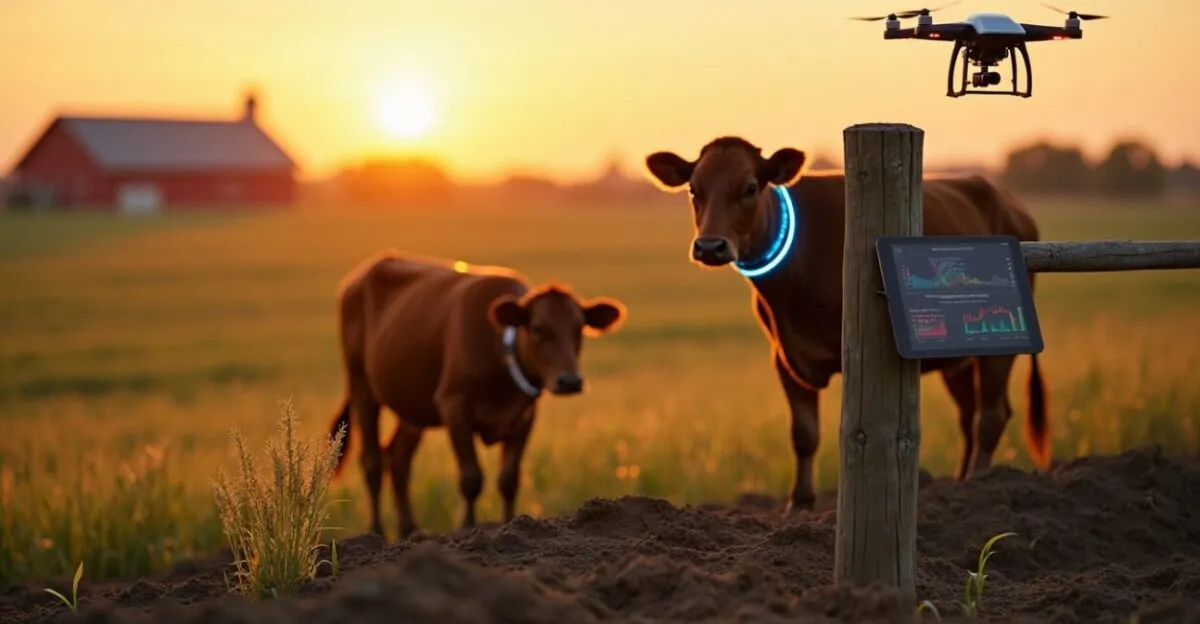
Drones used for mapping and precision spraying detect stress and pests before they spread, saving inputs and protecting yields. Yield forecasting models based on multispectral imagery help inform harvest timing and advance marketing decisions.
Livestock Applications
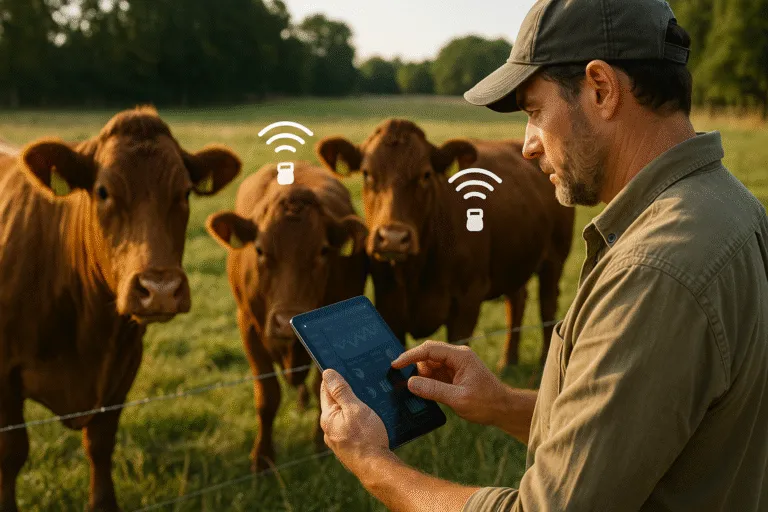
Smart collars and behavioral monitoring systems track animal health and reproduction, reducing mortality and optimizing weight gain per animal. Managing pastures with sensors and imagery supports rotational grazing plans that improve feed efficiency and reduce soil degradation.
Data Integration, Security, and Governance
System Interoperability
Open protocols and APIs ensure that data from sensors, machinery, and platforms can be combined to generate integrated insights and robust models. Standardized formats simplify integration across vendors and prevent data lock-in, supporting competition and ongoing innovation.
Security and Privacy
Protecting agricultural data through encryption and access policies is essential to mitigate the risk of leaks or misuse by competitors and markets. Strong governance practices define data ownership and sharing terms, balancing collective benefits with individual producers’ rights.
- APIs and open standards for integration.
- Encryption and role-based access controls.
- Clear data contracts and policies among stakeholders.
Technical and legal governance is just as important as technology: without clarity, incentives to share data diminish and the ecosystem cannot scale.
| Feature | Traditional Approach | Agrotechnology Solution |
|---|---|---|
| Decision-making | Based on experience | Based on real-time data |
| Input use | Uniform application | Localized, variable-rate application |
| Climate risk | High variability | Predictive modeling reduces uncertainty |
The table compares traditional and modernized approaches: agrotechnology improves operational precision and reduces economic and environmental volatility.
| Tool | Benefit | Limitation |
|---|---|---|
| Drones | Fast mapping | Upfront cost and regulations |
| Soil sensors | Efficient irrigation | Maintenance and calibration |
| SaaS platforms | Analytics and dashboards | Dependence on connectivity |
Comparing tools helps farms plan a phased rollout, weighing operational benefits against technical and economic constraints.
To support strategic decisions, consult official sources and technical studies that detail the sector’s impact and policy recommendations.
Further reading: Brazil’s Ministry of Agriculture, Embrapa, Brazil’s agricultural research corporation, and articles on specialized websites.
Practical Implementation and Roadmap
Adoption Steps
Mapping needs, running a pilot on representative fields, evaluating metrics, and scaling gradually reduces risk and helps tailor the technology to local conditions.
Operational training and ongoing technical support are essential to prevent underuse and ensure sustainable financial returns over the medium term.
Success Metrics
Typical KPIs include lower cost per acre, higher yields, water use per unit produced, and environmental compliance rates.
Regular reports and benchmarking against peers help farms refine their strategies and justify further investments with reliable data.
- Run a controlled pilot before scaling up.
- Train teams and agronomists.
- Track KPIs continuously and make adjustments.
A disciplined implementation process with clearly defined metrics turns technology into a competitive advantage and reduces the risk of project failure.
Question 1: What Is Agrotechnology, and Why Does It Matter Today?
Agrotechnology brings together digital tools, sensors, and analytics to optimize production and sustainability. It matters because it boosts efficiency, reduces environmental impacts, and improves climate risk management, while opening access to markets that value traceability and certification.
Question 2: What Are the Main Adoption Challenges for Small Farms?
Small farms face barriers such as upfront costs, limited connectivity, a shortage of technical training, and perceived risk. Flexible business models, cooperatives, and public support programs can help lower these barriers and encourage local collaboration.
Question 3: How Can You Measure Return on Investment in Agrotechnology Projects?
ROI can be measured using metrics such as increased productivity, reduced input use, and savings in fuel and operating time. Pilot projects with before-and-after metrics and discounted cash flow analysis provide realistic estimates to guide decisions about scaling up.
Question 4: Which Regulations or Public Policies Affect Agrotechnology in Brazil?
Agricultural credit policies, extension programs, innovation funding initiatives, and environmental regulations shape adoption. Rules on drone use, data protection, and research incentives are examples that affect sector strategy and compliance.
Question 5: How Can You Ensure Agricultural Data Security and Governance?
Security requires encryption, authentication, backups, and clear agreements about data ownership and use. Governance models should define consent, purpose, and benefits, building trust among producers, service providers, and buyers.