
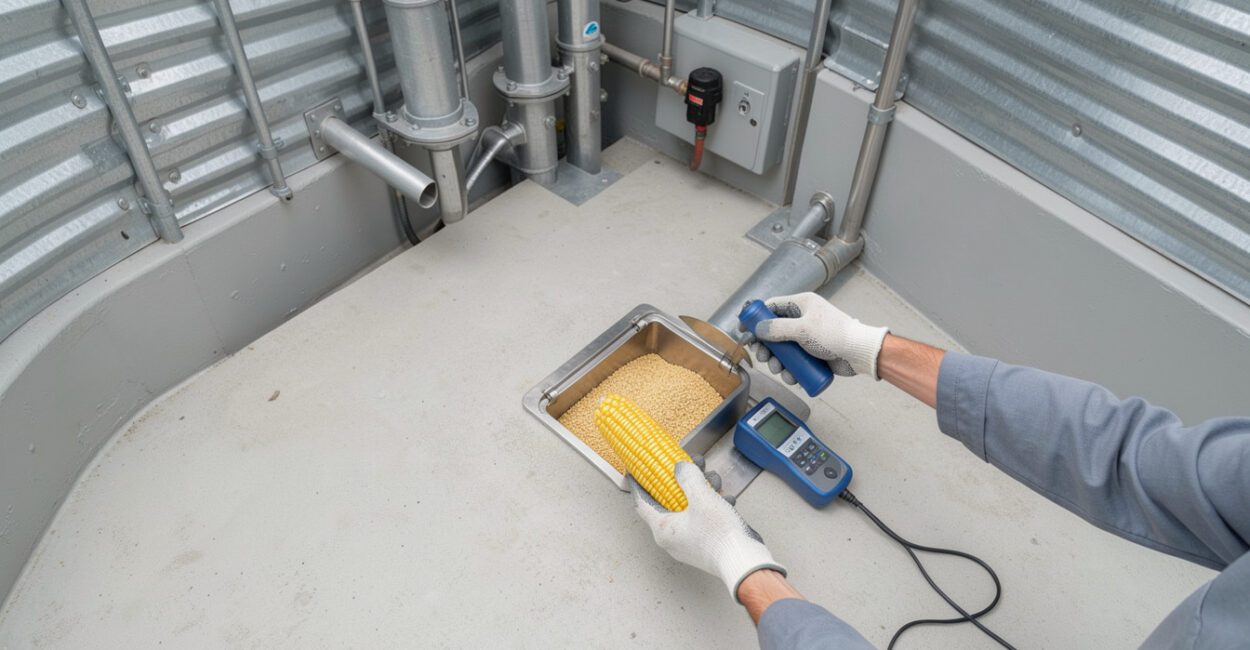
When harvest moves faster than the facility can handle, grain may sit in trucks, receiving pits, or makeshift piles, exposed to moisture and spoilage. On-farm grain storage helps manage that gap and decide when to sell, provided the system fits the operation and is managed properly. Storing the crop, however, won’t fix problems with cleaning, drying, or aeration. The silo choice and monitoring routine need to be planned together; otherwise, the facility may concentrate losses instead of preventing them.
What Is On-Farm Grain Storage, and How Does It Reduce Losses?
Grain storage means preserving a crop under controlled conditions of moisture, temperature, cleanliness, and pest protection until it is used or sold. On the farm, storage reduces exposure to rain, contamination, and receiving-line delays, but it only works when grain goes into storage in suitable condition and the system allows operators to monitor what is happening inside the stored grain mass.

The benefits also depend on logistics. With enough capacity, farmers can organize harvest flow and keep receiving from becoming a bottleneck. Deciding to hold grain for a later sale also requires weighing operating costs, financing, transportation, and market conditions; a silo alone does not guarantee a better price.
Storage is part of a broader set of post-harvest practices. For crops where appearance and product quality also matter, see the guidance on post-harvest processing to preserve potency and color.
Which Types of Grain Storage Work for Farms?
The main options are metal silos, concrete silos, grain warehouses, and temporary solutions such as grain bags. They differ in capacity, investment, flexibility, and operating requirements; the right choice depends on the scale of the operation and how long the grain will be stored.
System When it may make sense Key consideration Metal silo When vertical storage with planned aeration and unloading is desired. Requires a suitable foundation, proper assembly, and maintenance of the panels, floor, and equipment. Concrete silo or grain warehouse For larger operations or projects integrated with a receiving facility. Construction, grain handling, and monitoring need to be sized for the expected flow. Grain bag As a temporary option or to add capacity during peak periods. Requires a prepared area, protection from damage, and a plan for removing the grain. Bulk storage in an adapted structure When an existing structure can be technically evaluated and approved. Sealing, ventilation, and protection against water and rodents should never be improvised.
Temporary systems can help manage an unusually large crop, but they are not automatic substitutes for a permanent facility. Before hiring or installing a solution, the plan should account for loading, monitoring, unloading, and the grain’s destination.
How to Choose Silo Capacity and Location

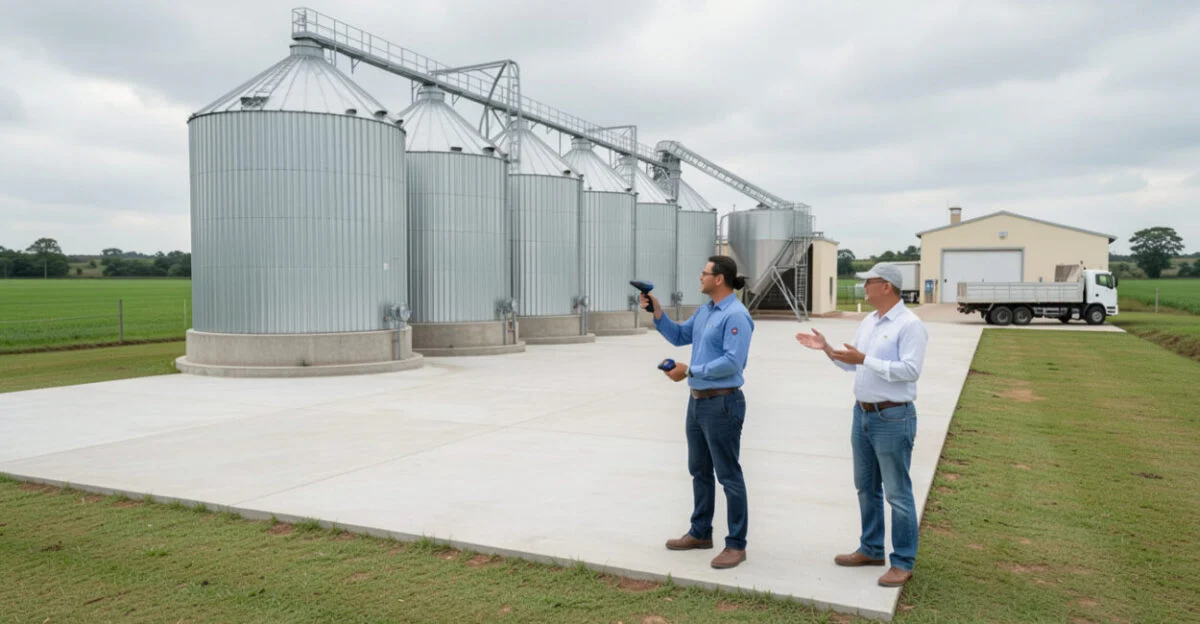
The right capacity is enough to hold the volume the farm plans to store without creating bottlenecks in receiving, drying, or shipping. To estimate it, consider production by crop, the share to be held, harvest frequency, and the volume that will be sold or transported soon after harvest.
You can make an initial estimate in stages:
- Estimate production for each crop and set aside the volume intended for immediate sale.
- Add the grain that will remain on the farm, taking different harvest schedules into account.
- Convert the mass to volume using the appropriate bulk density for each grain and the project specifications.
- Ask the designer to check usable capacity, operating space, aeration, and compatibility with the dryer and conveyors.
Illustrative example: If a farm plans to hold 600 tons and reserve another 200 tons for a second crop that arrives before the first crop is shipped out, the project does not automatically need 800 tons of usable capacity. You need to check whether the storage periods overlap and whether the calculated volume fits, taking the product, silo geometry, and operating margins into account. Rated capacity should not be confused with the capacity actually available.
The site should allow truck access, drainage, and safe traffic flow, with room for future expansion. Also consider the distance between the receiving pit, pre-cleaner, dryer, and silos: properly sized equipment can still perform poorly if transport between stages is too slow. If the facility is part of a processing project, this guide to planning a family-owned agribusiness may help connect capacity with the product’s destination.
Read also: Farm Succession: How to Plan for Continuity
Inside a Grain Silo: How Does Storage Work?
Inside, grain enters through the top and rests on a floor designed to support it and, depending on the model, facilitate unloading. Ducts and fans move air through the grain to control its temperature; sensors or readings taken at designated points help detect changes that call for inspection.
Aeration is not drying. It moves air to reduce temperature differences and help preserve the product, but it does not replace a dryer when grain arrives with moisture above the limit for safe storage. Proper management depends on the crop, moisture level, air temperature, and system design.
Read also: AgTech: Digital Solutions to Modernize Farms
During unloading, follow the procedures specified by the manufacturer and the qualified technical professional responsible for the system. Removing grain without proper control or entering a silo to clear a blockage creates a risk of engulfment and entrapment. The Brazilian Ministry of Labor and Employment website provides official information on workplace safety regulations, which should be reviewed along with the requirements that apply to the operation.
How to Prepare and Handle Grain to Prevent Losses
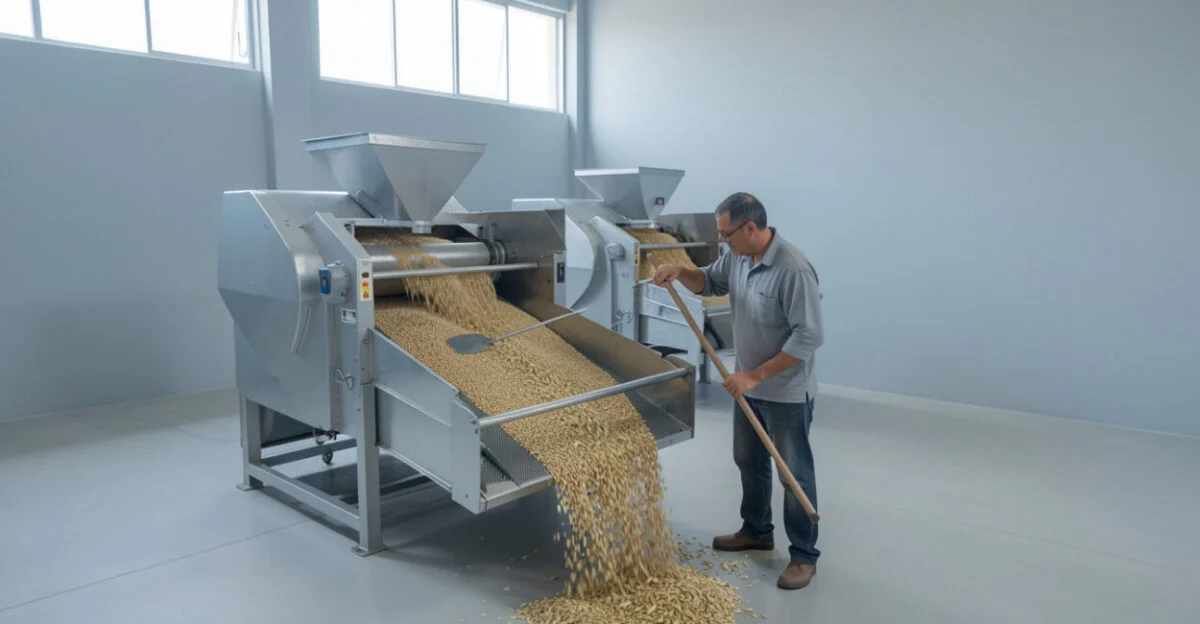
To reduce losses, receive clean grain, check its moisture and temperature, store it under the conditions recommended for the crop, and follow a regular inspection routine. Wet grain, accumulated impurities, and hot spots encourage spoilage and can make it harder to catch a problem before it spreads.
- Cleaning: Remove impurities that restrict airflow and can trap moisture.
- Drying: Check moisture with a suitable instrument; don’t rely on the grain’s appearance alone.
- Monitoring: Record temperatures and observations at regular intervals, comparing readings across locations and over time.
- Inspection: Look for condensation, unusual odors, insects, leaks, and changes in unloading.
- Safety: Never enter a silo when grain is moving or there is a risk of engulfment; entering the silo requires specific procedures and protective equipment.
A common mistake is turning on aeration without checking the conditions of the air and the grain. Poorly managed ventilation may not cool the grain mass as expected and, under certain conditions, can increase moisture in localized areas. Follow the system design and technical recommendations for the crop rather than copying a routine from another farm.
Embrapa, Brazil’s agricultural research corporation, is a useful source of technical guidance on grain preservation. Still, operating parameters vary by crop, climate, equipment, and the crop’s initial condition. If heating persists, odors change, or an infestation appears, having a professional assess the situation is safer than adjusting the system by trial and error.
Small or Used Silo: What to Check Before Buying
A small or used silo may be worthwhile if its usable capacity meets the production plan and its condition can be verified, with compatible installation and equipment. The asking price alone does not reveal the cost of dismantling, transportation, assembly, foundation work, or repairs.
Before making a deal, ask for the model, capacity, available drawings or manual, and maintenance history. Inspect the panels, bolts, corrosion, floor, roof, ladders, ducts, and fans; also check for any warping or modifications that could compromise the structure. A qualified professional should conduct the assessment, especially if the silo has been dismantled or modified.
Searches such as “used grain silos for sale” may turn up equipment in very different conditions. Compare the total installed cost and time to get it running with those of a new unit. For specific brands, such as searches for Kepler Weber silo catalog or Kepler Weber silo prices, consult the catalog and request a quote directly from the manufacturer or a dealer; models, configurations, freight, and availability all affect the price.
How Much Does On-Farm Storage Cost, and How Should You Plan the Investment?
Investment costs vary based on capacity, structure type, foundation, conveying equipment, aeration, automation, assembly, freight, and supporting construction. You also need to account for energy, maintenance, labor, and financing costs; without these expenses, comparing proposals is incomplete.
Request quotes for the same usable capacity and scope, with separate line items for the silo, foundation, ventilation, unloading, installation, and warranties. Then compare the total cost with available alternatives in your area, such as commercial storage, factoring in distance, wait times, operating losses, and turnaround time. Marketing decisions also connect to farm-to-market channels, since the product’s destination affects how long it will be stored.
Owning a silo may be a poor fit when production is small or inconsistent, there is no staff to operate and maintain the equipment, or the farm cannot install the structure safely. In these cases, using a commercial facility may cost less and reduce complexity. The answer depends on a cash flow analysis using local quotes, not a universal price per ton.
Next Steps for Making a Decision
Before requesting a quote, create a spreadsheet with production by crop, the volume you plan to hold, the schedule for incoming and outgoing grain, and the existing facilities. Share this information with a designer or supplier and ask the proposal to specify usable capacity, included equipment, site requirements, and installation costs.
Frequently Asked Questions
Is the Ideal Storage Moisture Level the Same for All Crops?
No. The limit depends on the grain, storage period, and system conditions. Check the technical recommendation for the specific crop and measure moisture before storing the grain.
Can I Use a Grain Silo to Store Different Crops?
In many cases, yes, provided the equipment is suitable and is cleaned and inspected between lots. Also check that unloading, aeration, and handling meet the needs of each crop.
How Can I Tell If There’s a Hot Spot Inside the Silo?
Rising temperature readings or significant differences between locations may indicate localized heating. Unusual odors and condensation also warrant inspection; don’t enter the silo to investigate without safety procedures and a professional assessment.
Does a Grain Bag Eliminate the Need for Drying and Monitoring?
No. This temporary solution also requires grain in suitable condition, a prepared installation site, and inspections to detect damage or water intrusion. The plan should specify how and when the grain will be removed.
Artigos Relacionados
 Farm Insurance: Coverage and How to Choose a Policy
 Soil Testing: The Step That Prevents Major Losses
 5 Sustainable Practices That Transform Small Farms
 Agrotechnology: Digital Solutions to Modernize Farms
 Efficient Irrigation: Reduce Water Use and Boost Yields
 Livestock and Technology: Innovations Transforming the Farm
