
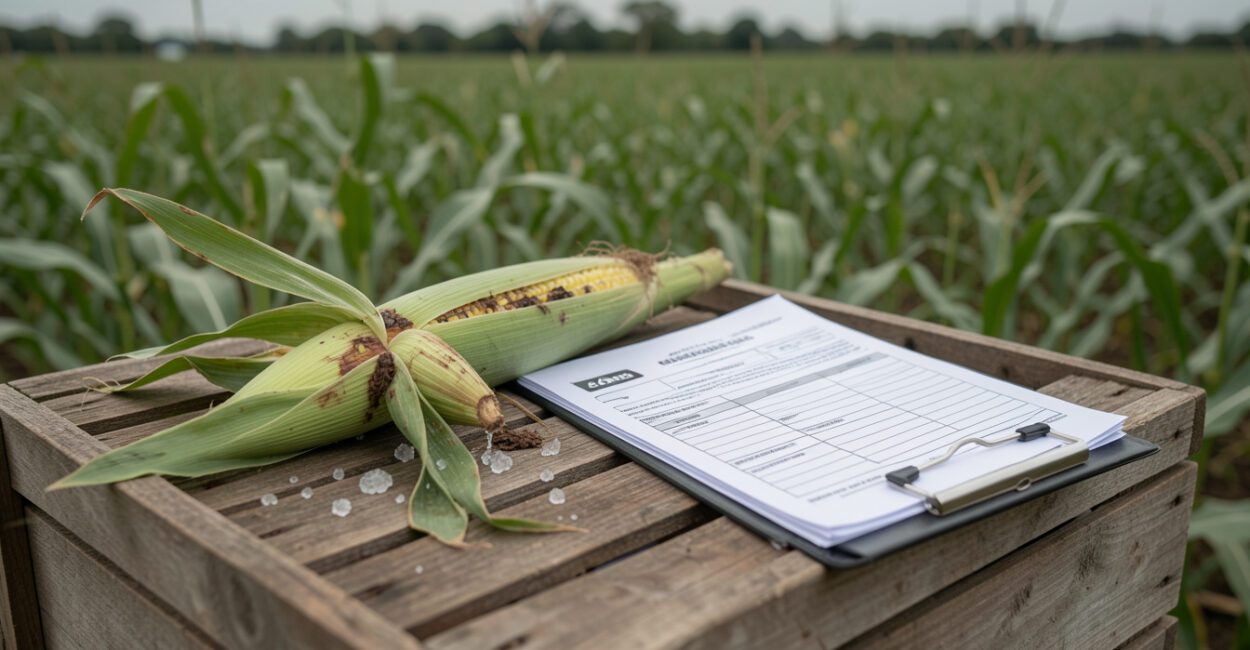
A hailstorm-damaged crop may lead to an insurance claim; a loss caused by an excluded risk may not be covered. Understanding how farm insurance works means knowing that the farmer pays a premium and may file a claim if an event covered by the policy occurs, subject to the contract’s limits, deductibles, and conditions.
Coverage varies by policy type, activity, region, and the insurer’s assessment. That’s why choosing a policy starts with understanding what is and isn’t covered—not just comparing premiums.

Farm insurance: how it works in practice
The policy spells out covered risks, the coverage period, claim limits, the deductible, and the criteria used to assess damage. If a covered event occurs, the insured must notify the insurer as stated in the contract and provide the information needed to adjust the claim—the process of reviewing it.
“Farm insurance” is an umbrella term for different products. One policy may protect crops, while another may cover livestock or farm property.
Buying a policy doesn’t guarantee that every loss will be reimbursed. Exclusions, the insured’s obligations, and the required proof also affect how a claim is reviewed.
If a loss could seriously affect your farm’s cash flow, get written confirmation that the policy covers that specific risk and under what conditions.

What farm insurance may cover
Depending on the product available and whether the insurer accepts the risk, coverage may include crop production, livestock operations, machinery and facilities, or certain financial obligations and income. Each type of coverage serves a different purpose and has its own terms; don’t assume one policy covers the entire farm.
Availability also varies by crop, location, and the nature of the operation. For example, a farm’s loss history and management practices can help put its exposure in context, but they don’t replace the terms of the contract. Integrated pest management covers measures to protect production, while insurance responds only to events listed in the policy.

Crop insurance, farm insurance, and income protection: key differences

Crop insurance covers agricultural production, subject to the risks and limits set out in the contract. Farm insurance is a broader category that may include policies for different agricultural activities and property. “Income protection insurance” can refer to different products, so check which income or obligation is covered, what events trigger coverage, and who receives any payment.
Policy type or term What it may cover What to confirm in the policy Farm insurance, a broad category Farm activities, property, or risks, depending on the policy type Which policy type was issued, which property or activities are listed, and which risks are covered Crop insurance Crop production, subject to the contract’s limits and conditions Crop, acreage, location, covered events, assessment method, and exclusions Income protection insurance Income or an obligation specified by the particular product Which income or debt is covered, what triggers coverage, and who may receive payment
For example, a farm may buy coverage for one crop and separately consider protection for its machinery. If an income protection product is tied to a specific obligation, the benefit may be used for that purpose rather than to replace all of the farm’s revenue. The product’s marketing name alone doesn’t explain its scope.
Read also: Solar Energy on the Farm: Uses and Installation Planning

What to review before buying coverage
Compare quotes with similar coverage. A lower premium may come with a higher deductible, a lower limit, or exclusions that leave out the risk you’re most concerned about. Provide accurate information about acreage, activities, location, and any other details requested. Differences between your application and your property can complicate a claim review.
- Covered risks: Which events allow you to file a claim?
- Exclusions: Which situations aren’t covered?
- Deductible: What portion of a loss do you pay yourself?
- Claim limit: What is the maximum amount the policy will pay?
- Coverage period: Which dates and stages of the operation are covered?
- Damage assessment: How does the policy calculate a covered loss?
- Claim notification: What documents and deadlines does the contract require?
Read the general and specific policy terms, which explain the product’s rules and any adjustments made for your quote. If a term such as guaranteed yield or covered loss isn’t clear, ask the insurer or agent to explain it before signing. Pricing and approval depend on a risk assessment; without information about the operation, no reliable cost estimate is possible.
Read also: Farm Loans: How to Prepare Your Application Documents
How to buy insurance and file a claim
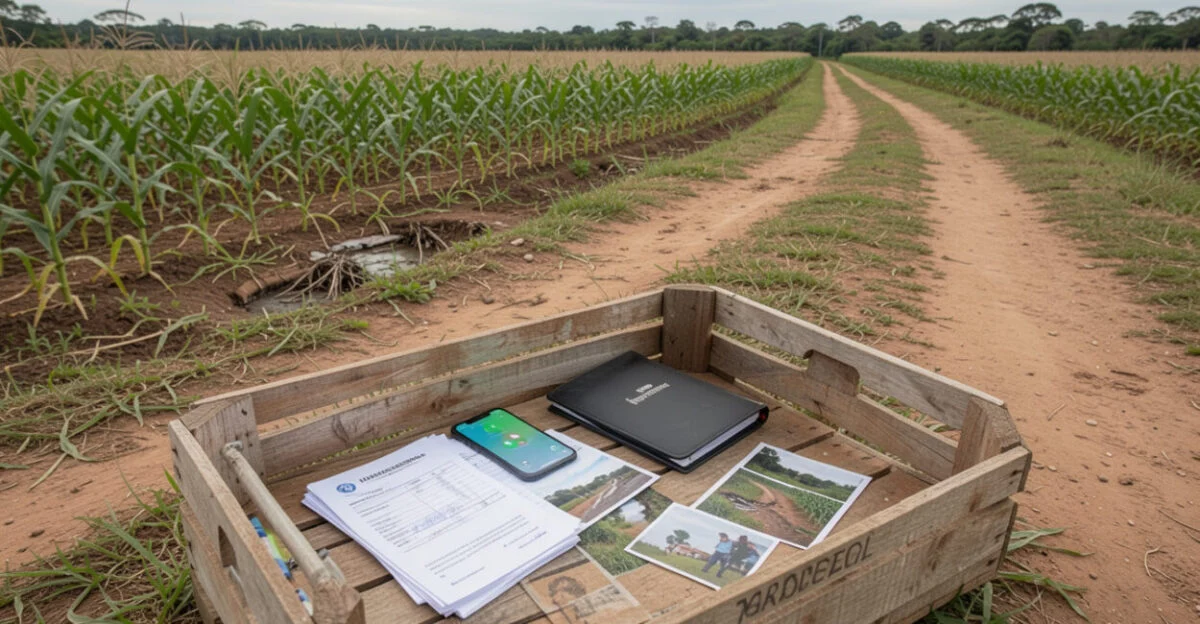
Start by identifying the risks you need to transfer and finding quotes suited to your operation. Then compare the terms, verify the information you provided, ask questions, and finalize the purchase. Keep the quote, policy, proof of payment, and records related to your land and production.
If damage occurs, notify the insurer through the channel and within the deadline specified in the contract. Document the condition of the property, gather the requested paperwork, and follow instructions for the inspection. When possible, avoid discarding or changing evidence before receiving guidance, as that could make the assessment more difficult. Deadlines and documentation vary by policy; there is no single deadline that applies to all farm insurance.
- Compare quotes with similar coverage.
- Verify the information provided about the property and operation.
- Read the general and specific policy terms.
- Keep the policy, quote, and proof of payment.
- If a loss occurs, notify the insurer as required by the contract and document the damage.
- Check an official source for the eligibility rules of any public program.
A claim payment depends on proof that a covered event occurred and the insurer’s review under the policy. That limitation matters: a loss may be real and still fall outside the coverage you purchased or fail to meet the policy’s assessment criteria.
Rules and public programs in 2026
To find out whether any changes to farm insurance apply in 2026, check current publications from Brazil’s Ministry of Agriculture and Livestock (MAPA) and the Superintendence of Private Insurance (SUSEP), Brazil’s private insurance regulator. Private insurance rules and the criteria for public premium-subsidy programs are separate matters. If a subsidy is available, it doesn’t automatically change the coverage described in the policy.
MAPA publishes information about farm insurance and the Programa de Subvenção ao Prêmio do Seguro Rural (Brazil’s Rural Insurance Premium Subsidy Program). Before counting on this support, check with the agency to confirm the criteria, availability for the relevant period, and whether it applies to your crop. Don’t assume that you’re eligible or that funds are available.
Be cautious when you hear about a “new insurance law.” A general law doesn’t, by itself, mean that every farm policy now includes universal coverage or has automatically changed. Check the current law and relevant regulations. To understand how they affect a specific contract, confirm the terms with the insurer or a qualified professional.
How to choose the right coverage for your farm
Start with the risks that could cause the greatest financial strain, taking your operation, location, and production calendar into account. Then consider how much of a loss the farm could absorb without jeopardizing costs for the next stage of production. If you could handle a loss with your own resources, it may make sense to prioritize another risk. If a loss could threaten the operation’s future, look into suitable coverage.
Compare quotes based on the full package—coverage, exclusions, deductibles, limits, and claims service—not just price. Insurance also doesn’t replace preventive measures or production records. For farms that combine crop production and conservation, practices described in resources on soil conservation can be part of risk management, though they don’t change what the policy covers.
Before signing, get written confirmation of which events are covered, which areas are included, and what period the policy covers. This is the best way to check whether the quote meets your actual needs or leaves the very risk that prompted you to seek coverage uninsured.
Frequently asked questions
Can farm insurance help me get a loan?
A policy may be considered during a loan application, but it doesn’t guarantee approval or automatically lower the cost of borrowing. The lender’s criteria and the terms of the loan determine the decision.
Can I insure a farm with more than one type of operation?
You can look into policies for different activities, but coverage depends on availability and the insurer’s risk assessment. Make sure each crop, livestock operation, or asset is accurately listed in the application and policy.
Do I need to keep records after buying insurance?
Yes. Records of acreage, management practices, production, and incidents can help document the operation’s conditions and a claim, as required by the contract. Organizing this information before a loss means you won’t have to rely on memory when the insurer asks for proof.
Artigos Relacionados
 Farm Insurance: Coverage and How to Choose a Policy
 Health Insurance: How Waiting Periods and Coverage Work
 Crop Insurance: How to Evaluate Farm Coverage
 How to Choose Car Insurance and Compare Coverage
 Life Insurance: How to Choose Coverage for Your Family
 Purchasing Manager: Duties, Daily Work, Salary, and Job Openings
