
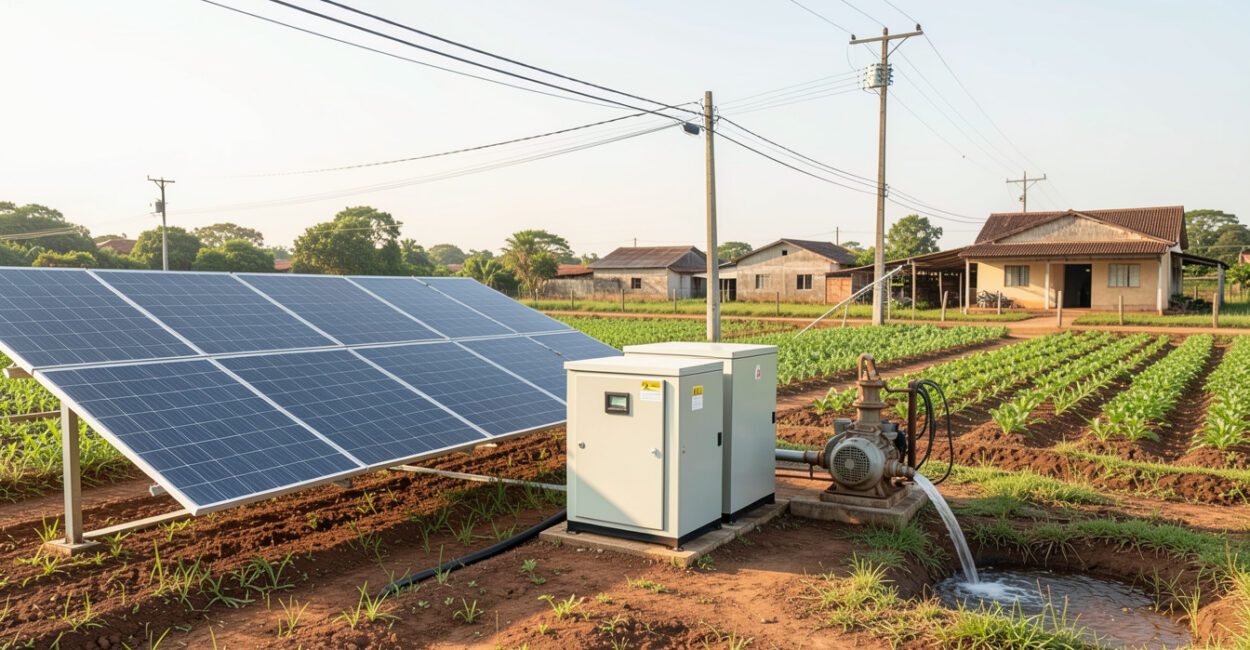
The choice between grid-tied solar and an off-grid system depends mainly on access to the utility grid, which loads must stay powered, and the budget for batteries. For many farms, a grid-tied system can meet daytime energy needs. Where the grid is unavailable or unreliable, an off-grid or hybrid system may be a better fit.
Grid-Tied or Off-Grid: Which System Should You Choose?
For a property with reliable utility service, a grid-tied system is usually the simplest option because it does not require batteries to store energy. In areas without grid access or with frequent outages, an off-grid system provides independence, as long as it is sized for the loads and the periods without solar generation. A hybrid system combines grid access and storage, but typically requires more components and planning.

The key difference is how power is supplied when the panels are not generating electricity. With a grid-tied system, the utility grid helps serve the property. Off-grid systems rely on batteries and, when available, another backup power source to keep loads running.
Criteria Grid-Tied Off-Grid Grid access Required for grid-tied operation Does not depend on the utility Energy storage Generally does not use batteries Requires batteries to supply power without sunlight Grid outages A grid-tied inverter may shut down during an outage Can keep loads running, depending on system capacity and sizing Upfront cost Generally lower without batteries Generally higher because it includes storage Best suited for Properties served by the grid Remote locations or areas without reliable grid service Middle-ground option Hybrid system: combines grid access and batteries
In Brazil, connections for small- and medium-scale distributed generation are governed by ANEEL, the country’s electricity regulator, and Law No. 14,300/2022. Applicable requirements and system operation depend on the project and utility. Check ANEEL’s distributed generation page and confirm current requirements with your utility.
How Can Solar Energy Be Used on a Farm?
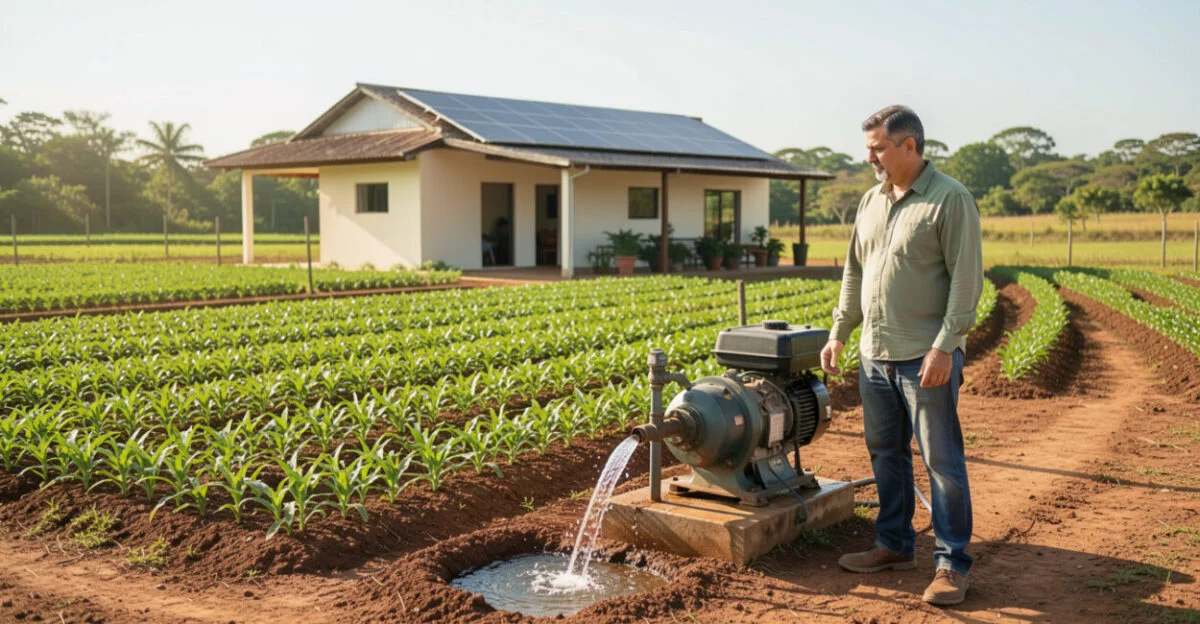
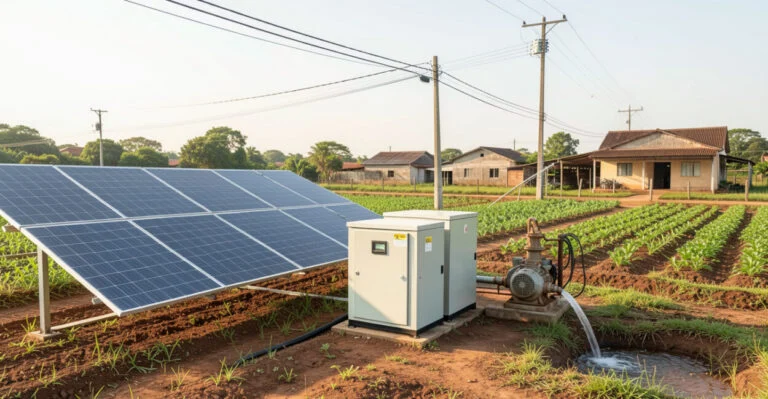
Solar power can run water pumps, irrigation systems, electric fences, lighting, refrigeration, and equipment in the farmhouse. Whether each use is practical depends on equipment power requirements, operating hours, and startup loads.
Pumps and motors need special attention: their rated power alone does not show their startup power requirements. The inverter must be able to handle the startup load, and the proposal should explain whether pumping will take place during the day, use stored energy, or follow another setup.
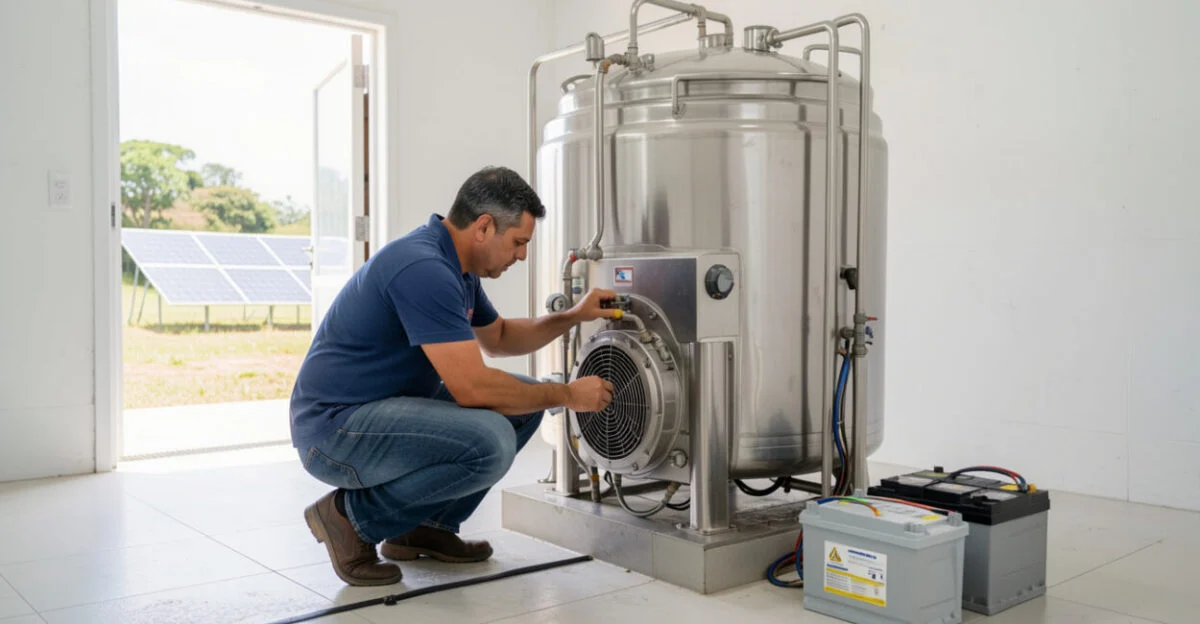
For refrigeration, such as walk-in coolers, continuous energy use and the impact of an outage make backup planning important. A conventional grid-tied system may not keep the equipment running during a grid outage, so an appropriate backup solution is needed.
For properties that also invest in monitoring, automation, or connectivity, digital farm solutions can help organize operations, but they do not replace an electrical load assessment.
What Should You Assess Before Planning an Installation?

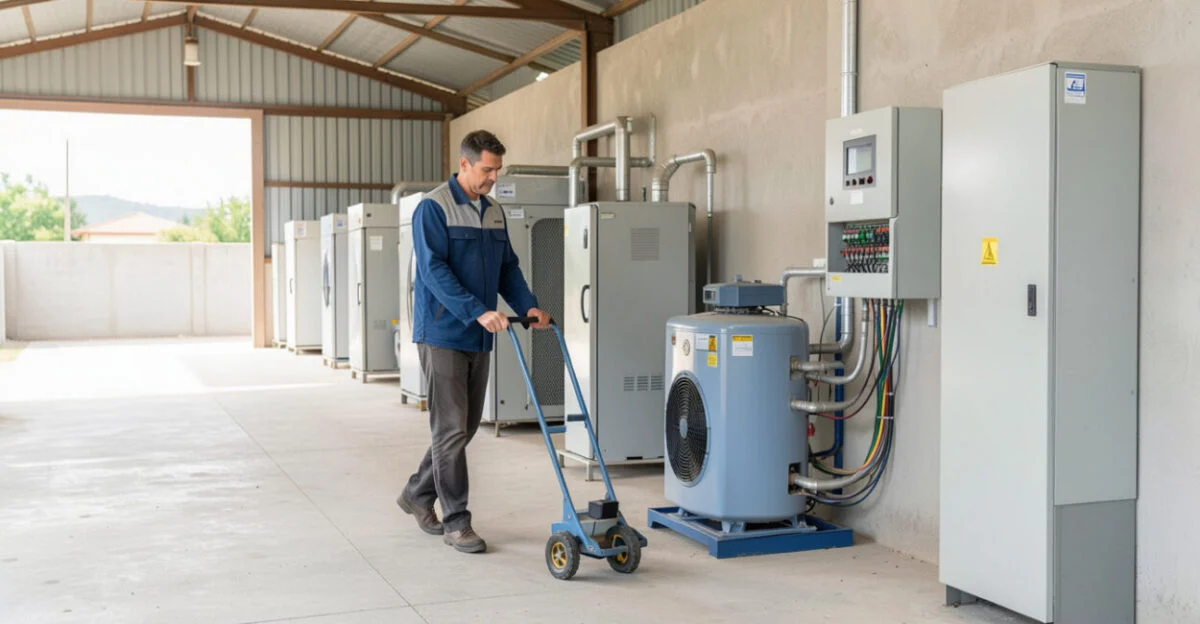
Start by mapping equipment locations and checking access to the utility grid. The distance between the solar panels, inverter, and loads can affect the electrical design. For off-grid systems, battery transportation and maintenance logistics also matter.
Record when each piece of equipment operates, for how long, and whether its use changes by season, growing cycle, or irrigation needs. A pump used only at certain times may have a very different load profile from a walk-in cooler that runs all day.
Include future loads, such as an expanded barn or new motors. Sizing a system only for current use may lead to costly upgrades later, but planning for growth without a clear basis can also inflate the proposal. List concrete plans and ask the provider to explain what can be expanded.
Conditions for farm installation and maintenance work matter too: dust, moisture, animals, access for cleaning, and impact protection all affect equipment placement. For an overview of other technical needs on a farm, read about the role of agricultural technicians in day-to-day farm operations.
How Do You Size a System for Farm Energy Use?
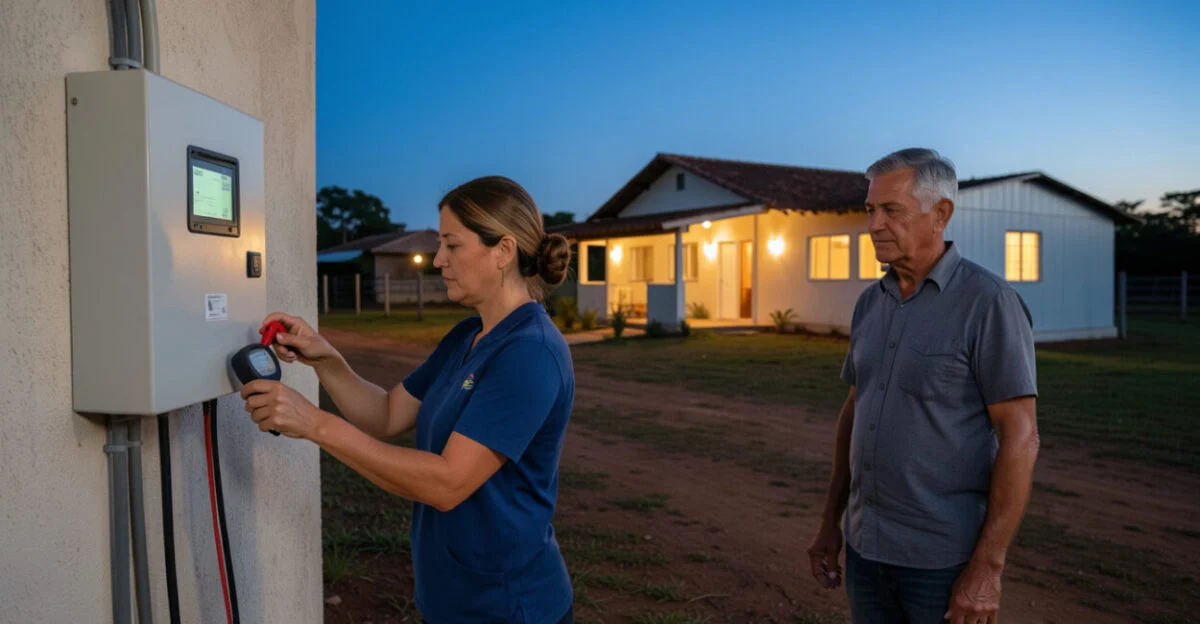
System sizing takes into account load consumption, equipment power, operating time, and local solar conditions. In simple terms, it turns a list of equipment and the farm’s daily routine into a system designed to generate and deliver power when it is needed.
Read also: Farm Insurance: How Coverage and Enrollment Work
Gather available electric bills and identify equipment that may not be clearly listed on them, especially motors, pumps, and seasonal loads. For each item, note its power rating, quantity, hours of use, and whether it needs to run at night or during a grid outage.
Equipment Quantity Label power rating Hours of use Operating times and notes Water pump To be filled in To be filled in To be filled in Motor startup; irrigation schedule Refrigerator or walk-in cooler To be filled in To be filled in To be filled in Is uninterrupted power required? Electric fence To be filled in To be filled in To be filled in Continuous or scheduled use Lighting To be filled in To be filled in To be filled in Hours of use Other loads To be filled in To be filled in To be filled in Seasonal changes and expansion
Power, measured in watts or kilowatts, is not the same as energy consumed, which is usually measured in kilowatt-hours. So a listing for a “1,000 kWh/month solar kit” or a “500 kWh/month solar kit” is not enough to determine whether the system will meet a farm’s needs. Generation depends on the location, and the system’s power rating must match the load profile.
Read also: Farm Supply Inventory Management: Best Practices
Terms like “complete 500 W solar panel kit” refer to the panel’s rated power, not a guarantee of daily energy production. The number of panels should be based on the system design, not on stand-alone comparisons between product listings.
Which Components and Kits Can Meet a Farm’s Needs?
A photovoltaic system includes solar panels, an inverter, a mounting structure, wiring, and safety equipment. Systems with storage also include batteries and compatible equipment for charge control and power conversion.
A grid-tied kit typically includes panels, a grid-tied inverter, a mounting structure, and safety equipment. A complete off-grid solar kit must also account for batteries and an inverter suited to off-grid loads. The word “complete” alone does not guarantee that it can handle motors, refrigeration, or the required backup time.
Searches for “rural solar kit price,” “complete off-grid solar kit price,” or “residential solar kit price” can help you learn about product categories, but they cannot replace a proposal tailored to your property. A complete residential solar kit may not suit a farm because pumping needs, operating hours, and the distance to loads are different.
The same applies to searches for “off-grid solar kit for air conditioning,” “off-grid solar kit with inverter,” and “residential off-grid solar kit.” Compare startup capacity, the inverter’s continuous power rating, battery bank voltage, and stated backup time. Also check whether installation and safety equipment are included.
How Much Does Rural Solar Energy Cost, and How Should You Compare Proposals?
There is no single reliable price for rural solar energy. Cost depends on energy use, system type, equipment, batteries if needed, installation, and site conditions. Without current proposals covering comparable work, comparing only the final price can lead to the wrong choice.
Check that each quote specifies panel and inverter power ratings, component quantities and models, wiring and safety equipment, the mounting structure, installation, and any exclusions. For projects with batteries, also ask about usable capacity, the backup time assumed, warranty terms, and expected replacement or maintenance needs.
A common mistake is to compare panel power ratings as if they show how much energy a system will deliver at any time. A panel’s rated power does not, by itself, tell you how much energy it will generate at a specific location or how much power will be available at night. Ask the provider for the generation assumptions and calculations based on your actual load list.
Compare warranties for panels, inverters, and batteries separately, along with coverage for installation and local technical support. Terms and coverage vary by manufacturer and provider, so review the specific documents rather than relying on a verbal promise.
How Should You Plan Installation, Grid Connection, and Financing?
Follow these steps so you do not commit to a kit before you know how it will be installed and connected:
- Gather electric bills and load data, including operating hours, seasonal changes, and continuity requirements.
- Decide whether your priority is to reduce grid consumption, serve a remote location, or keep critical loads powered during an outage.
- Request comparable proposals that include calculations and a list of equipment.
- When applicable, confirm current grid connection procedures and requirements with your utility.
- Before hiring a provider, review the electrical design, installation, safety measures, warranties, and maintenance plan.
- If you are seeking financing, confirm available loan programs, required documents, and current terms with the financial institution first.
Financing for solar through Pronaf, Brazil’s National Program to Strengthen Family Farming, depends on the current loan program, the producer’s eligibility, the intended use, and the lender’s review. Mentioning Pronaf does not guarantee approval. Check the terms in the Central Bank of Brazil’s Rural Credit Manual and directly with the institution handling the application.
Grid connection and energy credit rules can change and vary depending on the project. Check with ANEEL, your utility, and the lender before signing. To see how other sustainable practices can fit into a farm, read about sustainable farming techniques.
Frequently Asked Questions
Can a farm use solar power and a generator at the same time?
Yes. A generator can provide backup for off-grid or hybrid systems, as long as the system design includes the necessary electrical integration and controls. A qualified professional should confirm compatibility.
Can the system be expanded later?
Sometimes, but expansion depends on the inverter’s capacity, the electrical design, the mounting structure, and, for systems with batteries, storage compatibility. Ask the provider to specify expansion limits in the proposal from the start.
Can I install the panels far from the pump or house?
Yes, but distance affects wiring and safety equipment requirements. The installer must assess the route and site conditions rather than looking only at the available space for the panels.
Will an off-grid kit advertised for 500 kWh per month meet my farm’s needs?
You cannot tell from the advertised monthly energy output alone. You need to check which loads the system will serve, when they operate, whether any motors have high startup current, and how much backup time the batteries provide.
What should I do if the grid goes down and my farm has a grid-tied system?
A conventional grid-tied system may shut down during an outage for safety reasons, even when the sun is shining. To keep critical equipment running, the proposal must include a backup solution, such as a hybrid system with storage, sized for those loads.
For current prices and terms, check with your utility, ANEEL, the Central Bank of Brazil’s Rural Credit Manual, and the financial institution handling the financing.
Artigos Relacionados
 Rural Tourism: How to Create a Farm Experience
 Rural Succession: How to Prepare Your Farm for the Future
 Solar Energy for Small Businesses: When Is It Worth It?
 Solar Energy for Small Businesses: When It Pays Off
 Solar Energy or Energy Efficiency: Which Pays Off?
 Solar Energy on the Farm: Uses and Installation Planning
