
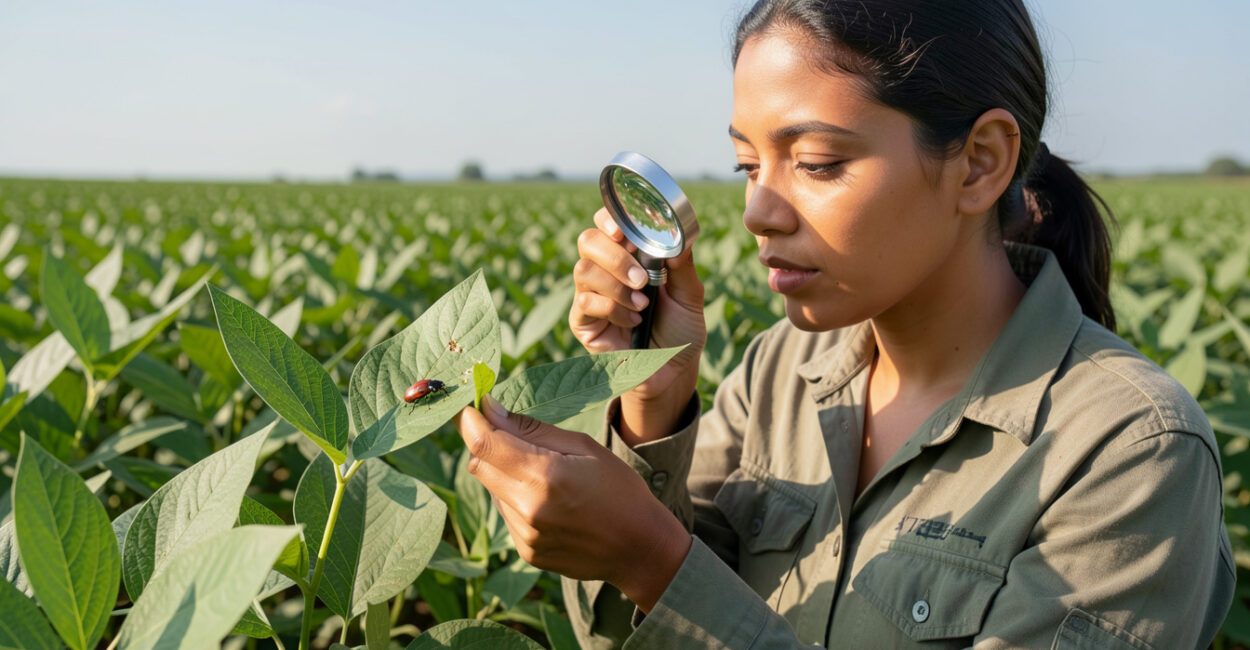
A leaf with visible damage doesn’t always call for spraying: first, you may need to confirm which organism caused the problem and whether its numbers are increasing. Integrated pest management (IPM) guides these decisions through prevention, monitoring, and technical criteria, combining control methods based on the crop and the conditions observed in the field.
The goal is to reduce losses and keep pest populations under control while preserving beneficial organisms and the effectiveness of available tools as much as possible. The right choice depends on accurate identification, representative sampling, and technical guidance; there is no action threshold that applies to every crop and region.

Quick facts
- Scope: Agricultural pest management; can be integrated with disease management strategies.
- Decisions: Based on monitoring and criteria suited to the crop and pest.
- Tools: Cultural, biological, physical or mechanical, and chemical measures.
- Implementation: Requires recordkeeping and follow-up after intervention.
- Limit: IPM reduces risks and damage; it does not promise to eliminate every pest.
What is integrated pest management, and what is its goal?
Integrated pest management is a decision-making strategy that combines prevention, monitoring, and control methods to keep pest organisms below levels that cause unacceptable losses. In simple terms, growers monitor their fields, identify the problem, and take action when technical criteria indicate it is needed, choosing measures suited to the situation. This sets IPM apart from preventive spraying on a calendar schedule or an isolated response to any sign of damage. The presence of insects alone does not prove that a crop will suffer significant losses: some are natural enemies, and others may be too scarce to justify control.
IPM also does not eliminate the need for pesticides. When an assessment indicates that chemical control is appropriate, it can be part of the strategy, provided the product is registered for that use, the label directions are followed, and safety, selectivity, and resistance risks are considered.
What principles guide IPM?
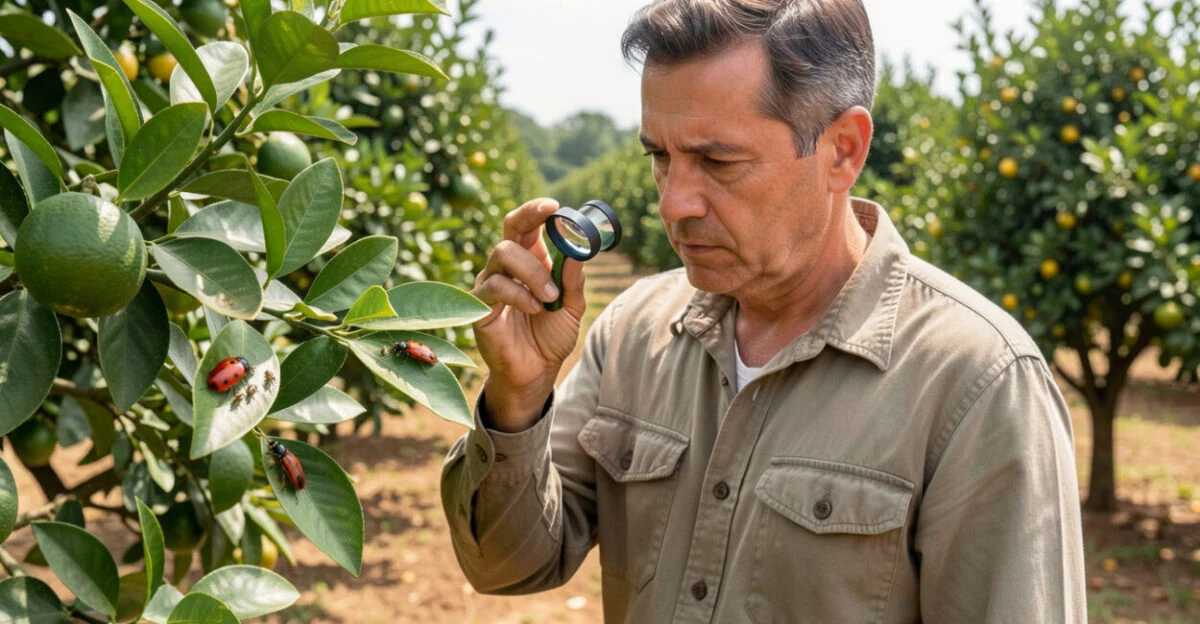
In practice, three pillars help organize pest management: prevention, monitoring, and control guided by technical criteria. This is a teaching framework for presenting the process; other sources may group its components differently, but the underlying logic is the same: reduce the chance of outbreaks, detect changes, and make decisions based on field evidence. Prevention includes practices such as crop rotation, choosing adapted cultivars, managing crop residue, and conserving natural enemies. Monitoring turns observations into comparable information. Control comes into play when the level of risk warrants intervention, which may involve more than one method.
The FAO and WHO International Code of Conduct on Pesticide Management addresses the responsible management of pesticides and the risks associated with their use. This concern is closely tied to IPM: technical decisions must also consider the applicator, anyone who may be exposed, and the surrounding environment.
What are the three steps of integrated pest management?

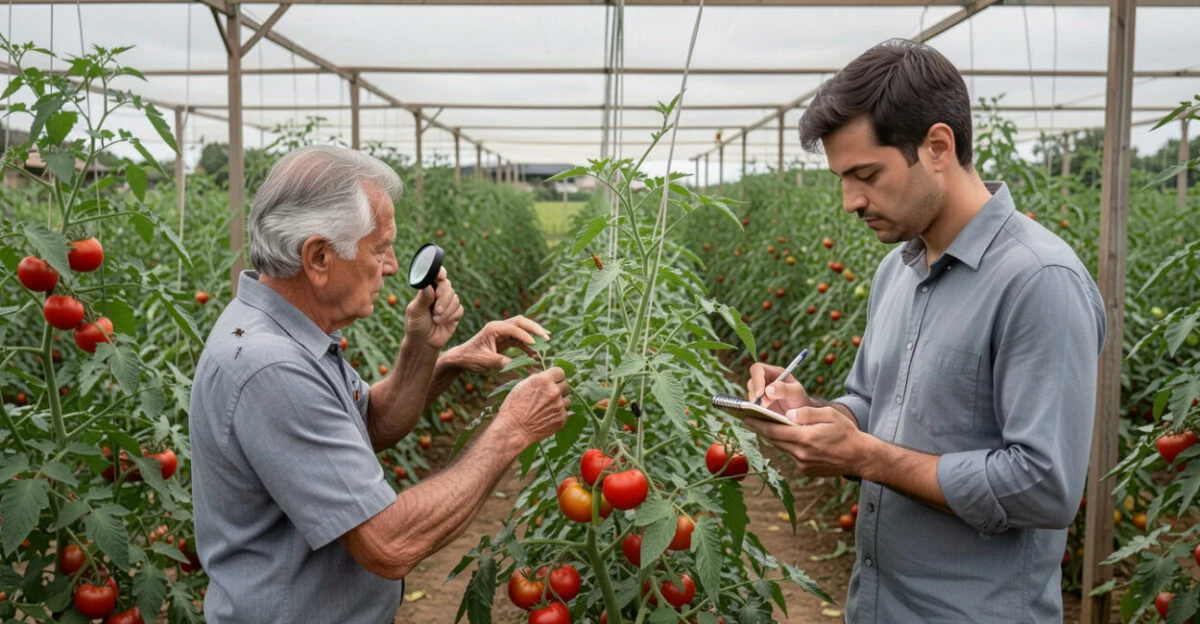
As a practical summary, the three steps are to identify and monitor, decide whether intervention is needed, and evaluate the results. They form a cycle: the final step informs the next round of observations and may prompt a review of the plan.
- Identify and monitor: Identify the pest and its natural enemies, estimate its presence, and track changes in damage through repeated sampling.
- Decide and intervene: Compare the data with the action threshold recommended for the crop and situation, weighing alternatives and risks before choosing a measure.
- Evaluate the results: Return to the field at the appropriate time, check pest populations and damage, and record whether the intervention worked or the plan needs to change.
Incomplete records can undermine the cycle. A note that says only “lots of pests” doesn’t allow comparisons between fields or dates; record where and when the sample was taken, what was identified, and which criteria guided the decision.
How do you monitor crops and decide when to act?
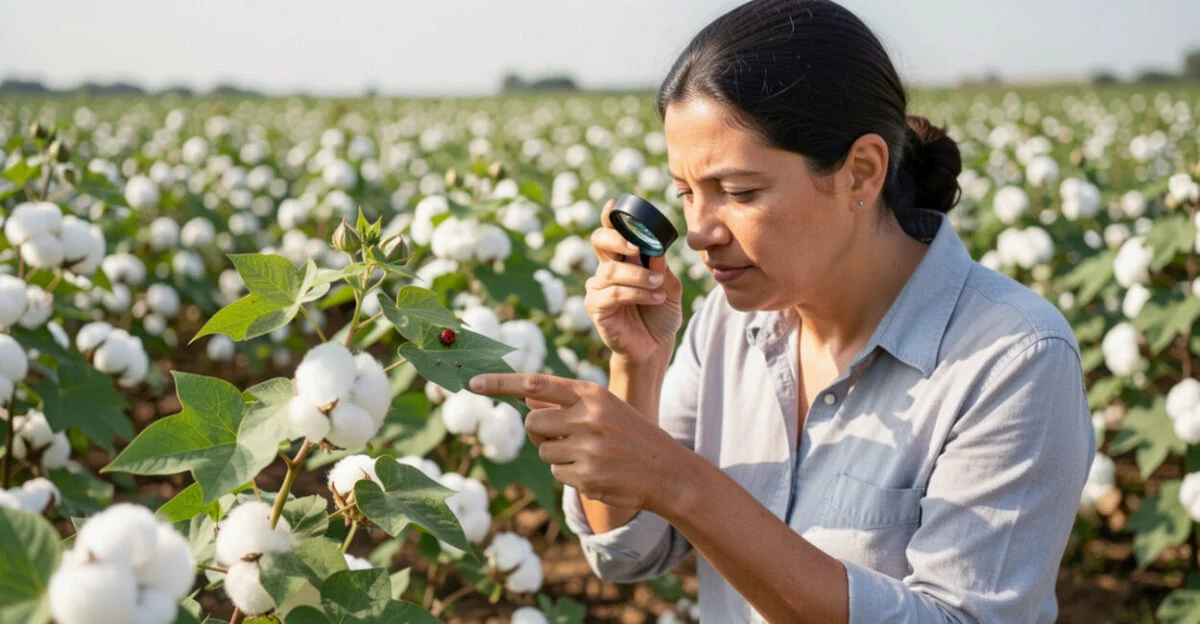
Monitoring should use a sampling method suited to the crop, pest, and stage of plant development. Accurate identification comes before counting: similar damage can have different causes, and the presence of predators or parasitoids can affect the need for control. The action threshold is the technical criterion indicating when intervention should be considered to prevent a population from reaching an economically damaging level. It varies by crop, pest, plant stage, region, and production conditions. For this reason, thresholds published for one situation should not be automatically applied to another.
Read also: Plant Diseases: How to Identify Them and Prevent Losses
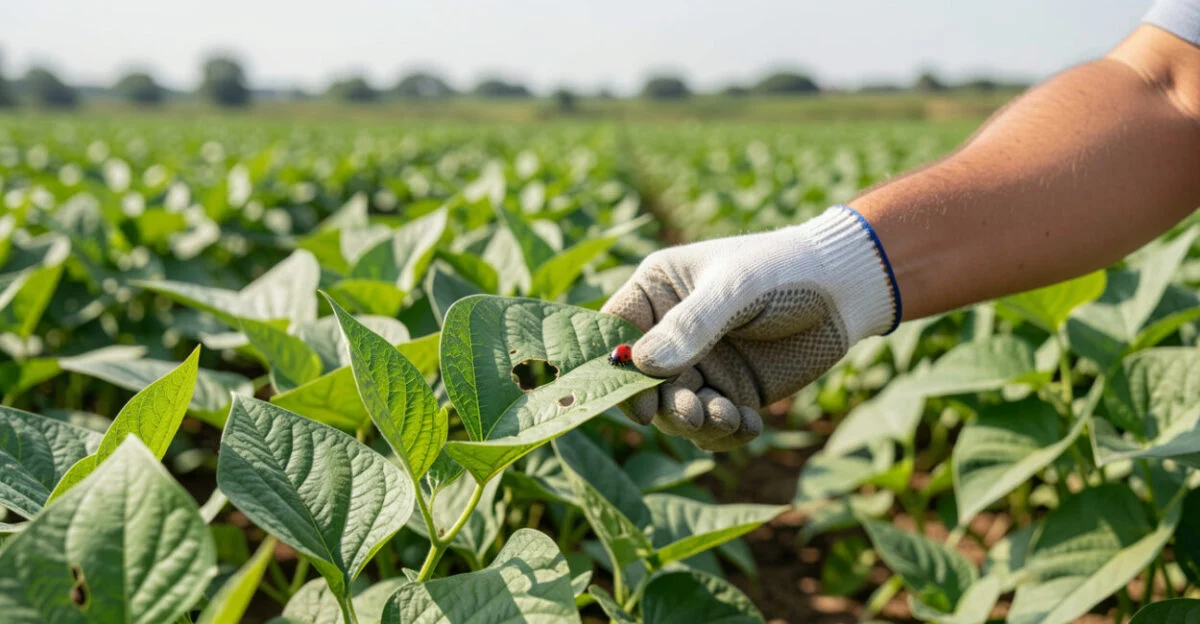
A common mistake is to inspect only field edges or plants with the most severe symptoms. Depending on the pest’s distribution pattern, this can lead to overestimating or underestimating the problem. Sampling should cover representative areas of the field, follow a technical protocol, and use the same method for each successive assessment.
Tools for agricultural technology can help organize field records and maps, but they do not replace accurate identification or agronomic interpretation of the data.
Read also: Beef Cattle: How to Organize Herd Management and Feeding
Which control methods can be combined?
The choice depends on the organism, crop stage, severity of the problem, and available resources. Combining methods doesn’t mean using them all at once; it means selecting compatible measures and avoiding interventions that undermine one another, such as a nonselective insecticide harming natural enemies that have been released or conserved.
Method Purpose Considerations Cultural Reduce conditions favorable to pests through crop rotation, planting schedules, residue management, or suitable cultivars. Check whether the practice is suitable for the crop and region; a single measure may not be enough. Biological Conserve or use natural enemies, such as predators, parasitoids, and biological control agents. Avoid incompatible practices and check the agent’s quality, timing, and application conditions. Physical or mechanical Remove, exclude, or reduce pests using barriers, traps, or targeted removal. Consider scale, labor requirements, and the risk of spreading pests during the operation. Chemical Reduce pest populations when monitoring and the action threshold justify this measure. Use a registered product and follow the label directions; consider selectivity, safety, and resistance management.
To reduce the selection of resistant pest populations, follow strategies tailored to the pest group and the insecticide’s mode of action. The IRAC publishes guidance and mode-of-action classifications; switching products by trade name alone does not ensure effective rotation if they belong to the same group.
Effective control starts by identifying the cause of the damage and ends by checking what has changed in the field.
How can IPM be used in agriculture and disease management?
Integrated pest management in agriculture adapts the strategy to each production system: the sampling method, action threshold, and available measures change based on the crop, climate, and organism being monitored. Technical publications from Embrapa, Brazil’s agricultural research agency, can help with crop-specific issues; look for recommendations relevant to your region and the conditions you observe. Integrated pest and disease management can share principles of prevention, monitoring, and decision-making, but diagnosis and methods differ. Diseases require attention to agents such as fungi, bacteria, and viruses, as well as environmental conditions that favor infection. Weeds are another group of organisms and require their own strategies, even though they are also addressed in integrated management programs.
Integrated pest management for urban pests, by contrast, applies to built environments such as homes and businesses and should not be confused with agricultural pest management. The setting, exposure risks, and available measures differ; recommendations for farms do not automatically apply to urban spaces. For those building their technical knowledge of agriculture, articles about the work of an agricultural technician can help explain why observation, diagnosis, and recordkeeping are part of production support.
How can you put IPM into practice and evaluate results?
Start by deciding what to monitor, where to sample, and which method to use, preferably with support from an agricultural advisor. Record the date, field, crop stage, identified organism, observed number, damage, and presence of natural enemies. If you intervene, also record the reason and what was applied, when relevant.
Then return to the field at the interval recommended for the situation and compare your observations with the previous record. A lower count is not the only sign of success: also check the damage, crop development, and possible effects on beneficial organisms. If the results are not as expected, review the diagnosis, application, and timing before repeating the same measure.
IPM is not a fixed recipe for anyone looking for a universal spraying schedule or the complete eradication of organisms. Recommendations vary, and a decision that works in one field may fail in another. Consult an agricultural advisor and Embrapa resources specific to the crop; for pesticides, also refer to the FAO/WHO International Code of Conduct and IRAC guidance on resistance.
The first practical step is to take a clearly documented sample before deciding on any control measure. Use the data to compare conditions with the technical criteria that apply to the crop, and seek a professional assessment if identification or the action threshold is unclear.
Frequently asked questions
What are the four A’s of integrated pest control?
Terminology varies by source. As a practical mnemonic, you can use assess (identify the problem and risk), avoid (reduce favorable conditions), monitor (track the population), and act (intervene when criteria indicate it is needed). This sequence helps organize decisions, but it is not a universal classification.
How can I find reliable Embrapa resources on integrated pest management?
Search Embrapa publications by crop and pest, and check whether the recommendation covers your region and growing conditions. An integrated pest management PDF or book is useful only if it identifies the authorship, technical context, and publication date, and it does not replace an assessment of the field.
Does biological control eliminate the need for monitoring?
No. Monitoring helps determine whether biological control is needed, when to apply it, and whether the pest population has responded. It can also reveal whether other measures are harming beneficial organisms.
Artigos Relacionados
 Integrated Pest Management: 7 Practical Techniques for Organic Gardens
 Integrated Pest Management: Sustainable Practices for Pest Control
 Integrated Livestock Farming: Efficient Management on Small Acreages
 Biological Pest Control: Protect Your Vertical Garden Naturally
 Event Task Management: An Integrated System for Planning, Assigning Responsibilities, and Delivering on Time
 Pasture Management: How to Restore Degraded Land
