
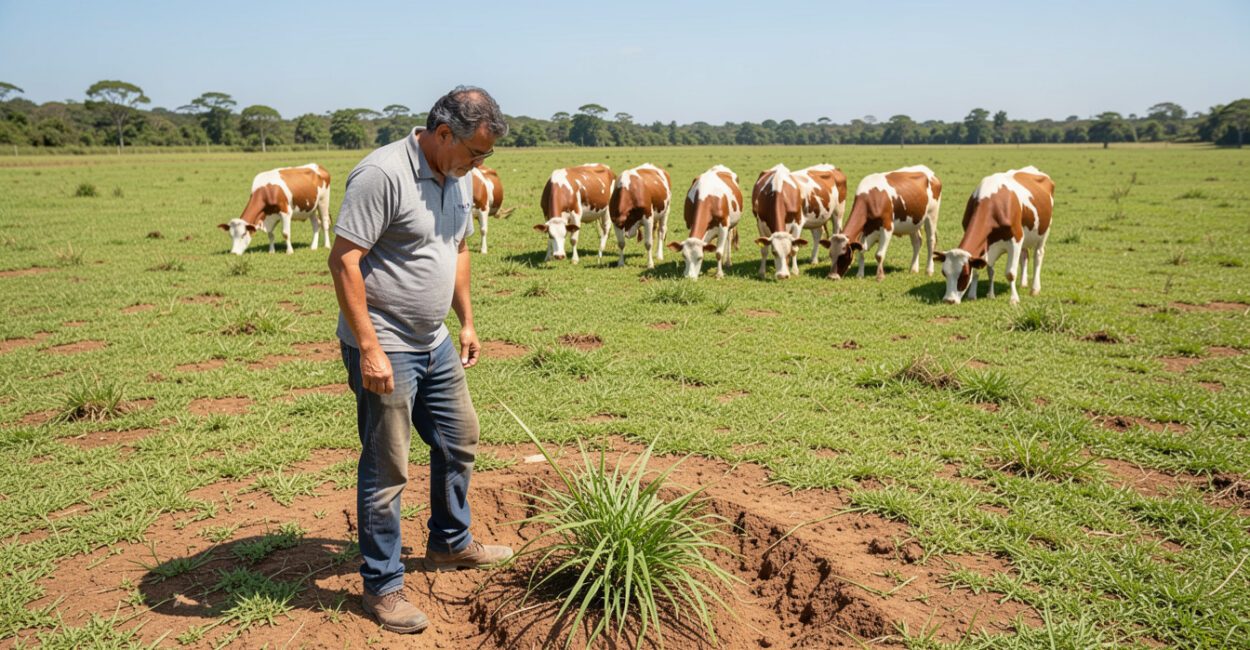
The pasture is thinning, bare soil is showing between grass clumps, and the herd is starting to compete for the remaining covered areas. In this situation, restoring degraded pastureland starts with finding out what is limiting vegetation: poor management, low soil fertility, weeds, pests, or forage that is unsuitable for the site. The diagnosis determines whether restoring ground cover is enough or the pasture needs to be renovated.
Taking action without this assessment can increase costs without addressing the cause. Liming, fertilizing, weed control, and adjusting stocking rates are tools, not one-size-fits-all solutions. The right choice depends on the soil, forage species, climate, and land-use history.

How to Identify and Restore Degraded Pastureland
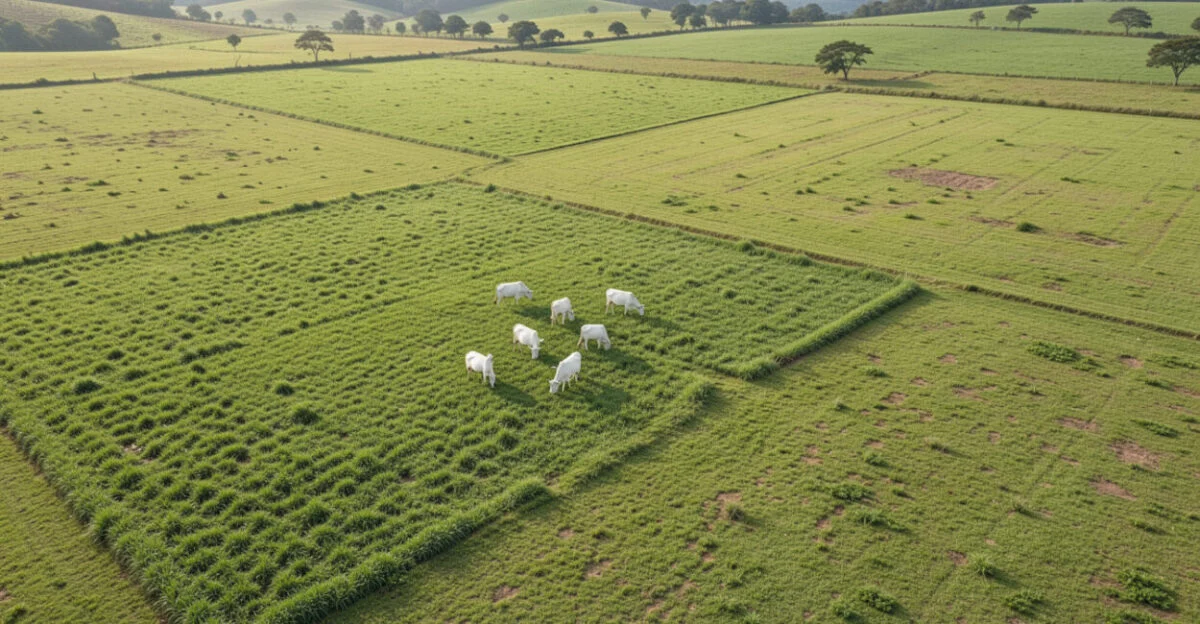
Restoring the area starts with identifying the stage and cause of degradation. In general, pasture restoration is recommended when enough live forage plants remain to regrow. Renovation becomes more important when the desired ground cover has nearly disappeared or the existing species is not suited to the property’s conditions. The decision should also account for soil, terrain, and feasible management practices.
In technical terms, pasture degradation is the progressive loss of the forage plants’ and soil’s productive capacity, associated with reduced vegetation cover and worsening conditions for use. In the field, this means less forage for livestock, more exposed soil, and increasing difficulty keeping the pasture productive.
Initial assessment checklist
- Are there gaps in ground cover or patches of bare soil?
- Do the forage plants regrow after a rest period?
- Is there erosion, channeling, visible compaction, or waterlogged ground?
- Are weeds occupying space that used to be covered by grass?
- Does the herd stay in the same area too long or return before regrowth?
- Are there records of soil tests, fertilization, and pasture history?
What Causes Pasture Degradation
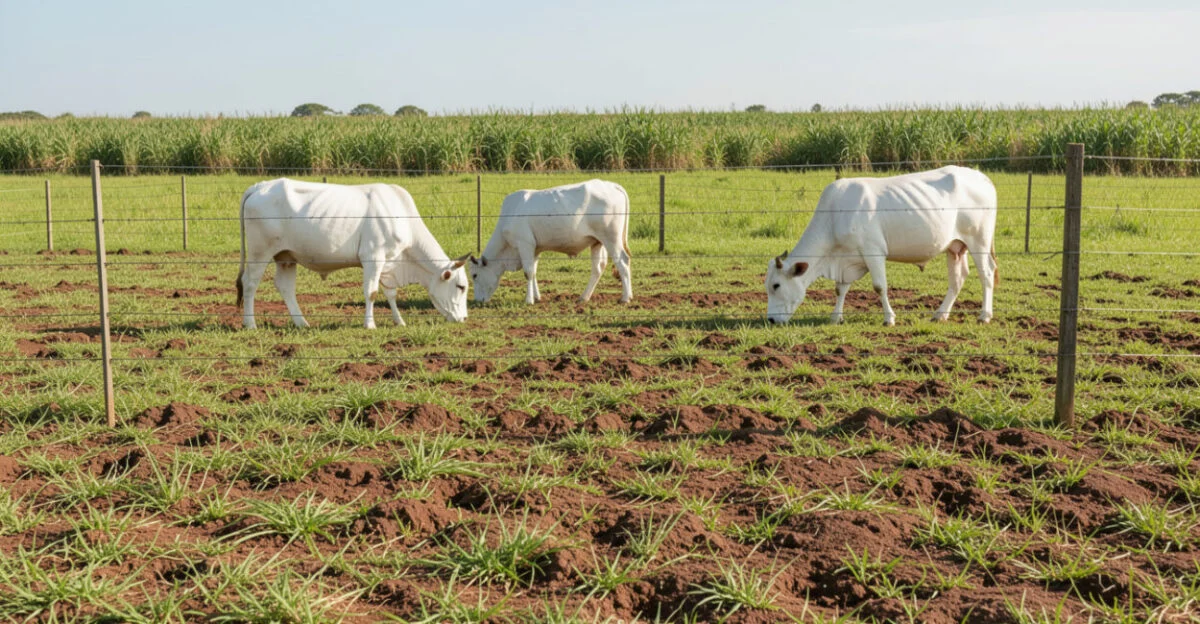
Poor grazing management is a common cause: stocking rates that exceed forage supply or insufficient rest reduce leaf area and weaken regrowth. As grass loses vigor, more soil is exposed, which can encourage erosion and make recovery even more difficult. Low fertility also limits growth. Phosphorus, potassium, and other nutrients should be assessed based on the soil and the forage species’ requirements. Applying fertilizer without a soil test can waste resources without addressing the limiting factor. Compaction, pests, weeds, drought, and excess moisture can also worsen the problem.
The forage species must be suited to the climate, soil, and production system. A grass adapted to one region may struggle under different drainage or fertility conditions. To learn how soil- and climate-related decisions connect, see this article on sustainable agriculture techniques.
How to Assess the Area Before Taking Action

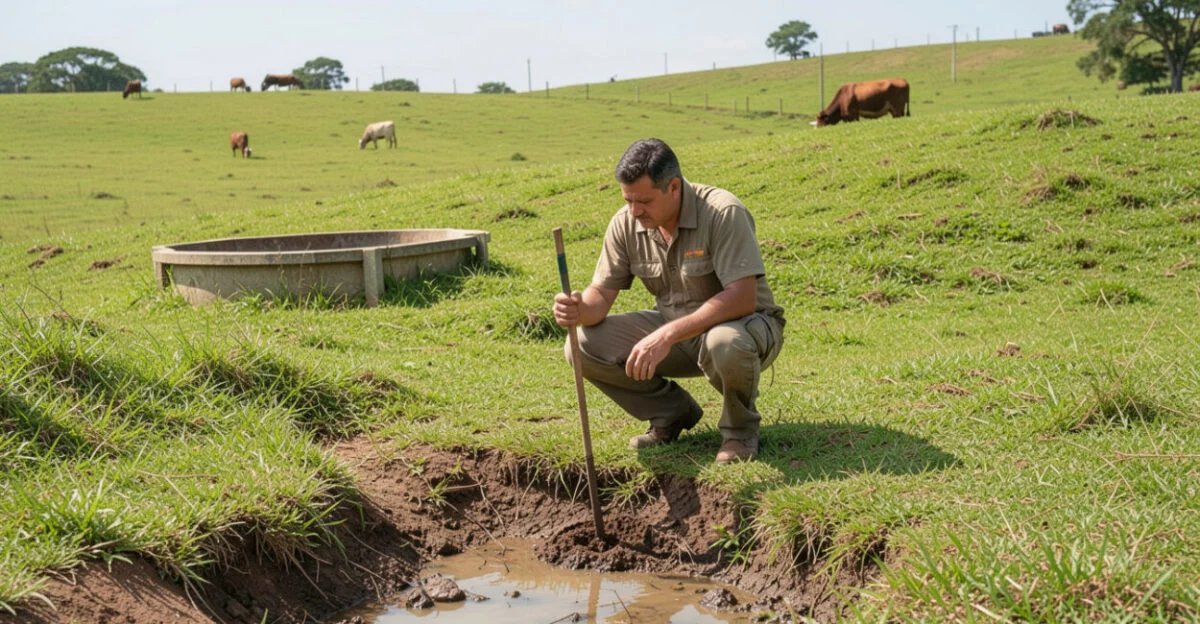
Start with the area’s history: the species planted, pasture age, dry spells, stocking rates, previous fertilization, and places where livestock tend to congregate. This record helps distinguish a localized problem, such as trampling near water troughs, from a limitation affecting the entire area. A soil test should guide pasture amendments. Sampling should represent areas with similar conditions. If terrain, land use, or appearance varies, sample those areas separately so an average does not mask different problems. Follow the lab’s instructions for sampling and depth.
Also assess access, slope, drainage, and water availability. An area with active erosion or limited access for machinery may require a different work sequence. Restoration alone will not fix poor drainage or eliminate the cause of concentrated trampling.
Restoration or Renovation: How to Choose
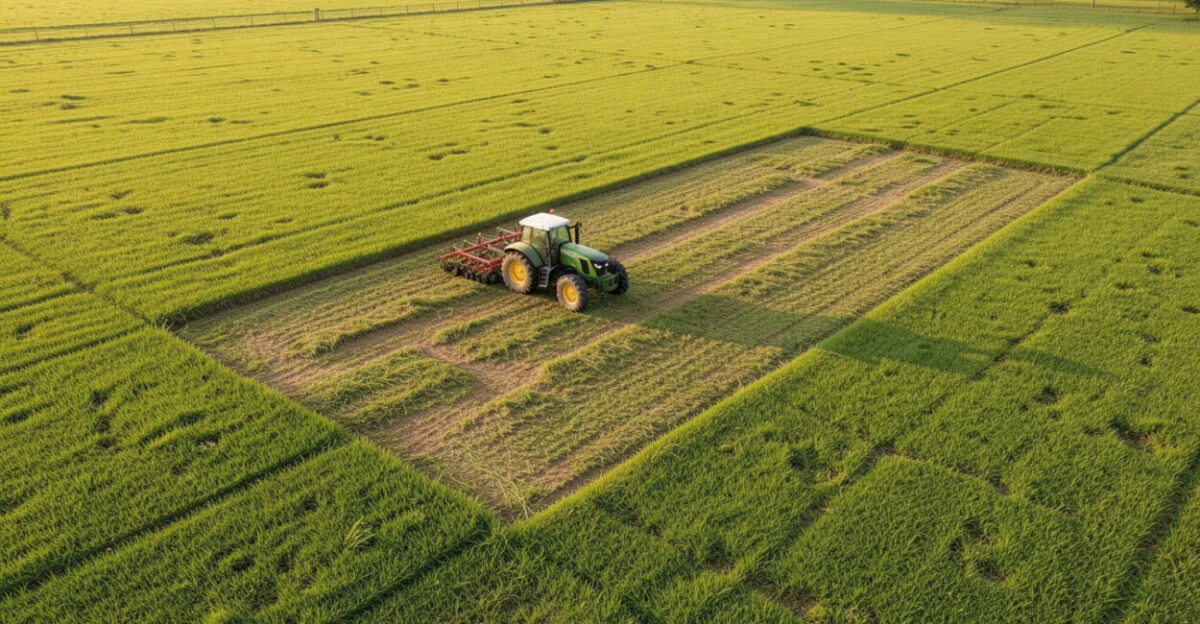
Restoration and renovation are different approaches. Restoration aims to bring existing vegetation back to productive levels through management and necessary amendments. Renovation replaces all or part of the pasture with a new planting, which typically requires more operations and planning.
Read also: Rotational Grazing Management: How to Plan Paddocks
Observed condition Possible approach Key consideration Desired grass is still present and can regrow Restore existing vegetation and adjust grazing management Confirm whether fertility and management are the limiting factors Localized gaps, with productive areas still remaining Restore sections or renovate only the affected areas Investigate why these patches degraded Few desirable forage plants or an unsuitable species Consider full or partial renovation Choose the species, site preparation, and planting method based on climate and soil Erosion, poor drainage, or severe compaction Address the physical cause before or alongside vegetation work Without controlling the cause, degradation may return
You do not have to renovate the entire property if the problem is limited to certain fields or patches. Dividing the land by condition makes it possible to prioritize the most affected areas and manage the rest appropriately. Feasibility depends on access, logistics, and having enough forage for the herd during the work.
Read also: Raising Sheep: Facilities, Feeding, and Management
Steps to Restore Ground Cover
The plan should be based on the diagnosis and account for how the herd will be fed while the area rests or is treated. Soil amendments should follow test results, and weed control should preserve the desired forage. If seeding or replanting is needed, the species, timing, and method will depend on local conditions.
- Divide the fields. Separate areas by ground cover, terrain, history, and soil conditions.
- Identify the limiting factor. Combine observations of vegetation with management history and soil test results.
- Plan the work. Determine amendments, weed control, and whether partial restoration or renovation is needed.
- Protect regrowth. Schedule rest periods and manage herd access to prevent grazing before plants have recovered.
- Monitor and adjust. Compare ground cover and plant vigor before increasing stocking rates or repeating the treatment.
Weed control requires identifying the species present and assessing the risks to the grass and the environment. Choose methods, including products, in accordance with registration requirements, label directions, and technical guidance. Embrapa Pecuária Sudeste, a Brazilian agricultural research center focused on livestock production, provides information on forage species. Specific recommendations should be suited to the region and production system.
Grazing Management During and After Restoration
The rest period should give forage plants time to rebuild leaves and energy reserves, but its length varies with species, season, rainfall, fertility, and grazing intensity. A fixed schedule may not work: during slow growth, the same interval may be too short; under favorable conditions, it may leave the pasture overgrown. Stocking rates should match forage availability, not just the number of animals planned for the property. During restoration, you may need to reduce the number of animals in the area, use other paddocks, or adjust grazing duration. Monitor regrowth and prevent livestock from repeatedly eating the most vigorous plants while weaker areas have no chance to recover.
Plano ABC+ (Brazil’s Low-Carbon Agriculture Plan) includes restoring degraded pastures among its strategies for low-carbon agriculture. However, applying the program on a property depends on the diagnosis and practical conditions; referring to the program does not replace a technical plan for each area.
How to Track Results and When to Seek Help
Restoration is progressing when desired forage cover increases, gaps shrink, plants continue to regrow after grazing, and less soil is exposed. Take photos from fixed points and record rest periods, stocking rates, rainfall, and treatments. Tracking changes over time is more useful than relying on a one-time impression.
How long does it take for pasture to recover?
There is no set timeline. Recovery depends on the species, degree of degradation, climate, fertility, and management after treatment. Monitor regrowth and ground cover before returning to the usual stocking rate. An area that has not developed enough cover may degrade again if livestock return too soon.
When should you seek technical assistance?
Seek professional help if there is active erosion, uncertainty about the forage species, a need for renovation, persistent gaps after management changes, or plans to apply inputs or pesticides. An agricultural technician or other qualified professional can help assess the soil and plan the work; learn more about the role and training in what an agricultural technician does. General guidance has limits: without knowing the species, soil, and climate, it is not safe to recommend amendment rates, fertilizer amounts, seeding rates, or stocking levels. To get started, divide the fields, record what you observe, and arrange a soil test. Then choose restoration or renovation based on the remaining vegetation and the cause of the problem.
Frequently Asked Questions
Can you restore part of the area while keeping the rest in use?
Yes. If degradation is concentrated in patches or fields, you can prioritize those sections and manage the rest separately. Planning must ensure enough forage for the animals while the treated area rests.
How do you choose when to seed or replant?
Timing depends on local rainfall patterns, the species, and soil preparation conditions. Plan so the forage can establish before facing unfavorable conditions or grazing pressure.
Can weed control alone restore the pasture?
Not necessarily. If the cause is low fertility, overgrazing, or poor drainage, removing weeds will not restore ground cover on its own. First identify why weeds took over the space where forage plants used to grow.
Artigos Relacionados
 Soil and Pasture Management in Family-Based ILPF Systems
 Reforestation: Effective Strategies for Restoring Degraded Land
 Free-Range Chicken Farming: Housing, Management, and Income
 Integrated Pest Management: 7 Practical Techniques for Organic Gardens
 Integrated Livestock Farming: Efficient Management on Small Acreages
 Integrated Pest Management: Sustainable Practices for Pest Control
