
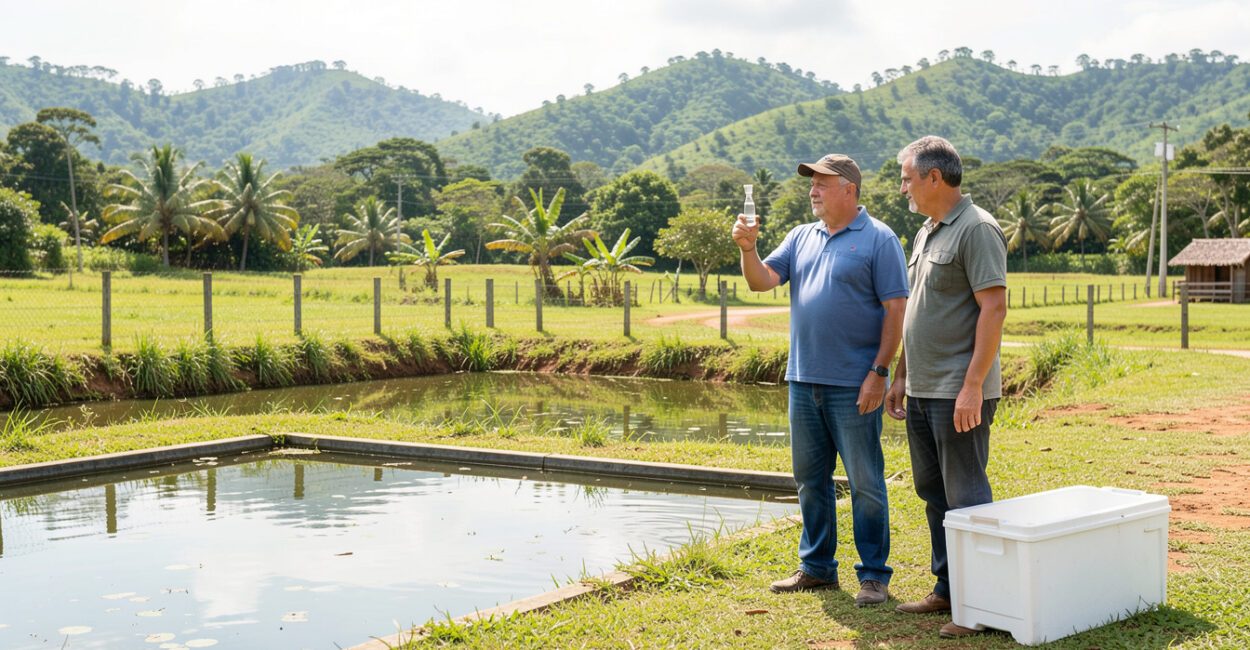
In rural fish farming, water and buyers matter just as much as choosing the fish species. Check these factors before investing in ponds or equipment.
Raising fish may sound like a matter of filling a tank and buying fingerlings. But whether it’s viable depends on local conditions: water volume and quality, available infrastructure, feed costs, and where you’ll sell the harvest.

The safest approach is to assess water, markets, and costs before choosing a species or building anything. Then compare systems, talk with an agricultural extension specialist, and check the legal requirements.
This sequence can help you spot early on when an idea needs adjustments.
1. Before you start: Is your property suitable for rural fish farming?
Fish farming is the controlled raising of fish. On a rural property, it makes sense only when available resources and a sales channel can support the production cycle. Start by checking water availability and quality, available land, access for supplies and transportation, and your production goals. These details will guide your next decisions.
Think about the daily workload, too: Who will feed the fish, monitor the water, and respond if the power or equipment fails? In a system that relies on aeration, for example, an outage may require a quick response. A qualified professional can help assess risks specific to your site.
If fish farming will share space and labor with other activities, consider how the property works as a whole. The article on efficient management of small areas with integrated livestock farming may help broaden your assessment, without assuming that the systems are interchangeable.
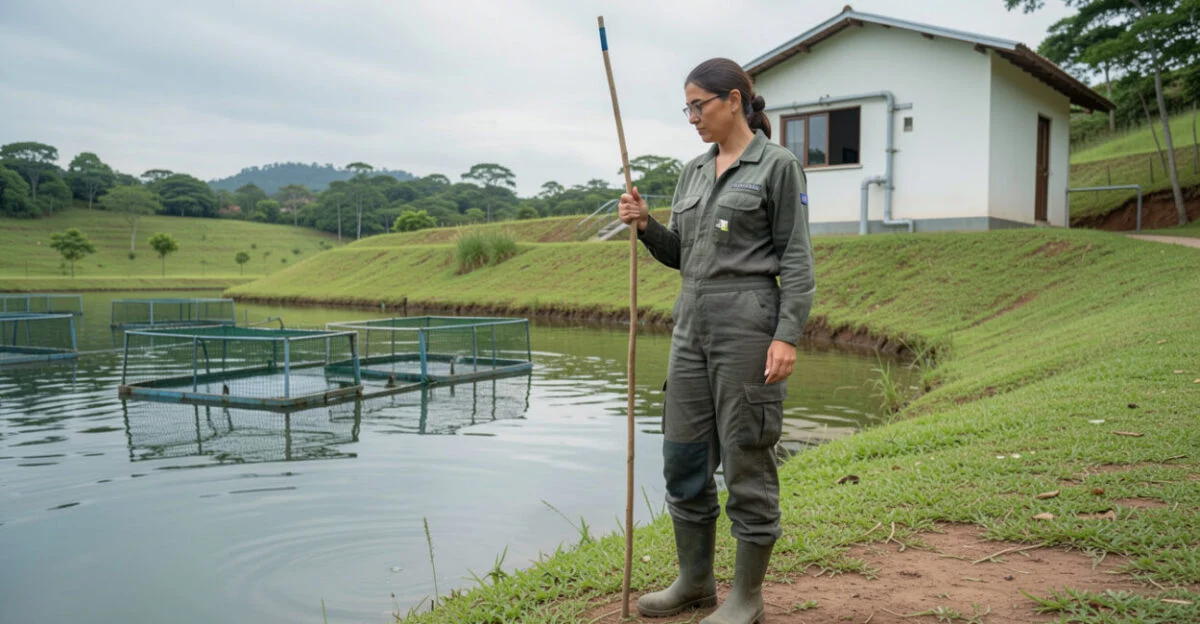
2. Water, land, and systems: what to compare before investing
Earthen ponds, net pens, and intensive systems suit different conditions. The right choice depends on the land, water, infrastructure, and applicable regulations. No system is best for every situation: the setup must fit the property and meet licensing requirements.
System Requirements and advantages Limitations Earthen pond Suitable land, appropriate soil, and a controllable water supply; allows you to manage the pond environment. Requires site assessment and construction, as well as attention to water exchange and quality. Net pen A suitable body of water and a containment structure; may eliminate the need for excavation. Depends on reservoir conditions and permits; the producer does not have exclusive control over the water. Intensive system Structures and equipment to control fish production; may require less land. Relies on electricity, monitoring, and more frequent technical management.
Before estimating construction or equipment costs, confirm that water withdrawal and use are allowed at the site. Use the table for comparison; it does not replace a technical plan.
Read also: Rural Tourism: How to Create a Farm Experience
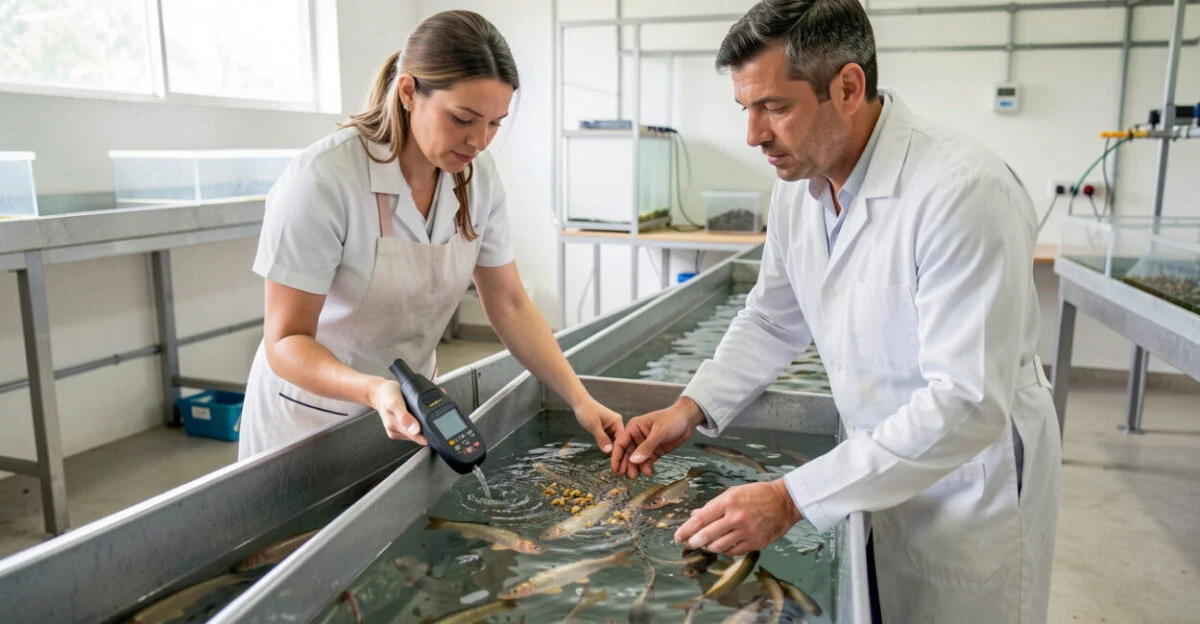
3. Species, fingerlings, and management: decisions that affect the production cycle

Choose a species suited to the climate, the available system, and what buyers in your area are looking for. Fingerlings from a known source with proper documentation can reduce uncertainty about health and performance. Recommendations should take into account the species and the property’s actual conditions.
Feed is usually one of the largest operating expenses. Store it in a dry, protected place, manage feeding, and monitor consumption to avoid waste. Frequent leftovers may point to a need to adjust feeding or address an environmental problem.
Read also: Free-Range Chicken Farming: Setup, Management, and Income
Temperature, dissolved oxygen, stocking density, and water quality affect feeding and growth. Monitoring these parameters with technical guidance is part of good management. To learn about training and career options in agriculture, see the profile on the daily work and career paths of an agricultural technician.
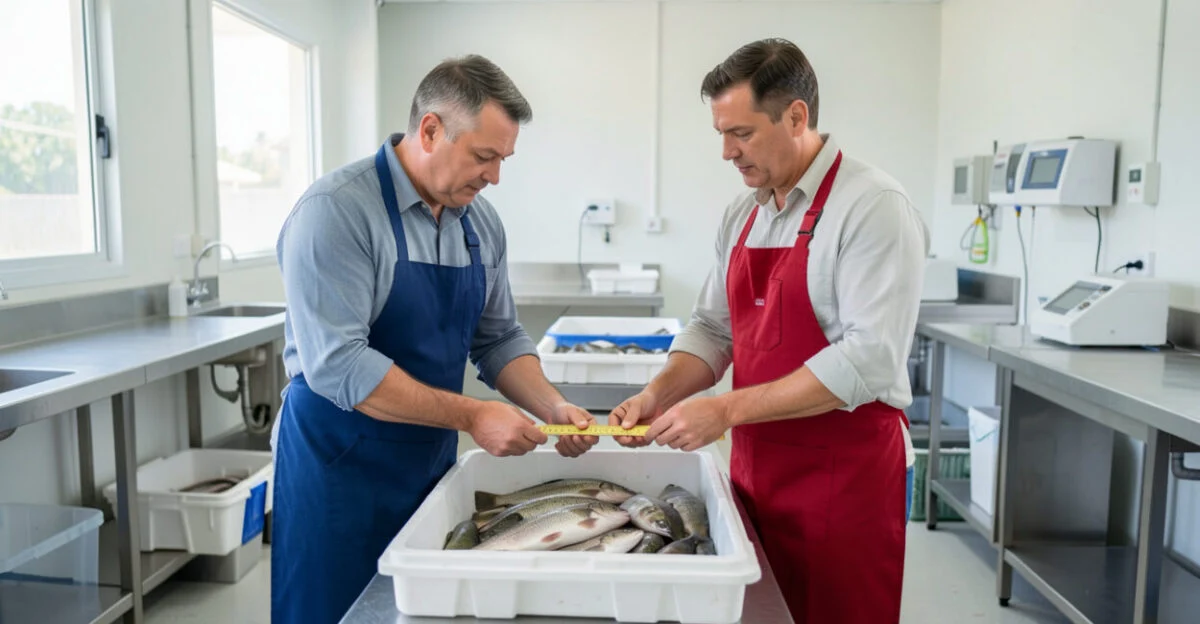
4. From production to sale: confirm your buyer before harvesting
Producing fish does not guarantee a sale. Before stocking a pond or tank, talk with fish markets, restaurants, cooperatives, farmers markets, and local buyers to find out what species, sizes, quantities, delivery schedules, and product forms they accept.
Imagine a producer who prepares a batch for sale whole, only to find out at harvest that the buyer accepts only gutted fish of a specific size. The fish are ready, but there’s no market for them. Confirming those requirements before the production cycle can help avoid extra transportation, delays, and less favorable terms.
Also find out who will handle slaughter or processing, what food-safety requirements apply, and how the product will be kept refrigerated. Distance and logistics affect the price the producer ultimately receives.
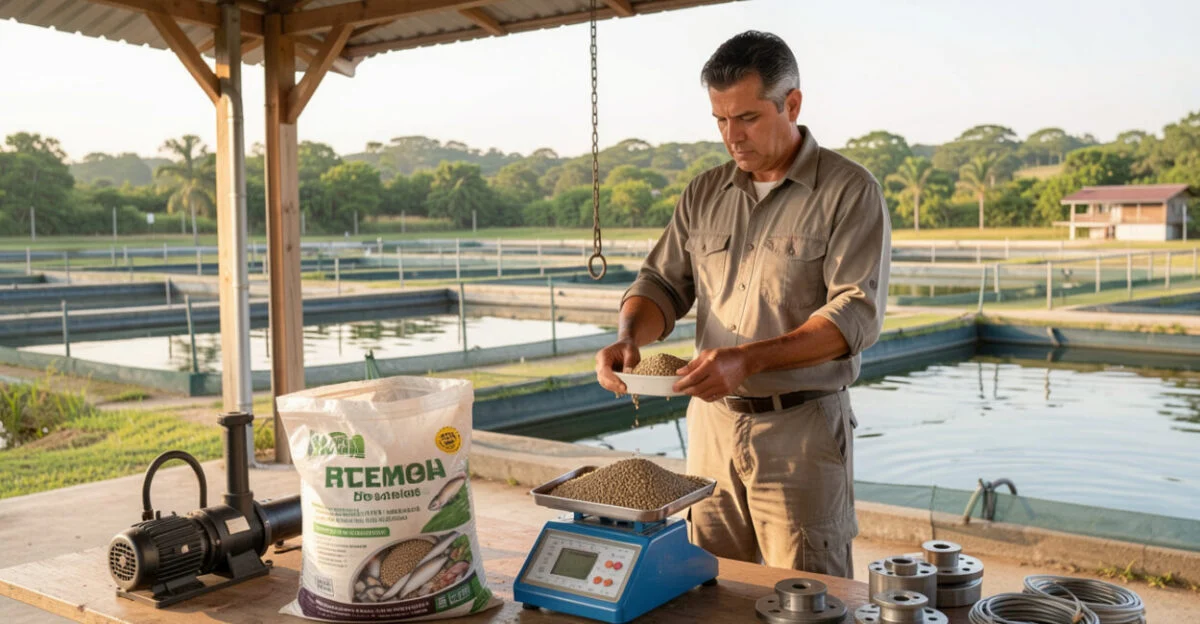
5. Costs, revenue, and profit: build a budget that accounts for surprises
There is no guaranteed profit in fish farming. Results depend on scale, productivity, losses, sale price, and local costs. That’s why other producers’ projections can’t replace a budget tailored to your property.
- Fingerlings and feed, including potential losses or waste.
- Electricity, pumps, aerators, and maintenance.
- Labor, technical assistance, and water testing.
- Construction, equipment, transportation, ice, and processing.
- Production losses and marketing expenses.
Compare scenarios with different sale prices and feed costs. If the numbers work only with perfect growth and sales at full price, the plan is not realistic. The IBGE Municipal Livestock Survey, published by Brazil’s national statistics agency, compiles municipal production data that can provide context, but it does not show the profit of an individual operation.
6. Permits and environmental considerations before installation
Requirements vary by state, municipality, system, species, and installation site. Before digging ponds, installing net pens, or withdrawing water, contact the environmental and water-resource agencies with jurisdiction in your area. Don’t assume that a permit for one property applies to another.
Embrapa Fisheries and Aquaculture, Brazil’s agricultural research agency, offers technical information on the sector. Applying general guidance, however, requires considering the characteristics of the water and land, along with local regulations. This is an important limitation of any broad recommendation.
7. A step-by-step plan for moving forward
Work through the decision in this order: assess the water, land, access, and labor; consult an agricultural extension specialist; compare systems; prepare a budget with different scenarios; confirm buyers and delivery requirements; and finally, check permits and approvals before beginning construction.
This approach can also show when it makes sense to delay or scale back the project. Before buying fingerlings, record water data, supply quotes, and responses from potential buyers. Keeping a simple folder of notes can help prevent you from making your first investment blindly.
Frequently asked questions
What is aquaculture?
Aquaculture is the farming of aquatic organisms. Fish farming is the branch focused specifically on raising fish.
How profitable is fish farming?
There is no single answer: results depend on scale, productivity, losses, costs, and market conditions. Only a budget based on local conditions can estimate the profit margin.
How many months does it take tilapia to reach 1 kg?
There is no universal timeline. Genetics, temperature, feed, stocking density, and management all affect growth. A qualified professional can help estimate the time needed for the chosen system.
Artigos Relacionados
 Corn Farming: How to Plan Planting and Harvesting
 Event-Day Operations Plan: Priority Task Run-of-Show, Communication, and Contingency Planning for Coordinators and Staff
 Crop Rotation: How to Plan Planting on Your Farm
 Rural Succession: How to Prepare Your Farm for the Future
 Fruit Farming: Profitable Crops Adapted to Brazil’s Northeastern Semi-Arid Region
 How Family Farming Cuts Costs and Becomes a Trend
