
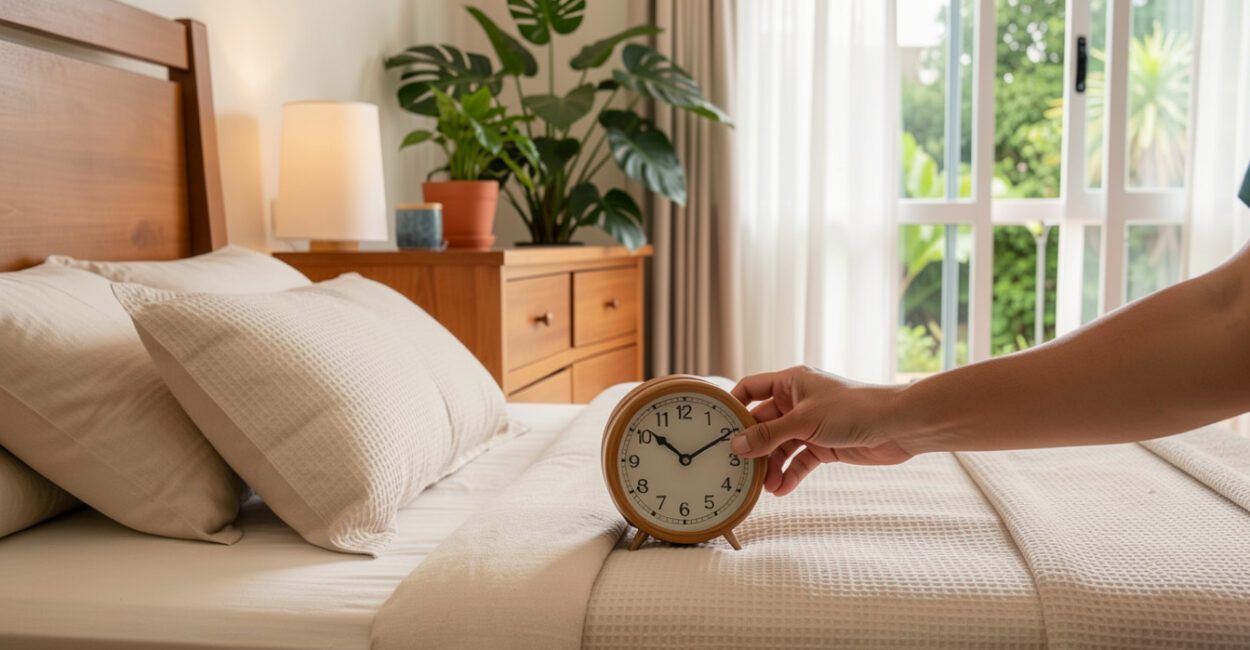
Going to bed earlier doesn’t always solve the problem: if your bedtime changes a lot from one day to the next, your body may not be ready to sleep. To improve sleep quality, the most reliable approach is to keep a regular schedule, get natural light during the day, limit stimulants, and create a wind-down routine that fits your life. Sleep depends on the circadian rhythm, your internal system that helps organize periods of alertness and rest over roughly 24 hours. Put simply, your body tends to sleep better when it receives predictable cues that the day has begun and is coming to an end.
These habits may support better rest, but they don’t replace a health evaluation if the difficulty persists or affects your daily life. There’s also no guaranteed technique for falling asleep in seconds.

What habits can help improve sleep?
To improve sleep, prioritize similar wake-up and bedtime schedules, natural light in the morning, regular physical activity, and less caffeine and alcohol in the evening. Also set aside time to wind down, and keep your bedroom comfortable, dark, and quiet. Consistency is usually more helpful than trying to make up for a bad night with drastic changes.
A practical place to start is your wake-up time: it’s often easier to stick to than a bedtime and can help stabilize your routine. The amount of sleep you need varies by age and from person to person; the American Academy of Sleep Medicine’s consensus recommendation addresses appropriate sleep duration for adults, but doesn’t set one perfect amount for everyone. If you want to turn small changes into routines, try ideas from micro-habits you can use in everyday life. Start by choosing one change you can repeat for a few days instead of trying to change everything in one night.
How can you create a consistent sleep and wake routine?
First, choose a wake-up time that works on weekends, too, and keep variations small whenever possible. Then, allow enough time for sleep and gradually adjust your bedtime rather than going to bed long before you feel sleepy. If you usually get up at 6:30 a.m. on weekdays and sleep in on Sunday, the difference can make it harder to get back into your routine on Monday. An occasional late night out isn’t something to feel guilty about; the goal is to keep exceptions from becoming the norm.
A predictable morning routine, with daylight and familiar activities, can serve as an anchor for your body clock. Find ideas for structuring the start of your day in this practical morning routine.

What daytime habits can help you rest better at night?

Natural light in the morning, movement throughout the day, and paying attention to when you consume caffeine can help create better conditions for sleep. If you drink coffee, black tea, energy drinks, or other caffeinated products, notice whether afternoon consumption coincides with greater difficulty falling asleep; sensitivity varies from person to person.
- Light: Spend some time outdoors early in the day, when your schedule allows.
- Physical activity: Stay active regularly; if intense evening exercise makes you feel more alert, try moving it earlier.
- Naps: If they interfere with your nighttime sleep, shorten them or avoid napping late in the day.
- Alcohol and nicotine: Don’t use them as sleep aids; alcohol can disrupt sleep, and nicotine is a stimulant.
The CDC recommends that adults keep regular schedules and avoid caffeine in the afternoon or evening. See the CDC’s guidance on sleep and habits that support it, too.
How can you wind down before bed?
Create a short, repeatable routine for the 30 to 60 minutes before bedtime, such as dimming the lights, getting things ready for the next day, and choosing a relaxing activity. This time frame is a flexible guideline, not a medical rule or a guarantee that you’ll fall asleep within a certain amount of time. If thoughts about tasks keep you alert, write them down and decide on the next step for the following day. Slow breathing or progressive muscle relaxation may help some people ease tension; if a technique makes you uncomfortable, stop and choose another calming activity.
Read also: How to Read More and Make Reading a Habit
How can you fall asleep fast when you’re not sleepy? Don’t force it. If you’re lying in bed frustrated and wide awake, get up, keep the lights low, and do something relaxing; return to bed when you feel sleepy. Methods that promise you’ll fall asleep in 1 minute, 5 minutes, or 5 seconds can’t guarantee that result.

What can disrupt sleep, and how can you adjust your routine?
Irregular schedules, worries, an uncomfortable sleep environment, late naps, and stimulants can contribute to poor nights, but they may not fully explain the problem. One common mistake is trying to make up for a bad night by spending a lot of time in bed the next night; this can increase frustration when sleep doesn’t come. Instead of changing several things at once, keep a record for one or two weeks of when you go to bed and get up, nighttime awakenings, naps, and caffeine or alcohol use. Look for patterns: for example, if the problem mostly occurs after late-afternoon naps, adjust that habit first and see what happens.
Read also: Active Listening: How to Improve Your Everyday Conversations
This tracking isn’t a way to diagnose a disorder. It can help you share specific information with a health care professional and avoid jumping to conclusions based on one bad night.
Can tea, natural remedies, or medications help you sleep?
Teas and products marketed as natural aren’t guaranteed to help with insomnia, and medications can carry risks or interact with other drugs. No over-the-counter sleep aid is safe for everyone: the right choice depends on the product, your health history, other medications you take, and the cause of your sleep difficulty.
Option What to consider Teas, such as chamomile or lemon balm They can be part of a relaxing ritual, but there’s no guarantee of deep sleep; consider allergies, interactions, and how much liquid you drink before bed. Melatonin and other natural products They aren’t right for every situation or for use without an evaluation; the evidence and safety vary depending on the circumstances and product. Prescription and over-the-counter sleep medications They can cause side effects and interactions. A health care professional should assess whether they’re appropriate and how long to use them.
A relaxing tea can be part of a bedtime ritual, including when you feel anxious, but it doesn’t necessarily address the cause of anxiety or guarantee deep, refreshing sleep. Terms like “home remedy for heavy sleep,” “natural sleep aid from the pharmacy,” or “strong sleep medication” don’t indicate safety or effectiveness. The NCCIH, part of the U.S. National Institutes of Health, provides information about melatonin and its limitations; talk with a health care professional before using this type of product, especially if you take other medications.
When should you seek professional help for sleep problems?
Seek guidance if the difficulty keeps recurring, persists despite reasonable changes, or affects your concentration, mood, work, or safety during the day. Loud snoring accompanied by pauses in breathing, severe sleepiness while driving, or frequent awakenings also warrant evaluation.
Persistent insomnia may involve health conditions, medications, pain, anxiety, depression, or other sleep disorders. A health care professional can investigate these possibilities and recommend appropriate treatment; healthy habits can help, but they don’t replace professional care.
Summary: What should you adjust first?
Question Practical answer Where should I start? Keep a consistent wake-up time and get natural light in the morning. How can I wind down? Repeat a relaxing routine before bed and don’t force yourself to sleep. Will tea solve the problem? It can be part of a ritual, but it doesn’t guarantee sleep or replace an evaluation. When should I seek care? When the problem persists, affects your day, or comes with concerning symptoms.
Choose one thing to pay attention to today: for example, keep the same wake-up time for a week and note how you feel during the day. If the difficulty continues or affects your routine, share your notes with a health care professional.
Frequently Asked Questions
How much deep sleep is ideal?
There’s no single amount of deep sleep that should be a goal for everyone. Watches and apps estimate sleep stages, but those measurements don’t replace a clinical evaluation; also pay attention to how rested you feel and how well you function during the day.
Does shift work change the best routine?
Yes. People who work nights or rotate shifts may need to adjust their light exposure, sleep schedule, and sleep environment. Needs vary, so consider seeking professional guidance if adjusting is difficult or causes dangerous sleepiness.
Does one bad night mean I have insomnia?
No. One isolated night of poor sleep isn’t enough to conclude that you have a disorder. How often it happens, how long it lasts, and its effect on your daytime functioning can help determine whether further evaluation is needed.
Can I make up for lost sleep by sleeping in?
Sleeping in once in a while happens, but sleeping much later than usual can make it harder to sleep the following night. If you need extra rest, try returning to your regular routine and notice whether daytime naps interfere with nighttime sleep.
Artigos Relacionados
 Reading at Home and Family Engagement: Build Routines, Choose Books, and Motivate Kids to Improve Reading Habits and School Performance
 How Daily Reading Improves Quality of Life: Benefits and Practical Tips
 Homework in Elementary School: How to Build Good Habits
 High-Performance Habits: 7 Practices to Start Today
 Sleep and Learning Consolidation: Why It Matters
 Reading Comprehension Strategies for Children: Guided Questions, Mind Maps, and Summaries to Improve Interpretation and Retention in Elementary School
