
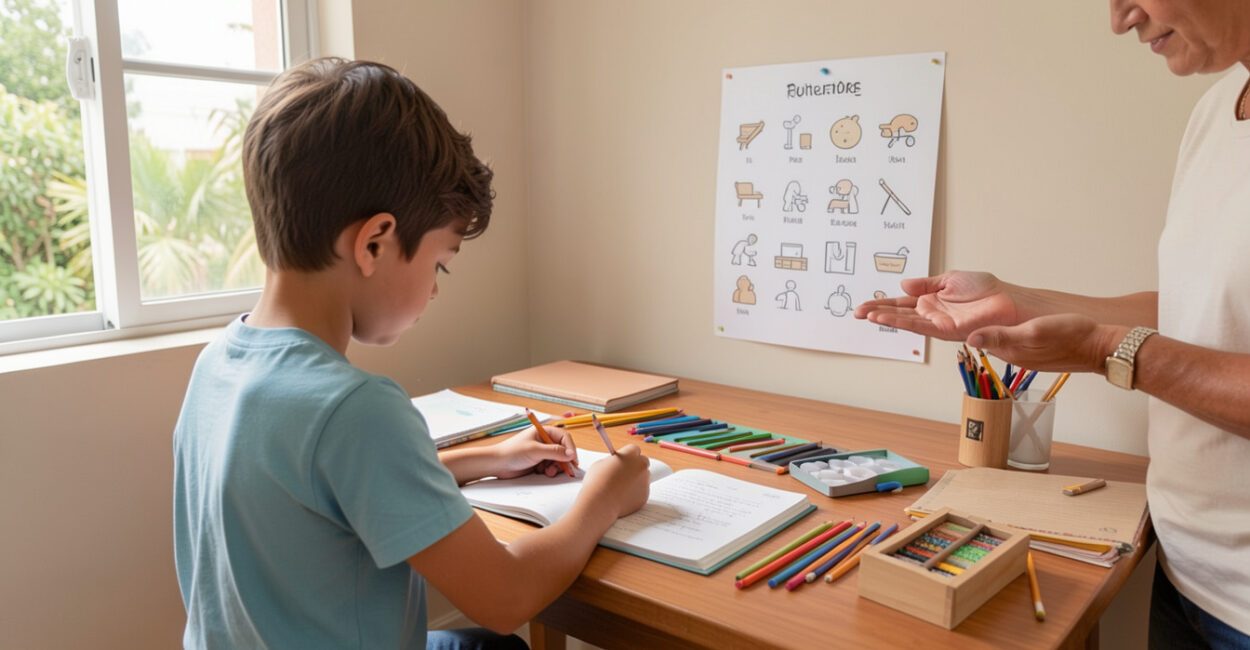
Sometimes homework starts before a child even opens a notebook: just mentioning it can spark a negotiation. A predictable homework routine in elementary school can ease that friction and give students opportunities to practice what they’ve learned and take responsibility. The best approach combines a realistic schedule, a low-distraction workspace, and an adult who stays involved without taking the pencil out of the child’s hand. The routine should change based on the child’s age, grade, type of activity, and what else is happening that day.
Quick Guide
- Goal: Review material and encourage independent study habits.
- Schedule: Choose a time that works for your family’s routine and your child’s energy level.
- Space: Choose an organized surface with the necessary supplies within reach.
- Guidance: Help your child understand the instructions and plan; let the student come up with the answers.
- When difficulties keep coming up: Keep track of what’s happening and talk with the school.
Why Homework Matters in Elementary School
Homework is schoolwork assigned to be completed outside of class time to practice, review, or deepen learning. For a child, that means having time to study, recall what they’ve understood, and notice where they need support—without an adult doing the thinking for them. A well-designed assignment can bring to light questions that went unnoticed in class. It also gives children a chance to learn how to gather materials, follow directions, and ask for help clearly. Brazil’s National Common Curricular Base (BNCC), presented by the Ministry of Education, outlines learning goals and competencies for basic education. Homework, however, is only meaningful when it connects to the class’s instructional work.

The goal isn’t to fill all of a child’s free time. If homework turns into a string of copied answers or a daily source of arguments, consider whether the assignment is clear, whether it fits the routine, and whether the student has the resources needed to complete it.
How to Create a Homework Schedule and Workspace
To build a routine, choose a time that works on most days, get the materials ready before starting, and agree on how your child can ask for help. A consistent schedule can reduce daily negotiations, but it should account for meals, rest, the commute, and family activities. There’s no one set amount of time that works for all children. How long homework takes depends on the child’s age, the number and type of assignments, their reading and writing pace, and factors such as sleep or fatigue. Notice how long your child takes when they can work calmly. If homework often drags on, talk with the teacher instead of making a timer the rule.
The workspace can be simple: a table or part of one, adequate lighting, and only the supplies needed for that assignment. If the home is busy, an adult can set aside a quieter time, even if the child doesn’t have a bedroom of their own to study in.
- After school, check the planner, online platform, or notes from school, and figure out what needs to be done.
- Gather what’s needed and choose which assignment to start with, taking deadlines and difficulty into account.
- Take a break if your child seems tired, then return to a specific next step.
- When the work is done, check that your child answered what was asked and put the materials in their backpack.
How to Adapt the Routine to Your Child’s Age and Grade

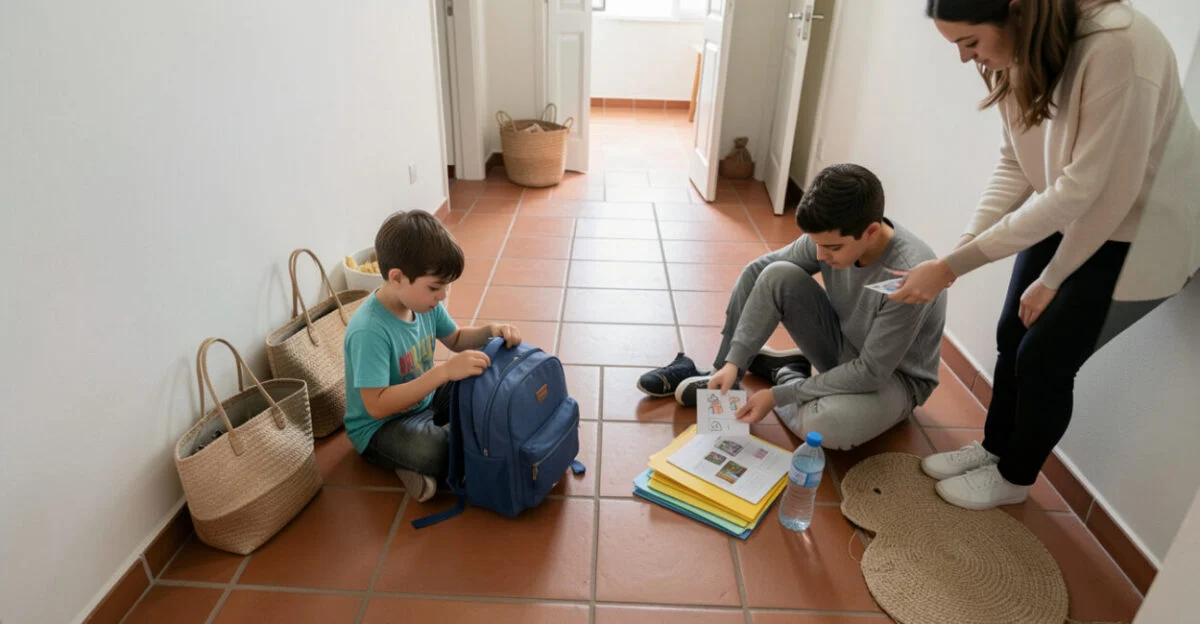
In the early grades, children often need an adult nearby to find the assignment, understand directions, and stay focused. That support can decrease as they learn to get started, break work into steps, and check their own work. Grade level can help guide you, but it doesn’t determine independence on its own: children in the same class may have different needs.
School stage Support that can help Responsibility to develop Early elementary grades Read the directions together and help gather materials. Get started and answer in their own words. Building independence Agree on one check-in at the start and another at the end. Check the planner and organize the order of assignments. Later elementary grades Discuss deadlines and availability for specific questions. Plan due dates, break long assignments into parts, and ask for help ahead of time.
The transition between stages doesn’t happen all at once. If your student still relies on reminders, try removing one kind of support at a time: first, ask them to check the planner; then, have them organize their materials; later, ask them to let you know when they have a question to discuss.
How to Encourage Independence Without Leaving Your Child on Their Own
Independent study means becoming increasingly able to start, organize, and keep track of one’s own work while asking for support when needed. It doesn’t mean leaving a child alone with directions they don’t understand. An adult can serve as a sounding board: ask what the child understood, help them find the directions, and then let the student work out the solution.
Read also: Homework: How to Help Your Child Without Doing It for Them
When a child says, “I don’t know,” avoid giving them the answer. Ask them to show you where they got stuck, reread the directions together, or ask a smaller question: “What is the problem asking you to find out?” For a writing assignment, for example, an adult can help the child organize ideas out loud, but should let them write and revise their own work.
Children become more independent when they do what they can already handle and get help only with the next step they haven’t mastered yet.
A common mistake is to correct every answer as the child works. This can make them wait for adult approval before moving on and can also hide the questions they really have. Agree to check the work at the end. If there’s a mistake, ask the child to explain their thinking before showing another approach.
Read also: Basic Math: Strategies for Learning in Elementary School
To explore ways to encourage participation and reflection, learn about active learning strategies in elementary school. They can help you think of activities in which students play an active role instead of simply repeating answers.
What to Do When Your Child Doesn’t Want to Do Homework
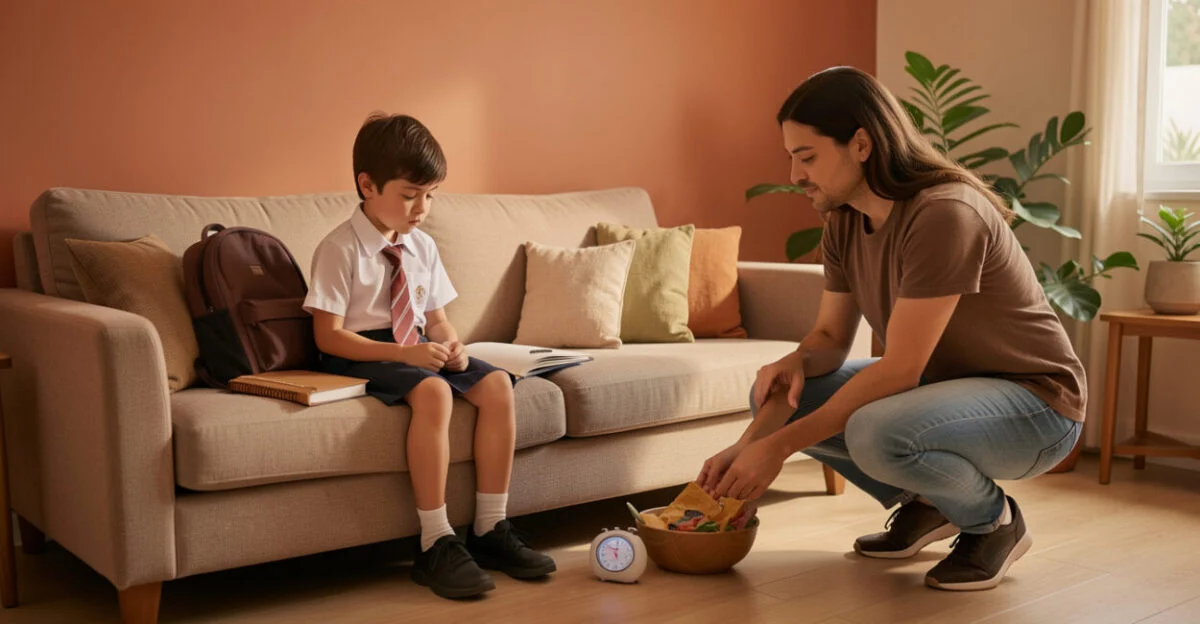
When a child refuses to do homework, first try to identify why. Resistance may stem from tiredness, difficulty understanding the assignment, fear of making mistakes, or a conflict with the chosen schedule. Calling a child lazy doesn’t clarify the problem and may make things more tense.
Instead of arguing about the whole assignment, suggest a small first step: open the notebook, read the first direction, or choose between two assignments. If your child is very tired, an agreed-upon break may work better than insisting as frustration builds. Set a clear time to return, such as, “After your snack, we’ll do the first problem.”
Consider this scenario: a child gets home from school, leaves their notebook closed, and says they don’t know how to do the assignment. The adult reads the directions with them and realizes the first step is to find information in the text. After finding that section, the child tries to answer independently. If they’re still stuck, the family writes down the question to share with the teacher.
If your child refuses homework almost every day, keep track of when it happens, which subjects are involved, and what seems to help or make things worse. Ongoing difficulties with reading, writing, or attention call for a conversation with the school. Without knowing the assignment and what’s happening in class, the family may not have enough information to understand the cause.
How Families and Schools Can Work Together
Families know what home life is like; schools know the learning goals and what’s happening in class. Sharing specific information can help both sides distinguish a one-time difficulty from a pattern that needs attention. Instead of saying only, “The homework is impossible,” explain which directions caused confusion, how long the child worked on it, and what kind of help they needed.
The school also needs to know whether the directions are clear and whether the assignment fits the student’s actual study conditions. If the child doesn’t have a quiet place to work or depends on an adult who is at work during homework time, bring up that context without assigning blame. The Harvard Center on the Developing Child offers information about the development of skills such as planning and attention control, which develop over time with appropriate support.
To turn the conversation into action, bring examples: a direction the child didn’t understand, an assignment they completed independently, and another that required adult help. Families can also support learning through everyday reading; find ideas for creating at-home reading routines that involve the whole family.
How to Tell Whether the Amount of Homework Is Appropriate
The amount is more appropriate when the child can understand what to do, complete the assignment without an adult taking over, and still have time for rest, play, and other needs. Time spent alone doesn’t tell the whole story: a new activity may take more effort, while repetitive work may take little time without contributing much to learning.
For a few days, notice whether your child can finish with the resources they have, whether most of the time goes toward understanding the directions or working through the material, and whether the difficulties are concentrated in one subject. If homework frequently leaves your child exhausted, interferes with sleep, or takes up a disproportionate amount of time, keep track of the pattern and talk with the teacher about adjusting the assignment.
This guideline has its limits: students work at different paces, and a longer assignment can make sense for a specific project if it’s explained and planned. Talking with the school is essential when a student has specific educational needs or when the difficulties may go beyond the home routine.
Start by trying a workable schedule for one week and agreeing on a simple plan: the child checks the planner, starts the assignment, and asks an adult for help with specific questions. Note what worked and what got in the way. These observations give the family and school a concrete basis for adjusting the routine without turning every afternoon into a battle.
Frequently Asked Questions About Homework
Is It Better to Do Homework Before or After a Snack?
It depends on how your child feels after school. If they’re hungry or very tired, a snack and a short break may make it easier to get started. If breaks tend to turn into long delays, agree on a time to get back to work.
Can a Child Use a Calculator or Computer for Homework?
Use these tools when the directions allow them or the school recommends them. If the goal is to practice a calculation, a calculator may hide the very skill the assignment is meant to develop.
What Should You Do When Homework Covers Material the Family Doesn’t Know?
Help your child read the directions and find the point where they’re confused, without improvising an explanation that might conflict with the method taught in class. Write down the question for the teacher and let your child note what they were able to understand.
Is It Appropriate to Reward a Child for Studying?
An agreed-upon routine and recognition of effort are usually more sustainable than paying for each completed assignment. If you offer a reward, make sure it doesn’t replace the purpose of the activity or become the only reason your child studies.
Artigos Relacionados
 How to Improve Reading Skills in Elementary School: Practical, Proven Ways to Build Fluency and Comprehension in the Classroom
 Morning Habits: 7 Routines That Build School Independence
 Reading at Home and Family Engagement: Build Routines, Choose Books, and Motivate Kids to Improve Reading Habits and School Performance
 Dyslexia in Elementary School: Signs and Learning Support
 Bullying in Elementary School: Signs and How Schools Can Respond
 Reading Comprehension Strategies for Children: Guided Questions, Mind Maps, and Summaries to Improve Interpretation and Retention in Elementary School
