

Dyslexia in Elementary School: What It Is and How It Affects Learning
A child may know the answer to a question and still take a long time to read the prompt or write down what they know. Dyslexia is a specific learning disorder with a neurobiological origin. It primarily affects reading accuracy and fluency and can make writing more difficult.
In elementary school, persistent signs call for observation and support—not judgments about effort or intelligence.

Technically, dyslexia involves difficulties recognizing words and decoding them—that is, connecting letters with sounds. In everyday situations, reading may take so much effort that the child has less attention left to understand the text. The presentation varies: some children read slowly, others substitute or leave out sounds and letters, and many develop their own ways to compensate. Dyslexia can occur alongside other conditions and does not, by itself, explain all academic struggles. The U.S. National Institute of Child Health and Human Development (NICHD), a federal research institute, describes dyslexia as a learning difficulty related to reading. This definition helps frame the topic, but it does not replace an individual evaluation.
Signs of Dyslexia in Children: What to Look For
Possible signs include slow or inaccurate reading, difficulty connecting letters with sounds, and persistent problems spelling words. These signs alone do not confirm a diagnosis. What matters is observing a pattern over time, taking into account the child’s age, access to instruction, and response to the support provided.
- Difficulty recognizing familiar words or reading new ones, even after instruction and practice.
- Choppy, syllable-by-syllable reading, with frequent pauses, self-corrections, or losing one’s place in the text.
- Persistent spelling errors, such as leaving out, adding, or reversing letters or syllables.
- Taking a long time to copy or write down ideas, even though the child can explain them verbally.
- Avoiding reading activities, which may reflect fatigue, embarrassment, or fear of making mistakes.
One detail that often goes unnoticed is the difference between what a child can explain verbally and what they can produce in writing. A child may share thoughtful ideas in a conversation but write very little when faced with a worksheet because so much time goes into decoding words and organizing their writing. Noting this difference helps the school plan support without singling the child out.
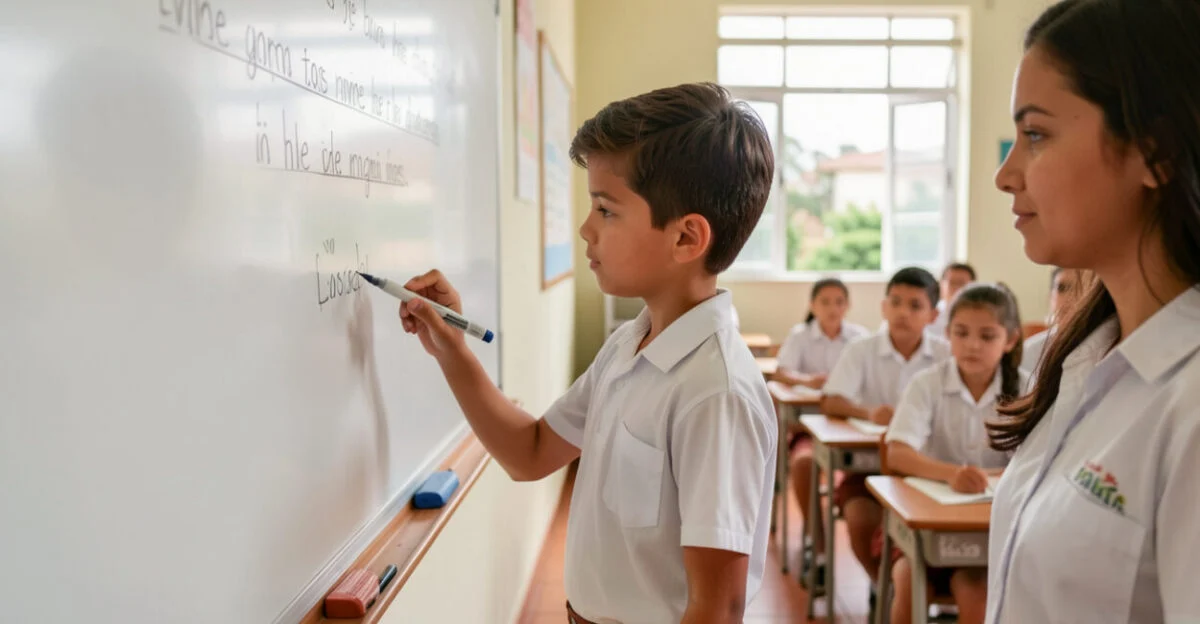
Reading and Writing Challenges at Different Grade Levels

During early reading instruction, signs may include difficulty hearing sounds within words, connecting letters with those sounds, and moving beyond choppy, syllable-by-syllable reading. In later grades, a child may continue to read slowly, miss information in longer texts, or make spelling errors, even when they understand a spoken explanation well.
These signs do not look the same in every student. One child may have more difficulty reading words, while another may struggle more to write accurately. Progress also depends on the instruction provided, how consistently interventions are offered, and factors such as language, attention, and access to appropriate materials.
Planned instruction may include activities that build awareness of speech sounds to support early reading. The article on phonological awareness in early reading instruction describes practices related to this skill. These activities do not diagnose dyslexia or, by themselves, address every student’s needs.
How to Tell Persistent Signs from Temporary Difficulties
Persistent signs and a child’s response to instruction can help determine what to do next, but they are not enough to diagnose dyslexia through classroom observation. A temporary difficulty may arise after absences, changes in routine, or limited exposure to the material. A pattern that continues despite explicit instruction and consistent support, however, warrants further evaluation.
A practical rule is to document what is happening and what has been tried. If a child struggles with specific tasks but makes progress with review and guided practice, the school can continue monitoring. If the challenges continue to limit reading and writing, talk with the school’s support team and the family about an evaluation instead of waiting for the problem to go away on its own.
Read also: Homework in Elementary School: How to Build Good Habits
A simple record can note the task, the type of error, how long it took, and the strategy the teacher used. For example, a child may understand a story when someone reads it aloud but be unable to answer questions independently in writing as quickly as classmates. This observation does not establish a diagnosis; it shows where an accommodation might help the child demonstrate what they know.
It is important to understand the limits of this approach: a slow response to an intervention does not prove dyslexia. Instruction quality, attendance, the language of instruction, and other learning conditions also affect progress. A professional evaluation takes all of these factors into account.
Read also: Basic Math: Strategies for Learning in Elementary School

Classroom Strategies for Dyslexia
Teachers can reduce barriers to accessing content and teach reading and writing explicitly, with instructions organized into steps. Support works best when it preserves learning goals and does not turn the child into an example in front of the class.
- Give instructions both verbally and in writing, breaking longer tasks into smaller steps.
- Allow an appropriate amount of time for the task and, when suitable, let students respond orally or use digital tools.
- Provide texts with a clear visual layout and avoid making extensive copying from the board the only way to take notes.
- Teach sound-letter connections and reading strategies systematically, while monitoring progress.
- Grade with the learning objective in mind: if an activity assesses science, for example, do not let spelling errors obscure the student’s demonstrated scientific knowledge.
An accommodation should address the need observed. Extra time may help on a test with extensive reading, but it does not replace reading instruction. Having a text read aloud may help assess comprehension when decoding is not the focus. The school can also combine these measures with inclusive practices described in inclusive education practices in elementary school.
How Families Can Work with the School
Families can share specific observations and work with the school to monitor progress. Rather than asking a child to read faster, it may help to ask which tasks are difficult, what the child can already do independently, and which supports have been effective.
At home, reading can be shared without turning every moment into a test: an adult can read a passage while the child follows along, or they can take turns reading, depending on what feels comfortable. A short, predictable routine is often more manageable than long, high-pressure practice sessions. Here are more ideas for building reading habits at home, which can be adapted to the child’s pace.
Avoid comparing the child with siblings or classmates, and avoid comments that equate mistakes with laziness. Repeated criticism can make a child more resistant to reading, while specific praise—such as noticing that the child reviewed a difficult word—recognizes strategies and effort without promising automatic results.
How to Seek an Evaluation and Which Professionals May Be Involved
An evaluation may involve health and education professionals, depending on the child’s needs and local guidelines. A teacher’s observations and school difficulties can help start the process, but a diagnosis should not be based solely on reading errors or low grades.
An evaluation may consider the child’s learning and developmental history, reading and writing skills, instructional opportunities, and possible related factors. Qualified professionals, such as speech-language pathologists, psychologists, and physicians, may be involved as appropriate. The team and procedures vary, and no single test can explain the whole picture.
In Brazil, Law No. 14,254/2021, a Brazilian law on support for students with dyslexia and other disorders, provides for comprehensive support, including early identification and educational assistance. The law guides the work of the education system, but how it is put into practice depends on the organization of services and communication among the school, family, and professionals.
A first step may be to ask the teacher or school support team for a meeting and bring examples of assignments, reading records, and information about what happens at home. If difficulties persist, the family can seek guidance through the health system or from qualified professionals, while maintaining school support during the evaluation.
Frequently Asked Questions About Dyslexia at School
Can a Child with Dyslexia Enjoy Reading?
Yes. An interest in stories and other topics does not determine how easily a child can decode words. Audiobooks, shared reading, and texts related to the child’s interests can help foster an interest in reading without requiring every activity to involve independent reading.
Does Dyslexia Mean a Child Will Struggle in Every Subject?
Not necessarily. The impact depends on how much reading and writing each task requires. On a history test, for example, difficulty reading the prompt may affect a student’s answer even if they understand the material.
Is Reversing Letters While Writing Always a Sign of Dyslexia?
No. Writing errors can occur during early reading instruction and for many different reasons. What matters is how persistent the difficulties are and how much they affect the child, considered alongside the child’s instructional history and development.
Can Audiobooks Get in the Way of Learning to Read?
Listening to texts can provide access to content and encourage an interest in stories, but it does not replace explicit instruction in reading skills. Schools can combine different ways of accessing text based on the goal of each activity.
Should Schools Wait for a Formal Diagnosis Before Offering Accommodations?
Schools can observe a student’s needs and provide instructional support while an evaluation is underway. Supports should be documented and reviewed based on the student’s response; diagnostic evaluation and classroom support serve different purposes.
Artigos Relacionados
 Bullying in Elementary School: Signs and How Schools Can Respond
 Active Learning Methods for Elementary School: A Practical Guide
 School Partnerships: How to Support Elementary Reading
 Play-Based Learning in Elementary School: Learning Through Play
 Inclusive Education in Elementary School: Practices and Support
 Basic Math: Strategies for Learning in Elementary School
