
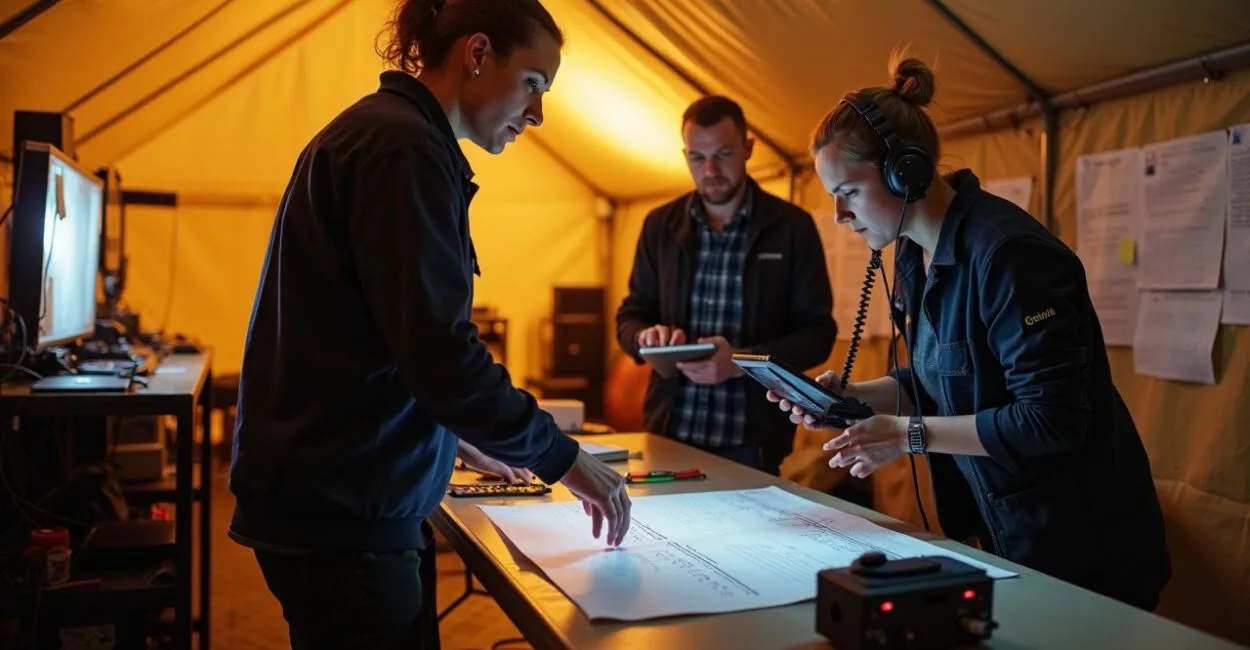
This is a tactical document that details the responsibilities, sequence of activities, communication channels, and contingency plans needed to run an event predictably. Essentially, it’s a playbook that spells out who does what, when, and how, with clear decision points, internal SLAs, and escalation protocols.
A well-crafted operations plan reduces operational risks, minimizes response times when unexpected issues arise, and creates a more consistent experience for attendees. Today’s events require coordination among vendors, technology, and on-site staff. This guide focuses on putting event-day operations into practice so the team can deliver confidently, with room to handle the unexpected.

Key Takeaways
- An event-day operations plan maps out schedules, owners, and decision triggers for every critical activity, preventing last-minute improvisation that can compromise execution.
- Clear communication protocols (channels, formats, and hierarchy) reduce noise and speed up problem-solving during the event.
- Tested contingency plans—with checklists, backup resources, and designated owners—directly reduce the impact of common failures involving power, sound, or weather.
Why an Event-Day Operations Plan Is Key to Logistical Success
Operational success on event day depends on predictability and quick responses to unexpected situations. An event-day operations plan turns uncertainty into procedures: firm timelines, named owners, and objective decision criteria.
This won’t eliminate surprises, but it will shorten the time between identifying a problem and taking effective action.
The Difference Between Planning and Operations
Planning sets goals, budgets, and vendors. Operations turn those decisions into minute-by-minute tasks. Teams often confuse the two and fail to document event-day routines. Clearly separating the strategic plan from the operational plan prevents ambiguous delegation.
Impact on Event NPS and the Cost of Failures
Operational mistakes directly affect the attendee experience and metrics such as NPS. An internal case study of events uses post-event measurements showing a 15–25% drop in NPS when more than three critical incidents go unresolved for over 30 minutes. The direct cost of fixing problems also rises exponentially without protocols.
Priority Task Run-of-Show: Time-Based Checklist and Owners
A practical run-of-show divides the day into blocks (pre-opening, opening, peak, and closing), with assigned tasks, deadlines, and owners. Every task should have a start trigger, acceptance criteria, and a backup plan. This prevents “gut-feel” decisions and makes it possible to measure results afterward.
Sample Time-Based Checklist
- T-10 hours: Technical team arrives; check critical equipment (power, sound, network).
- T-2 hours: Final briefing with front-of-house, security, and registration teams.
- Doors open: Manage attendee flow, open alternate entrances, and staff information points.
- Peak: Monitor lines and rotate staff to reduce fatigue.
- Close: Complete the venue handback checklist and incident report.
Each item should have an owner with a direct contact number and a designated backup. This helps prevent failures when someone is unavailable.
Example of Responsibility Assignments
Use a straightforward structure: Operations Lead (coordination), Technical Lead (sound/lighting), Front-of-House Lead (attendees/flow), Security Lead (evacuation), and Vendor Coordinator (logistics). Give each lead a printed checklist and a digital copy in the communication channel.
Communication Protocol and Decision Flows

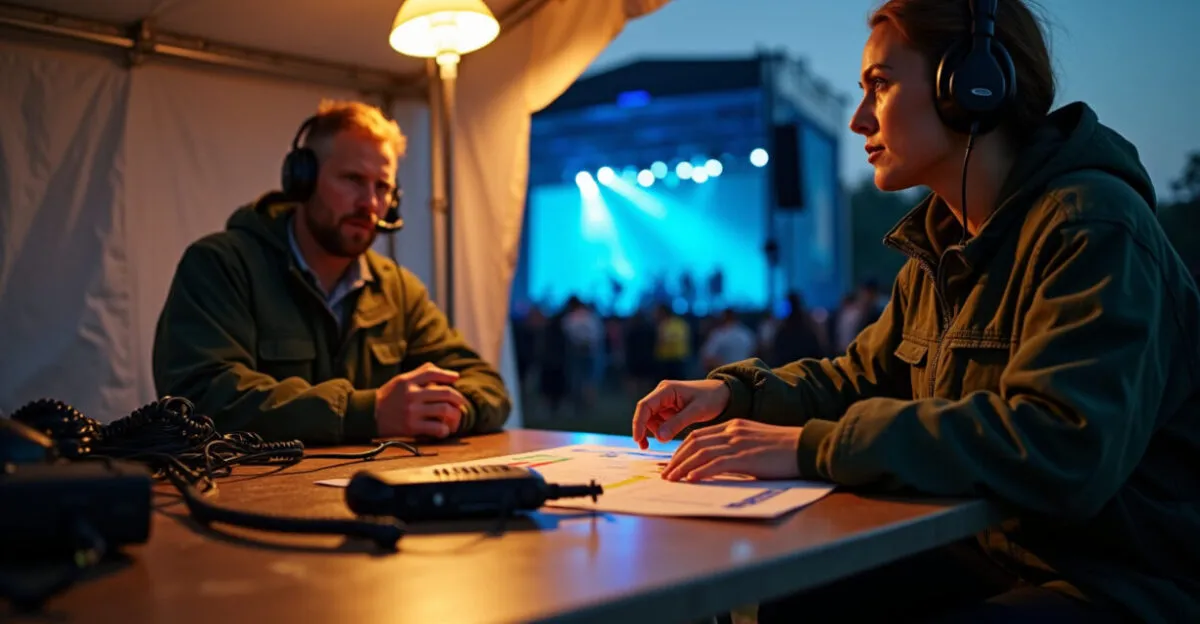
Effective communication is simple: one primary channel, one secondary channel, and a standard message format. The event-day operations plan should explicitly state which channel to use for each type of information and how to escalate issues. This prevents duplicate messages and decision-making delays.
Channel Structure
- Primary channel: Two-way radios/PMR for real-time, short-range operations.
- Secondary channel: Instant messaging group for logs and non-urgent decisions.
- Emergency channel: Direct call to the Operations Lead and a backup contact by phone.
Standardize messages with the prefixes ALERT, INCIDENT, and INFORMATION. Always include the location, estimated impact, and requested action. This speeds up triage and response.
Decision Flows and Internal SLAs
Set authority limits (what staff can resolve on-site) and define when to escalate to the coordination team. For example: if a microphone fails, the on-site technician resolves the issue within 5 minutes; after 5 minutes, escalate to the Technical Lead; after 15 minutes, if the issue affects the main session, activate the backup plan (spare microphone or schedule change). SLAs reduce ambiguity and document expectations.
Contingency Plans: Priority Risks and Tested Responses
Contingency planning means more than having a plan—it means testing it and having resources ready. List risks by likelihood and impact, then pair them with immediate actions, backup resources, and owners. The goal is to restore operations within a previously defined acceptable timeframe.
Critical Risks and Standard Responses
| Risk | Immediate response | Target resolution time |
|---|---|---|
| Power outage | Start the generator; prioritize sound and communications | ≤ 5 minutes |
| Sound failure | Switch to the preassigned mixer/microphone | ≤ 10 minutes |
| Medical emergency | First aid team on-site; keep ambulance access clear | Immediate response |
Run contingency tests during rehearsals using a realistic schedule. Simulations reveal hidden dependencies, such as cables without backups or radio coverage dead spots.
Tools, Documentation, and Supporting Technology
Choosing the right tools makes execution and tracking easier. An event-day operations plan should list communication and task management tools, digital maps, and offline backups. When applicable, prioritize solutions that work without a network connection.
Essential Technology Checklist
- Two-way radios/PMR with extra batteries and reserved channels.
- Cloud-based task management systems with offline mode.
- Digital and printed venue maps with critical areas marked.
- Emergency power (generators, UPS units) and maintenance contracts.
Document versions and contacts: information is often lost between the IT manager and the vendor’s technician. A quick-reference contact sheet helps prevent that disconnect.
Training, Briefings, and the Post-Event Operations Review
Training turns a document into action. The operations plan calls for short, practical pre-event briefings, along with checks at each level to confirm understanding. The post-event review closes the loop with concrete lessons and adjustments.
Effective Briefing Format
Hold 10–20-minute briefings for each role, focusing on critical tasks, points of contact, and escalation triggers. Provide a printed summary and a digital checklist. Avoid lengthy theory-heavy presentations; use quick simulations and confirm everyone understands.
Debrief and Operations Report
After the event, collect information on incidents, response times, and deviations from the plan. Prepare a report with metrics (incidents by category, average resolution times, and staff feedback). Use the data to prioritize changes for the next event.
How to Apply This Knowledge
Take an incremental approach: define the priority run-of-show, document communication channels, and conduct a rehearsal with time-based goals. Prioritize and test the highest-impact contingencies. For events with outside vendors, require a documented SLA and include penalty and replacement clauses for critical risks. Finally, establish a continuous improvement cycle with clear metrics and mandatory debriefs. This discipline reduces uncertainty and turns operational experience into a competitive advantage.
Practical Recommendations
Start with a responsibility assignment matrix (RACI) and create checklists for each time block. Run at least one full rehearsal with vendors and a shorter team rehearsal 24 hours beforehand. Name an operational owner who can make decisions up to a defined financial and operational limit. This speeds up action and avoids lengthy meetings during a crisis.
What’s the Difference Between an Operational Run-of-Show and a Production Schedule?
The operational run-of-show describes actions, owners, and triggers for event day; the production schedule lists deliverables and deadlines leading up to the event. In other words, the schedule organizes what needs to be ready by event day, while the operational run-of-show details how to execute and respond throughout the day. For the event to run smoothly, the two documents must work together: the schedule feeds resources and checkpoints into the run-of-show, while the run-of-show validates the schedule’s operational readiness.
What Contingencies Are Essential for Outdoor Events?
For outdoor events, prioritize a rain plan (tents, covered routes), ground and drainage management, backup power, and evacuation logistics. Flexible vendor contracts and insurance that specifically covers weather risks are also critical. Test high-wind and heavy-rain scenarios during rehearsals, including safe teardown procedures. Document shelter locations, emergency access routes, and alternate meeting points for attendees and staff.
How Do You Create a Communication Protocol That Works in Practice?
Define primary and secondary channels and standardize messages with clear prefixes (ALERT, INCIDENT, INFO). Train staff to use radios and keep offline backups. Establish a decision-making hierarchy and maximum response times for each type of incident. Hold briefings to confirm everyone knows when to use each channel. Finally, log critical communications for post-event review so you can identify communication breakdowns and adjust the protocol before the next event.
What Should a Closing Checklist Include to Ensure Accountability?
The closing checklist should cover venue handback, equipment inventory, incident records, outstanding payments, and staff timesheets. Require sign-off from the owner of each area and take photos of the venue after teardown. Also record follow-up items, such as fines, damage, or vendor requests. This ensures responsibilities are fulfilled and makes it easier to pursue compensation when needed.
How Do You Measure Whether the Operations Plan Was Effective After the Event?
Useful metrics include the number of critical incidents, average response time by category, schedule deviations, contingency-related extra costs, and NPS or attendee satisfaction. Compare these indicators with predefined targets and previous events. Also review checklist compliance and qualitative staff feedback. An effective plan reduces incidents and response times while improving satisfaction. If results don’t improve, identify root causes and adjust processes.
Artigos Relacionados
 Event Digital Checklists: How to Create, Automate, and Monitor Tasks in Real Time for Operations Teams and Production Coordinators
 Event Task Management: An Integrated System for Planning, Assigning Responsibilities, and Delivering on Time
 Task Delegation at Events: Agile vs. Traditional Methods to Reduce Errors and Improve Team Efficiency
 Event Task Management Tools: 10 Options for Small Event Businesses
 Corporate Event Badge Templates: 12 Layout, Color, and Font Ideas to Improve Identification and Networking
 Best Materials for Event Badges: PVC, PET, Bamboo, and Reinforced Paper Compared
