
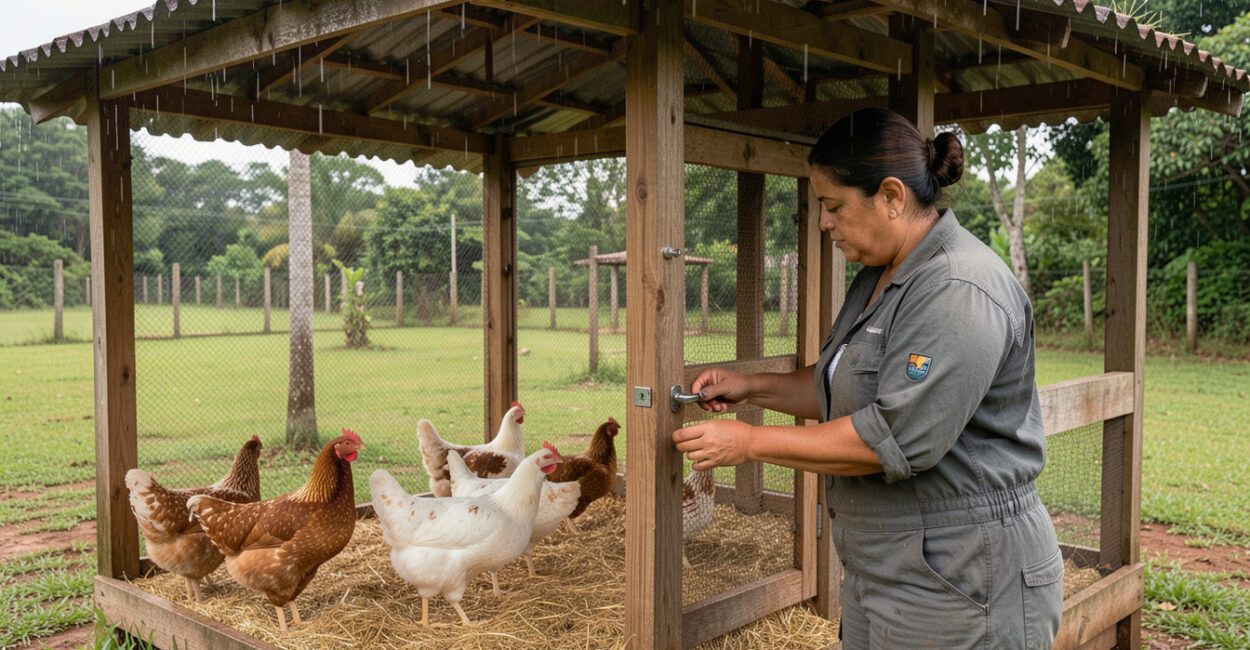
A small flock can quickly become a lot of work and expense if the coop does not protect the birds from rain, predators, and dampness. Free-range chicken farming means keeping birds in a system that gives them access to an outdoor area, subject to management conditions and applicable rules; the word “caipira,” a Brazilian term often used for traditional or free-range poultry, does not by itself mean the product is certified. To get started, decide whether you want eggs, meat, or birds for your household, size the coop and run, and check local rules before buying birds.
Management varies depending on your goal: laying hens need nest boxes and feed suited to egg production, while meat birds require planning for flock cycles and where the product will go. At any scale, clean water, protection, and daily observation matter more than starting with a large flock.

Key takeaways
- Start with your purpose and market; your setup and costs depend on that choice.
- For 20 birds, calculate coop and outdoor space based on the system, climate, and technical standards; there is no one-size-fits-all figure.
- Buy chicks or birds from a known source, and avoid mixing flocks from different sources without a biosecurity plan.
- If you live in a city, check with your local government and review health regulations before building a coop.
Free-range chicken farming: where to start
To start free-range chicken farming, first choose your product and a flock size you can manage. Then confirm you have enough space, water, feed, technical support, and a plan for your products. This sequence reduces the risk of building an unsuitable coop or buying birds without a way to feed or sell them. For household use, the routine can be simple; selling adds health regulations, processing costs, and marketing requirements.
A practical rule: if you do not have an identified buyer, start at household scale and track expenses for a few weeks before expanding. If you plan to sell, talk with potential customers and your local inspection service before investing in facilities or processing.
- Decide whether you will produce eggs, meat, or both, keeping in mind that each goal requires different management.
- Check the available space, drainage, water access, and distance from neighbors.
- List expenses: birds, feed, bedding, fencing, feeders, waterers, and technical support.
- Confirm local and health regulations, then choose your initial flock.
How to choose birds and organize your flock
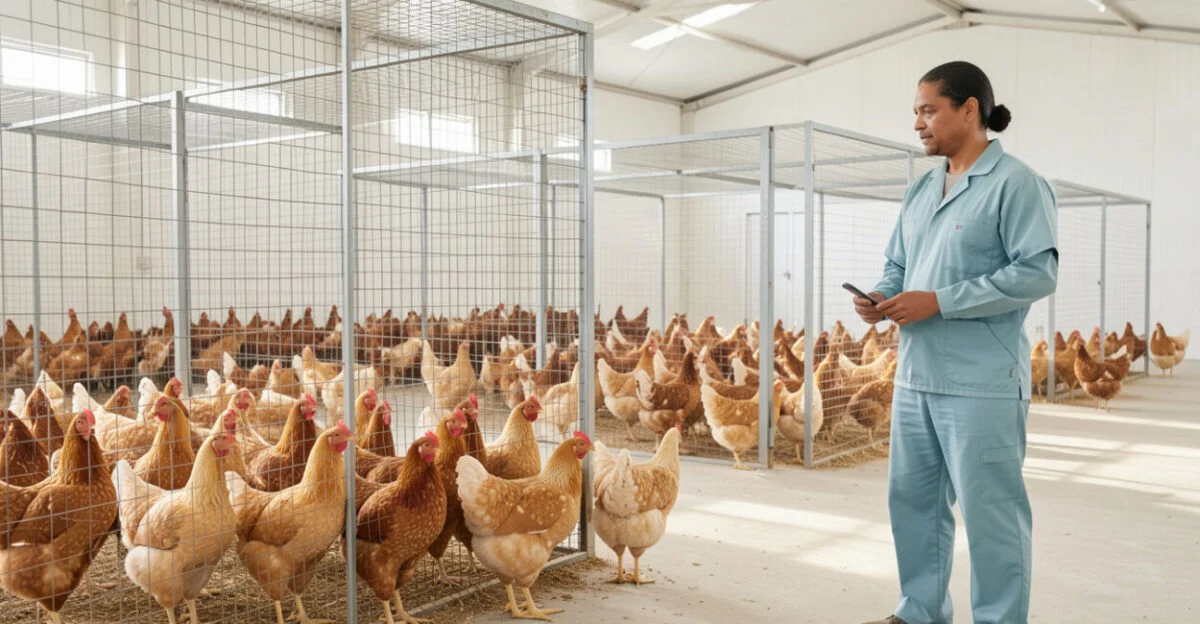
Your choice depends on the product you want and how well the birds suit your system. Strains selected for egg production or growth may perform differently from dual-purpose birds; ask the supplier about their source, age, vaccination, and management guidance. The word “caipira” used in commerce does not, on its own, prove a particular rearing standard or certification.
Inspect the flock before you buy: birds should be active, have plumage appropriate for their age, and show no visible discharge or signs of breathing difficulty. Make sure the supplier can provide information about the birds’ origin and any relevant documentation. Avoid buying birds from several sources to fill out your flock; mixing sources makes it harder to track health records and may introduce disease.
When the birds arrive, keep them separate from your existing flock for the period recommended by a poultry health professional. This lets you monitor the new birds and reduce the risk of disease transmission before introducing them.
Coop and outdoor area: shelter, space, and protection

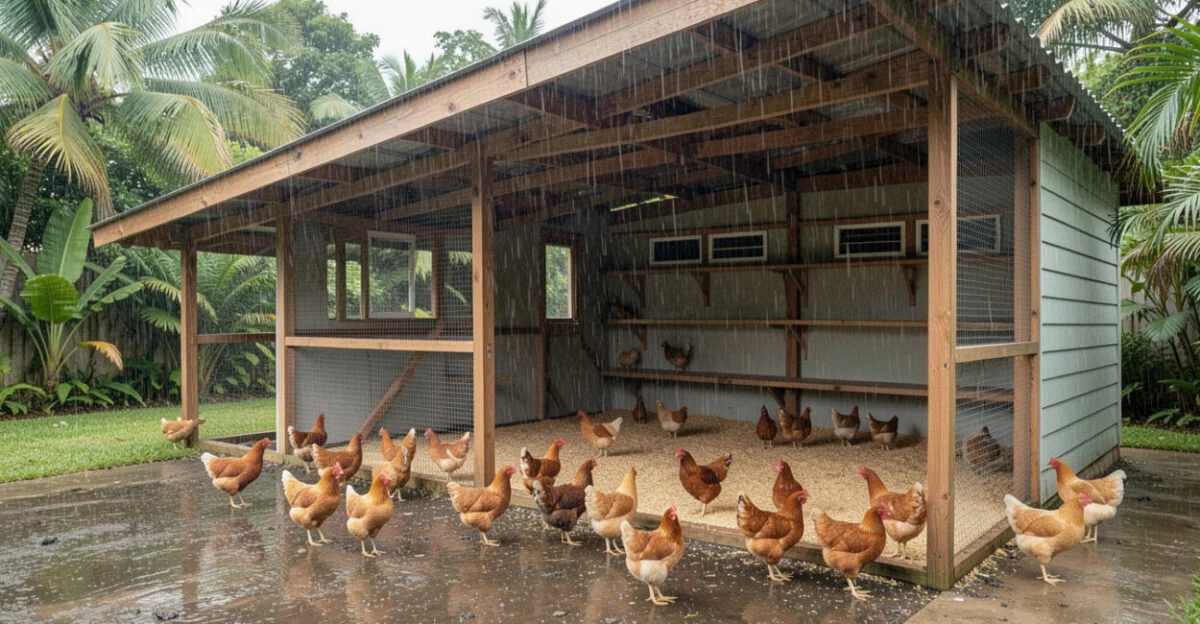
The coop should protect birds from rain, strong winds, excessive heat, and predators, while providing ventilation without blowing drafts directly onto them. A dry, easy-to-clean floor helps control moisture in the bedding, which tends to collect droppings and can contribute to health problems if it stays wet. There is no single measurement that works for every system when planning space for 20 chickens. The calculation depends on how long birds are kept indoors, access to the run, bird size, climate, rotation of the outdoor area, and applicable rules. Size the shelter, nest boxes, feeders, and waterers along with the birds’ circulation space; a larger run will not make up for a cramped or poorly ventilated coop.
Planning scale What to size What to consider Family backyard Shelter, fenced area, roosts, and daily access to water and feed Noise, odors, drainage, and distance from neighbors Small flock for sales Facilities for each growth stage, runs, feed storage, and waste management Where eggs or birds will go and inspection requirements Larger-scale production Capacity, biosecurity, people flow, and logistics Technical plans, permits, and specialized support
A common mistake is letting birds roam on poorly drained ground: after rain, mud builds up around the waterers, bedding gets wet, and cleaning becomes more difficult. Place waterers on firm ground and, when possible, rotate runs to give vegetation time to recover.
A well-planned coop keeps birds protected, bedding dry, and routine cleaning manageable.
If you are looking for a coop plan PDF or an Emater coop plan PDF, check who created it, which state it comes from, what type of system it covers, and when it was published. A generic drawing is no substitute for adapting the design to your climate, flock size, and local rules.
Read also: Rural Fish Farming: How to Plan a Fish-Raising Operation
Feed, water, and daily care
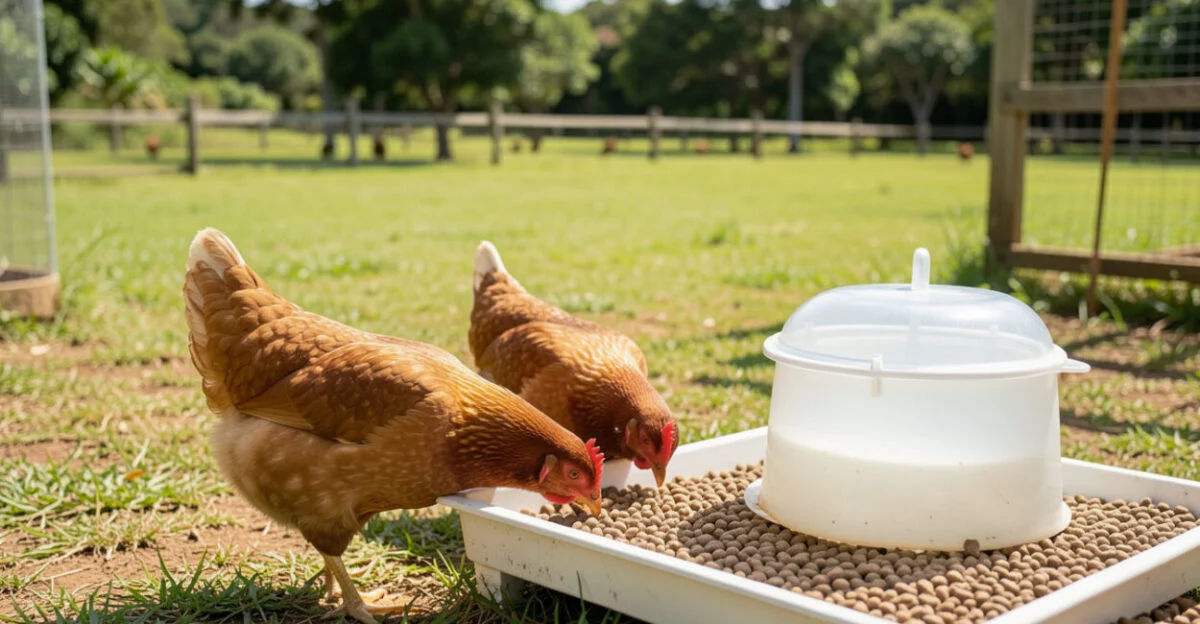
The foundation of the diet should be feed suited to the species and life stage, formulated to meet the birds’ nutritional needs. Kitchen scraps or corn alone do not provide balanced nutrition and may reduce performance. Birds with access to a run still need complete feed: what they find outdoors varies by season and should not be treated as a reliable substitute for feed.
Laying hens need feed formulated for egg production, following the manufacturer’s and the responsible professional’s guidance. Clean nest boxes in a quiet location help reduce dirty or broken eggs. To learn how an agricultural technician can support farm management, consider getting a site visit before expanding production.
Read also: Beef Cattle: How to Organize Management and Feeding
Keep water available, clean, and protected from droppings and bedding material. Replace it whenever it gets dirty, and check waterers throughout the day, especially in hot weather. One practical point: small leaks often go unnoticed until the bedding around the waterer gets wet, so check the floor as well as the water level.
How long does it take to raise a free-range chicken?
The timeline depends on your goal, the strain, the age of the birds when purchased, and management. Meat birds and laying hens follow different cycles, and there is no universal timeline that guarantees a bird will be ready for processing or start laying by a certain date; check the supplier’s guidance and adjust your expectations with technical support.
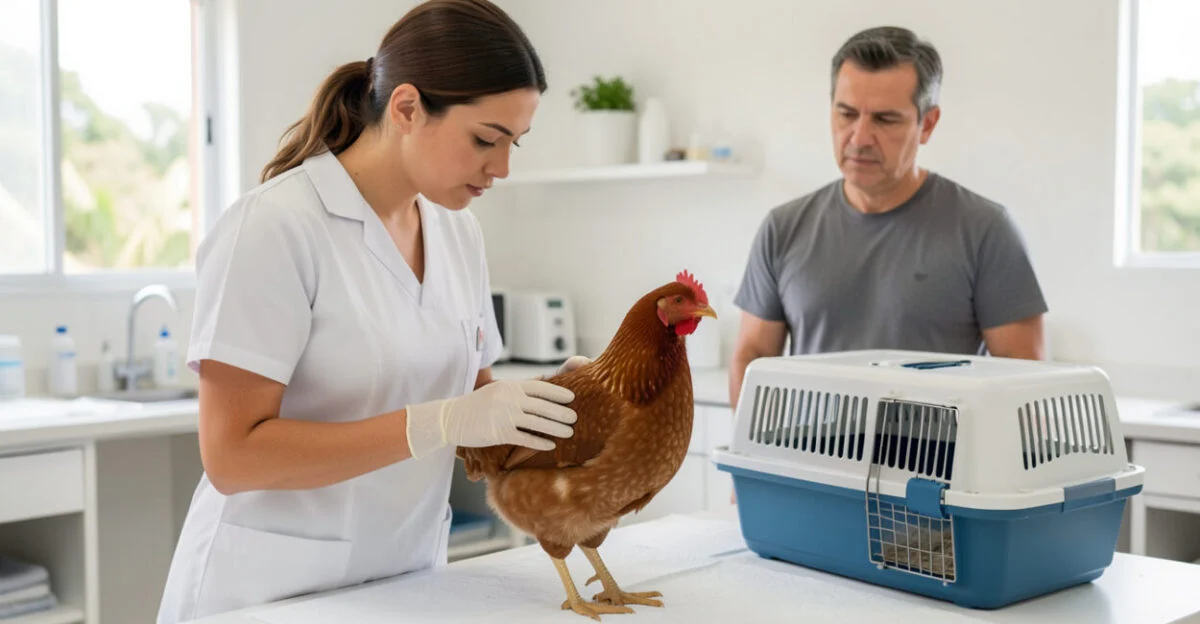
Flock health, biosecurity, and bird welfare
Biosecurity is a set of measures that reduces the introduction and spread of disease-causing agents. Limit visits to the coop, clean equipment, protect feed from rodents and wild birds, and do not share crates or tools without sanitizing them. Vaccination and prevention guidance should take into account the region, the flock’s origin, and the production system.
Monitor appetite, activity, breathing, droppings, and egg production every day. Birds that are isolated, lethargic, having difficulty breathing, or experiencing a sudden drop in production need to be evaluated; these signs can have many causes and cannot be safely diagnosed remotely. Contact a veterinarian or technical support service instead of trying to medicate the flock on your own.
Embrapa Swine and Poultry, a Brazilian agricultural research unit, publishes technical resources on poultry production and management. Consult publications from Embrapa Swine and Poultry and check with local technical support to see whether the recommendations apply to your system.
Costs, sales, and income potential
Before buying birds, estimate the costs of purchasing them, feed, bedding, water, electricity, fencing, equipment, flock replacement, losses, and labor. If you plan to sell, add packaging, transportation, processing, and any changes required by inspection authorities. Your results depend on the price you receive and how consistently you produce; calling a product “caipira” does not guarantee income.
How much does a free-range chicken cost today?
Prices vary by region, age, strain, season, and sales format, so check local listings and producers when you plan to buy. Compare the price of a live bird, a processed bird, and a laying hen that is already producing separately: these are different products with different costs and sales requirements. Example calculation—not a market price: if a hypothetical flock generates R$ 1,000 in sales and variable costs total R$ 700, R$ 300 remains before fixed expenses, losses, and labor are deducted. This simple calculation shows why revenue is not the same as profit. Farmers diversifying their operations can also explore another activity, such as beekeeping on the farm, but should assess space, investment, and market potential separately.
Local rules and technical resources for planning your operation
There is no single nationwide answer to “What law prohibits keeping chickens in the city?” Whether it is allowed depends on municipal regulations, zoning, health rules, and any environmental or homeowners’ association restrictions. Check with your local government and health department before keeping birds in your backyard, especially if you plan to sell or process them, or if noise and odor complaints are a concern. If you plan to sell animal products, also find out which inspection service applies to your sales destination. Brazil’s Ministry of Agriculture and Livestock (MAPA) publishes guidance and regulations for animal products; check its official animal product inspection page and confirm the procedures with the relevant local or state agency.
Materials from Emater, a Brazilian agricultural extension service, can help with coop design, but the agency and its recommendations vary by state. Contact your local office and compare its plan with guidance from Embrapa, Brazil’s agricultural research corporation. A publication titled “Embrapa free-range chicken farming PDF” is useful only if it identifies its author, production system, and conditions for use.
The next step is to sketch the available area, write down your goal, and contact your local government or a technical support service before buying birds. With those answers, it is easier to choose a starter flock that fits your space and budget without relying on generic productivity estimates.
Frequently asked questions
How do you raise chickens in a small backyard?
Start by checking whether your local government allows it and whether you have room for a dry, well-ventilated shelter and a fenced area. Keep a small flock suited to the space you have, and plan how you will manage droppings, odors, and noise before setting up.
How do you raise laying hens?
Choose birds bred for egg production, provide feed suited to this stage, clean water, and protected nest boxes. Monitor production and flock conditions; age, strain, and management all affect when hens start laying and how consistently they produce.
Does “caipira” mean the bird is certified?
No. On its own, the term does not prove certification or a standardized production method. For products sold with specific claims, check labeling rules and the producer’s documentation.
Can I feed the birds only corn and kitchen scraps?
This combination does not ensure that birds get all the nutrients they need. Use a complete diet suited to their life stage, and treat supplemental foods as part of a professionally guided feeding plan—not as an improvised replacement for feed.
Do I need a veterinarian for a small flock?
A professional can advise you on prevention, vaccination, and symptom evaluation, even on a small scale. If there are deaths, a sudden drop in egg production, or respiratory signs, seek help right away rather than waiting for the problem to spread.
Can I sell eggs produced in my backyard?
Whether you can sell them and what requirements apply depend on the city, state, volume, and sales channel. Check with inspection authorities and your local government before offering eggs to the public.
Artigos Relacionados
 Integrated Livestock Farming: Efficient Management on Small Acreages
 Corn Farming: How to Plan Planting and Harvesting
 Integrated Pest Management: 7 Practical Techniques for Organic Gardens
 Fruit Farming: Profitable Crops Adapted to Brazil’s Northeastern Semi-Arid Region
 Soil and Pasture Management in Family-Based ILPF Systems
 How Family Farming Cuts Costs and Becomes a Trend
