
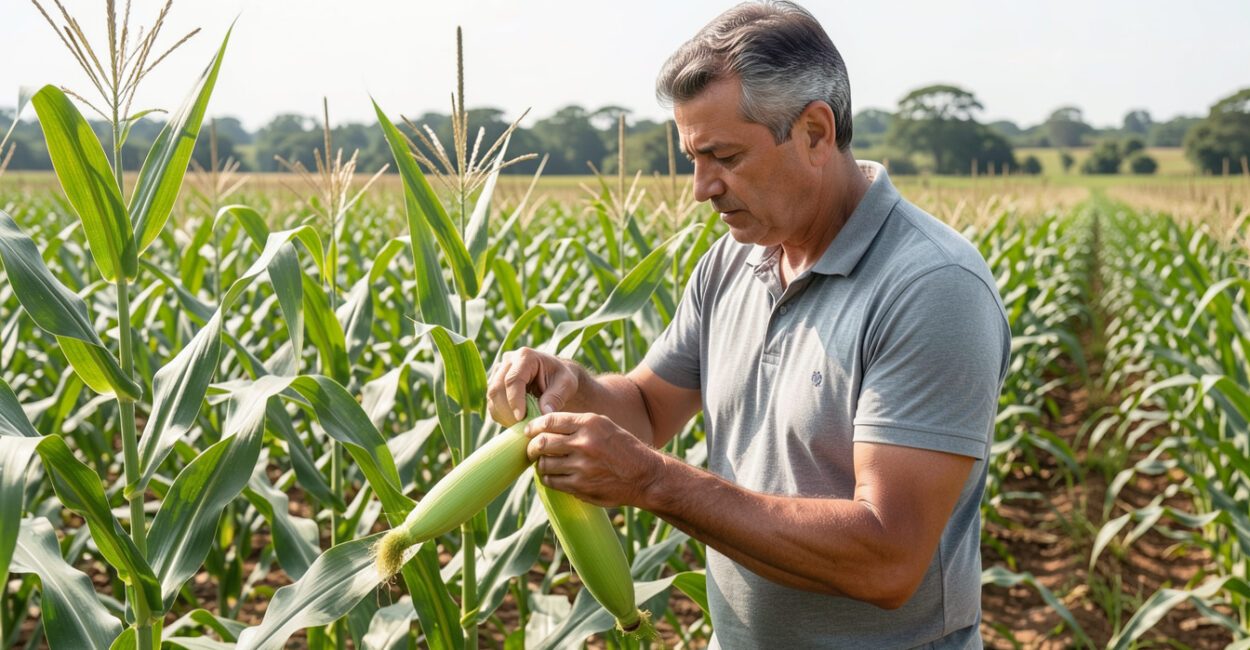
A cornfield can produce ears within a few months, yet still need several more weeks before the kernels are ready to harvest as dry grain. Corn farming requires you to plan each stage around the variety, region, climate, and intended use. The first decision is whether to harvest the corn fresh, for grain, or for silage; this affects both the schedule and the harvest stage.
The growing season listed in a variety’s catalog is a reference, not a guaranteed timeline for every farm. Temperature, water availability, planting date, and management all affect the rate of development.

That’s why your schedule should combine the estimated growing season with observations of the plants.
What to decide before planting
- Intended use: fresh corn, dry grain, or silage.
- A variety suited to your region and planting window.
- Field history, soil test results, and water availability.
- Labor and equipment needs, along with the harvest date.
What to consider when growing corn
Corn farming is the agricultural production of Zea mays, from choosing a field and planting through crop management and harvest. To plan effectively, first decide how you’ll use the crop, then select a variety suited to your region and estimate planting and harvest dates based on the growing season provided by the seed supplier.
Soil, climate, and intended use are interconnected. Fresh corn needs to reach the eating stage consistently; for grain, the goal is to let the plant reach maturity and the kernels dry down before harvest. For silage, the ideal timing depends on the whole plant, kernel development, and storage system. Start with a soil test to identify acidity and nutrient availability. Recommendations for amendments and fertilizer depend on the results, the expected use of the field, and local technical guidance. Applying a generic rate without considering these factors can raise costs without addressing the problem limiting the crop.
Also consult the Agricultural Climate Risk Zoning (ZARC), a program of Brazil’s Ministry of Agriculture, to check planting recommendations by municipality, soil type, and crop maturity group. ZARC provides guidance on climate risk; it does not replace an assessment of your field or guarantee the outcome of a particular crop.
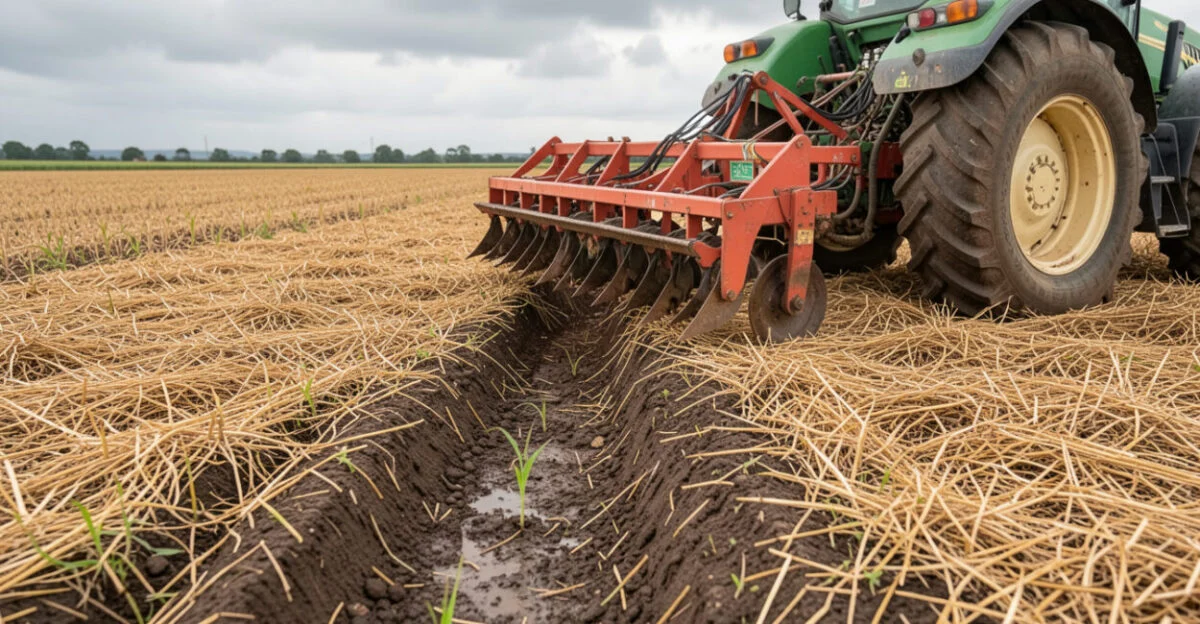
How to choose a planting date and prepare the field
The best planting date depends on your region, rainfall patterns, temperature, and the variety’s growing season. Summer corn is usually planted around the rainy season; the second crop, planted after another crop, may face a greater risk of dry conditions and cold, depending on planting date and location.
Before preparing the field, review its history of weeds and crop health issues, drainage conditions, and management system. In no-till fields, crop residue needs to be distributed so the planter can open the furrow and place seed at the intended depth.
Waterlogged or very dry soil can interfere with emergence and lead to an uneven stand.
ZARC is a reference for comparing planting windows, but recommendations vary by previous crop, municipality, and maturity group. You can also consult research materials from Embrapa Maize and Sorghum, Brazil’s agricultural research agency, to learn more about the crop.
If the field has a history of erosion or poor ground cover, consider soil conservation practices before increasing planting intensity.
Tip
Start with the expected harvest date and work backward on the calendar using the variety’s growing season. Then check whether that window aligns with ZARC and actual soil moisture conditions.
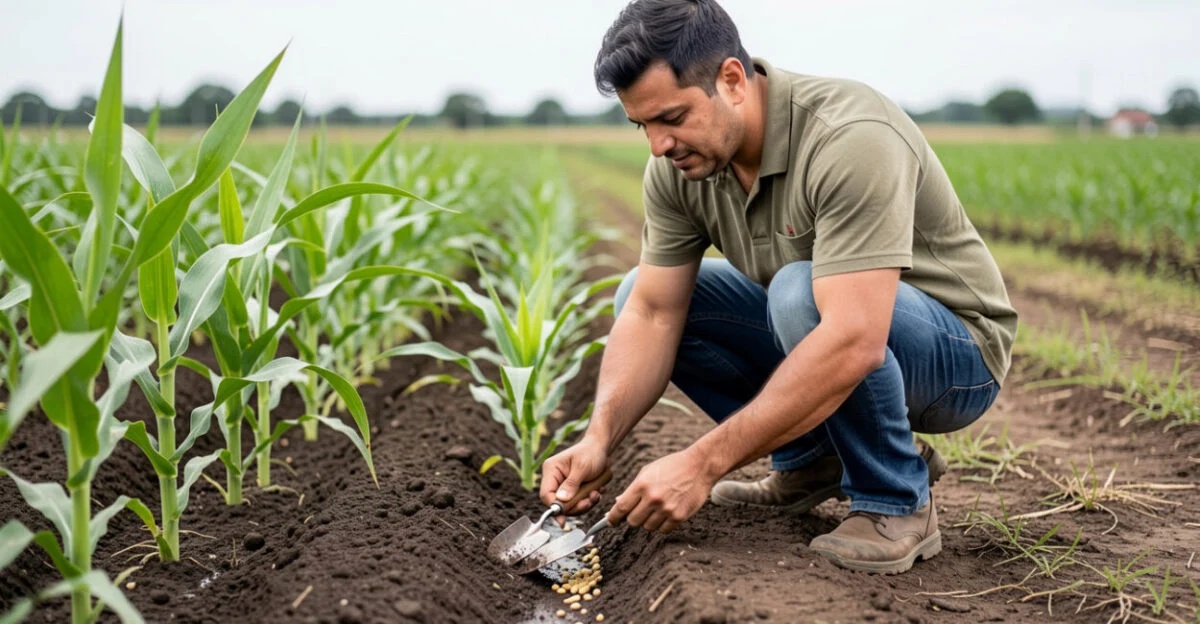
How to plant corn: row spacing, plant population, and depth

Row spacing, plant population, and planting depth should follow the variety’s recommendations and the capacity of the growing environment. A high plant population can increase competition for water and nutrients; a low population reduces the number of productive plants per acre.
There is no single planting configuration that works for every field.
Before planting, check the planter’s seed-rate settings, distribution uniformity, and furrow closure. Seed depth should ensure contact with moist soil without making emergence difficult.
Proper settings vary with soil texture, moisture, and local conditions, so check in the field rather than relying only on the machine’s display.
- Check the variety, seed lot, and expiration date.
- Calibrate the planter for the recommended population.
- Check planting depth and seed spacing in the furrow.
- Check soil moisture, ground cover, and field trafficability.
- Confirm that inputs are available as recommended by a qualified professional.
A common mistake is to judge planting only by how fast the equipment is moving. If the planter fluctuates, skips seeds, or fails to close the furrow properly, emergence will be uneven. Plants at different growth stages then make management and harvest more difficult. A quick check after starting work can catch problems before the whole field is planted.
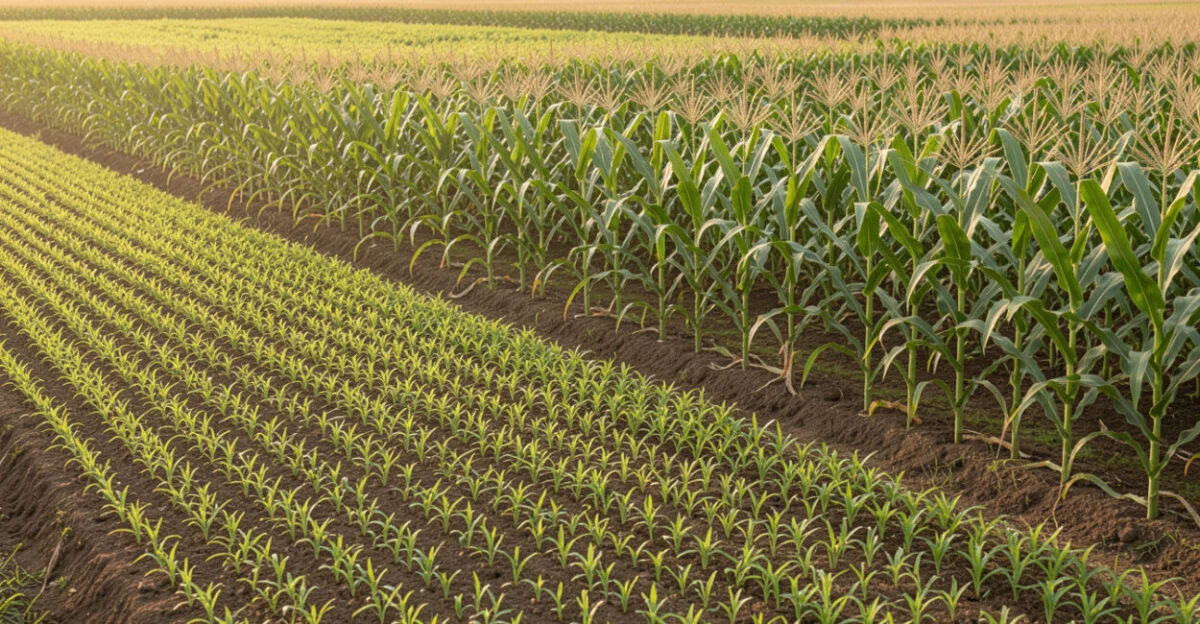
Corn growing season in days and months: development stages
The corn growing season varies by variety and environment, so the timelines below are approximate references, not fixed predictions. Emergence may take about a week under favorable conditions, while the period to physiological maturity usually lasts around three to five months. Cold, drought, or differences between varieties can change that timeframe.
Read also: Crop Rotation: How to Plan Planting on the Farm
Stage Approximate timing What to look for Emergence Usually about 5 to 10 days after planting, under favorable conditions Uniformity and gaps in the row Vegetative growth From emergence through tasseling; duration varies Leaves, vigor, weed competition, and water availability Flowering and ear formation Often about 45 to 70 days after emergence, depending on variety and environment Tassel emergence, silks, and kernel set Kernel fill In the weeks after pollination Kernel development and ear health Physiological maturity Usually around 100 to 150 days after planting, with wide variation Black layer formation and gradual kernel drydown
How long does it take a corn plant to produce an ear?
Under many growing conditions, a plant begins forming an ear about 45 to 70 days after emergence, but that doesn’t mean the ear is ready to harvest. Ear formation happens near flowering, and kernels continue developing after pollination. Variety, temperature, water, and management can shift this estimate earlier or later.
Read also: Growing Soybeans: From Planting to Harvest
The corn growing season in months is therefore a useful estimate for organizing resources, not a substitute for observing the crop. A catalog date may refer to a maturity group or a growing period under specific conditions; compare that information with the planting date and your farm’s environment.
Managing corn during growth
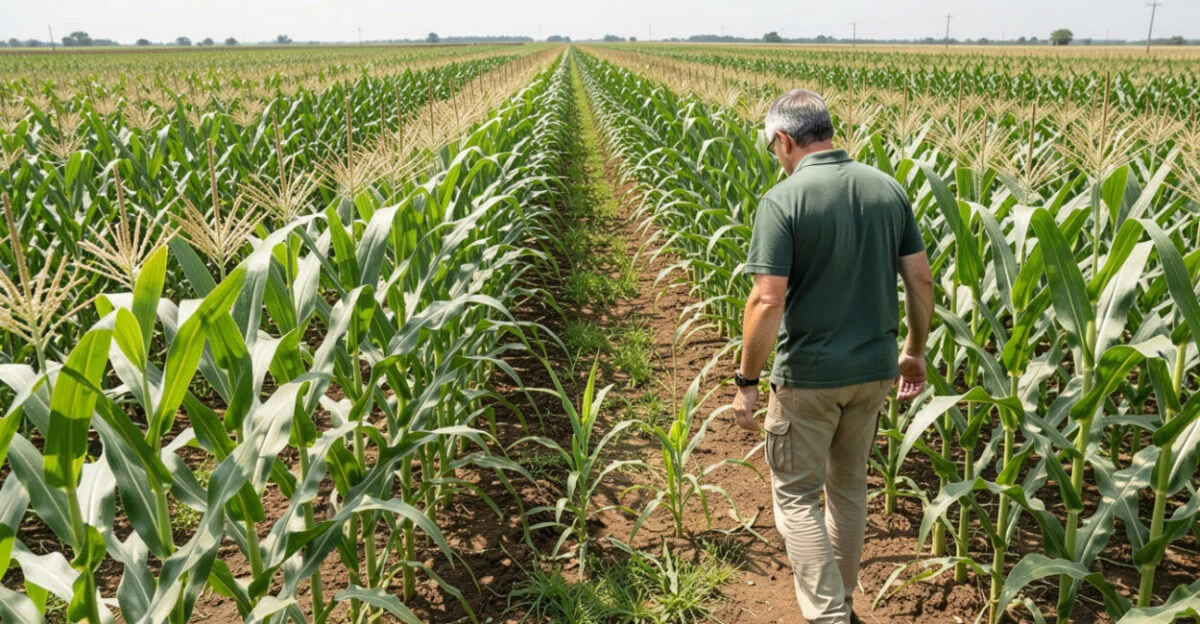
Corn management should focus on establishing a uniform stand and protecting the crop during periods when water shortages or competition can cause the most damage. Flowering is a sensitive stage: water stress at this point can interfere with pollination and kernel formation. Irrigation needs, if irrigation is available, depend on soil, climate, and crop stage.
Control weeds at the recommended time to prevent competition, following professional guidance and the label of any product used. Monitor for pests and diseases regularly; finding an insect or seeing a symptom does not automatically mean the entire field needs treatment. Identifying the cause and assessing the severity of the problem can help you choose an appropriate response.
A field can look uniform from above and still have gaps in parts of the rows. Walk the field and check the stand, canopy closure, leaf condition, and presence of suppressed plants. Monitoring these signs can help you catch problems early, before harvest reveals losses that could have been noticed during the growing season.
For decisions about fertilizer, pest control, and soil conservation, consider consulting a professional familiar with the field. An agricultural technician can help assess field conditions and implement recommendations within the scope of their training and responsibilities.
When to harvest fresh or dry corn
Harvest fresh corn when the kernels have formed, are tender, and contain milky liquid, before they harden. For dry grain, wait until physiological maturity and monitor drydown until the kernels reach the moisture level suitable for your harvest and storage system. The right harvest stage depends on the intended use, not just the number of days since planting.
What signs show that fresh corn is ready to harvest?
The silks darken and dry, the ear fills out, and pressing a kernel releases milky liquid. The husks are generally still green, and the kernels remain tender. Since hot weather can move the crop through this stage quickly, check ears from different parts of the field before scheduling harvest.
How long does it take to harvest dry corn?
Dry grain is generally harvested after physiological maturity, often around 100 to 150 days after planting, but timing varies with variety, climate, and planting date. The plant may reach maturity before the grain is dry enough for your planned harvest operation. Check kernel moisture and harvest and storage conditions before choosing a date.
For a crop intended for fresh corn, the crew can start checking ears once the silks dry, without harvesting the whole field at once. If the kernels are still too watery, wait and sample again; if they’re already firm, the eating window is closing. This approach avoids basing the decision on the calendar alone.
Silage harvest follows a different standard: it depends on the plant’s growth stage and the moisture level needed for ensiling, not the fresh-corn stage or complete grain drydown. Recommendations should account for the equipment and silo type, since material that is too wet or too dry can compromise storage.
How to organize the schedule and correct problems
The growing season for second-crop corn can differ from that of summer corn because it is planted at a different time and faces different temperatures, rainfall, and daylight conditions. The variety may also have a different growing season. Compare varieties with similar maturity ratings and use the local ZARC to assess the planting window; don’t assume the same number of days applies to both crops.
To build a schedule, note the expected planting date, the variety’s listed growing season, the likely flowering stage, the harvest window, and the availability of equipment and labor. Allow some flexibility for weather changes. A buffer won’t fix an unsuitable planting window, but it can help prevent the entire operation from depending on a single date.
If emergence is uneven, first investigate seed placement, depth, moisture, and furrow closure. If the crop is delayed, assess the plants’ actual growth stage instead of relying on the dates in the original plan. The schedule guides monitoring; the plants and field conditions confirm management decisions.
Farmers on family-run farms can coordinate crop planning with conservation practices and production planning. Additional guidance on sustainable agriculture and soil care can help you think beyond a single growing season.
The next step is to identify the municipality and intended use, consult ZARC, and compare the recommended window with the growing season of the available variety. Then, test the soil and record estimated dates. This process makes clear what needs to be confirmed before taking the planter into the field.
Frequently asked questions
Can corn be planted in any type of soil?
No. You need to assess drainage, soil structure, acidity, and fertility. A soil test shows which amendments may be needed before planting.
Can you use the same variety for summer and second-crop corn?
It depends on the region, planting date, and climate risk. Compare the growing season and recommendations for each window; a variety that works well for one crop is not guaranteed to perform just as well for the other.
Why might ears have poorly developed kernels?
Poor pollination, water stress during flowering, stand problems, or pest damage can interfere with kernel formation. You need to identify the cause in the field, since similar symptoms can have different origins.
What does physiological maturity mean in corn?
It is the stage when the kernel has finished accumulating dry matter and reached full development. After that, moisture tends to decline, but the kernel may not yet be dry enough for the planned harvest.
Where can I find reliable technical information about corn?
Consult publications from Embrapa Maize and Sorghum and official ZARC recommendations for your municipality. To find educational resources, search for terms such as “Embrapa corn crop PDF” in the institution’s publication catalog, and check the author, date, and context of each recommendation.
Artigos Relacionados
 Crop Rotation: How to Plan Planting on Your Farm
 Fruit Farming: Profitable Crops Adapted to Brazil’s Northeastern Semi-Arid Region
 Integrated Livestock Farming: Efficient Management on Small Acreages
 How Family Farming Cuts Costs and Becomes a Trend
 From Tradition to Innovation: How Minas Gerais Specialty Coffee Is Transforming Family Farming
 African Mahogany Planting: A Complete Guide to Profitable, Sustainable Growing
