
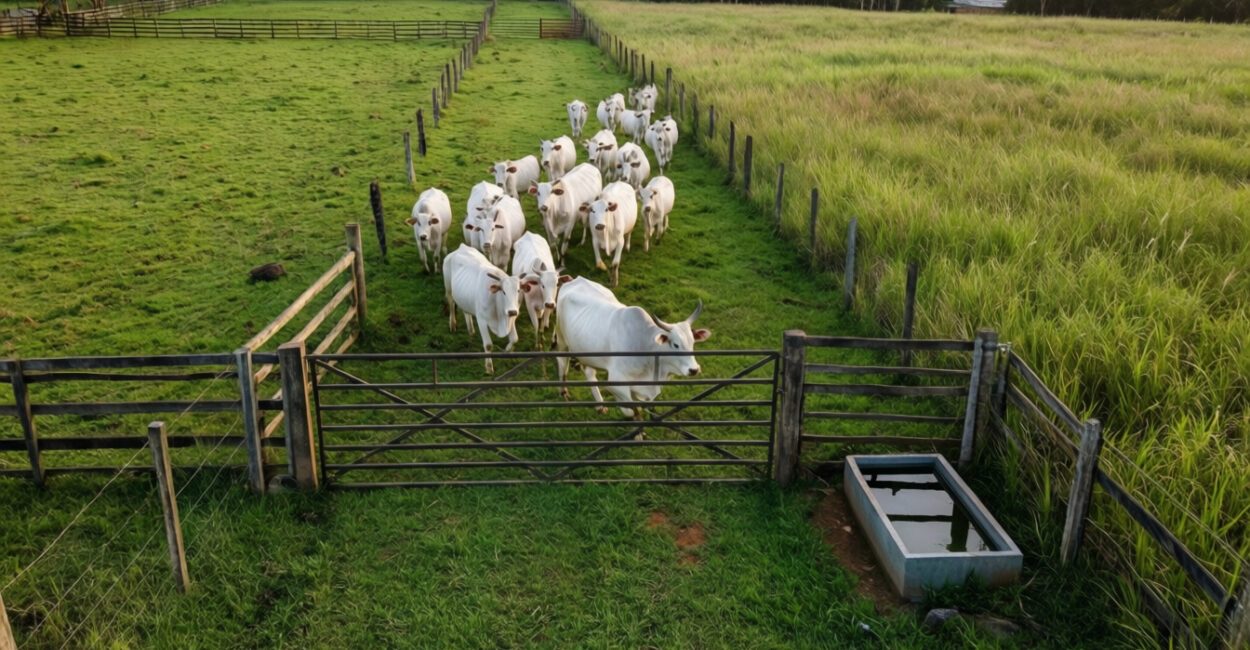
Poorly planned divisions can let grass get overgrown in some paddocks and be grazed again before it has recovered in others. Rotational pasture management organizes when animals enter and leave smaller areas to control forage use and allow regrowth. Planning starts with usable acreage, herd size, and the growth rate of the forage species—not with a one-size-fits-all number of paddocks or rest days.
With this information, you can estimate the number and size of paddocks and adjust the rotation as the seasons change. The operating rule is simple: grass height or condition guides when animals enter; forage availability and animal performance help determine stocking rate and when they leave.

Key points
- The number of paddocks depends on the relationship between the desired rest period and grazing period, as well as the farm’s logistics.
- Each paddock’s size should reflect the herd’s needs and the forage available during that grazing cycle.
- Rest periods vary with forage species, climate, soil, and fertilization; a fixed schedule can lead to undergrazing or overgrazing.
- Water, lanes, and fence access affect day-to-day operations and should be included in the plan from the start.
What Is Rotational Pasture Management, and When Should You Use It?
Rotational pasture management is a forage-use system in which a herd grazes one portion of the land for a controlled period, then moves to another while the first portion recovers. Put simply, paddocks organize the alternation between grazing and rest, giving you better control over where and when animals eat grass. This system can be useful when you have the infrastructure to divide the land, move animals, and monitor the pasture. Dividing the land alone does not increase production: without adjusting stocking rates and allowing adequate recovery, cattle may graze the grass just as heavily as before, only in smaller areas. For already degraded land, first assess the causes of declining vigor, as explained in this resource on restoring degraded pastures.
A paddock serves its purpose only when the grazing period allows you to control forage use and the next paddock has enough forage available.
What Information to Gather Before Dividing the Land
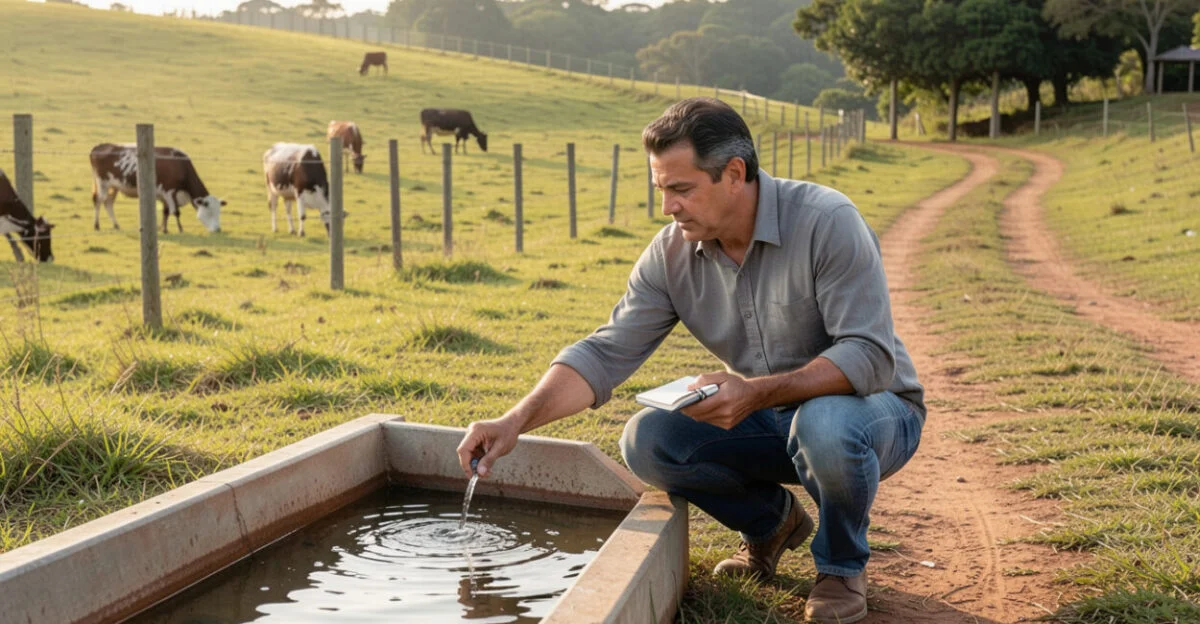
Before installing fences, assess the land and the herd’s daily routine. The layout needs to reflect the actual terrain: wet lowlands, slopes, shade, access points, and obstacles can make a geometric layout impractical.
- Usable acreage: Subtract buildings, flooded areas, woodland, and land unsuitable for grazing.
- Terrain and soil: Identify slopes, erosion-prone areas, and places where water collects.
- Grass: Note the species or cultivar and observe how it responds to rain, cold, and soil fertility.
- Herd: Record the number of animals, approximate weight, class, and any planned changes to the group.
- Water: Check flow rate, quality, water trough locations, and access from every paddock.
- Infrastructure: Assess existing fences, lanes, power supply, and the labor available to move animals.
Weight and class matter because lactating cows, growing cattle, and dry cows have different needs. If the pasture also needs fertility correction or restoration, fence planning should go hand in hand with an agronomic assessment, not replace it.
How to Calculate the Number and Size of Paddocks

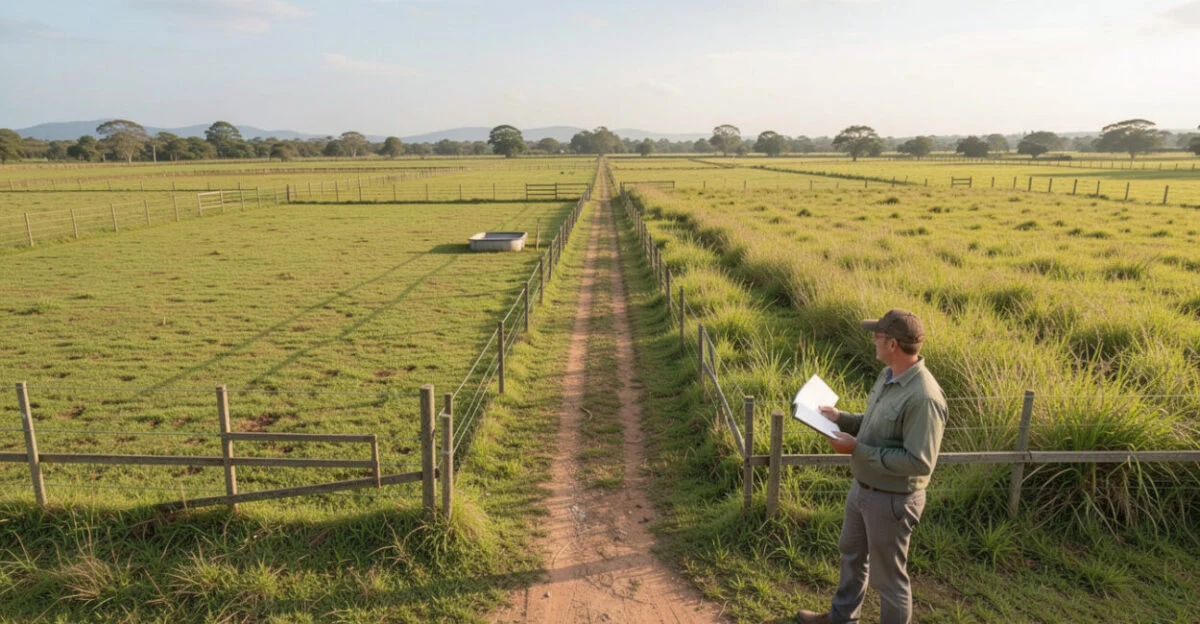
You can make an initial estimate of the number of paddocks by dividing the planned rest period by the grazing period and adding one: number of paddocks ≈ (rest days ÷ grazing days) + 1. This is a starting point, not a firm recommendation: the rest period must match grass recovery, and the grazing period should be short enough to prevent animals from grazing new regrowth in the same paddock.
How many paddocks do you need for a pasture?
There is no fixed number. It depends on the rest period the forage needs under local conditions, the chosen grazing period, and the infrastructure available. If the calculation gives you a fraction, round up and make sure water, fencing, and day-to-day management make the layout practical.
Variable How it factors into the calculation What to check Rest period A longer rest period may require more paddocks to keep grazing periods short. Observed grass recovery, species, and time of year. Grazing period The shorter it is, the more paddocks are generally needed for the same rest period. Your ability to move the herd and manage forage use. Usable acreage It is divided among paddocks based on the forage needed in each one. Exclude unsuitable areas and adapt boundaries to the terrain. Herd demand Determines the area needed for each grazing period based on available forage. Weight, class, number of animals, and supplementation.
Example for illustration: If a local assessment indicates a 30-day rest period and you use a one-day grazing period, the estimate is 30 ÷ 1 + 1, or 31 paddocks. These figures illustrate the formula only; they are not a recommendation for any particular farm. If your team cannot manage that many paddocks, you can reconsider the grazing period or the system, as long as the grass still gets adequate time to recover.
To estimate paddock size, first calculate the herd’s forage needs for the grazing period and compare them with the grazeable forage available in the paddock. Without an estimate of forage mass, you can make a provisional estimate based on observed grazing and leftover forage, but it will be less precise. Tracking field indicators and seeking technical guidance, including resources from Embrapa Pecuária Sudeste (the Brazilian Agricultural Research Corporation’s Southeast Livestock Research Center), can help you refine your assumptions.
Read also: Sheep Farming: Housing, Feeding, and Management
How to Determine Stocking Rate and Grazing Period
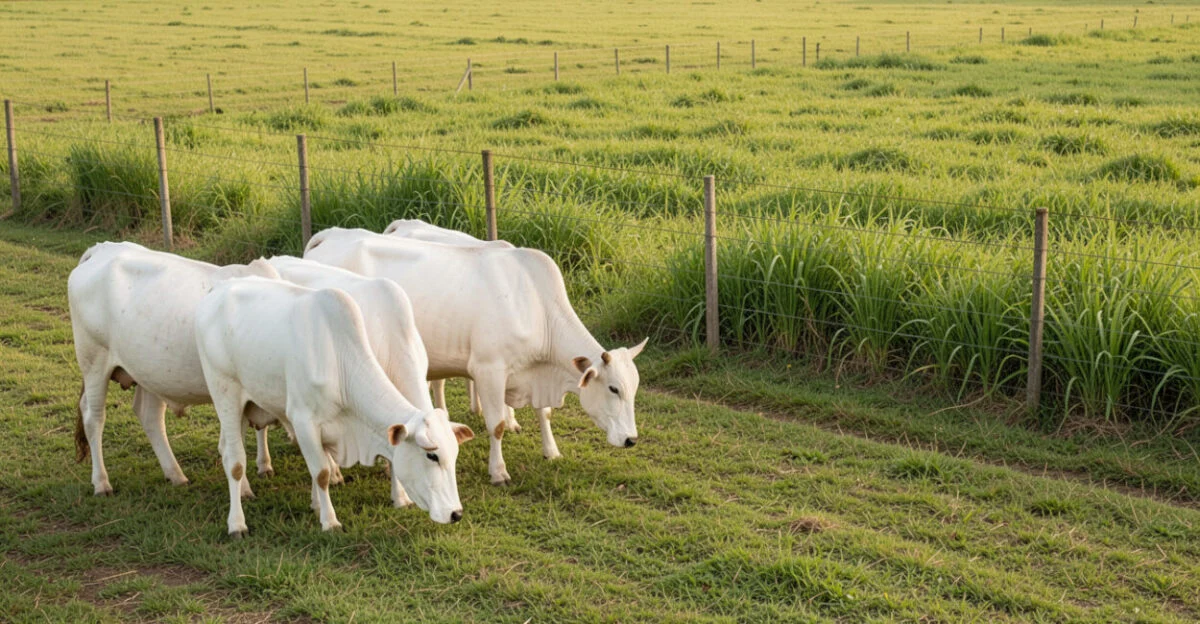
Pasture stocking rates need to balance herd demand with the forage supply that can be grazed without compromising regrowth. Don’t determine paddock size by head count alone: a heavier herd or one with greater nutritional needs may consume more, while forage availability varies with climate, soil fertility, and grass growth stage. The grazing period should be short enough to prevent animals from returning to newly emerging regrowth before moving to another paddock. If the grass disappears quickly and animals eat less, the paddock may be too small for that herd or forage may be in short supply. If stems and old leaves are left behind, the paddock may be too large, the stocking rate too low, or the grazing period too long.
Read also: Integrated Pest Management: How to Protect Crops
Adjust stocking rates by changing herd size, the area offered, or the grazing period. Supplementation can contribute to the diet, but it does not automatically fix uneven forage distribution or inadequate recovery.
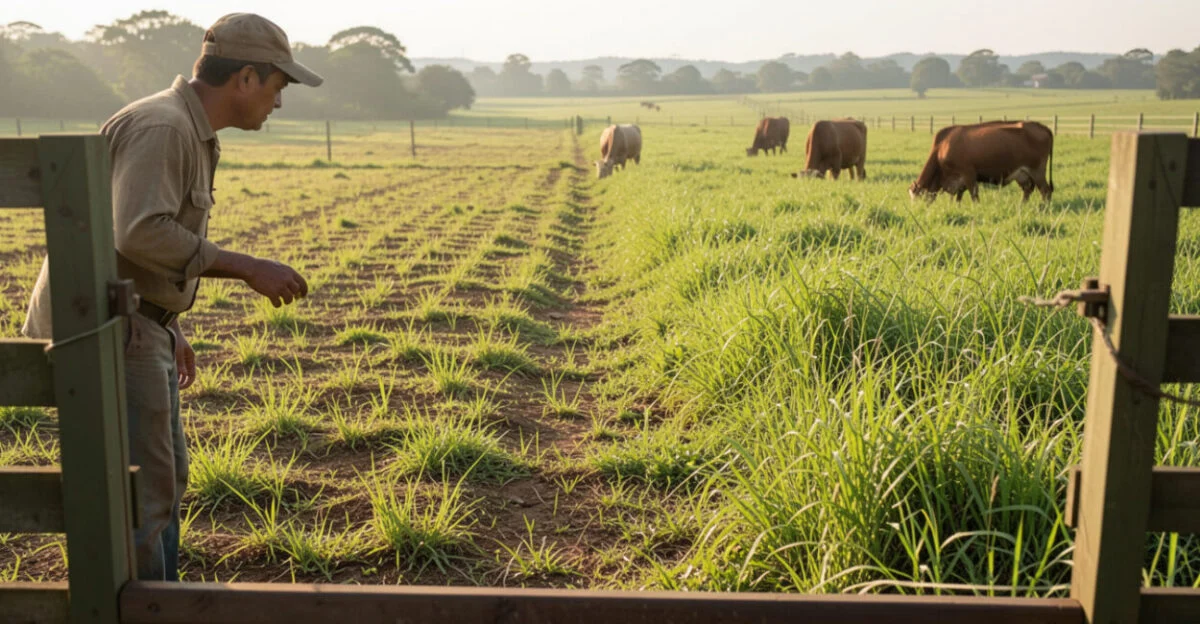
How to Set the Grass Rest Period
The rest period should vary throughout the year because pasture growth changes with temperature, rainfall, sunlight, soil fertility, and soil moisture. An interval that works during active growth may be too short during a slow-growth season or too long when grass grows quickly.
How can you tell if the grass has recovered enough for animals to graze it again?
Check whether the pasture has reached the recommended entry condition for its species and system, taking height, leaf proportion, and regrowth vigor into account. Don’t rely only on the number of days elapsed: during slow growth, a calendar may send animals back before the grass has recovered; during rapid growth, it may allow the grass to become overmature. Embrapa and forage-management resources from the Federal University of Viçosa offer technical guidance, but recommendations depend on the cultivar and the farm’s conditions.
There is an important caveat: recommended entry and exit heights are not the same for all forage species. Before applying a guideline, confirm which species is planted and seek technical advice suited to it; the same height can lead to different decisions for different grasses.
How to Plan Water, Fences, and Livestock Movement
Place water points so the herd can reach a trough without traveling long distances or creating muddy, heavily trampled areas. If several paddocks share a water point, make sure access does not create bottlenecks and that the flow rate meets the herd’s needs during peak drinking times. Well-positioned lanes reduce the time needed to move animals and make inspections easier. Fence layouts should follow the terrain and allow for maintenance; a layout that looks inexpensive on paper can become costly if it needs frequent repairs or makes handling animals difficult. This planning can also be useful for people preparing to work in the field, as illustrated by the day-to-day work of an agricultural technician in the field.
How to Start Rotational Grazing and Adjust the System Over Time
Start with a layout your team can manage and record conditions every time animals enter or leave a paddock. Note the date, paddock, herd size, grass condition, and observations about grazing and leftover forage. These records help you distinguish a stocking-rate problem from a seasonal change in grass growth.
During drought or cold weather, you may need to reduce stocking rates, extend rest periods, or set aside forage. During rapid growth, you may need to move animals more often and provide additional grazing area to keep the grass from becoming overmature. If the pasture loses vigor despite these adjustments, assess the soil, fertility, and cause of the problem before simply adding more paddocks.
As a first step, map the usable acreage and record herd information; then estimate forage supply and test a layout you can manage. Reassess the plan as the seasons change and consult species-specific recommendations in technical publications from Embrapa (the Brazilian Agricultural Research Corporation), the Federal University of Viçosa, and Brazil’s Ministry of Agriculture and Livestock.
Frequently Asked Questions
Does rotational grazing require electric fencing?
Not necessarily. The type of fencing depends on the layout, the animals, available maintenance, and local costs. Electric fencing can make temporary divisions easier, but it must be installed and maintained properly.
Can I use paddocks of different sizes?
Yes. Uneven paddock sizes can accommodate the terrain, grass supply, or distance from water. The key is to know how much forage each paddock provides and adjust the grazing period to the herd.
What should I do if a lot of grass is left in some paddocks?
Review the area offered, stocking rate, and grazing period. Persistent leftovers may mean the herd is too small for the available forage or the interval between grazing periods is too long. Also check whether animals avoid certain areas because of limited water, shade, or access.
Does supplementation change how I plan paddock divisions?
It can change how much forage the herd needs to eat in the pasture, but it does not eliminate the need to monitor recovery. Include supplements when assessing the diet, and don’t use feed provided at a bunk as a reason to keep the pasture in poor condition.
Artigos Relacionados
 Soil and Pasture Management in Family-Based ILPF Systems
 How to Plan Corporate Presentations: A Complete Guide to Content, Time Management, and Resources That Engage Professional Audiences
 Debt Management Plan for Fast and Sustainable Relief
 Pasture Management: How to Restore Degraded Land
 Rural Fish Farming: How to Plan a Fish-Raising Operation
 Free-Range Chicken Farming: Housing, Management, and Income
