
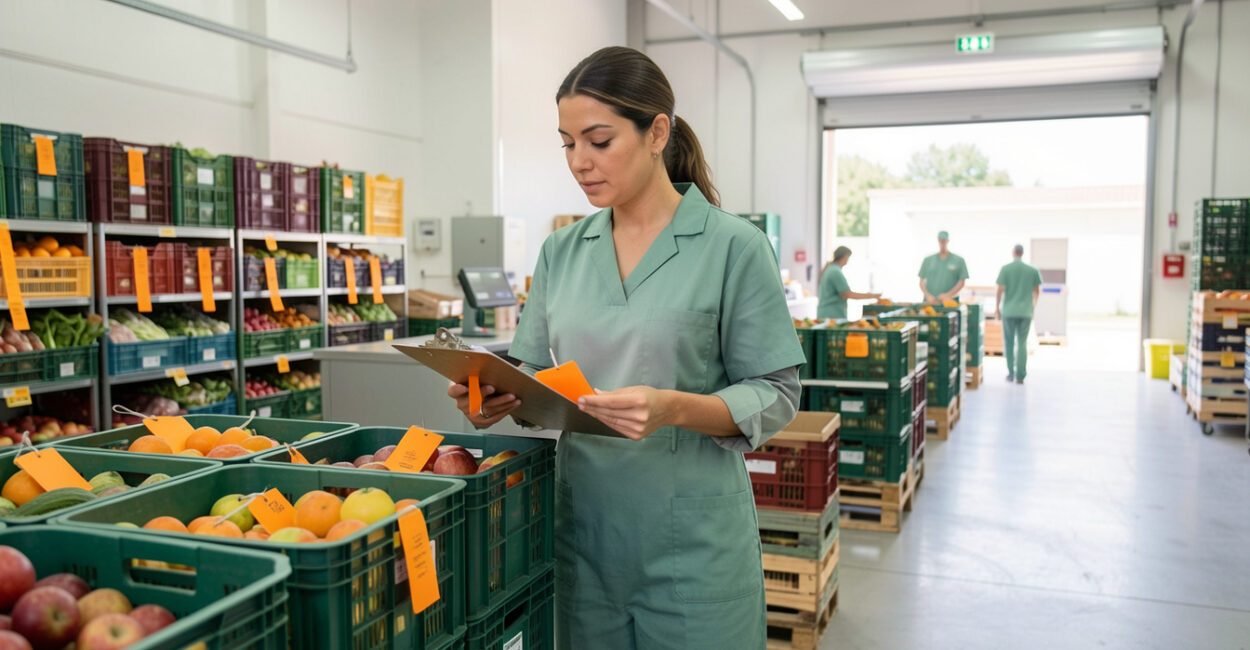
A lot is traceable only when the records show, without gaps, where it came from and where it went.
For food traceability, the number recorded at receiving needs to track the product through shipping. If labels, invoices, and internal records use different codes, finding the source or recipients can turn into a time-consuming search. The process starts by linking receiving, lot identification, storage or processing, and shipping. For example, the product and lot, supplier, date, and quantity received should be linked to internal movements and the quantity sent to each recipient.

Food traceability starts with the lot’s journey
Traceability is the ability to follow a food product through specified stages of production, processing, and distribution. To organize records, link the product’s receipt to its lot identification, movements, and destination; then test whether you can retrace its journey in both directions. This lets you answer two questions: Where did this lot come from, and where was it sent? The second answer also helps identify the products and destinations involved in an investigation or recall, in accordance with applicable procedures.
A traceable lot leaves a verifiable path from source to destination and back again.
What information should be recorded for each lot?
Records should include enough information to retrace a product’s journey without trying to document every possible detail. In general, make sure they include:
- product identification and lot code;
- supplier or other source information;
- relevant dates, such as receiving, processing, and shipping dates;
- quantities received, used, stored, and shipped;
- movements between locations or stages;
- recipient, when applicable.
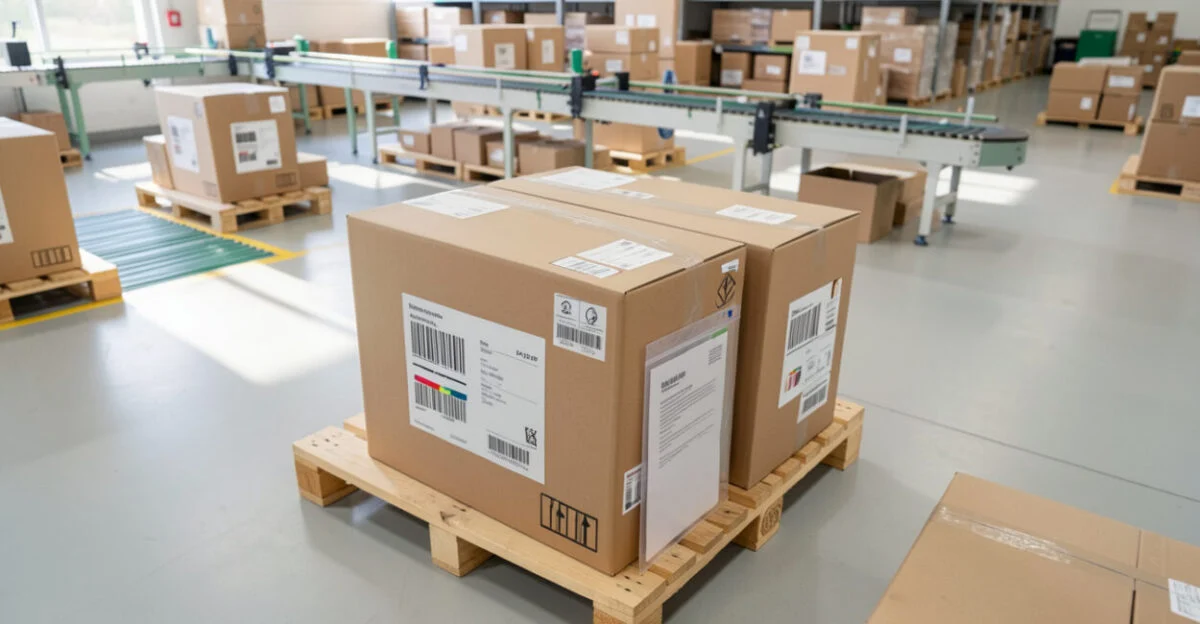
The lot code should appear consistently on documents, labels, and internal records. A common mistake is copying the invoice quantity into a spreadsheet but leaving the lot field blank or using an abbreviation that no one can match to the label.
How can you keep records linked across stages?

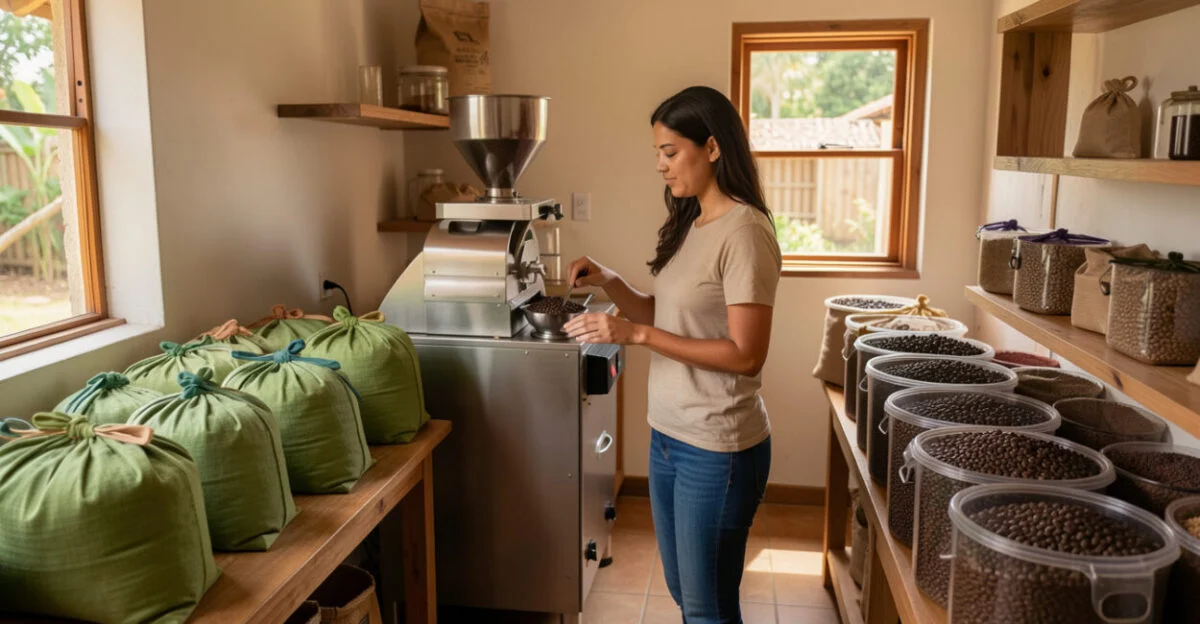
When storing a product, record where it was kept and any relevant movements. If it is processed, document which raw material lots went in and which finished product lot or lots resulted. This way, processing does not break the link to the source.
Reconciling quantities can help uncover gaps: compare what came in, was used, remained in storage, and went out. A discrepancy may point to an incomplete record or an unrecorded movement, but it does not, by itself, prove where a problem occurred. Businesses that already use digital tools to organize operations may find useful ideas in agtech solutions for day-to-day farm operations. A tool can make records easier to search, but the process still needs to define which data points to link.
Read also: Beef Cattle: How to Organize Herd Management and Feeding
Paper, spreadsheet, or software: which format should you choose?
No format is universally better. The right choice depends on the volume of activity, your team, and the requirements that apply to your product and operation. The deciding test is whether you can locate a lot and retrace its journey without relying on one person’s memory.
Format Searching and updating Access and control Paper Manual lookup; updates require care. Access depends on where the documents are stored. Spreadsheet Searching and editing can be quick; codes and versions need to be standardized. Permissions and backups need to be managed. Software Can link stages and make records easier to search, depending on the setup. Users, permissions, and procedures need to be defined.
Read also: Rural Land Tenure Regularization: How to Organize the Paperwork
A spreadsheet alone does not guarantee compliance or safety. For teams that need to divide responsibilities, the work of an agricultural technician may be relevant to organizing day-to-day farm operations, depending on the work and qualifications involved.
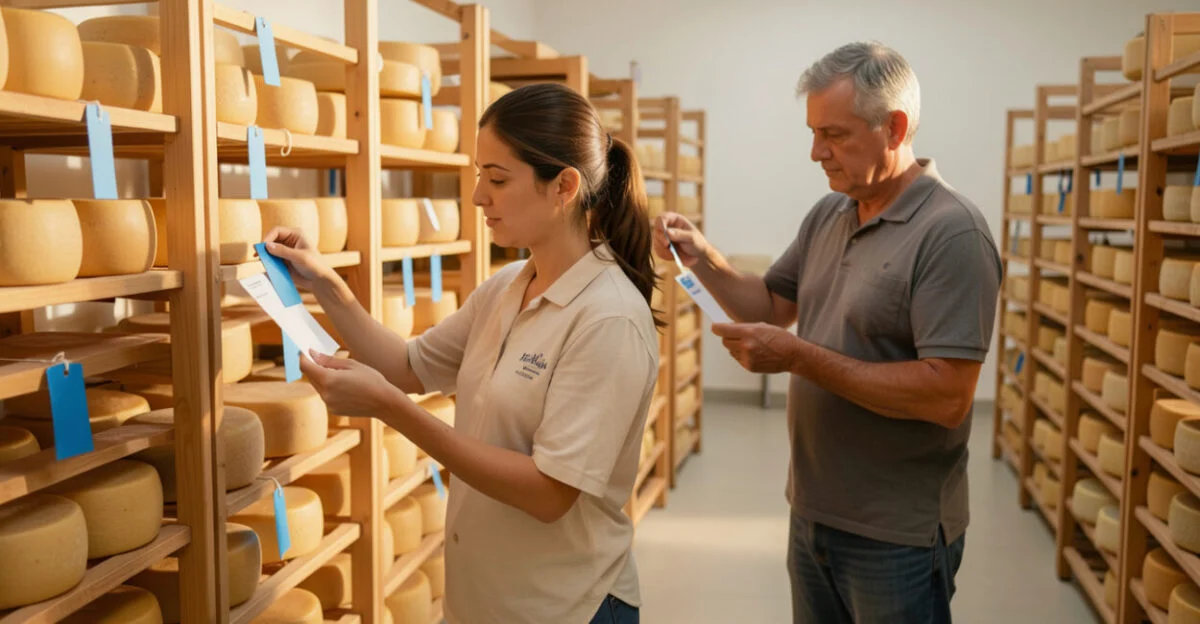
How can you check whether the records tell the same story?
Run periodic checks: compare codes across documents and labels, make sure dates make sense, and reconcile quantities between stages. If you find an error, correct it without erasing the history: document what changed, when, and who made the change, following your established procedure.
- Avoid assigning different codes to the same lot.
- Do not leave movements or repackaging unlinked to the original lot.
- Do not treat a quantity discrepancy as conclusive proof of the cause of a problem.
Requirements vary by product, industry, and activity. To define your process, consult guidance from the Ministry of Agriculture and Livestock (MAPA), Brazil’s agriculture ministry, when applicable, as well as relevant regulations. The Codex Alimentarius guidelines on traceability also address the topic in the context of food inspection and certification.
What should you do when you need to locate a lot?
Gather the records for receiving, identification, storage or processing, and shipping. Cross-check codes and quantities to identify the products and destinations involved; then follow the procedures that apply to your operation without treating a single discrepancy as proof of the cause.
In Brazil, Anvisa Resolution RDC No. 24/2015 addresses food recalls and notifications to health authorities and consumers. Check the text and the requirements that apply to your case. For operations connected to farming, understanding the routes products take from farm to shelf can help you visualize the points a product may pass through.
A simple test to try today
Choose a recent lot and try to find its source, the stages it went through, and its recipients using only the records you already have. Note where the sequence breaks down: a mismatched code, an unexplained quantity, or a label with no matching record points to the next adjustment to make.
This exercise can also help you decide whether your current tracking process is sufficient or needs to change. The process should reflect your actual operation and the specific requirements for your product; a routine that works for one business may not work for another.
Frequently asked questions
What is food traceability?
It is the ability to follow a food product through stages of production, processing, and distribution.
What information should lot records include?
Product and lot identification, source, dates, quantities, movements, and recipient, when applicable. The required information depends on the activity and relevant regulations.
Can a spreadsheet be used to track food?
It can be used as a recordkeeping tool if the fields are linked and updates, access, and versions are managed. A spreadsheet alone does not guarantee compliance or safety.
What should I do if the quantities do not add up?
Review the records for receiving, use, storage, and shipping, document any corrections, and follow the applicable procedure. The discrepancy signals something to investigate, but does not automatically identify the cause.
Artigos Relacionados
 Agricultural Traceability: 5 Innovations for 2025
 Food Security: 7 Trends That Will Shape 2025
 Home Gardening: How to Grow Your Own Food in a Healthy, Affordable, and Sustainable Way
 AI in Agriculture: A Revolution Transforming Global Food Security
 School Supply List Apps Are Taking Off: Why Parents and Public School Leaders Use Apps to Organize Purchases
 Certificando.PRO – Organize Your Event or Course, Automatically Generate Certificates, Attendance Sheets, and Badges
