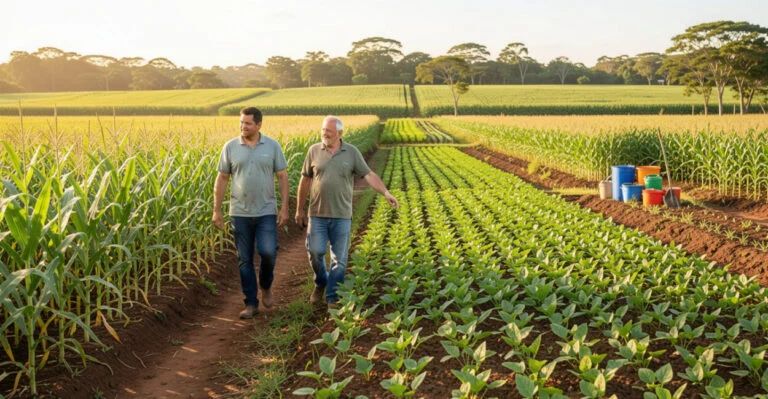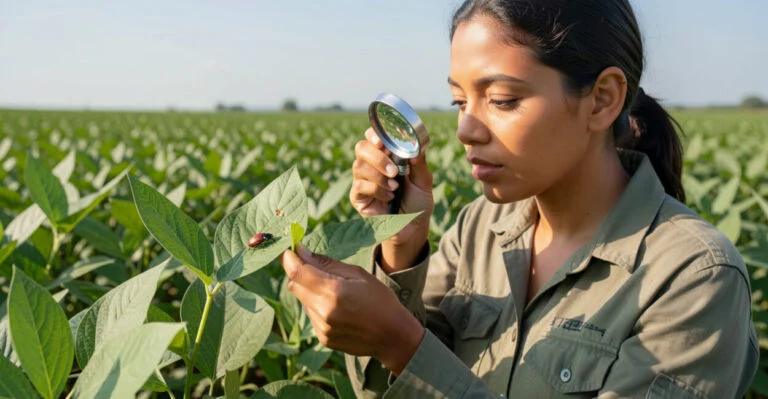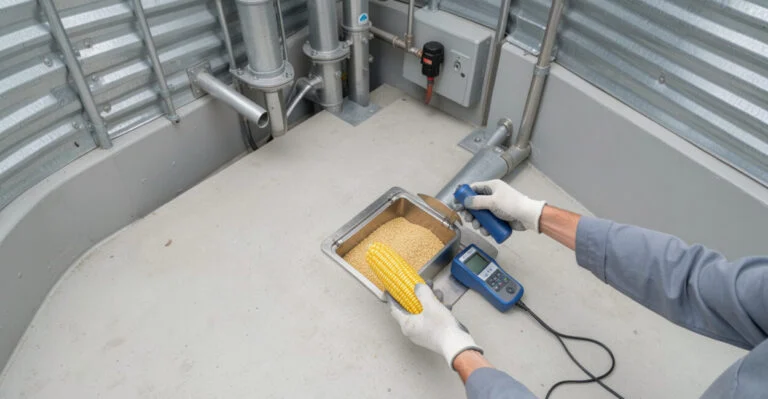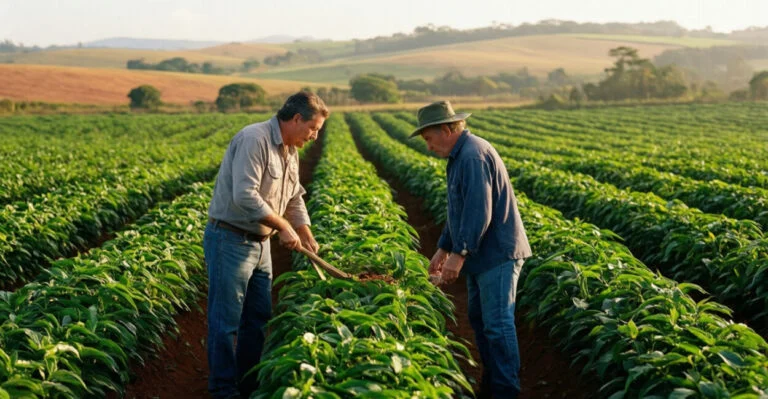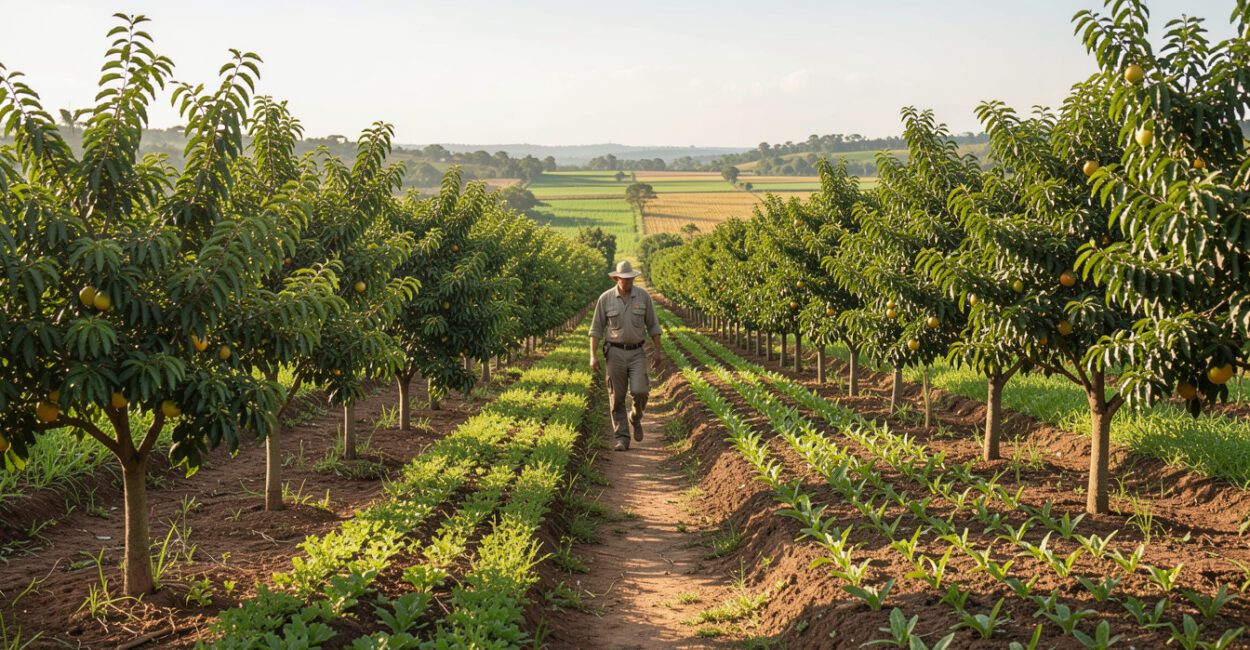
An agroforestry system (AFS) is a form of land use that combines trees with agricultural crops in a planned way and, in some cases, includes livestock. The layout and management of its components aim to make the most of ecological and productive relationships over time while taking local soil, climate, water, labor, and market conditions into account.
This guide is for farmers, agricultural professionals, and students who want to understand how combining trees and crops works, compare possible arrangements, and assess whether to establish a system on their property. By the end, you’ll have criteria for planning an AFS without treating any one model as a universal solution.

What is an agroforestry system, and how does it work?
The technical definition refers to systems of land use and management in which perennial woody species interact, in space or over time, with agricultural crops and, sometimes, livestock. These interactions can be economic, ecological, or both.
Put simply, this means organizing trees, crops, and livestock so they share the same area without production depending on a single species or harvest season.
How the system works depends on the arrangement. Trees may grow in the same field as crops, occupy strips between crop fields, or make up different stages of a planned succession. Whatever the setup, the farmer needs to decide how the components will be distributed, how long they will remain in the area, and how they will be managed. A mature tree may shade nearby crops, compete for water and nutrients, or protect the soil and provide products. The effects vary by species, size, spacing, time of year, and water availability. So saying that trees always improve crop production oversimplifies the issue: the design must account for the relationships among species throughout the entire cycle, not just at planting.
Stratification describes how plants occupy different heights and positions in space. In a stratified arrangement, species of different sizes can use sunlight at different levels. Temporal sequencing, meanwhile, organizes when components are introduced, how they grow, and when they are removed over the years.
These principles guide the design, but they don’t replace the need to observe conditions on the property.
Agroforestry and agroforestry system are often used interchangeably. “Agroforestry” commonly refers to both the practice and the field of study; “agroforestry system” emphasizes a planned arrangement of agricultural and tree-based components and, where applicable, livestock. In everyday conversation, the distinction isn’t always clear-cut. An AFS isn’t the same as crop rotation. In a rotation, different crops follow one another in the same area over time. In an agroforestry system, the planned presence of perennial trees is a defining component, though crop rotation can be part of the farm management plan. There’s no one-size-fits-all formula, either: an arrangement that works on one property may be unsuitable for another.
To learn more about the relationship between production, soil conservation, and adapting to local conditions, see these sustainable farming practices for soil and climate. Choosing a system takes agronomic knowledge and ongoing observation of the field, not just a list of popular species.
What are the main types of agroforestry systems?
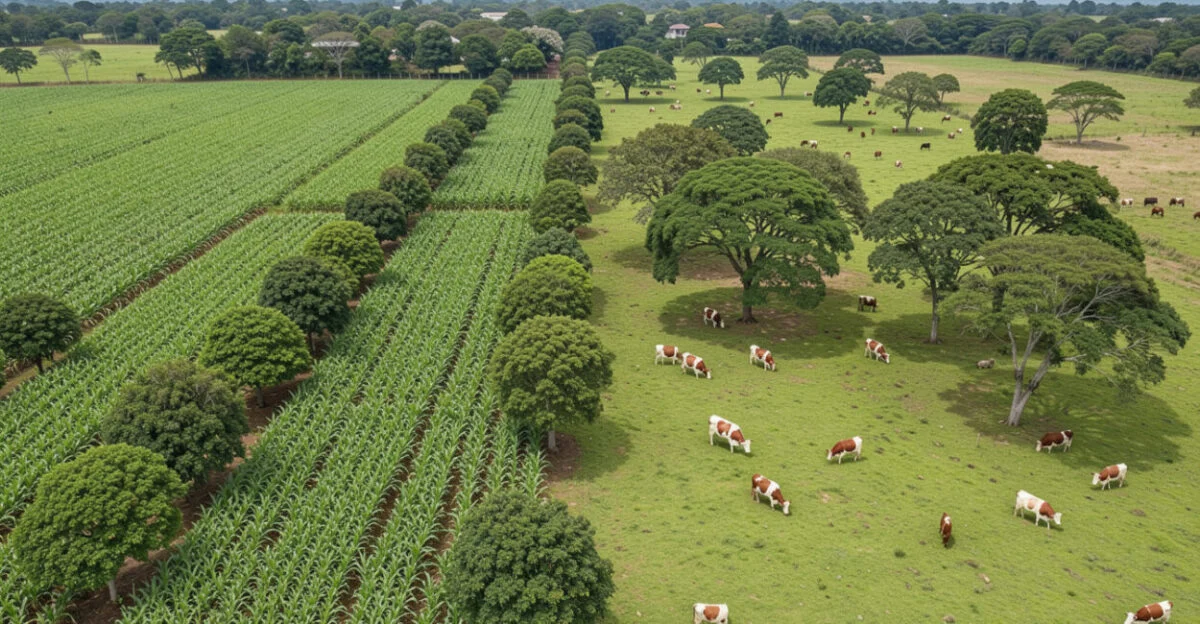
Agroforestry systems are distinguished by their components, how those components are arranged across the land, and their production goals. The table compares common arrangements; the boundaries between categories may vary depending on the technical classification used.
Arrangement How the components are organized Potential use Key consideration Silvoarable Trees are combined with crops, without livestock as a planned component. Annual or perennial crops grown between trees, in strips, in mixtures, or in successive stages. Shade, competition for water, and challenges with mechanization can vary with tree size and spacing. Silvopastoral Trees, pasture, and livestock share the same area in a managed arrangement. Livestock production alongside trees, with pasture and animal management. Seedlings need protection, and grazing must not damage regeneration or tree growth. Agrosilvopastoral Trees, crops, pasture, and livestock are integrated at the same time or in planned phases. Properties seeking to combine crops, livestock, and trees on the same land. Operations, schedules, and infrastructure for each component must be coordinated. Successional agroforestry Species are established in sequence, with different cycles and ecological and productive roles. Diverse arrangements whose composition changes as species grow and are managed. Pruning, harvesting, and replacement must keep pace with succession and available labor. Agroforestry home garden Trees, fruit trees, vegetables, and other components are grown near the home. Household consumption, product diversification, and, depending on the circumstances, sales of surplus. Management can be intensive and requires planning for access, water, and frequent harvests.
Silvoarable, silvopastoral, and agrosilvopastoral refer to combinations of components. “Successional” describes a principle of organizing them over time, while “agroforestry home garden” refers to a particular setting.
These categories help compare projects, but they aren’t entirely separate boxes.
Trees can be combined with annual crops and livestock as long as the plan specifies where and when each component will be introduced. For example, a crop can be grown during the initial establishment phase, followed by tree growth and then grazing once it’s been determined that the trees are large enough and the field is protected well enough to support livestock. The sequence and timing depend on the species and farm conditions. A common mistake is to plan an integrated system based on how it looks at the outset and ignore how large the canopies and roots will become. Small seedlings leave plenty of room, but growing trees change light levels, machinery access, and access to pasture. To avoid surprises, map out what the system is expected to look like at different stages and check that each operation will remain feasible.
The FAO provides information on agroforestry as systems that bring trees and agricultural production together in different settings. In Brazil, publications from Embrapa, the Brazilian Agricultural Research Corporation, on agroforestry systems and integrated crop-livestock-forestry systems can help explain different arrangements and management approaches. However, technical recommendations should be tailored to the region and property.
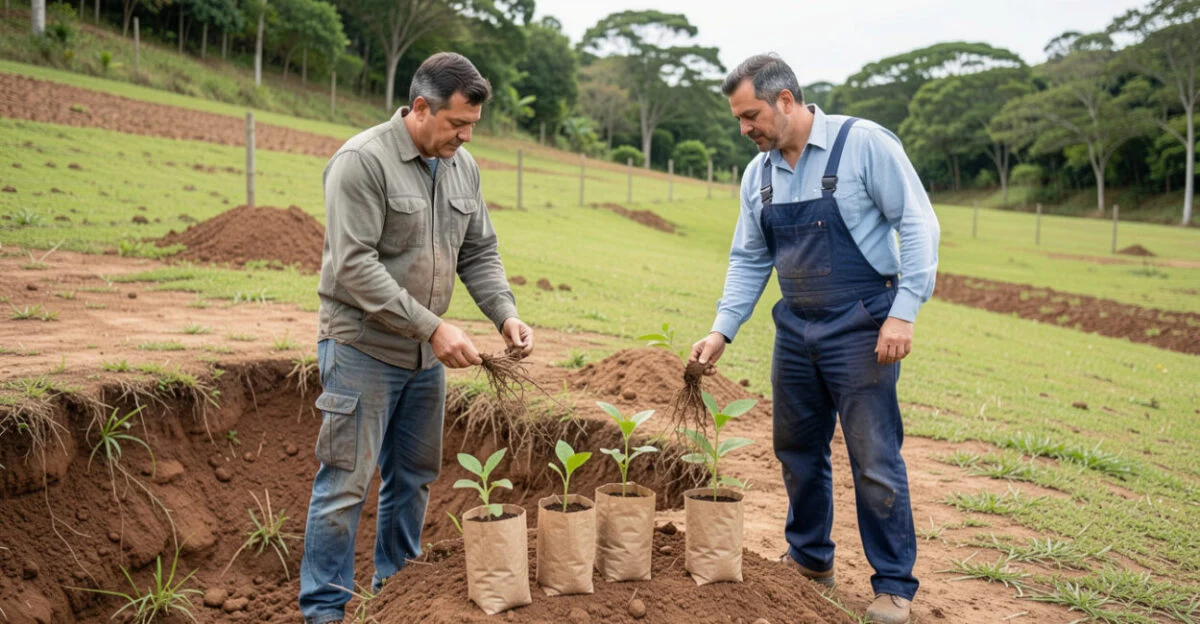
How do you choose species and organize planting?

Start by considering your family’s goals and the field’s conditions, not by consulting a generic list of species. A tree suited for shade or timber may not meet short-term income needs; a crop with strong market demand may require water, labor, or soil resources the property doesn’t have.
Before selecting species, assess the criteria below. If you’re unsure whether a species is suited to your area, consult local extension services and research materials for your region.
- Climate: Consider temperatures, rainfall patterns, frost, wind, and dry spells. Confirm that the species can tolerate local conditions and the planned planting season.
- Soil and topography: Consider texture, drainage, depth, fertility, acidity, slope, and erosion risk. A soil test can help guide amendments and fertilization, but it doesn’t replace an assessment of the land.
- Water: Check water availability throughout the year, the soil’s water-holding capacity, and expected competition among components. A species may tolerate the region’s annual rainfall yet still suffer during a prolonged dry spell.
- Light, roots, and size: Estimate how much shade each species will cast on its neighbors, how much room the canopy will need, and the likely depth or spread of the roots. Also consider how these relationships will change as plants grow.
- Role in the system: Decide whether each component will provide food, income, ground cover, shade, timber, forage, a windbreak, or another function. Avoid including species that have no clear role in the design.
- Markets and household use: Identify who will buy the products, what quality standards they require, how transportation and storage will work, and whether any products are intended for household use.
- Schedule and labor: Compare planting, pruning, harvesting, and other peak work periods with the farm’s existing activities. A crop that requires frequent harvesting can compete for time with essential tasks for the main crop.
- Management and inputs: Research pruning, weed control, seedling protection, fertilization, and equipment needs. Include establishment and maintenance costs in your calculations, not just the price of seeds or seedlings.
- Regulations and seedling sources: Check the requirements that apply to the activity, land, and species, as well as the origin of the planting material. If the system includes trees for commercial production, check current regulations with the relevant authorities.
Once you’ve considered these criteria, organize the species by function and location. For a simple layout, draw the field boundaries, planting rows, access lanes, and water sources.
Also mark the distance between trees and crops, allowing for canopy growth and the access needed for fieldwork and harvest.
Don’t copy spacing from a model without checking whether it suits your conditions. Rows that are too close together can restrict machinery and reduce sunlight for a crop that needs full sun; rows that are too far apart may not provide the intended shade or protection. Spacing needs to accommodate tree growth as well as the needs of the crop components and the available workforce.
In diverse arrangements, it’s useful to map out succession: which species will be planted first, which will remain the longest, which will be pruned, and which may be harvested or replaced. Well-planned pruning can manage competition for light and produce biomass for ground cover. If pruning is done too late or without considering how species will respond, it can also reduce yields or increase labor.
One practical detail often overlooked in the design is access for harvesting and moving products. A row of trees may look well spaced on paper but become an obstacle when machinery needs to enter for an annual crop or when boxes of fruit need to be hauled out of the field. Marking access lanes and testing the route for field operations before planting can help prevent this problem.
For technical resources, search for terms like “agroforestry system PDF” and “agroforestry project PDF” along with the names of research institutions, universities, or government agencies. Look for documents that specify the region, climate, species, spacing, management, and context of the case they describe. A PDF describing one project isn’t automatically a recommendation for another property.
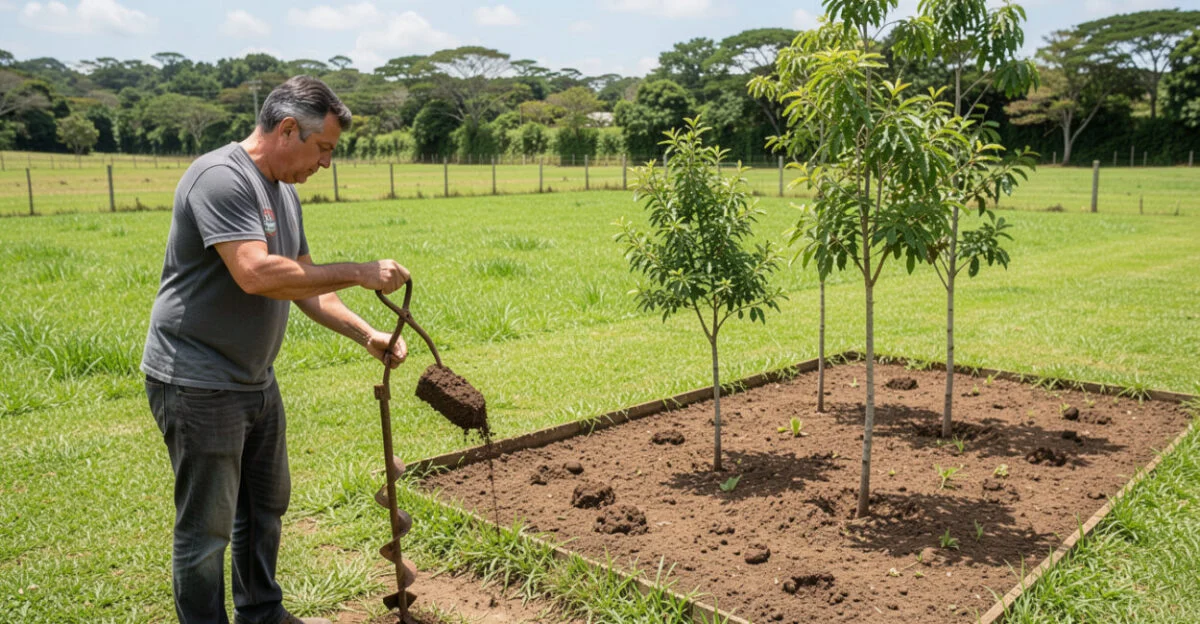
How do you plan and establish an AFS on your property?
A well-planned project starts with an assessment of the land and production goals. Establishment can be gradual, especially if the family needs to maintain income from existing activities or is still learning how species perform locally.
Read also: Raising Free-Range Chickens: Facilities, Management, and Income
- Define your goal. Clarify whether the priority is food production, diversifying income, integrating pasture and trees, restoring an area, or meeting more than one objective. Rank your priorities to make decisions easier when they conflict.
- Assess the land. Record topography, soil, drainage, water, existing vegetation, access, fences, shaded areas, and land-use history. Observe the field at different times of year: a spot that seems wet after rain may dry out significantly during a drought.
- Map resources and constraints. List labor, equipment, budget, seedling availability, technical knowledge, and transportation capacity. Also identify farm activities that can’t be interrupted during establishment.
- Choose the arrangement and components. Compare silvoarable, silvopastoral, agrosilvopastoral, and other arrangements suited to your goals. Select species that fit the climate, water, soil, management, and demand, and assign a role to each component.
- Plan the space and timeline. Mark rows, spacing, crop strips, access lanes, and infrastructure. Then set an establishment sequence and estimate when thinning, pruning, harvesting, or livestock introduction will be needed.
- Plan the workflow. Check whether planting, fieldwork, pruning, and harvesting will overlap with other farm tasks. Plan how people, machinery, and products will move without damaging seedlings or compacting sensitive areas.
- Calculate costs and returns by phase. Separate costs for site preparation, seedlings, inputs, labor, maintenance, and any structures. Record potential revenue by product and when it might come in, without assuming guaranteed prices or yields.
- Establish and monitor. Record dates, seedling survival, gaps, yields, costs, and pest or competition issues. Adjust management based on observations, and seek technical advice when a problem requires specialized diagnosis.
The budget needs to reflect the time it takes each component to generate returns. Annual crops may bring in revenue before trees grown for timber or fruit, but they also add operations and costs. Prepare a cash-flow plan for each period, including maintenance and potential gaps between harvests, to assess whether the family can sustain the project.
How long does it take for an AFS to start generating returns? There’s no single timeline: an annual crop may produce within one growing cycle, while perennial and forest species may take several years to reach their first commercial harvest, depending on the species, climate, management, and market. “Returns” can also mean food for household use, reduced expenses, sales income, or recovery of the initial investment, and these benefits occur at different times.
A prudent way to reduce risk is to establish a pilot plot where you can observe the system without putting all production at risk. It should be large enough to reveal management and access issues, but small enough for the team to monitor. Record the results to decide whether to expand, change spacing, or replace components.
Read also: Logistics Director: A Complete Guide to the Role and Its Responsibilities
There’s no universally appropriate pilot size. On a small property, even a modest plot may account for a significant share of production; elsewhere, a larger module may be needed to test machinery operations. The right size depends on the purpose of the trial and the financial risk the family can take on.
The plan can be compiled into an agroforestry project that includes a map, species list, schedule, budget, management procedures, and monitoring indicators. On properties with livestock, include fencing and a tree protection plan. On sloped land, account for water runoff and conservation practices suited to the terrain.
The ABC+ Plan, a Brazilian Ministry of Agriculture and Livestock policy focused on adaptation and low-carbon agriculture, includes integrated systems among the strategies it promotes. The existence of a policy or support program doesn’t mean every AFS will qualify for funding or suit a particular case. Check current terms, programs, and requirements through official channels.
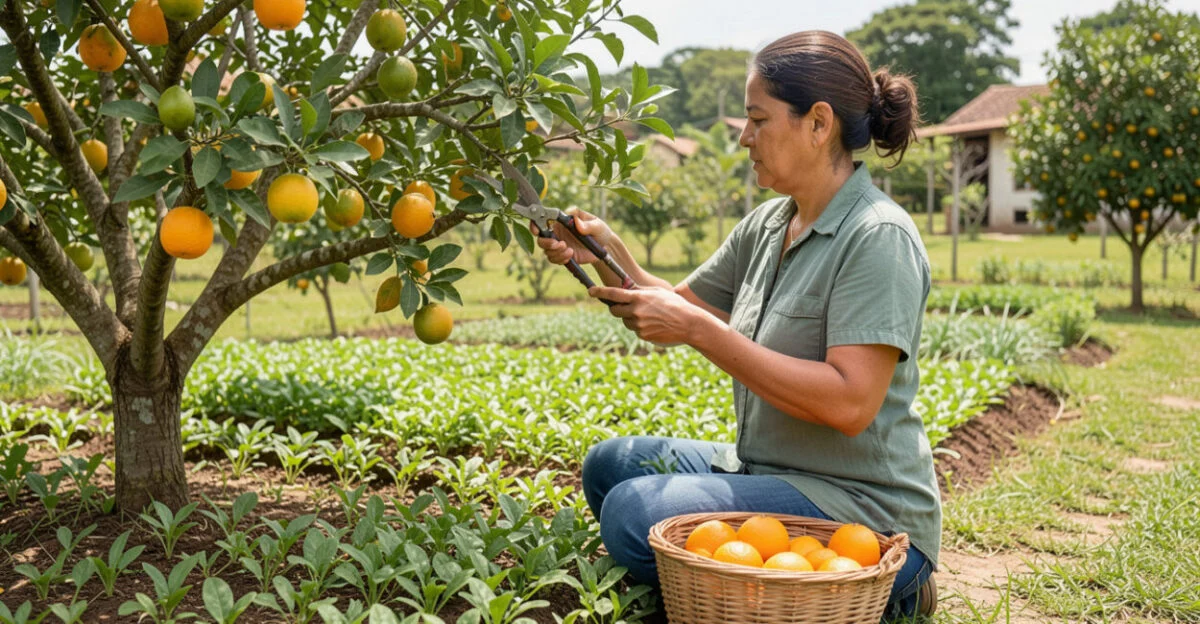
What benefits and challenges should you consider before adopting agroforestry?
Potential benefits include a wider range of products and harvest seasons, ground cover, shade, and greater structural diversity across the landscape. Trees may also contribute to nutrient cycling, wind protection, or habitat for organisms, provided the design and management support those functions. The scale of the effect depends on the location and the system used.
Diversification can reduce reliance on a single source of income, but it doesn’t eliminate risk. Prices for several products may drop at the same time, and selling perishable items requires logistics. When components have different schedules, the farm may be able to spread out tasks and income, but it also needs to manage more types of operations.
Vegetative cover and organic matter can improve soil structure and protection, especially when management keeps the ground covered and reduces exposure to erosion. These results don’t come from planting trees alone: poor site preparation, bare ground between rows, or badly planned traffic can still degrade the soil. The agroforestry design should be combined with appropriate conservation practices.
Challenges include the upfront investment, labor needs, knowledge of species and pruning, and the time between expenses and revenue. Managing a diverse arrangement can be more demanding than managing a mechanized monoculture, particularly when different products need to be harvested by hand around the same time.
There are also opportunity costs. Land used for trees may no longer be available for a particular crop or may limit certain farm operations. In return, it may provide other products or services. The comparison should take into account current land use, the planning horizon, and the value the family places on products for its own use, as well as market revenue.
Different species can compete for light, water, and nutrients. Some plants may also be sensitive to shade, allelopathy, or the conditions created by other species. Compatibility should be verified using local technical references and field observation. Even recommended species may respond differently to different soils, rainfall patterns, and management practices.
There are commercial challenges, too. Different products may require separate buyers, grading standards, packaging, and sales channels. Before expanding a component, confirm that an accessible market exists, when buyers purchase, and how the product will reach its destination. A species valued in one region may have little demand or inadequate transportation infrastructure in another.
Caution
In systems with livestock, grazing too early can damage seedlings and hinder regeneration. Plan for protection, and allow the herd in only when tree growth, animal type, and pasture management are compatible.
The limits of general recommendations become clear when local factors interact. A technical table can guide species selection and spacing, but it doesn’t replace soil diagnosis, water monitoring, and market assessment. Agroforestry design methods also vary: professionals may prioritize different production or ecological goals, and the project should make those priorities clear.
For official guidance, Embrapa publishes materials on agroforestry systems and integrated production systems; Brazil’s Ministry of Agriculture and Livestock outlines the ABC+ Plan. Always check the current edition and the rules that apply to the program you plan to access, since policies and programs can change.
Examples of agroforestry systems in different production settings
The following examples are illustrative, not fixed recommendations. Species and planting sequences need to be checked for the region’s climate, soil, water, regulations, and market.
Vegetable garden and trees on a small farm
A family can combine short-season vegetables with trees and fruit trees in a home garden or nearby field. The garden provides crops in a shorter time, while trees can provide fruit, shade, or other products, depending on the species selected. The layout should provide enough light for the vegetables and make irrigation, weeding, and moving the harvest easier.
This arrangement may suit people with access to regular labor and channels for household use or small-scale sales. Being close to the home makes daily monitoring easier, but it doesn’t make management effortless: vegetables may require frequent irrigation and harvesting, just when other farm tasks also need attention.
Annual crops between tree strips
On land used for mechanized cropping, rows or strips of trees can be arranged alongside crop lanes. Annual crops can occupy the space while trees become established, as long as machinery can operate without damaging trunks or roots and the gradual reduction in sunlight suits the crop.
This arrangement requires advance decisions about strip width, the direction of field operations, and traffic limits. The choice also depends on how water drains and which tree product will be harvested. If mechanization is essential and the layout creates too many obstacles, another arrangement may be more suitable.
Trees in pasture with livestock
In a silvopastoral system, trees and pasture are managed alongside livestock. Shade may be one of the design goals, but tree placement needs to allow livestock access and pasture maintenance. Protecting seedlings, adjusting stocking rates, and controlling grazing time can help reduce damage while trees are getting established.
The key consideration is whether tree growth is compatible with animal behavior. Temporary fencing or paddock divisions may be needed, depending on the farm’s layout. Water availability and soil conservation in areas where livestock congregate should also be part of the plan.
Diversified production with species succession
A successional arrangement can combine species with different life cycles, starting with components that can be harvested sooner while keeping others in place longer. Pruning and harvesting change the amount of available light and the composition of the system. This approach requires monitoring plant responses and keeping records to see whether the arrangement is developing as planned.
This model may appeal to producers experienced in frequent management and able to monitor the area. If labor or pruning and reorganization skills are in short supply, the initial diversity may become a source of costs and competition. Starting with a simpler design may be a safer choice.
In all these examples, one question helps distinguish an appealing idea from a viable system: Who will do each task, with what resources, and when? The design should fit the farm’s actual routine. To learn more about the roles and skills involved in providing field support, see our article on what an agricultural technician does on a farm.
How do you assess whether an AFS is right for your farm?
An AFS is more likely to be a good fit when production goals are clear, the selected components suit local conditions, and the family can keep up with management during establishment. The decision also needs to account for markets, labor, and the ability to fund each stage without relying on uncertain future revenue.
Use this checklist before making a major commitment:
- Is there a clearly identified production or environmental need for this area?
- Were species selected based on local climate, soil, water, and management conditions?
- Does each tree, crop, or livestock component have a defined role?
- Does the layout allow for access, harvesting, pruning, and maintenance as the trees grow?
- Does the farm have the labor, equipment, seedlings, and resources needed to establish and maintain the system?
- Is there a plan for the products, whether for household use, local sales, or another market?
- Does the cash-flow plan account for costs, gaps between harvests, and price uncertainty?
- Is technical support or region-specific guidance available to review the project and address problems?
If several answers are no, that doesn’t mean agroforestry is off the table. You may need to start with a smaller area, revisit your goals, seek technical guidance, or select components that better fit the existing operation. If intensive mechanization, short-term financial needs, or a lack of labor are unavoidable constraints, another use of the land may make more sense.
As a next step, document the field’s current condition, set a measurable goal, and compare at least two possible arrangements. A simple map, an operations calendar, and a budget by phase can help you talk with agricultural extension professionals and decide whether a pilot plot is feasible. Expansion should depend on what monitoring reveals, not on promises of consistent results.
Frequently asked questions
Can an AFS be established on a property of any size?
Size alone doesn’t determine whether it’s viable. Small areas can accommodate agroforestry home gardens or intensive mixtures, while larger properties can test strips or integrated components. The design depends on labor, access, markets, and goals.
Do you need to plant many species to create an agroforestry system?
There’s no universal minimum number of species that applies to every classification or purpose. The mix should suit the arrangement and its goals; adding species without a defined role can increase costs and make management more difficult.
Can an agroforestry system help restore land?
Some arrangements can help provide ground cover and restore productive or ecological functions, but the right approach depends on the condition of the land and applicable regulations. Protected areas or land with environmental violations may require specific technical and legal guidance before any work begins.
Can I use native species?
Yes. Native species can be part of an AFS if they suit the location and the project’s purpose. Check where seedlings came from, what management they require, and whether there are rules on harvesting, transporting, or selling forest products.
Does an agroforestry project require technical assistance?
There’s no single requirement for every type of project, but technical support can help prevent mistakes in design, species selection, and management. It’s especially important when the system includes livestock, mechanization, commercial tree species, or specific environmental regulations.
How can I tell whether the system is working?
Track seedling survival, production by component, expenses, labor hours, competition problems, and where products go. Compare the data with the project’s goals and adjust management if actual results differ from expectations.
Does an AFS eliminate the need for fertilizer and pest control?
No. Diversity can change interactions among plants and other organisms, but it doesn’t guarantee pest-free crops or eliminate the need to replace nutrients when necessary. Management should be based on assessments of the soil, plants, and problems observed in the field.