
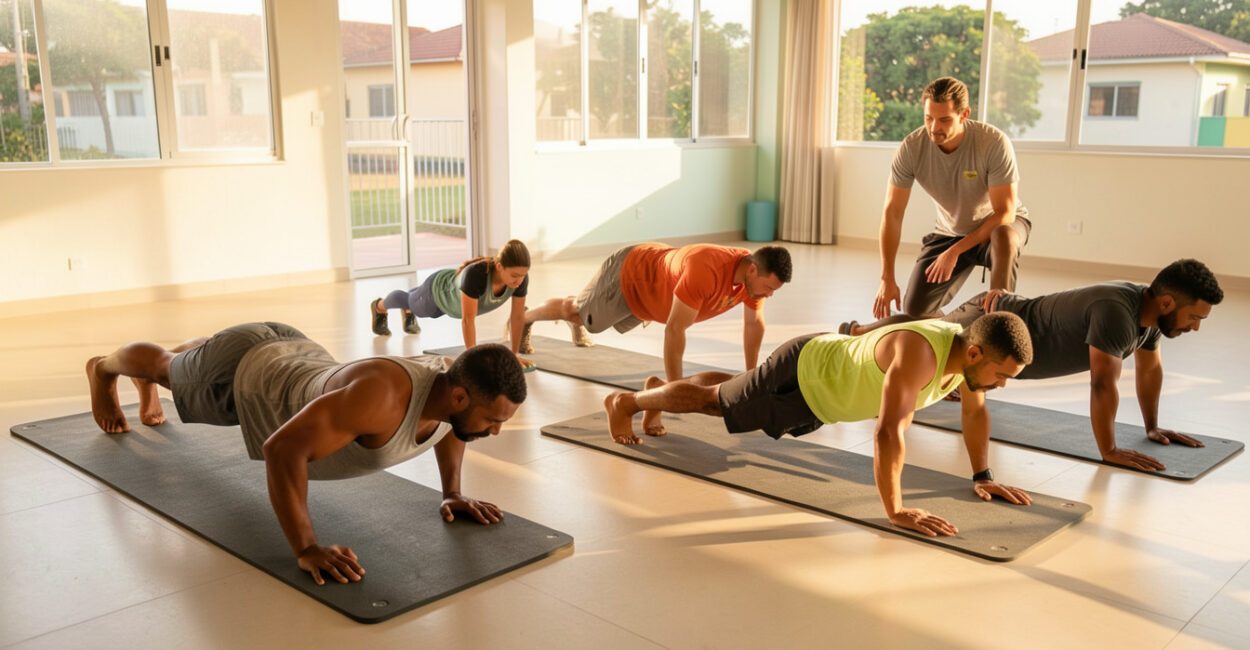
A candidate may run well and still be disqualified because the test administrators do not count one repetition. A physical fitness test for a civil service exam is a practical assessment that checks whether a candidate meets the physical requirements for a specific position. Events, qualifying standards, and rules vary by exam notice, so preparation starts with reading the criteria—not following a generic workout plan.
Physical fitness tests are common in hiring processes for public safety and other positions that require specific physical abilities. Training ahead of time helps, but your plan should account for the required movements, your current fitness level, and the time available before the assessment.

What is a civil service fitness test, and how does it work?
A physical fitness test is a selection stage that uses exercises and objective criteria to determine whether a candidate meets the physical requirements for a position. In simple terms, the exam administrators conduct practical tests and check whether each candidate meets the standards in the exam notice, which may specify disqualification for insufficient performance. There is no single format. One exam may include running and push-ups; another may include pull-ups, sit-ups, swimming, or a different combination. The order of events, time limits, how repetitions are counted, and the conditions for a retest can also vary.
The exam notice and official announcements from the testing organization are the authoritative sources for what will be tested. For exams administered by Cebraspe, for example, check the exam page and documents published for that specific cycle; older guidance for the same career does not replace the current rules.
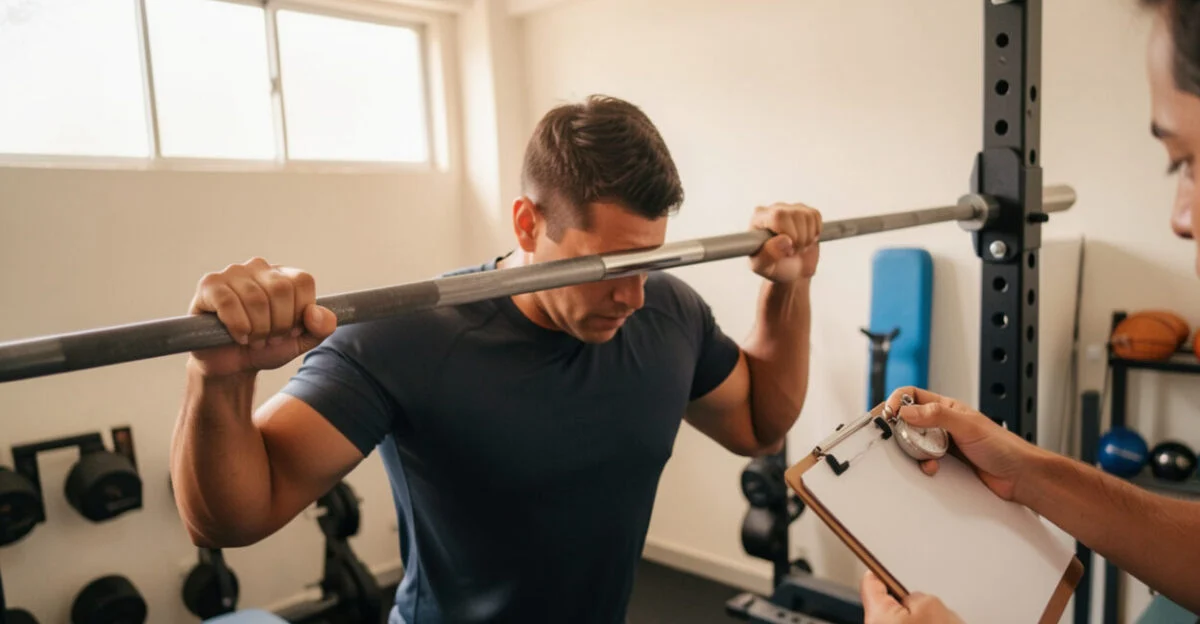
What exercises and criteria might be included in the test?
Tests may assess cardiovascular endurance, strength, muscular endurance, agility, or a specific skill, but the selection depends on the position and the exam notice. The table below summarizes common events without suggesting that any single exam will include them all.
Possible event What to check in the exam notice Running Distance, time limit, course, and starting procedure. Pull-ups Execution requirements, starting position, how repetitions are counted, and whether standards differ by sex. Push-ups Range of motion, body alignment, and what counts as a valid repetition. Sit-ups Position, time limit, and execution standards. Swimming Distance, permitted stroke, start, and completion rules.
The minimum qualifying standard is only part of the rules. The exam notice may also specify how many attempts are allowed, whether there is a break between events, and how the administrators record an invalid attempt. An incomplete repetition may not count, even if the candidate made a strong effort.
The standard that counts is the movement described in the exam notice, judged according to the testing administrators’ criteria.
During preparation, practice the technique according to the published standard. If the document does not clearly explain a situation, look for amendments, announcements, and official responses from the organizers rather than making assumptions.
How do you find the requirements and appeal rules in the exam notice?

Search the exam notice for terms such as “physical fitness assessment,” “physical fitness test,” “eliminatory,” and “minimum qualifying standards.” Read the appendices and specific test announcements as well: details such as clothing, check-in times, required documents, and event order may appear outside the main section. Make a checklist for each exercise, including the required standard, how it is assessed, the number of attempts allowed, and the consequence of not meeting the requirement. Also note the deadline and process for challenging a result or requesting a review, if the exam notice provides for one. An administrative appeal is no substitute for training and must follow the published rules and deadlines.
If the exam is administered by an organization such as Cebraspe, check the official Cebraspe exam portal for documents related to the relevant cycle. To coordinate physical training with your other study subjects, a study plan for a limited number of available hours may help.
Tip
Turn every rule into something you can observe—for example, full range of motion, a correct starting position, or finishing within the time limit. That way, your workouts measure what will be assessed, not just how hard you feel you are working.
How do you prepare for a physical fitness test, step by step?
Start as soon as you decide to apply for a position that includes a physical assessment—even before the exam notice is published, if the requirement is already known. How far in advance should you start? Ideally, several months will give you time to assess your fitness and make progress gradually; the right timeline depends on your starting condition, the events, and professional guidance. If you start close to the test date, avoid trying to make up for lost time with intense workouts.
- Confirm the events. Use the current exam notice or, before it is published, recent official documents for the career as a temporary reference.
- Assess your starting point. A fitness professional can help evaluate your conditioning, technique, and limitations before setting training loads.
- Practice the required movements. Gradually reproduce the execution rules and relevant conditions for each event.
- Track your progress. Record distance, time, valid repetitions, and perceived effort to adjust your plan.
- Review the rules before the test. Check for amendments, the test announcement, required documents, and instructions from the administrators.
A common scenario is reaching the required number of push-ups during training, only to find that the administrators require a greater range of motion or do not allow pauses between repetitions. In that case, your physical ability may be close to the qualifying standard, but your execution does not yet meet the assessment criteria. Practicing the rules beforehand helps prevent this gap.
Read also: Psychological Assessments for Civil Service Exams: What to Expect
Physical training should take your health into account and progress at an individual pace. The Federal Council of Physical Education (CONFEF), Brazil’s professional council for physical education, is an institutional resource on the profession and the field; training plans should be based on appropriate assessment and supervision.
How do you adapt training to your fitness level and the test events?
Adjust your training load to your current fitness level: beginners need to build a base before increasing volume or intensity, while experienced athletes may need to refine their technique and focus on test-specific skills. Persistent pain, unexpected shortness of breath, or a significant drop in performance are reasons to stop the session and seek medical guidance.
Read also: Study Time for Civil Service Exams: A Complete Guide to Managing and Improving Your Preparation
Running, strength, and technique may require different types of training. Schedule sessions so your body has time to recover, and avoid repeating intense efforts without enough rest. A fitness professional can help structure your progression and determine when to increase your training load.
Standards published for a previous exam are only an initial reference, not a guarantee that they will be repeated. Requirements may vary by position, exam notice, and groups specified in the selection process. There is also a difference between what a candidate can do and what the testing administrators consider a valid execution.
What are women’s, military, and Federal Police fitness tests like?
Women’s physical fitness tests follow the exercises and criteria specified for female candidates in the relevant exam notice; there is no universal women’s test. Some civil service exams set different qualifying standards by sex, while others specify criteria for each exercise. The official table for the selection process determines which test applies.
What is a military physical fitness test?
A military physical fitness test is an assessment required for selection processes or routine evaluations at military institutions, with criteria set by the branch, program, or position. Events and standards may differ among the Armed Forces, state military police forces, and individual selection processes; always check the document issued by the responsible institution.
Does the Federal Police require a physical fitness test?
The Federal Police may include a physical fitness assessment in civil service exams for certain positions, depending on the current exam notice. Do not assume the requirements, events, or qualifying standards based on previous selection processes. Check the Federal Police’s official exam page and the notice for the position you want.
Which Federal Police positions do not require a physical fitness test?
It is not safe to name a position as exempt without checking the current exam notice. The requirement depends on the position and the rules for that selection process, so check the physical fitness assessment section of the official document before concluding that a position does or does not require the test.
What should you do during the week and on the day of the assessment?
During the week of the test, reduce your training load and stick to your usual sleep and eating routines. Avoid trying new supplements, unfamiliar meals, or exhausting last-minute workouts. A hard session close to test day can leave you fatigued when your performance is measured.
On test day, arrive early, bring the required documents and equipment, and follow the staff’s instructions. Warm up as directed for the events without turning it into another workout. If you experience sharp pain, feel unwell, or have a condition that interferes with your performance, prioritize your health and follow medical advice and the exam notice.
- Identification accepted by the testing organization.
- Test announcement and any supporting documents required by the exam notice.
- Clothing and footwear permitted for the events.
- Time and address confirmed in the test announcement.
- Your usual food and hydration routine.
- Instructions on warm-ups, attempts, and event order.
What mistakes can hurt your performance?
Training without a gradual progression is a common mistake, because trying to reach the qualifying standard too quickly can lead to accumulated fatigue or injuries. To prevent this, increase your training load gradually, allow time for recovery, and adapt your plan to your fitness level instead of copying another candidate’s routine. Ignoring the required technique can also hurt your performance. Running at the wrong pace can use up your energy too soon; a repetition that does not meet the required range of motion may be disallowed. Training for the exercise without practicing its criteria leaves a gap between your workout performance and the assessment.
Another risk is relying on videos, personal accounts, or tables from old exams as if they were current rules. Use those materials only to understand the types of events; the current exam notice and official announcements govern what to train for and how the assessment will work.
Question Short answer What determines the events? The exam notice for the position and official announcements from the testing organization. How should I train? Use gradual progression, practice the required technique, and allow time to recover. When should I start? As early as possible, ideally several months ahead and with a professional assessment. What counts on test day? The qualifying standards, criteria, and instructions for the current selection process.
Start by finding the latest exam notice for the position and recording the standards and execution rules for each event. Then compare those requirements with your current fitness level and create a progressive plan, with appropriate supervision when needed.
Frequently Asked Questions
Can I use the results of a previous exam as a training goal?
Yes, as a temporary reference, provided you confirm that it was for the same position and institution. The new exam notice may change the events, standards, or execution requirements, so review your goal once the current rules are published.
Should I train every day to get in shape faster?
Not necessarily. Training frequency depends on the type of workout, your experience, and your recovery; doing intense sessions back to back can hinder progress. An individualized plan is safer than adding training days on your own.
What should I do if a repetition is ruled invalid?
During preparation, ask someone to watch your technique against the standard in the exam notice and help you make adjustments. During the test, follow the administrators’ instructions. If you have grounds to challenge the result, use the process and meet the deadline specified in the official documents.
Do I need to submit a medical certificate?
It depends on the exam notice. Check whether a certificate is required, which format is accepted, and when it must be submitted; do not assume that the rules from another selection process still apply.
How can I balance studying for the written exam with physical training?
Set realistic times for each and schedule workouts without compromising sleep and recovery. A study plan that starts from scratch can help you organize your routine while you work on your physical preparation.
Artigos Relacionados
 Subject-by-Subject Organization in a 3-Month Study Schedule: How to Prioritize Tested Subjects, Allocate Hours, and Build Targeted Review Cycles for Brazilian Civil Service Exams
 Mental Health for Civil Service Exam Candidates: Essential Strategies for Staying Well
 Study Time for Civil Service Exams: A Complete Guide to Managing and Improving Your Preparation
 How to Effectively Prepare Students With ADHD for Exams
 Realistic Practice Tests That Mirror Exams and Boost Scores
 Administrative Law: The Core Topics Behind Many Exam Questions
