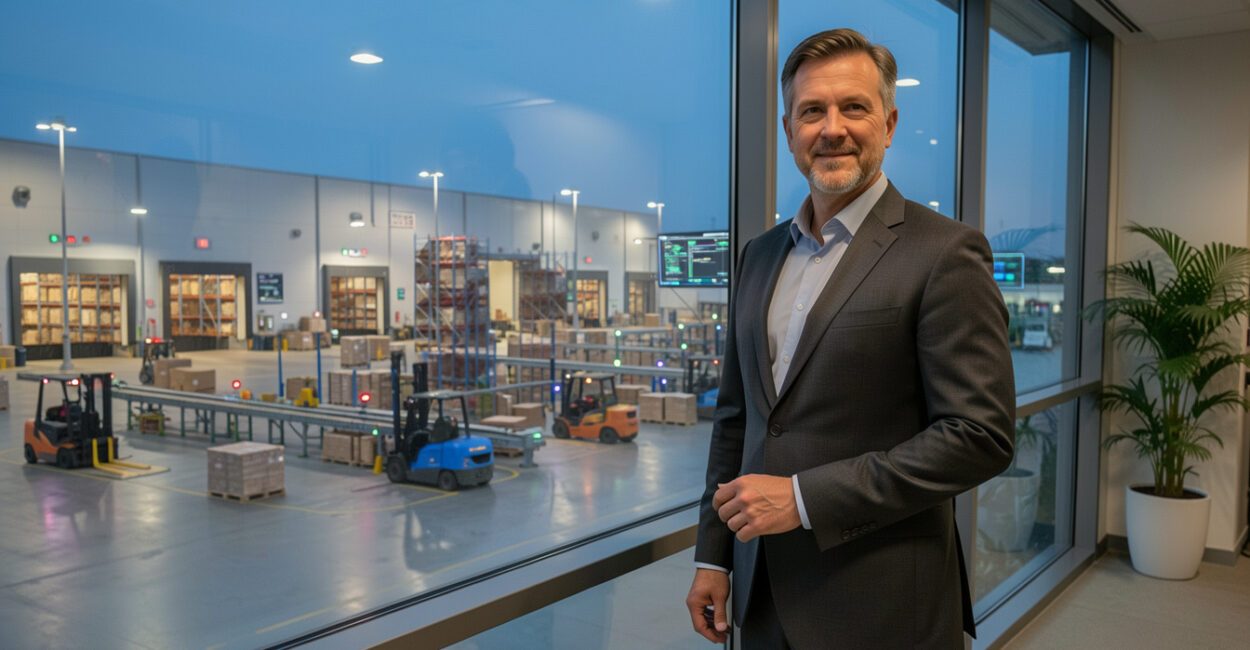
When an operation grinds to a halt, the problem is rarely just inventory or transportation. More often, the breakdown is in the coordination of purchasing, warehousing, distribution, and information—the exact area where a Logistics Director can make a real difference.

This role exists to turn complexity into predictable flow, reduce waste, and prevent the company from losing money to delays, stockouts, or poorly aligned decisions.
In practice, it’s simple: when logistics leadership can’t see the entire supply chain, the company pays the price in expensive freight, inconsistent service, and unhappy customers. This article explains what the role involves, which skills really matter, how logistics connects with supply chain, ERP, WMS, and TMS, and how to assess performance without relying on vanity metrics.
What You Need to Know
- A logistics director coordinates the flow of materials, orders, and information to ensure competitive costs and reliable delivery.
- The job goes beyond transportation: it includes inventory, warehousing, purchasing, technology, and service metrics.
- The role requires data literacy, supplier negotiation, and decisions that balance speed, service levels, and margins.
- Companies with mature logistics operations tend to track OTIF, inventory turnover, accuracy, and logistics cost per order.
- The difference between an efficient operation and a chaotic one often comes down to how well planning is integrated with daily execution.
Logistics Directors and Supply Chain Management in Practice
A Logistics Director is the executive responsible for planning, organizing, and managing the movement of raw materials, finished goods, and information throughout the supply chain. Put simply, they make sure the right product gets to the right place at the right time, at the lowest viable cost, without compromising service levels.
The role isn’t limited to the warehouse or fleet. Logistics directors work with purchasing, production, sales, customer service, and finance because any isolated decision can trigger a domino effect.
For example, a poorly planned promotion can cause demand to surge. If inventory can’t keep up, a stockout can happen before the sale even begins.
What separates low-cost logistics from efficient logistics isn’t spending less on transportation. It’s reducing the operation’s total cost without undermining service levels.
Where Logistics Leaders Make a Real Difference
Day to day, the director makes decisions about the distribution network, safety stock, warehousing, logistics providers, and service policies. They also set priorities around delivery time, cost, and coverage, because no operation can excel in every area at once.
Anyone who works in this field knows that theory breaks down when demand fluctuates too much or a company grows without processes in place. In those situations, the manager needs to reorganize routes, review replenishment parameters, and adjust the logistics network before the problem becomes a recurring one.
Key Terms in the Field
- Supply chain: an integrated view of the supply chain.
- OTIF: a metric for on-time, in-full deliveries.
- WMS: warehouse management system.
- TMS: transportation management system.
- ERP: a platform that integrates company processes and data.
- Logistics provider: a third-party partner for warehousing and distribution.
- Lead time: the total time from order placement to delivery.

Key Responsibilities That Define the Role
There’s no single model for the job, but certain responsibilities appear in most manufacturing, retail, and distribution companies. What varies is the relative importance of each area.
In e-commerce, the focus is on delivery times and reach; in manufacturing, inventory, supply, and production tend to take priority.
Planning, Inventory, and Distribution
The heart of the role is balancing product availability with working capital tied up in inventory. Too much inventory drives up costs and masks problems; too little hurts sales and increases emergency orders. A good manager sees this as one system, not a set of separate pieces.
Transportation and Logistics Network Management
Freight isn’t just about the rate sheet. A seasoned director evaluates vehicle utilization, delivery windows, frequency, damage, and carrier performance. In larger operations, the choice between an owned fleet, owner-operators, and third-party carriers can completely change the cost structure.
Working with Sales and Operations
When sales promises delivery dates without checking capacity, logistics ends up putting out fires. That’s why one of the most important parts of the job is working with sales and production to make commitments more predictable. Without that alignment, the company may sell more but deliver less reliably and at lower margins.
According to data from IBGE, Brazil’s national statistics agency, economic activity puts uneven pressure on supply chains across sectors. This underscores the need to plan based on demand patterns rather than generic rules. In real-world operations, these differences affect inventory, shipping windows, and capacity planning.

Technical and Interpersonal Skills That Make a Difference

Being good at operations isn’t enough. The role calls for the ability to interpret metrics, understand processes, and persuade different teams to move in the same direction. An executive who knows only transportation loses perspective; one who knows only spreadsheets loses touch with execution.
| Skill | What It Helps Solve | Common Pitfall When It’s Missing |
|---|---|---|
| Data analysis | Identifies bottlenecks and trends | Decisions based on gut feel |
| Negotiation | Improves contracts and SLAs | High freight costs and inconsistent service |
| Systems thinking | Sees the ripple effects of decisions | Optimizing one area at another’s expense |
| Leadership | Aligns the team and priorities | A reactive, uncoordinated operation |
| Risk management | Prevents stockouts and delays | Scrambling for a plan under pressure |
What the Technical Side Requires
It’s important to understand tools like ERP, WMS, and TMS, but also know how to interpret ABC analysis, inventory turnover, dock utilization, picking productivity, and cost per ton or per order. These numbers aren’t dashboard decoration. They show where the operation is losing money.
What Leadership Requires
Beyond technical expertise, the role calls for the confidence to say “no” when the company wants speed without the infrastructure to support it. Experts disagree about how deeply a director should get involved in day-to-day operations, but experience shows that the best leaders don’t lose touch with the daily routine. They understand the details well enough to hold people accountable with precision.
A mature logistics operation doesn’t depend on heroics; it depends on process, metrics, and disciplined execution.

Metrics That Show Whether an Operation Is Healthy
Measuring the right things matters more than measuring everything. Some companies fill management dashboards with charts and still don’t know whether their operation is profitable. A director needs to choose a few metrics with a direct impact on service, cost, and predictability.
The KPIs That Really Matter
- OTIF: measures on-time, in-full deliveries.
- Fill rate: shows how much demand was met without a stockout.
- Inventory turnover: indicates how efficiently working capital is being used.
- Inventory accuracy: shows whether the system balance matches the physical count.
- Logistics cost per order: helps reveal true profitability.
- Lead time: shows the operation’s total turnaround time.
Where Many Companies Get It Wrong
Cheaper freight can hurt delivery performance and increase returns. Low inventory may look efficient, but it can undermine service during demand spikes. A single KPI rarely tells the whole story; the value lies in looking at them together.
Data and historical series from Ipea, Brazil’s Institute for Applied Economic Research, help put the effects of infrastructure, productivity, and costs on the country’s logistics performance into context. This matters because internal operations don’t exist in a vacuum: poor roads, port lead times, and distance from markets directly affect strategy.

How Technology Has Reshaped the Role
Today, a director who can’t work with data is operating in the dark. Technology is now central to logistics decision-making, not just a secondary support tool. Advances in integrated systems make it possible to track orders, inventory, transportation, and performance in near real time.
Tools That Transform Management
ERP organizes the operational foundation; WMS improves warehouse control; TMS supports freight planning and tracking. In more advanced operations, dashboards and business intelligence shorten the time between identifying a problem and taking corrective action.
Automation Without the Hype
Automation won’t fix a bad process. If the data is inconsistent, the system just makes the error happen faster. I’ve seen companies invest heavily in technology and still struggle with delays because no one reviewed their inventory, picking, and verification rules.
A useful resource for understanding global trends in trade, flows, and supply chain performance is UNCTAD, which publishes analysis on transportation, connectivity, and international trade. This data helps show how local logistics responds to external shocks, such as currency fluctuations and supply bottlenecks.
How to Become a Stronger Logistics Director
A career doesn’t advance just because you’ve been with a company for a long time. It grows when you learn to improve processes, reduce costs without sacrificing quality, and lead teams under pressure. At more structured companies, promotions often follow clear results in warehousing, distribution, planning, or supply chain management.
Steps That Can Accelerate Your Growth
- Master metrics, not just operations.
- Understand the financial implications of inventory and freight.
- Learn to negotiate with carriers, suppliers, and internal teams.
- Study demand planning, S&OP, and risk management.
- Work with data before weighing in on a solution.
A Practical Example of Progress
A midsize manufacturer struggled with stockouts of fast-moving items and excess inventory of slow-moving ones. The logistics leadership team reorganized the ABC classification, adjusted reorder points, and renegotiated delivery windows with carriers. Within a few months, the operation reduced emergency orders, improved OTIF, and freed up tied-up capital without increasing total inventory.
These kinds of gains don’t come from a magic formula. They come from discipline, root-cause analysis, and the ability to implement changes without disrupting operations along the way.
When This Role Falls Short—and How to Avoid Costly Mistakes
Not every logistics problem can be solved with more oversight. Sometimes the company has a structural problem: a poorly designed network, a culture of urgency, weak forecasting, or teams operating in silos. When that happens, the director becomes a permanent crisis manager.
Common Mistakes
- Making decisions based only on freight cost.
- Ignoring the quality of inventory data.
- Treating planning and execution as rival functions.
- Promising delivery dates without validating operational capacity.
- Measuring productivity without considering service and customer satisfaction.
Where General Rules Fall Short
This model works well in high-volume, repeatable operations, but it can fail when the supply chain is highly volatile, the product mix changes constantly, or products require special handling. In these situations, inventory, transportation, and service-level strategies need to be tailored to each case.
The biggest threat to logistics isn’t an isolated delay; it’s treating improvisation as a normal management practice.
What to Do Now to Put This Knowledge to Work
If your goal is to assess or strengthen the function, the next step isn’t memorizing concepts. It’s looking at the operation and asking three specific questions: Where is money tied up? Where is service breaking down? Which decisions rely on bad data? This sequence reveals more than a polished report ever could.
If you want to dig deeper, study supply chain metrics, network design, inventory management, and integration across ERP, WMS, and TMS. Real progress comes when leaders connect these pieces and make decisions based on root causes rather than urgency.
Frequently Asked Questions
What does a logistics director do day to day?
They coordinate inventory, transportation, warehousing, service levels, and integration with other teams. In practice, they monitor metrics, set priorities, and address bottlenecks before they lead to greater losses.
What’s the difference between a logistics director and a logistics manager?
A manager typically focuses more on execution and day-to-day operations. A director works at a more strategic level, setting the structure, budget, goals, and alignment with supply chain and business teams.
Which KPIs are most commonly used in logistics?
The most common are OTIF, fill rate, inventory turnover, inventory accuracy, lead time, and logistics cost per order. Together, they help measure service, efficiency, and financial impact.
Do you need to know technology to hold this role?
Yes. You don’t need to know how to code, but it’s essential to understand ERP, WMS, TMS, and data analysis tools. Without that knowledge, it’s harder to assess operations quickly and accurately.
Does this role exist at small companies?
It does, though not always under that formal title. At smaller companies, the responsibilities may fall to a manager, coordinator, or operations leader focused on distribution and supply.
What are the biggest risks in this role?
The biggest risks are stockouts, excess inventory, poorly negotiated freight contracts, and a lack of alignment between teams. When operations grow without processes, the director ends up addressing symptoms instead of causes.
{
“@context”: “https://schema.org”,
“@type”: “FAQPage”,
“mainEntity”: [
{
“@type”: “Question”,
“name”: “What does a logistics director do day to day?”,
“acceptedAnswer”: {
“@type”: “Answer”,
“text”: “They coordinate inventory, transportation, warehousing, service levels, and integration with other teams. In practice, they monitor metrics, set priorities, and address bottlenecks before they lead to greater losses.”
}
},
{
“@type”: “Question”,
“name”: “What’s the difference between a logistics director and a logistics manager?”,
“acceptedAnswer”: {
“@type”: “Answer”,
“text”: “A manager typically focuses more on execution and day-to-day operations. A director works at a more strategic level, setting the structure, budget, goals, and alignment with supply chain and business teams.”
}
},
{
“@type”: “Question”,
“name”: “Which KPIs are most commonly used in logistics?”,
“acceptedAnswer”: {
“@type”: “Answer”,
“text”: “The most common are OTIF, fill rate, inventory turnover, inventory accuracy, lead time, and logistics cost per order. Together, they help measure service, efficiency, and financial impact.”
}
},
{
“@type”: “Question”,
“name”: “Do you need to know technology to hold this role?”,
“acceptedAnswer”: {
“@type”: “Answer”,
“text”: “Yes. You don’t need to know how to code, but it’s essential to understand ERP, WMS, TMS, and data analysis tools. Without that knowledge, it’s harder to assess operations quickly and accurately.”
}
},
{
“@type”: “Question”,
“name”: “Does this role exist at small companies?”,
“acceptedAnswer”: {
“@type”: “Answer”,
“text”: “It does, though not always under that formal title. At smaller companies, the responsibilities may fall to a manager, coordinator, or operations leader focused on distribution and supply.”
}
},
{
“@type”: “Question”,
“name”: “What are the biggest risks in this role?”,
“acceptedAnswer”: {
“@type”: “Answer”,
“text”: “The biggest risks are stockouts, excess inventory, poorly negotiated freight contracts, and a lack of alignment between teams. When operations grow without processes, the director ends up addressing symptoms instead of causes.”
}
}
]
}