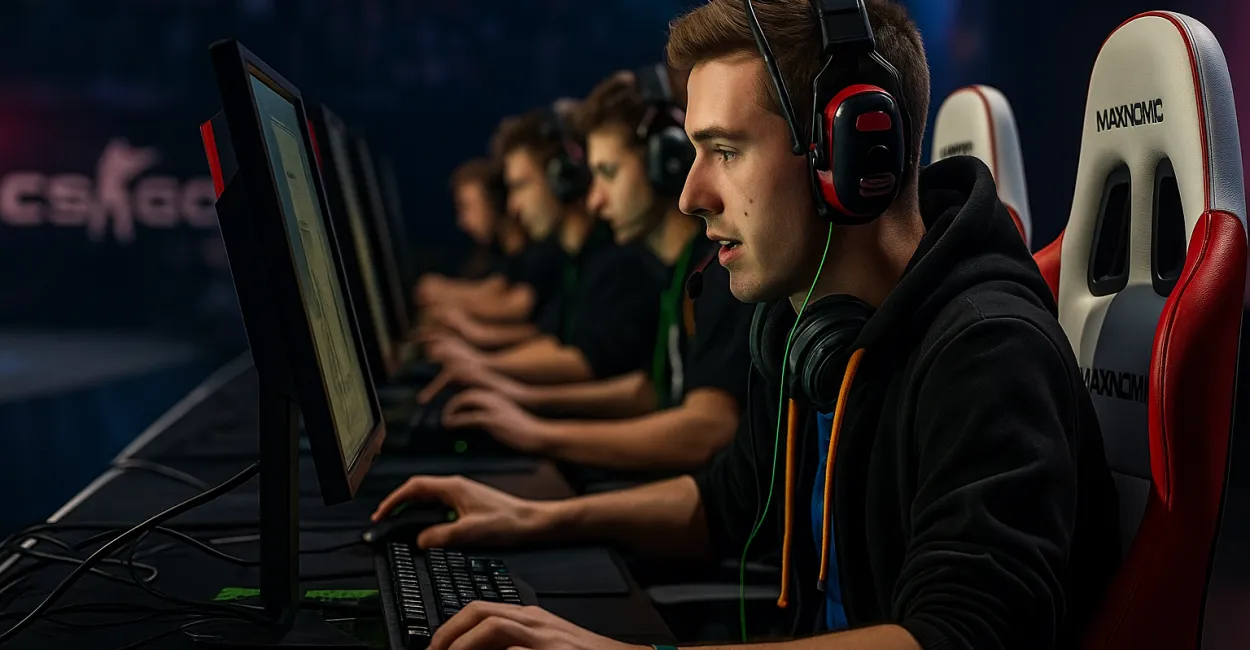
Being a professional gamer today is about much more than raw talent and endless hours in front of a screen. It’s a career that combines performance, discipline, situational awareness, personal branding, and competitive consistency.

For anyone following the industry, that’s become even clearer as tournaments, streaming, and organized teams have expanded across the gaming ecosystem.
In practice, anyone who wants to make a living from gaming has to treat it like a job: train with a plan, maintain a healthy routine, understand contracts, build an audience, and track results. This article explains what defines a professional gamer, the paths available, what the market expects, and where people often stumble when they try to turn skill into income.
What You Need to Know
- A professional gamer earns money from their performance in video games through competition, streaming, coaching, or content creation.
- Quick reflexes help, but a sustainable career depends on routine, emotional consistency, communication, and a digital presence.
- The esports market has several moving parts: teams, tournaments, sponsors, audiences, and distribution platforms.
- Not every competitive talent turns into a career. Without clear positioning and discipline, growth can stall quickly.
- A viable plan usually combines technical training, personal branding, and a revenue strategy.
How Professional Gamers Turn Skill Into a Career
Technically speaking, a professional gamer is a competitor who generates economic value through measurable performance in video games. That value can come from prize money, a team salary, sponsorships, coaching fees, or channel revenue. Put simply, they don’t play just for fun—they play to deliver results. This model gained traction with the growth of esports, Twitch, YouTube, and leagues organized by publishers such as Riot Games and Valve. What many people overlook is that “talent” alone rarely sustains a career. What keeps it going is a combination of mechanics, tactical awareness, routine, and the ability to stay relevant beyond the match.
What separates a good player from a consistent esports athlete isn’t just quick reflexes. It’s smart repetition, learning from mistakes, and adapting under pressure.
What Changes When Gaming Becomes a Job
The turning point comes when the schedule stops being random. Training gets set time blocks, weekly goals, and VOD reviews (watching recordings of your own gameplay).
On organized teams, players also learn to work with coaches, analysts, and a scrim schedule. A scrim is a practice match against another team.
In practice, this changes everything: decisions become more deliberate, performance becomes data, and the mental game takes on real importance. People who don’t accept that reality often get frustrated quickly, because a professional career demands consistency, not the occasional peak performance.
The Main Ways to Make Money in Gaming
Not every professional in the industry makes a living the same way. The market offers several paths, and the right choice depends on your competitive strengths, communication skills, and comfort with being in the public eye.
For some, the best route is competing in tournaments; for others, it’s growing as a content creator or working as a coach.
| Path | How It Generates Revenue | Best Suited For |
|---|---|---|
| Team player | Salary, prize money, and bonuses | Competitive, disciplined, and goal-oriented players |
| Streamer | Subscriptions, donations, ads, and sponsorships | Strong communicators with a consistent presence |
| Coach/analyst | Coaching, consulting, and lessons | Tactical insight and teaching skills |
| Content creator | Advertising, affiliate links, and partnerships | Consistent publishing and strong storytelling |
The most common mistake is trying to do everything at once without a clear focus. People who compete, stream, and edit videos all at the same time often spread themselves too thin.
Your choice doesn’t have to be permanent, but it needs to be clear enough to build momentum.
Where the Market Pays the Most
Today, earnings tend to rise when strong performance is paired with reach. A player who wins and also draws an audience is more valuable to brands and organizations. That’s why sponsors look beyond rankings to reach, engagement, and public image.
According to Newzoo, the global esports market continues to attract investment in media, brands, and competitive infrastructure. That doesn’t mean easy money; it means more professional competition for the attention of valuable audiences.
Training, Routine, and Mental Health: The Work Behind the Results

Anyone who works in this field knows the behind-the-scenes work matters more than it might seem. Eight hours of unfocused training often accomplishes less than four well-organized hours spent reviewing mistakes and improving decision-making. And when your body or mind falters, your mechanics suffer too.
A strong competitive career isn’t built on marathon ranked sessions; it’s built on a predictable routine, planned rest, and objective feedback.
What a Serious Routine Includes
- Dedicated technical training for mechanics, aim, rotations, or combos.
- Reviewing recorded matches to spot recurring mistakes.
- Light or moderate exercise to support focus and posture.
- Breaks to prevent loss of focus and mental fatigue.
- Managing sleep, nutrition, and screen time.
This may sound basic, but many amateur teams struggle with it because everyone wants to climb the ranks quickly without building a foundation. In the short term, talent may make up for it. In the long run, performance falls off.
Read also: Sociologist: A Complete Guide to the Profession and Building Your Career
There’s an important limit to keep in mind: even a perfect routine won’t save a player who lacks game sense or adaptability. Discipline raises your performance ceiling, but it can’t replace competitive intelligence. That’s why more mature teams invest in analysis and coaching, not just grinding.
Personal Branding, Audience, and Digital Presence
Being good at a game helps, but it isn’t enough in 2025. Platforms like Twitch and YouTube have turned visibility into an economic asset, changing how gaming careers work. Today, athletes and creators need to think about how they present themselves, how they communicate, and how they stay relevant outside the game.
In practice, that means managing your name, visual identity, tone of voice, and publishing schedule. Audiences can tell when a persona feels hollow, when someone makes too many promises, or when there’s no clear positioning. And they can tell quickly.
What Builds Authority Online
- Publishing regularly, even if you start out posting less often.
- Being clear about your specialty: competition, entertainment, analysis, or teaching.
- Having enough experience to talk naturally about your game.
- Maintaining a consistent presence across livestreams, social media, and in-person events.
For example, a Counter-Strike 2 player who posts training clips, explains map decisions, and discusses round mistakes is likely to build more trust than someone who only posts wins. Audiences see expertise when content shows the process, not just the results.
If you want to understand the scale of this trend, it’s worth following data from the IBGE’s National Household Sample Survey, which helps show how much of Brazil’s population is online and how access to technology is growing in the country. Reports from UNESCO on media, young people, and digital skills are also useful, because careers in this field depend on a connected environment.
Equipment, Platforms, and the Basics You Need to Compete
There’s no magic fix for bad hardware, but it also doesn’t make sense to think peripherals can solve everything. The right equipment removes barriers; it doesn’t create skill out of nowhere. The goal is to build a setup that suits the game and your role.
Practical Priorities
- A monitor with a refresh rate suited to competitive gaming.
- A mouse, keyboard, or controller with consistent responsiveness.
- A stable internet connection, preferably with low latency.
- A headset or audio setup that helps you pick up sound cues.
- A training space with minimal noise and decent ergonomics.
Your setup also includes software, platforms, and a schedule. Players who grind ranked matches without reviewing their stats miss opportunities to correct patterns. Those who use Discord, OBS Studio, editing tools, and stat-tracking software can turn gameplay into measurable improvement.
The Role of Tournaments, Teams, and Organizations in Career Growth
The competitive circuit isn’t just a showcase; it’s a proving ground. Open tournaments, qualifiers, and regional championships show whether a player can perform consistently under pressure. Teams and organizations come into the picture once a player proves they can perform within a group structure.
This is where many people get frustrated: the spot doesn’t automatically go to the most individually skilled player. It goes to the person who’s the best fit for the role, communication style, and team mentality. In esports, playing well without supporting the team’s game plan almost always comes at a cost.
What Organizations Really Evaluate
- The ability to follow calls and execute a strategy.
- Behavior after a loss and during a slump.
- Potential to connect with sponsors and audiences.
- Availability for schedules, travel, and external commitments.
This ties in with how events themselves are structured. Esports Charts tracks viewership for international competitions and shows how the scene revolves around tournaments, teams, and major broadcasts. That helps explain why some brands see competitive gaming as media, not just a game.
The Mistakes That Most Often Hold People Back
A short list of mistakes comes up again and again. The first is treating a career like a short-term bet. The second is relying on motivation, which fluctuates. The third is ignoring contracts, image rights, and financial management.
Another serious problem is confusing a brief moment in the spotlight with a lasting career. I’ve seen players shine during qualifiers, earn praise from everyone, and disappear the next month because they couldn’t maintain a routine, handle criticism, or adjust their role. That derails more careers than a lack of talent.
In esports, talent opens the door; consistency determines who stays in the room.
What Commonly Stalls Progress
- Training without a specific goal.
- Joining a team without agreeing on roles and expectations.
- Ignoring mental health until performance drops.
- Failing to separate personal finances from career income.
- Posting without a strategy or a distinct identity.
If there’s one practical rule to keep in mind, it’s this: a professional gaming career needs a plan, not luck. People who structure their work see gaming as a profession; those who don’t focus only on the next match.
Next Steps for Building a Strong Career
The best approach isn’t to try to do everything at once. Choose a path, focus on a specific game or role, build a training routine, and track your progress with concrete metrics. After that, your digital presence can amplify your work instead of being an afterthought.
If your goal is to enter this market, start by testing three things at once: performance, discipline, and positioning. After a few weeks, you’ll have a much better idea of where the bottleneck is. That diagnosis is what separates a passion from a career.
Frequently Asked Questions
What does it really mean to be a professional gamer?
It means turning performance in video games into recurring income. That can happen through competition, streaming, coaching, or content creation. The key difference from amateur play is having a routine, goals, and measurable results.
Do I need to be a prodigy to get started?
No. What matters most is consistency, the ability to learn, and the discipline to improve methodically. Talent can speed things up, but it can’t replace structure or resilience.
What’s the best way to make money from gaming?
It depends on your strengths. Strong competitors may do best on teams and in tournaments; good communicators can grow through livestreaming and content; people with tactical knowledge can earn money through analysis and lessons. The best path is the one that combines your skills with consistency.
Do I need expensive equipment?
Not when you’re starting out. What matters is having a stable setup with enough performance that it doesn’t limit your progress. Once the game demands more, you can upgrade your setup thoughtfully.
How can I tell if this career is worth pursuing?
Look for three signs: real improvement in performance, the ability to maintain a routine, and a positive response from audiences or the market. If those three things don’t show up over time, it may be time to adjust your plan or try another path.
Can I be a player and a streamer at the same time?
Yes, but it takes strong organization. Both roles compete for the same time and energy, so you need to be clear about your priorities. Without focus, one can get in the way of the other.
%%AGPTRH10%%