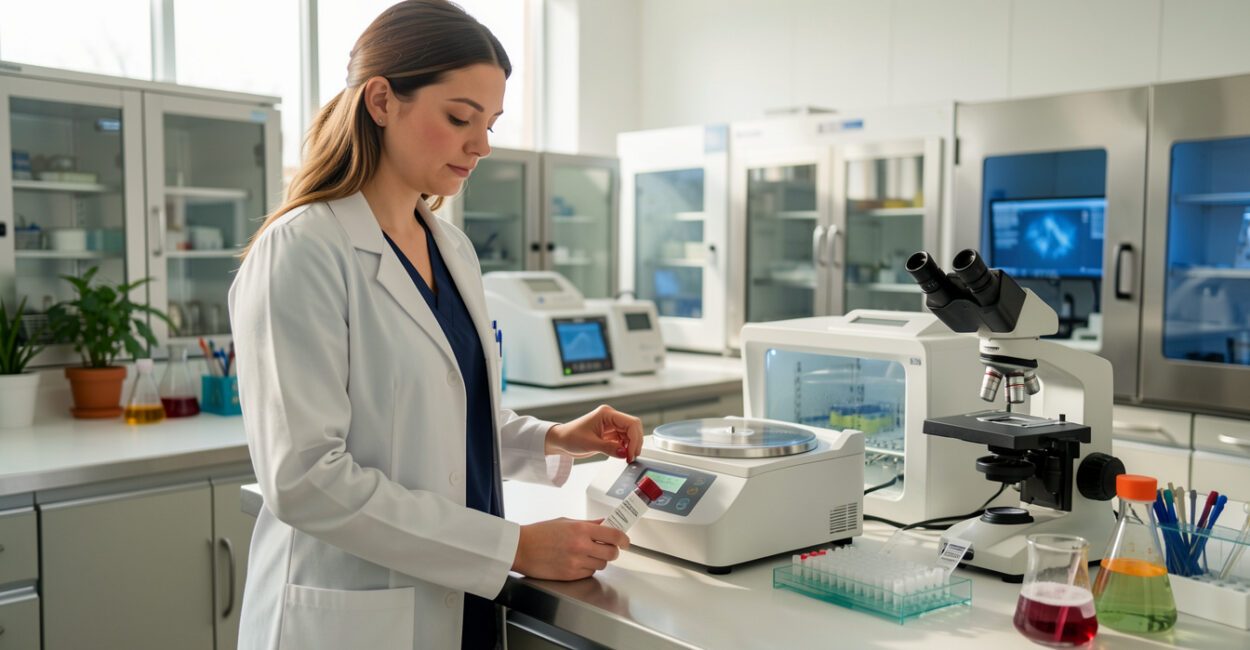
A test result can guide a clinical decision, provided the sample is processed and interpreted carefully. A biomedical scientist is a health professional with a degree in Biomedicine who works in laboratory testing, research, and other regulated fields.
Their role, workplace, and level of independence depend on their professional credentials and applicable regulations.

The profession includes laboratory work, diagnostics, technology development, and services in fields such as aesthetics. The degree provides a broad foundation, but each field has its own requirements. Understanding these differences can help you choose a program, plan internships, and set realistic expectations about employment and pay.
In addition to scientific knowledge, the day-to-day work requires careful attention to procedures and records. For example, mislabeling a sample can compromise a result even when the equipment works as expected.
Career Overview
- Education: Undergraduate degree in Biomedicine.
- Registration: Registration with the relevant regional council is required to perform regulated professional activities.
- Scope of practice: Depends on credentials and the rules for each field.
- Workplaces: Laboratories, hospitals, research centers, companies, and specialized services.
- Official resources: The Federal Council of Biomedicine and the e-MEC database of institutions and programs.
What Does a Biomedical Scientist Do?
A biomedical scientist is a health professional with an undergraduate degree in Biomedicine, prepared to work in regulated areas of diagnostics, research, and development. They may analyze biological samples, perform and validate procedures within their authorized scope, and help produce information that supports clinical and scientific decisions.
In a clinical laboratory, this may involve receiving and checking samples, performing tests, monitoring quality controls, and recording results according to the facility’s protocols. Releasing results and assuming technical responsibility are subject to professional and health regulations; a degree alone does not authorize someone to perform every activity in every field.
Biomedicine and Biology share subjects such as genetics and microbiology, but they have distinct curricula and professional fields. Biomedicine focuses on applications related to human health, diagnostics, and biological processes associated with disease; Biology covers organisms and ecosystems more broadly. Each profession’s scope of practice depends on its regulations.
Biomedical work turns laboratory procedures and scientific knowledge into reliable information for healthcare.
Check professional rules and credentials with the Federal Council of Biomedicine, which provides information about the profession and the council system.
What Is a Biomedicine Degree Like?
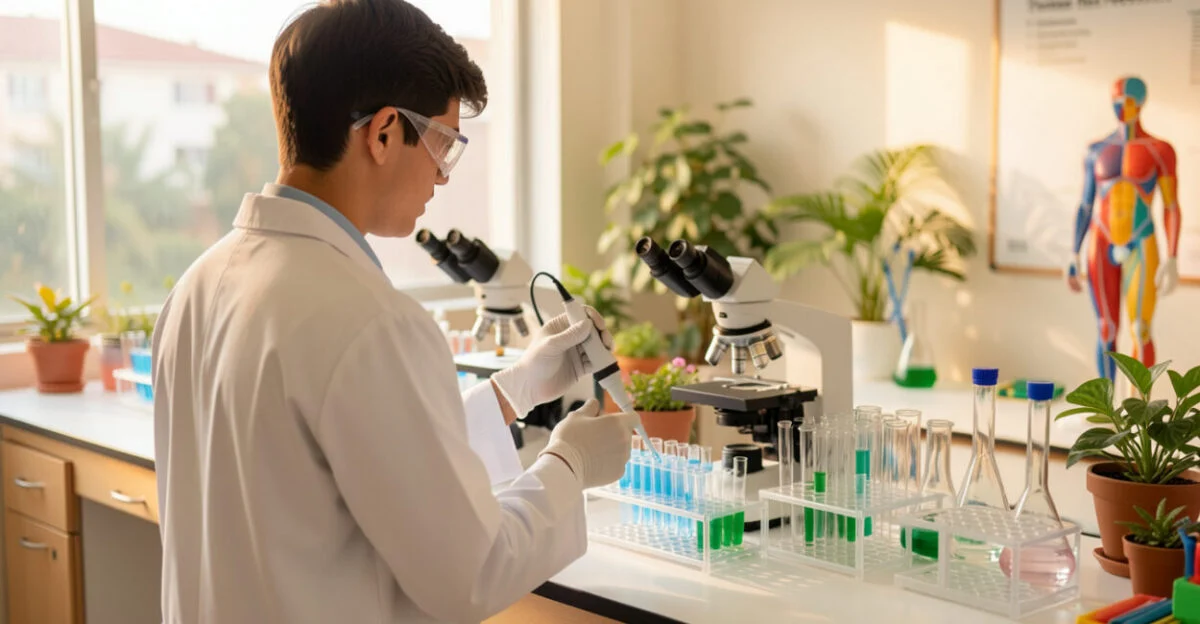
Biomedicine programs combine basic and applied courses such as anatomy, physiology, biochemistry, microbiology, immunology, genetics, and clinical laboratory testing. Program length and curriculum vary by institution. To find out how long a specific program takes, check its curriculum and the college’s official information.
Supervised internships give students hands-on experience with professional routines and help them explore their interests. In a lab, for example, training can cover everything from biosafety and materials preparation to quality control. A well-chosen internship also offers insight into the pace of the field and the qualifications employers commonly seek.
Online Biomedicine Programs and Choosing a School
Program formats and in-person requirements depend on education regulations and each program’s design. Since the degree includes laboratory training, anyone considering an online Biomedicine program should check how hands-on activities, internships, and facilities are arranged, and confirm the program’s status in the Ministry of Education’s e-MEC database.
Tuition varies by institution, region, format, and enrollment terms. Compare the total cost with the laboratory facilities, internship opportunities, and regulatory status. A lower price alone does not show whether a program offers the practical training you need.
Where Can Biomedical Scientists Work?

Career opportunities span healthcare, research, industry, and specialized fields. Specific duties vary based on credentials, employer experience requirements, and current regulations.
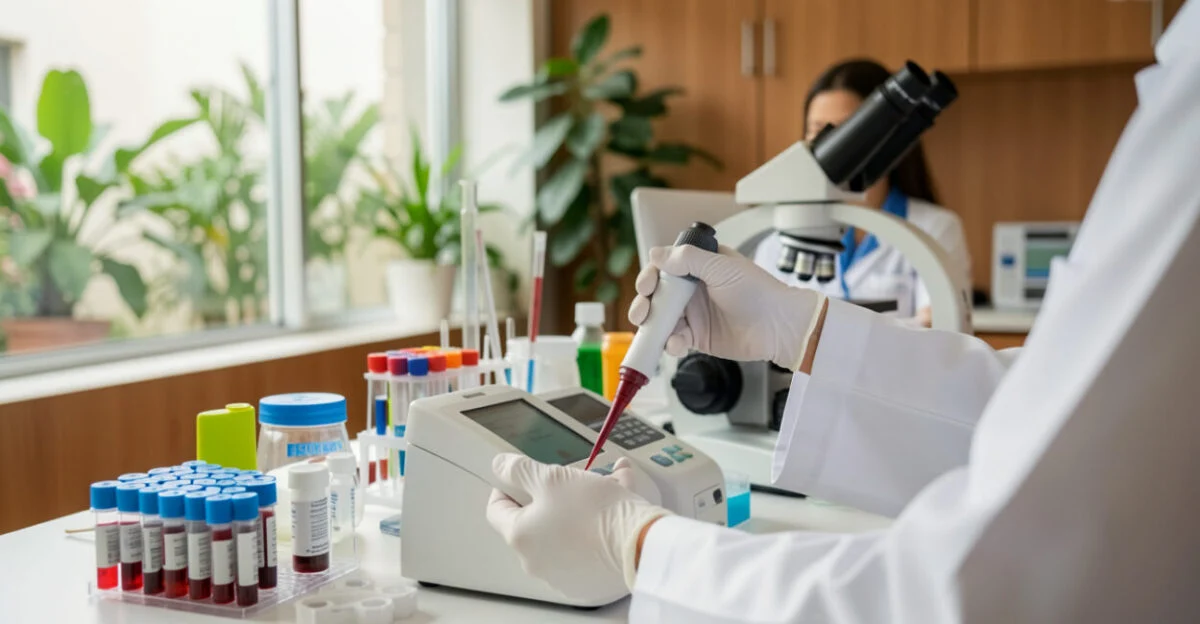
- Clinical laboratory testing: Tests in areas such as hematology, biochemistry, immunology, and microbiology. This is a common entry point, but requires credentials appropriate to the duties performed.
- Diagnostic imaging: Work in imaging services within the applicable professional scope, with relevant training and credentials.
- Research and teaching: Participation in projects, scientific publication, and teaching; academic positions may require graduate education or specific experience.
- Biotechnology and industry: Work in development, production, quality control, or process validation, depending on the company’s needs.
- Reproductive medicine and genetics: Work in specialized laboratories, which may require additional education and technical experience.
- Aesthetics: Practice is subject to the credentials and professional and health regulations applicable to the procedures.
There are also roles in public health surveillance, management, and services related to healthcare. In any of these settings, a field’s name alone does not define what a professional may do: you need to confirm the authorized scope and job requirements.

Credentials and Scope of Practice
Professional credentials confirm qualifications for a field of practice recognized under professional regulations. They may require coursework during the degree, an internship, and proof of specific qualifications; requirements vary by field and current regulations. Some jobs may require graduate education, which can also deepen your knowledge, but it is not a universal requirement for getting started.
A common mistake is assuming that a degree automatically qualifies you to work in any specialty. This misconception arises because degree programs introduce students to many fields, while professional practice may require additional qualifications. Before accepting a position, confirm that your credentials cover the duties and find out what registrations or documents are required.
The Federal Council of Biomedicine is a key resource for checking professional rules. Health surveillance authorities, employers, and service providers may impose additional requirements depending on the activity. What is permitted may depend on the specific procedure and changes to regulations, so a general description of a field is no substitute for checking official guidance.
Job Market, Salary, and Day-to-Day Work
There is no single salary for this profession. Pay varies by region, public or private sector, hours, experience, specialty, employer size, and job responsibilities. When comparing offers, consider work hours, benefits, registration requirements, and duties, as well as the advertised salary.
Without current salary data that can be compared across locations and job types, it’s safer to avoid broad averages. To assess the job market, review recent job postings and public-sector competitive exams. IBGE, Brazil’s national statistics agency, can help put regional differences in context, but its data does not replace profession-specific pay information.
Day-to-day work also varies by setting. A hospital lab may handle urgent samples and tight deadlines; a research center typically spends more time on protocols, documentation, and analyzing results. In both settings, traceability matters: recording who completed each step and under what conditions makes it possible to investigate issues and protect the reliability of test results.
Evaluate a job opportunity based on the full package: pay, hours, responsibilities, and required education.
How to Enter the Field and Build a Career
Supervised internships, proficiency in laboratory techniques, and familiarity with equipment and record-keeping systems can strengthen your application. Biosafety, quality control, reading protocols, and clear communication with multidisciplinary teams also matter. In competitive fields, hands-on experience can set candidates apart when their academic backgrounds are similar.
A useful way to get started is to:
- Check that the program is accredited and offers practical training relevant to your preferred field.
- Look for an internship that lets you take part in real workflows, not just observe procedures.
- Confirm registration and credential requirements with the regional council.
- Compare job postings and public-sector exam notices to identify commonly requested skills before investing in additional courses.
During interviews, being able to explain a procedure matters as much as knowing its name. Practicing communication can help you report a deviation, document an incident, or present results without overstating conclusions. Computer skills and familiarity with systems are useful, too, since many services integrate equipment, medical records, and digital workflows.
Is Biomedicine Right for You?
This career may suit people who enjoy applied science, are comfortable following protocols, and pay close attention to detail. It may also appeal to those who prefer research or healthcare technology to a role centered on direct patient care. The amount of patient contact varies considerably by field.
If immediate stability or predictable income is your priority, consider your options carefully: a degree does not guarantee a job, a particular salary, or employment in a specific region. Look into local openings, experience requirements, and education costs. If you’re still deciding, compare program curricula and talk with professionals in different fields before enrolling.
The next step is to choose two fields that interest you, check the corresponding credentials with the council, and compare programs based on their internships and practical facilities. This can help you avoid choosing a school based only on price or on unsupported career promises.
Frequently Asked Questions
Are Biomedical Scientists Doctors?
An undergraduate degree in Biomedicine does not, by itself, confer an academic doctoral title. Informal forms of address vary, but titles should reflect the education a person has actually completed.
Can I Work While I’m Still in School?
Yes, through internships and roles that are appropriate for students and comply with applicable rules. Regulated professional activities require the right education and credentials; an internship does not authorize independent practice.
Do I Need a Master’s Degree to Work in Research?
Not for every role. Some technical support positions accept a bachelor’s degree and relevant experience; academic research or teaching positions may require graduate education, depending on the institution and project.
What Should I Look for in a Laboratory Internship?
Check whether the internship offers supervision, hands-on experience with real procedures, and training in biosafety, quality, and sample documentation. An internship limited to repetitive tasks may offer less preparation for the demands of an entry-level job.
Can Biomedical Scientists Work with Patients?
It depends on the field and the activities they are authorized to perform. In many settings, the work focuses mainly on samples, data, or equipment; some specialties may involve patient contact within professional and health regulations.
How Can I Check Whether My Credentials Are Current?
Consult the professional council and confirm the requirements for your field and intended activities. Outdated course information or job postings may not reflect changes to regulations.