
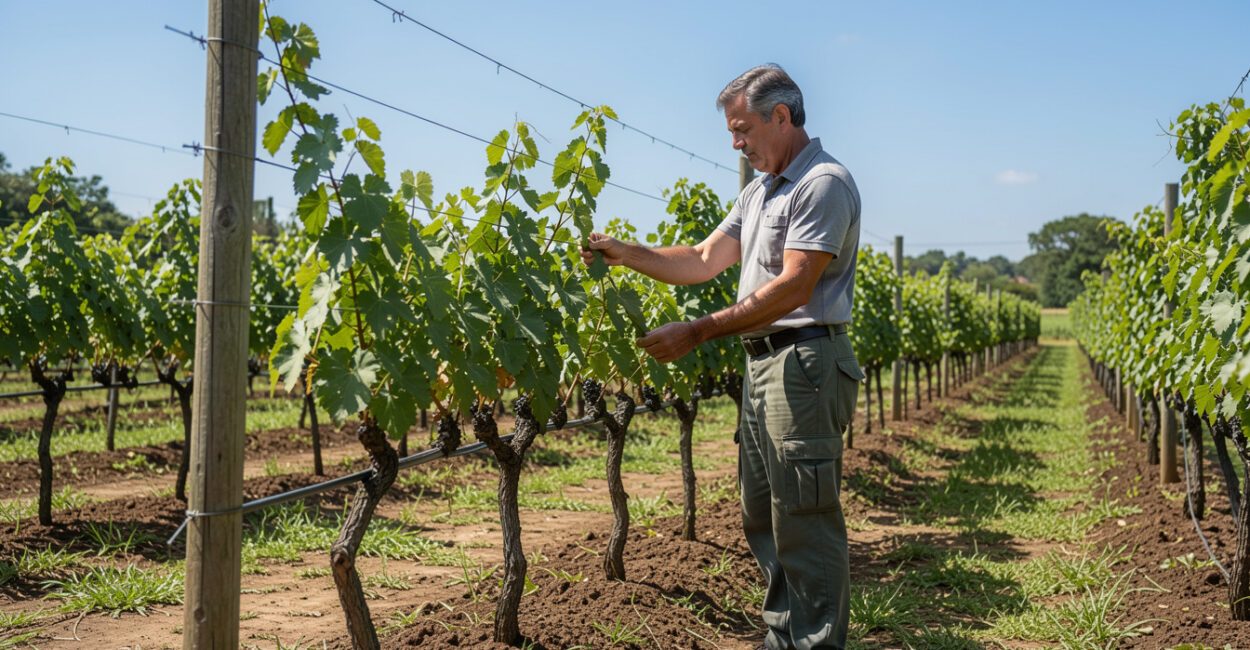
A grapevine can grow vigorously and still produce little fruit if it doesn’t get enough sun, sits in waterlogged soil, or lacks room for its shoots. Successful grape growing depends on matching the variety to the climate, soil, and care practices. So your first decision isn’t which fertilizer to use, but whether the site and grape variety are a good match.
In a backyard, you can train a vine over a pergola or along a trellis. On a farm, the system should suit the variety, terrain, and production goals. The steps below can help you plan your planting and recognize when general guidance needs to be adapted to local conditions.

What You Need to Start Growing Grapes
Growing grapes starts with choosing a variety suited to your region, a vine from a reliable source, and a sunny site with well-drained soil and a support structure for training the shoots. From there, care involves establishing the vine, pruning, irrigation, and fertilizing according to its growth cycle. A grape plant is called a grapevine; “grape arbor” is also a common term for a vine trained on a structure.
The grapevine is a perennial climbing plant in the genus Vitis. Its shoots need support, and pruning directs growth and fruit production. Table grapes, juice grapes, and wine grapes have different requirements. When choosing a variety, consider whether it suits your local climate and whether expert guidance is available for training it.
For information on grape varieties and production systems, consult technical resources from Embrapa Uva e Vinho (Brazil’s Agricultural Research Corporation’s grape and wine research center). Searches for “Embrapa grapevine growing” often lead to publications on planting, training, and care. Look for recommendations specific to your region and grape type rather than following a one-size-fits-all formula.
Climate and Site Conditions for Growing Grapes
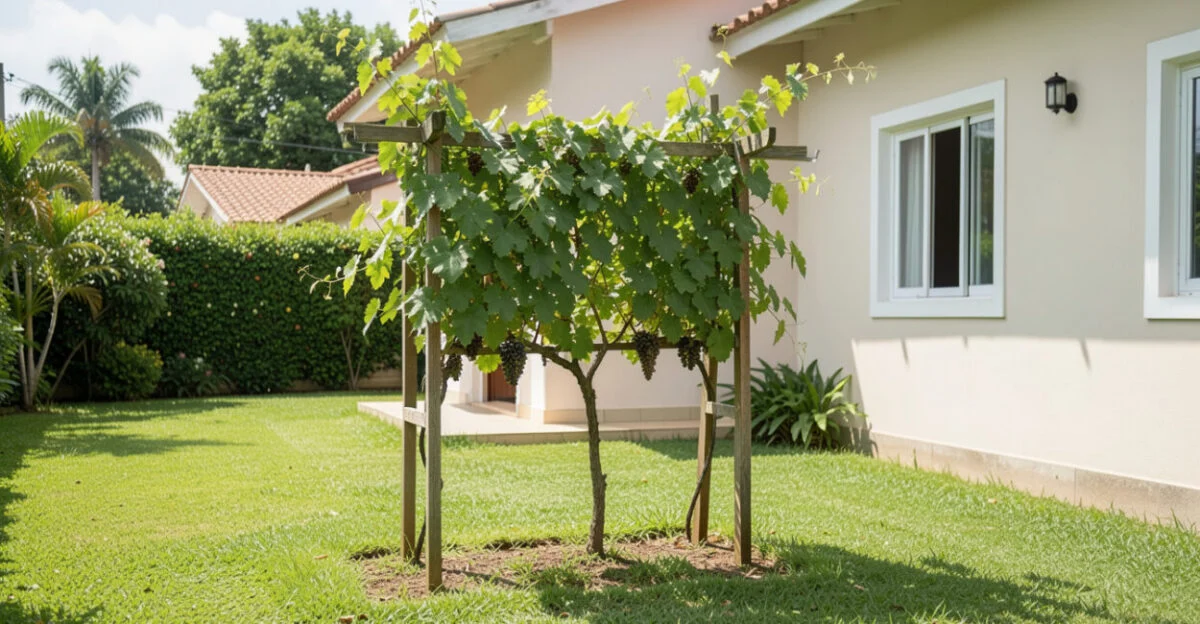
Grapevines need direct sunlight to grow shoots and fruit, while good airflow helps leaves and clusters dry after rain or dew. A site shaded by trees or buildings can limit production, while a damp, poorly ventilated area encourages fungal diseases. At home, track how much sun the area gets throughout the day, and avoid planting where rainwater collects.
Brazil’s climate varies widely by region and production system. In areas with more pronounced winters, vines go dormant and pruning follows a different schedule than in warm-climate regions, where conditions may allow more than one growing cycle per year. Variety, rainfall, and temperature all affect the calendar, so there is no single pruning season that works across the country.
If your area often gets rain while grape clusters are ripening, pay extra attention to variety selection and canopy airflow. Rain can encourage disease and reduce fruit quality. To learn how interpreting climate and soil conditions can guide agricultural decisions, see this article on sustainable farming practices.
Soil and Site Preparation for Grapevines

The soil should drain well so the roots don’t stay waterlogged. Before planting, get a soil test to check acidity and nutrient availability. Amendments such as lime or fertilizer should be applied according to the test results and local expert recommendations. Applying lime or fertilizer “just in case” can throw the soil out of balance without addressing the cause of poor growth.
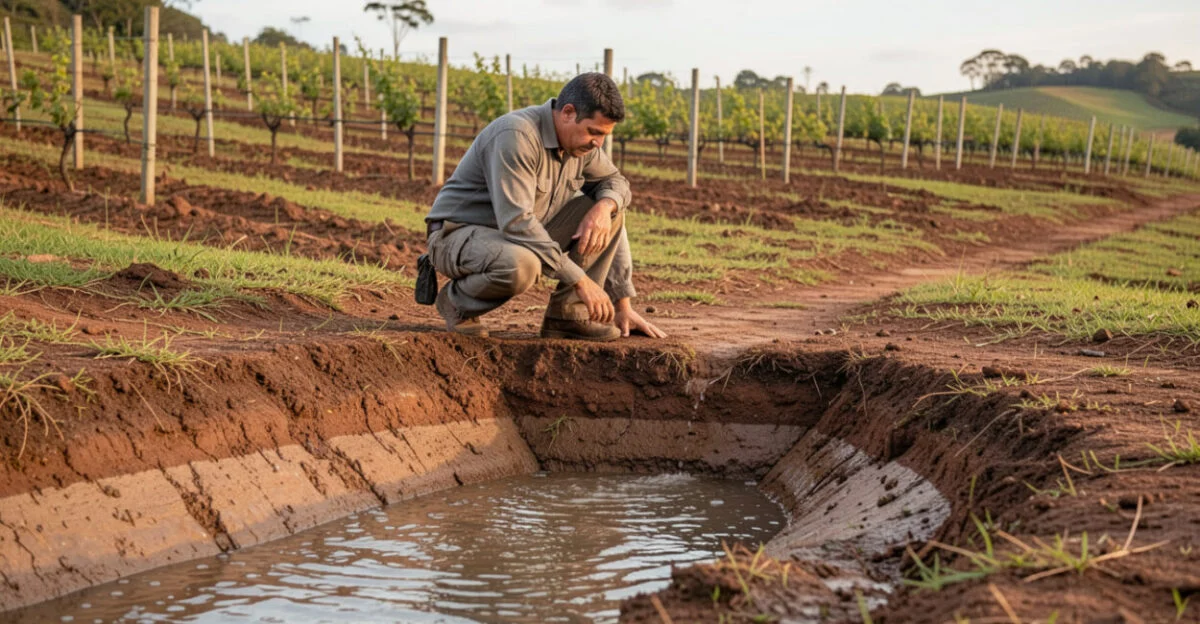
Also check soil depth, compaction, and where water flows after a heavy rain. If water pools for hours or there is a compacted layer near the surface, address the problem before planting. On sloped ground, plan for runoff to reduce erosion and soil loss.
The Instituto Agronômico (IAC) (São Paulo State’s Agronomic Institute) conducts agricultural research and provides technical information. For recommendations on soil amendments and fertilizer, use your soil test results with help from an agricultural professional or local extension service familiar with regional conditions.
How to Plant a Grapevine: Step by Step
Plant when the vine and soil are in suitable condition for your region, with the support structure already planned or in place. Spacing depends on the variety, vigor, training system, and use of machinery. Follow a local plan with a comparable layout rather than copying measurements from a differently designed vineyard.
- Choose a vine. Look for healthy, clearly labeled plants from a reliable supplier. Check whether the variety—and, when relevant, the rootstock—is suited to your area.
- Prepare the site. Test the soil, make recommended amendments, and address drainage or compaction problems before planting.
- Plan spacing and support. Set the distance between plants and rows based on the training system, expected vigor, and access for maintenance.
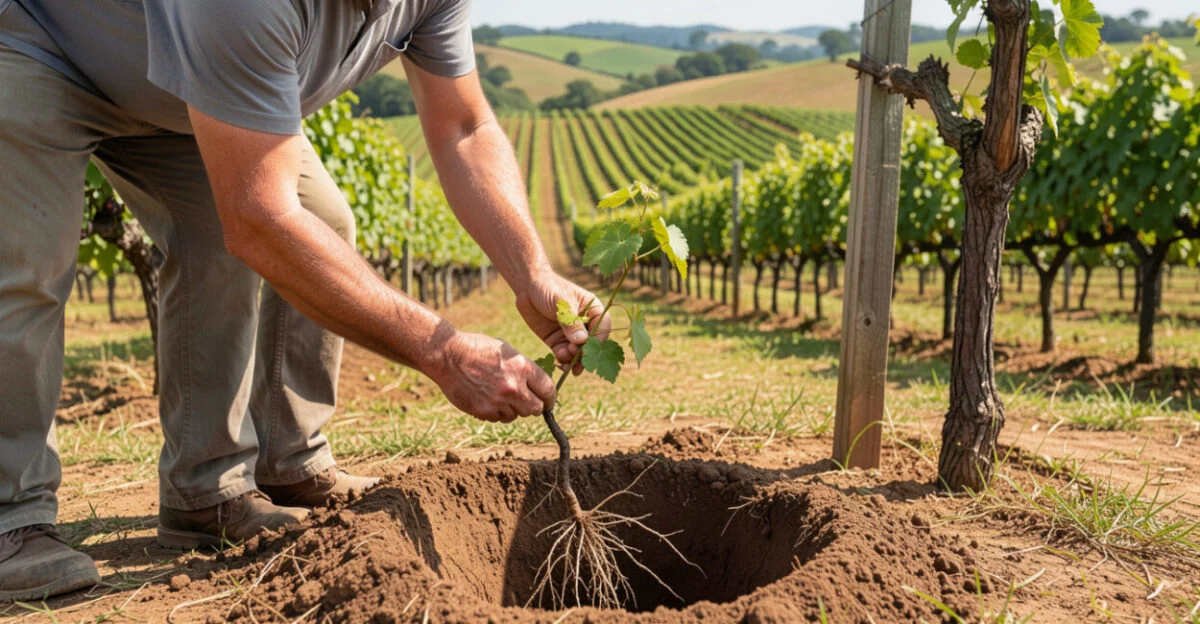
- Plant and stake. Set the vine in place without bending the roots, firm the soil around it, and guide the main shoot up the stake without tying it tightly.
- Monitor establishment. Maintain adequate soil moisture, control competing plants, and inspect leaves and shoots for damage or signs of disease.
One detail that’s easy to overlook is how you tie the vine. A tie that’s too tight can girdle the shoot as it thickens. Use flexible ties, check them as the vine grows, and leave room for the stem to expand.
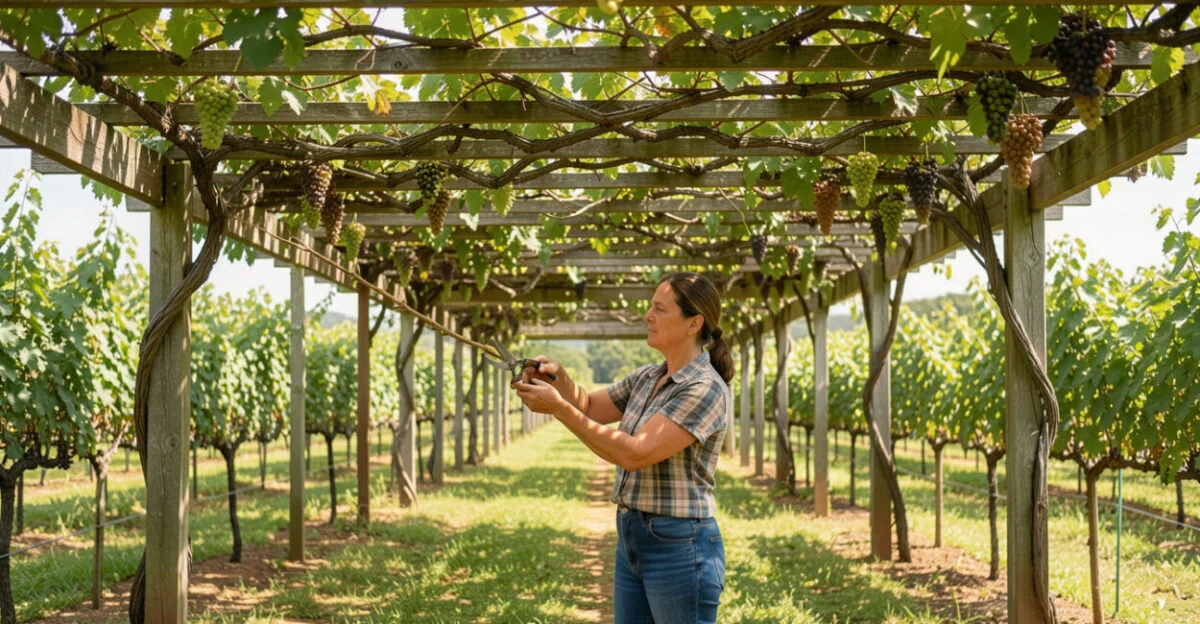
Grapevine Training, Staking, and Pruning
The training system determines how the trunk and shoots fill the available space, get sunlight, and allow access to the clusters. Pruning, in turn, shapes the vine and determines how many buds are left to grow. The right approach depends on the variety, climate, terrain, and purpose, whether you’re growing grapes at home, producing table grapes, or growing grapes for processing.
System How it trains the vine When it may be suitable Vertical shoot positioning (VSP) Shoots grow in rows supported by wires, usually on a vertical trellis. For vineyard rows and sites where access for maintenance and harvest needs to be straightforward. Pergola or overhead trellis The canopy spreads across an elevated structure, forming a cover. For backyards or systems designed to use space above walkways. Requires a sturdy structure and canopy management to prevent excessive density. Individual stake training Early growth is guided along a support for each plant. For establishing and training young vines before moving to the chosen permanent system.
Formative pruning builds the trunk and arms that support the canopy. With fruiting pruning, the number and position of retained buds vary by variety and training system. Severe pruning or pruning at the wrong time can reduce production or trigger vulnerable new growth. Embrapa resources and local agricultural extension services can help you determine the right approach.
Well-planned training distributes light and space throughout the canopy, while pruning keeps the structure suited to the variety and local growing cycle.
Irrigation, Fertilizing, and Other Grapevine Care
Grapevines need water, but they shouldn’t sit in waterlogged soil. Water needs vary with climate, soil type, vine age, and growth stage, so a fixed watering schedule may not provide enough during hot weather and may be excessive in soil that holds moisture. Check the soil before watering and observe the vine; don’t rely on the appearance of its leaves alone.
The right fertilizer for grape production addresses an identified need; there’s no universal formula. Soil tests and, when recommended, leaf analysis help determine how much to apply and when to provide nutrients. Too much nitrogen, for example, can encourage vigorous vegetative growth at the expense of canopy and fruit balance.
A common situation: the vine grows vigorously but produces few clusters. Your first instinct may be to add more fertilizer. Before doing that, check whether it gets enough sun, whether pruning left productive buds, and whether the variety suits the climate. These factors may explain the problem without any fertilizer deficiency.
Inspect leaves, shoots, and clusters regularly, especially after wet weather. Remove diseased material and keep the canopy open according to the training system. If symptoms spread, appear on multiple vines, or have no obvious cause, describe them to an extension specialist and bring photos if possible. Similar-looking spots can have different causes and require different treatments.
Growing Grapes at Home and in Brazil
You can grow grapes at home if you have direct sunlight, space for a support structure, and time to prune and monitor the vine. A backyard trellis or pergola can work. In small spaces, root volume and support limit container growing; pots need to be large, stable, and well drained. A harvest isn’t guaranteed—it depends on the variety, climate, and care throughout the growing cycle.
Commercial production in Brazil spans a wide range of climates, growing seasons, and management practices. That makes it impossible to describe grape growing in Brazil as a single model. Variety selection, training systems, and pest and disease management should reflect the region and intended use of the harvest. If you’re considering a career in the industry, this guide to the work of an agricultural technician provides context on fieldwork and technical support.
If you’re looking for a “grape growing PDF,” search for technical publications from Embrapa Uva e Vinho and resources from the IAC using terms such as variety, region, pruning, or training system. These documents can help you explore the topic, but fertilizer and pest-management recommendations should be checked against a soil test and local guidance. Technology can also support crop monitoring, as explained in this article on agricultural technology in the field.
To get started, choose a variety recommended for your region and assess the sunlight, drainage, and space available for a support structure. Then test the soil before buying fertilizer or deciding on amendments. This simple assessment can help you avoid investing in a training system or supplies that aren’t suited to the site.
Frequently Asked Questions
How long can a grapevine keep producing?
Grapevines are perennials and can produce for many years, but their lifespan and yield depend on the variety, plant health, vine training, and care. Shoots and arms age over time, and pruning helps renew the productive structure.
Can I plant different grape varieties in the same backyard?
Yes, if you have enough space and the varieties suit your climate and training system. Label each vine and monitor it separately, since pruning times and fruiting habits may differ.
Why are my grapevine leaves turning yellow?
Yellowing can be caused by too much or too little water, nutrient deficiencies, root problems, or disease. Note whether the symptoms appear on new or older leaves and whether they affect one vine or several. A soil test and expert assessment can help identify the cause.
Do grapevines need preventive spraying?
There is no spray schedule that works for every region and variety. Management should reflect disease risk, local history, and technical and regulatory guidance. Use only products registered for grapes and follow the label.
Artigos Relacionados
 How to Grow Strawberries: Climate, Plants, and Essential Care
 Beef Cattle Management: How to Organize Herd Care and Feeding
 Strawberry Growing: How to Plant and Manage Production
 Coffee Cultivation: How to Plan Your Farm and Care for Plants
 Hydroponics: How to Start Growing Without Soil
 Bromeliads and Their Special Care
