
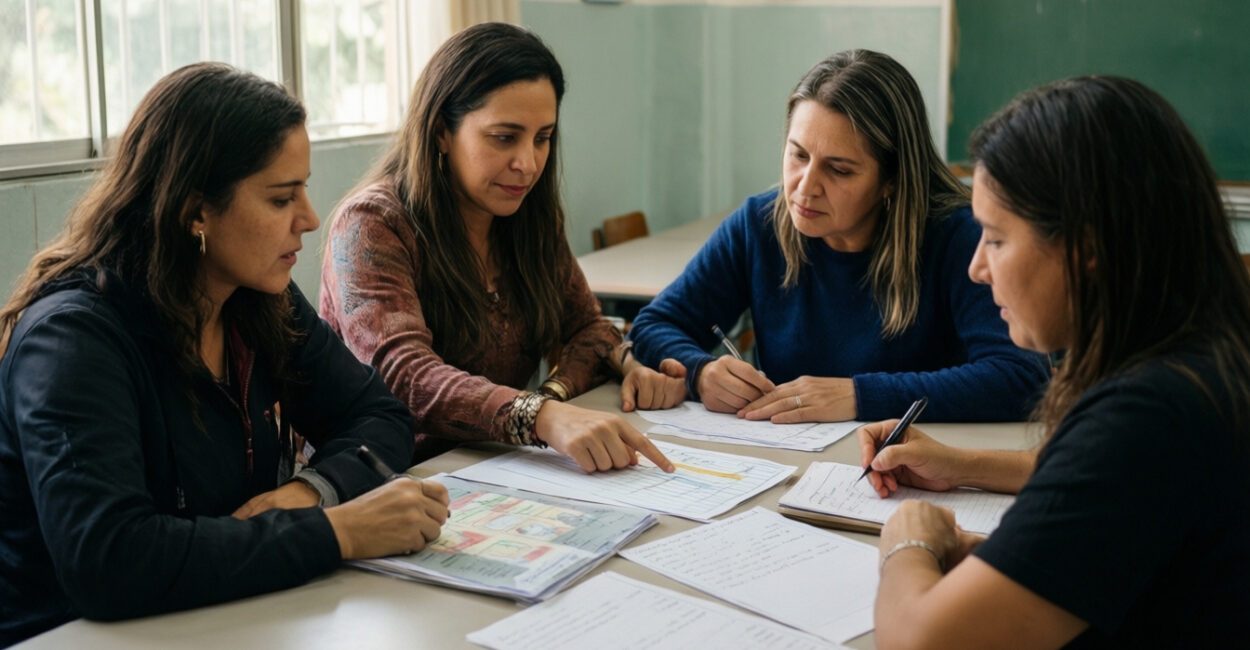
A meeting can last for hours and end with no one knowing what to do on Monday. A class council meeting is more effective when the team reviews evidence of learning and turns the discussion into actions that can be tracked, rather than simply going over grades and incidents.
This instructional forum brings together professionals who work with a class to assess progress, challenges, and teaching strategies. Its format, participants, and records vary according to the school’s policies and district guidelines. A useful agenda, therefore, combines local procedures with concrete decisions that support students.

At a glance
- Purpose: review teaching and learning and define follow-up actions.
- Typical participants: teachers who work with the class, instructional coordinators, and school administrators, as local rules allow.
- Useful records: student work, observations, attendance, and strategies already tried.
- Expected outcome: action items with owners, deadlines, or review dates.
- School guidelines: school policies, the instructional plan, and district rules.
What a class council is and what it does
A class council is a collaborative forum for reviewing the teaching and learning process, monitoring students’ progress, and defining instructional interventions. Put simply, it is a chance for professionals to bring together evidence, discuss what is working, and agree on next steps, rather than simply comparing grades or deciding whether students pass.
In public schools, class councils support instructional work and the assessment of student learning, but there is no single format used across all districts. The schedule, membership, tools, and impact of decisions depend on school policies and local rules. Brazil’s National Education Guidelines and Framework Law (Lei de Diretrizes e Bases da Educação Nacional) establishes general principles for education; the specific rules of the institution should be checked to determine how meetings are organized.
A school council is a separate body, with its own membership and responsibilities, which may include community participation in school life. A meeting of teachers about a class’s learning does not become a school council meeting simply because families or students take part.
An instructional decision only has value when it specifies what will be done, who will do it, and when the team will check its impact.

Who participates and what each person’s role is
Typically, participants include teachers who work with the class, instructional coordinators, and school administrators. Students and family members may take part in participatory formats when the school provides for or adopts this option, with clear goals and privacy safeguards. Check school policies and district guidance to confirm who should attend.
Participant
Possible contribution
Note on membership
Teachers
Share observations about learning, student work, strategies used, and student responses.
Participation depends on school rules and organization.
Instructional coordinator
Organize the agenda, support the review, and help align action items with instructional planning.
Specific responsibilities vary by institution and district.
School administrators
Ensure the meeting can take place and follow up on decisions involving school operations.
Not all schools use the same membership or assign duties in the same way.
Students or families
Share perspectives and help develop actions when the format includes an opportunity for their input.
Participation should follow local rules and protect other people’s information.
The question “Who is an ex officio member of the school council?” refers to the school council, not automatically to the class council. The answer depends on the rules that apply to the district and school, so consult school policies rather than assuming there is one membership structure nationwide.
How to prepare for the meeting

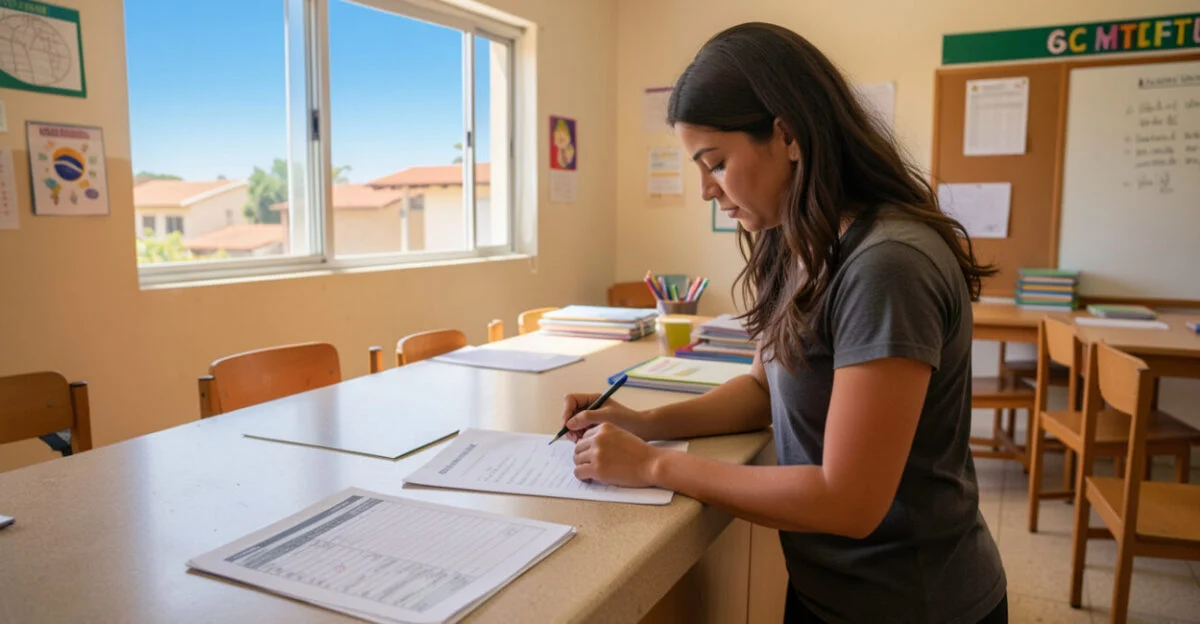
Sharing an agenda in advance helps each professional arrive with relevant information instead of vague impressions. Assessment records, attendance, completed activities, and strategies already tried provide a richer foundation than a spreadsheet of grades alone. To organize follow-up, formative assessment and its tools can help the team identify evidence that shows how learning is progressing.
The teacher’s completed pre-council form should guide the discussion without labeling the student or prejudging decisions. Use observable descriptions such as “solved problems with the help of hands-on materials” or “still has difficulty locating explicit information in the text,” rather than judgments about personality, interest, or ability.
- Set the objective and agenda in advance.
- Update relevant records for the class and individual students.
- Select a range of evidence, not just numerical results.
- Complete the pre-council form using objective language and focusing on learning.
- Agree on confidentiality safeguards and remind participants of them.
A common mistake is to fill out the form the day before the meeting, using generic phrases such as “can’t keep up” or “isn’t interested.” This happens when the form becomes a bureaucratic requirement, disconnected from observations made during class. To avoid this, record examples throughout the term and note the strategies already tried, as well as the student’s response.

How to lead a productive discussion
Start the meeting by revisiting its purpose and discussion criteria. Then review the evidence, hear from the professionals involved, identify needs, and develop action steps. This sequence reduces the risk of moving from case to case without distinguishing between a learning challenge, a gap in instruction, or a need for support.
Set aside time to review the class as a whole, not just individual situations. If many students are struggling with the same skill, consider the lesson sequence, opportunities to practice, and assessment tools before attributing the results to personal characteristics. Planning the stages of a lesson can offer a starting point for reviewing objectives and strategies.
During the discussion, describe observable situations and protect confidentiality. Comments about a student’s family, personality, or supposed ability do not explain what the student has learned and can distract the team from possible interventions. In participatory meetings, give students or family members a chance to speak without exposing other people’s information.
Brazil’s National Common Core Curriculum (Base Nacional Comum Curricular), published by the Ministry of Education, is a reference for organizing learning in basic education. It does not replace school policies or, by itself, prescribe a single meeting format. The team should connect learning objectives to the curriculum and to the rules that guide the school.
How to turn discussion into action items
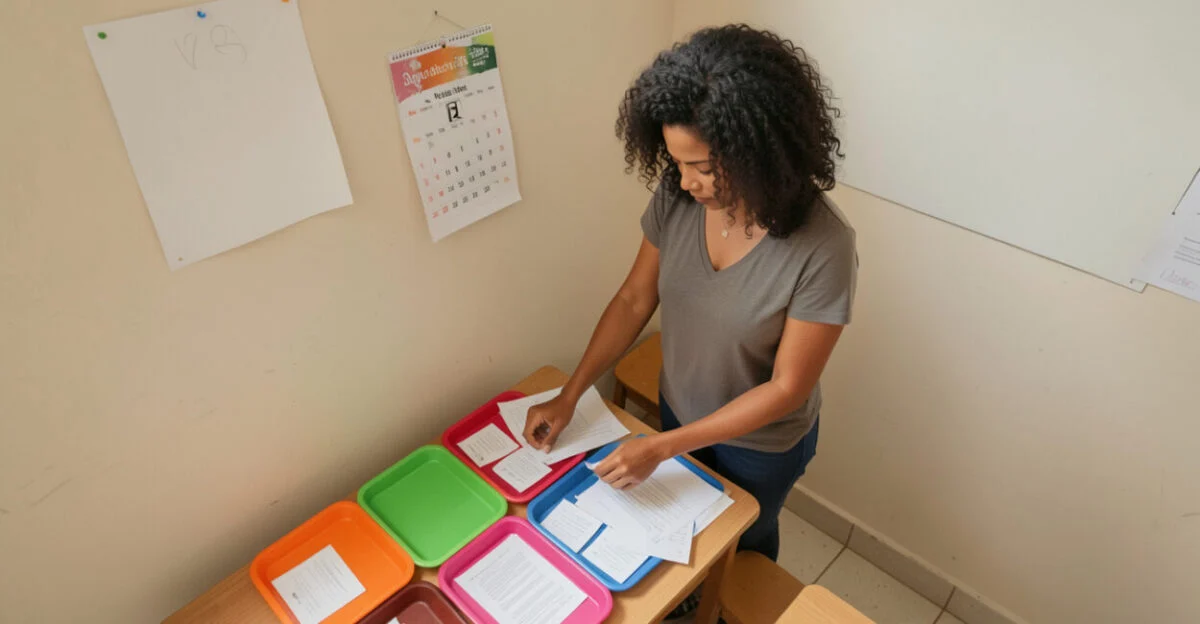
Each decision should specify an observable action, an owner, a deadline or review date, and evidence that can be used to track the outcome. “Pay more attention” does not guide the work; “review the skill in small groups and revisit student work at the next instructional meeting” makes clear what to check.
Observed need
Agreed action
Owner
Deadline or review
Evidence for follow-up
Some students in the class are struggling with a skill included in the instructional plan.
Revise activities to revisit the skill and observe student responses.
The teacher responsible for the class or subject, as agreed.
Review on the date set by the team.
Student work, observations, or other evidence selected by the group.
A completed class council report can serve as an organizational reference, but it should reflect what was discussed and follow the institution’s recordkeeping procedures. The document should help the team revisit decisions, not simply prove that the meeting took place.
- Record each decision in concrete terms.
- Identify who is responsible for each action.
- Set a deadline or date to review the action item.
- Define what evidence will be used to track progress.
- Revisit decisions at the next meeting and check what was completed.
This follow-up closes the loop: the team checks what was done, considers whether needs have changed, and decides whether to continue, adjust, or replace the action. Without this follow-up, the record is likely to become an archive rather than a guide for the work ahead.
Adaptations for early childhood education and participatory formats
In early childhood education, class council discussions should be grounded in observations of children’s development, experiences, and participation. Mechanically applying assessment criteria from other grade levels can narrow the focus and overlook play, interactions, and children’s own forms of expression, which also provide valuable instructional information.
For participatory formats, decide before the meeting why students or families will be invited to share their views, how they can contribute, and what information should not be shared with the group. Meeting frequency and tools also vary. Schools should tailor the agenda to the grade level, class, and instructional plan.
School class councils and professional boards
The phrase “professional class council” may refer to an organization that regulates or represents a profession. It does not mean an instructional meeting held at a school. For that reason, a search such as “engineering class council” usually leads to information about professional registration or practice, not the assessment of a class.
Terms such as “registration with a class council” and “proof of registration” depend on the profession and the rules of the relevant organization. Anyone seeking professional registration or proof of it should contact the board responsible for their field. These requirements are unrelated to school class councils.
To organize your next meeting, start by reviewing school policies and identifying the instructional decision the team needs to make. Then choose evidence that will help answer the question and end the meeting by assigning owners and setting a date to review the action items.
Frequently asked questions
How do you write “class council”?
The standard form is “class council,” with lowercase initial letters in the middle of a sentence. Use capital letters only at the beginning of a sentence or when the phrase is part of an official name.
What is a council?
A council is a group or body that meets to discuss issues, guide decisions, or carry out responsibilities established by its own rules. The exact meaning depends on the context: it may be instructional, school-related, or connected to a profession.
How can you tell if a class council report is complete?
Check whether it records the evidence discussed, the decisions made, the people responsible, and how follow-up will happen. It should also comply with the school’s documentation and confidentiality requirements.
What does “registration with a class council” mean?
The phrase may refer either to a record of instructional decisions made at a meeting or to registration with a professional board. The context and profession help clarify the meaning. For proof of professional registration, contact the relevant regulatory body.
Can family members attend a participatory class council meeting?
They may be able to attend if the school adopts this format and defines how participation will work. The purpose of hearing their input should be clear, and information about individual students should remain confidential.
Artigos Relacionados
 Writing That Captivates: What Techniques Make Writing More Engaging?
 Conscious Shopping: The Mistake That Makes Everyday Life More Expensive
 How to Organize Built-In Closets to Make More Space
 A Practical Study Plan for More Effective Exam Prep
 Creative Lesson Planning: Strategies for More Engaging Classes
 Multiplication Games: How to Practice Times Tables in Class
