

A personal development plan is a working document that organizes growth goals into targets, actions, flexible timelines, and ways to track progress. It helps you choose priorities and turn intentions into observable steps, without requiring you to change every area of your life at once. It’s useful when it fits your routine and allows for adjustments.
This guide is for anyone who wants to build a skill, reorganize habits, or make decisions more clearly. By the end, you’ll have a process for choosing a direction, a fill-in template, and criteria for reviewing your plan when circumstances change.

The acronym PDI is used in different contexts. It can mean an individual development plan for work or personal life, but it can also refer to an educational document with a different purpose. Understanding the distinction can keep you from looking for a student example when your goal is to organize your own growth.
What is a personal development plan, and how does it differ from an educational PDI?
A personal development plan is a planning tool that connects a development need to a desired outcome, actionable steps, and evidence of progress. In plain language, it’s a record that answers these questions: What do I want to develop? Why does it matter? What will I do? How will I know I’ve made progress?
The term PDI, or individual development plan, often comes up in businesses as a way to guide professional skills, conversations with managers, and learning opportunities. It can also be used by someone who wants to structure personal goals. The context determines what it includes: a professional PDI might cover technical skills, communication, and career next steps; a personal plan might cover education, health, relationships, or personal finances.
An educational PDI, by contrast, addresses a student’s needs in a school setting. Depending on the situation, it may document learning goals, teaching strategies, accessibility resources, and ways to track progress, in consultation with the school team and family. Brazil’s Lei Brasileira de Inclusão (Brazilian Inclusion Law) addresses the right to inclusive education and access to accessibility resources. See the Lei Brasileira de Inclusão and the Ministry of Education’s guidance on special education for official references.
That’s why searches like “completed student PDI example,” “ready-made PDI for an autistic student,” or “completed teacher PDI example” fall under education. They aren’t interchangeable with an individual development plan for adults. For an autistic student, goals and supports need to account for the individual, the school setting, and their educational needs; a generic example can’t replace an appropriate assessment and plan.
If you’re looking for an individual development plan template, a free PDI template, or a completed PDI example, you can use this article’s structure as a starting point. It isn’t an official form or a ready-to-print school document. A completed PDI example in PDF format or an individual development plan PDF is useful only when it fits the context and includes fields the person can actually track.

How to choose a direction without trying to change everything at once
Choose an area where progress would bring a tangible benefit to your life over the next few months. That direction might come from a recurring challenge, an upcoming opportunity, or a goal you’ve been pursuing but haven’t yet turned into consistent action.
Start with a quick inventory; don’t try to assess everything. Write down what’s working, what tends to hold you back, and which conditions you can control. For example, “I want to grow professionally” is still broad. “I want to present ideas more clearly in team meetings” points to a skill and situations where you can practice it.
Then use three filters to choose your priority:
- Relevance: Why does this matter to you right now?
- Influence: Which actions are up to you, even if the final outcome depends on other people?
- Room in your routine: What time, energy, and resources can you set aside without compromising basic needs?
If two goals compete for the same time, compare their expected impact and the effort required to maintain them. When a goal depends on an external opportunity, such as a promotion, define a controllable intermediate outcome: complete a training program, prepare a project, or ask for feedback on a skill. That way, your plan won’t stall because of a decision you can’t control.
A common mistake is choosing several changes at once because they all seem urgent. This often happens when people confuse importance with priority: many things can matter, but they don’t all need to start this week. Limit your plan to one main priority and, if you have the capacity, one compatible secondary goal. You can note the others for a future review without treating them as failures.
To find topics that align with your interests, explore practical ideas related to personal development. Use trends as inspiration, not as a list of obligations. Include a practice in your plan only if it addresses one of your needs and fits your current circumstances.
How to create a personal development plan step by step

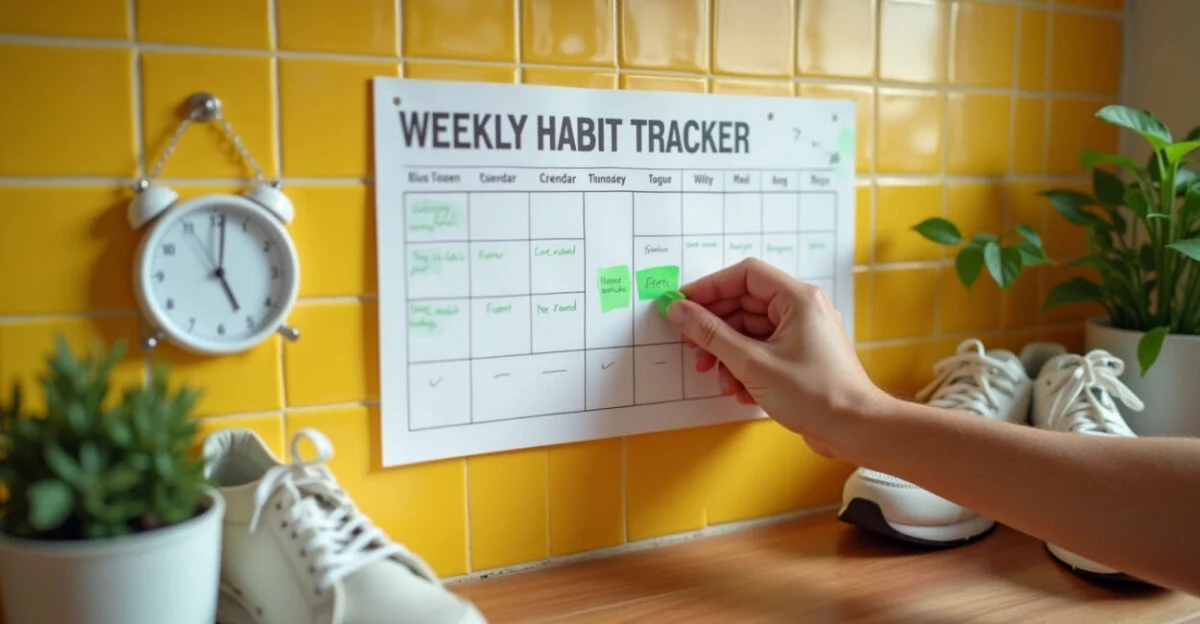
A step-by-step PDI starts with a simple assessment and ends with a review date that works with your routine. The cycle can be summed up as goal, action, evidence, and adjustment: define the outcome you want, practice, observe what changes, and decide what to do next.
1. Take stock of where you’re starting
Record observable facts, not judgments. Instead of “I’m disorganized,” write, “Over the past four weeks, I left three important tasks until their due dates.” That detail helps you pinpoint the issue: time estimation, too many commitments, lack of clarity, or difficulty getting started.
If your plan is work-related, feedback from colleagues or your manager can offer another perspective. The Chartered Institute of Personnel and Development (CIPD) addresses learning and development as part of professional people management practice. Its publications can help you think about workplace learning opportunities, without turning a corporate template into a universal rule. See the CIPD’s page on learning and development.
2. Write a specific outcome
Describe what will be different and in what situation. “Study more” doesn’t show how to recognize progress. “Complete four modules in a training program by the end of the next two-month period, studying twice a week” is a measurable outcome, as long as the workload fits your routine.
3. Choose a skill or behavior to develop
A goal may require knowledge, practice, or a change in process. If you want to communicate better in meetings, your actions might include preparing a short agenda, presenting one idea per meeting, and asking for specific feedback. To explore technical skills and how to develop them, see the article on developing hard skills.
4. Plan small, recurring actions
Define the first step and how often you’ll take it. “On Tuesday, after lunch, I’ll practice for 25 minutes” is more actionable than “I’ll work harder.” The duration can vary; the key is to tie the action to a time or an existing cue. If you miss a session, pick it back up at the next scheduled opportunity instead of trying to make up for it with an excessive workload.
5. Define evidence and a review date
Choose indicators that show both activity and results. The number of sessions completed measures follow-through; a finished project or feedback on a presentation can show development. Schedule a review in a few weeks, depending on the pace of your goal. The plan needs enough time to produce evidence, but it doesn’t need a rigid deadline that ignores unexpected events.
This process works for personal and professional goals, but it doesn’t replace a clinical assessment, specialized financial advice, or educational planning when those are needed. For example, if a goal involves health, your actions should follow guidance from qualified professionals and account for your individual circumstances.

How to turn objectives into trackable goals and actions
A trackable goal describes an outcome, a target timeframe, and an indicator you can observe. Actions, in turn, are behaviors under your control. Separating the two keeps you from measuring your effort solely by outcomes that also depend on other people, the market, or unexpected circumstances.
Follow these steps to turn an objective into a goal:
- Write down the broad objective: “I want to improve my professional communication.”
- Choose a specific situation: “I want to explain proposals in weekly meetings.”
- Define an observable outcome: “Present a proposal in five minutes or less and answer the main questions.”
- Identify actions you control: Prepare an outline, rehearse once, and present when the right opportunity comes up.
- Choose evidence: Presentations delivered, questions answered, and specific feedback received.
- Schedule a review: After enough time to practice and gather feedback, decide what to keep or change.
Not every goal needs to follow a rigid formula. The SMART method, for example, helps you check whether a goal is specific, measurable, achievable, relevant, and time-bound. But it can feel artificial when applied to subjective areas like confidence or well-being. In those cases, pair an observable indicator with a reflective question: “In which situations was I able to act with more confidence?”
Consider a hypothetical example. Marina wants to improve her English so she can participate in client meetings. Instead of setting a goal to “become fluent in three months,” she decides to practice conversation for 30 minutes on two weeknights for six weeks and give a short update in English at the end of that period, if an appropriate opportunity arises. She tracks her practice sessions and notes what she was able to explain without referring to her script.
This example shows why it helps to separate measures of success from measures of effort. Marina controls her practice sessions, but she may not control when an English-language meeting comes up. If that opportunity doesn’t arise, she can evaluate a recording or a simulated meeting without discounting the progress she’s made. For study habits, techniques such as spaced repetition to reinforce learning can be included as an action when they make sense for the material.
A well-designed action also accounts for obstacles. If your evening schedule tends to change, you can set aside two alternative time slots each week. That flexibility doesn’t weaken your commitment; it keeps a predictable change from derailing the entire plan.

Personal development plan template: fields and a completed example
A useful template should fit on one page or in an easy-to-access note and let you see the connection between your goal, actions, and evidence. The table below includes fill-in fields and a hypothetical example. Adapt the timelines and indicators to your goal; don’t treat the example as a promise of results or an official PDI form.
Field
What to record
Hypothetical example
Development area
The topic you’ll focus on
Communication in meetings
Reason
Why this priority matters now
I want to present proposals more clearly to the team
Desired outcome
What will be different and in what context
Explain a proposal in five minutes or less and answer the main questions
Starting point
A current fact or situation
I tend to improvise and go over the allotted time
Actions
Steps that are up to you
Prepare a brief outline and rehearse before each presentation
Frequency and timeline
When to practice and when to review
One practice session per week, with a review after six weeks
Evidence
How to track follow-through and results
Presentations delivered, length, and feedback received
Obstacle and alternative
What might get in the way and what your backup plan is
If the meeting is canceled, record a short presentation
To fill it out, start with the reason and your starting point. If you can’t explain why the goal matters, it may come from someone else’s expectations. If you don’t know where you stand today, spend a week observing before setting a pace. A baseline record reduces the risk of setting a goal based only on a passing impression.
Next, write down just a few actions. The table doesn’t need to become a journal of every hour, and an indicator doesn’t have to be a number. “Asked for feedback on how clear my presentation was” is valid evidence when the skill involves communication. Your criteria should help you make decisions, not create administrative work that competes with the practice itself.
If you’re looking for a “ready-made individual development plan,” a “printable PDI,” or a “completed PDI example,” you can copy the fields from the table into a document or notebook. It can also serve as a free PDI template, as long as you fill in each field with a goal of your own. There’s no attached PDF here; the content is provided directly so you can adapt it without relying on a generic file.
If you’re searching for an “individual development plan PDF,” first check whether it’s intended for personal development, career management, or education. A school form may include learning data and accessibility guidance that don’t apply to personal goals. Likewise, a corporate template may assume you’ll have conversations with a manager and access to resources that may not be available to someone who’s self-employed.
How to review your plan, measure progress, and fit it into your routine
Review your plan at intervals that suit the type of goal, looking at the actions you’ve taken, evidence of progress, and any changes in your circumstances. A review isn’t a judgment of your discipline; it helps you decide whether your approach still makes sense and what adjustment would make the next step doable.
Ask yourself four simple questions: What was I able to do? What evidence shows progress? What got in the way or helped? What will I keep, scale back, or replace in the next period? A few lines are enough. If you followed through on the action but didn’t see the result, it may be too early to evaluate, or your approach may need to change.
When your routine changes, use these guidelines:
- If the goal is still relevant but you have less time, reduce the frequency or duration before giving it up.
- If the goal is no longer important, pause it or close it out with a note about why.
- If the obstacle is outside your control, choose an alternative way to show progress that doesn’t depend on that condition.
- If the action doesn’t lead to progress after enough attempts, look into whether you need more knowledge, resources, support, or a different approach.
One factor that often goes unnoticed is the transition time between tasks. A plan might set aside 30 minutes for studying but still fall apart because you need to wrap up a meeting, prepare materials, and find a quiet place. Make a note of setup time and contextual obstacles. Sometimes cutting a session to 20 minutes and protecting that time leads to more consistency than sticking to an ideal duration on paper.
You can also pause a goal without treating the break as a failure. Illness, caring for family members, a job change, or burnout may require a different priority. Note what changed, preserve what’s still useful, and choose a date to reassess. An adaptable plan keeps you moving in a direction without requiring every week to look the same.
For professional goals, check-in conversations can help align expectations and resources, as long as the goal fits your role and the opportunities available. For a study goal, changes to your environment and the way you get started may matter more. The article on how to get started studying when you don’t feel motivated can offer additional guidance.
Pillars of personal development: how to choose the ones that make sense for you
There’s no universal list of four or five pillars of personal development. These categories vary by author and by the purpose of the model, so a list of four pillars isn’t an official answer that contradicts a list of five. The best approach is to choose categories that help you understand your situation without turning your plan into pressure to improve everything at once.
One possible framework includes five areas:
- Health and energy: sleep, movement, nutrition, and health care, following professional guidance when needed.
- Learning and skills: knowledge, technical skills, and deliberate practice.
- Emotional well-being and self-awareness: recognizing patterns, boundaries, values, and needs; this doesn’t replace psychotherapy or mental health care.
- Relationships and communication: relationships, collaboration, listening, and conflict management.
- Work, purpose, and organization: career, projects, day-to-day finances, and time management.
A four-area version could combine work and learning, or group physical and emotional health, depending on the question your plan needs to answer. The number matters less than clarity: if two categories overlap and don’t help you choose actions, combine them. If one area includes very different needs, split it up to make the priority easier to see.
To choose a pillar, look for the biggest gap between your current situation and where you want to be, but also consider the effort required to act. Someone who wants to change careers might prioritize skills and financial organization before applying for a job. Someone else might need to restore their energy and set boundaries in their routine before starting a training program. The right sequence depends on each person’s resources, responsibilities, and circumstances.
Every framework has its limits. A health issue can affect both study and work; a lack of income can limit choices in several areas. In these cases, don’t force an individual explanation onto challenges that also depend on access to services, working conditions, or social support. A plan organizes possible actions, but it can’t resolve structural barriers on its own or replace specialized support.
Choose one area to start with and treat the others as context, not parallel goals. During the first cycle, focus on learning what works: which schedules are sustainable, which obstacles keep recurring, and what kinds of evidence help you make decisions. That information will make the next cycle a better fit for your real life.
Frequently asked questions
How long should a personal development plan last?
There’s no required duration. Choose a timeframe that gives you a chance to practice and observe results, and set a review date before the goal loses relevance.
Can I use the same plan for personal and professional goals?
Yes, as long as the goals and tracking criteria are clear. If you share the document with a company, keep personal information private and out of the professional version.
What should I do if I can’t complete a planned action?
Identify the cause before putting more pressure on yourself. The action may be too big, poorly timed, or dependent on a resource you don’t have. Adjust the plan and try a different version.
Does an individual development plan need a manager’s approval?
A personal plan doesn’t need approval. In a company, a professional PDI may be developed with a manager and follow internal processes, which vary by organization.
How can I tell whether a goal is realistic?
Compare the expected effort with the time, energy, and resources available. If the goal only works during a perfect week, scale it back or create an alternative for busier periods.
Can I use an educational PDI as a personal plan?
Not as a direct substitute. An educational document addresses learning goals and may involve school accommodations and supports; a personal plan organizes your own goals and requires different criteria.
Is it better to track progress every day?
Only if daily tracking helps you take action or notice patterns. For some goals, a weekly or biweekly review provides enough information and keeps tracking from becoming an overwhelming task.
Artigos Relacionados
 How to Set Realistic Goals and Track Your Progress
 How to Create a Realistic Personal Development Plan
 A Complete Guide to Entrepreneurial Education: Build Leadership Skills, Create an Effective Business Plan, and Start a Successful Career
 How to Create a Weekly Study Plan for Local Government Exams
 Event-Day Operations Plan: Priority Task Run-of-Show, Communication, and Contingency Planning for Coordinators and Staff
 Personal Development: The Essential Journey to Excellence
