
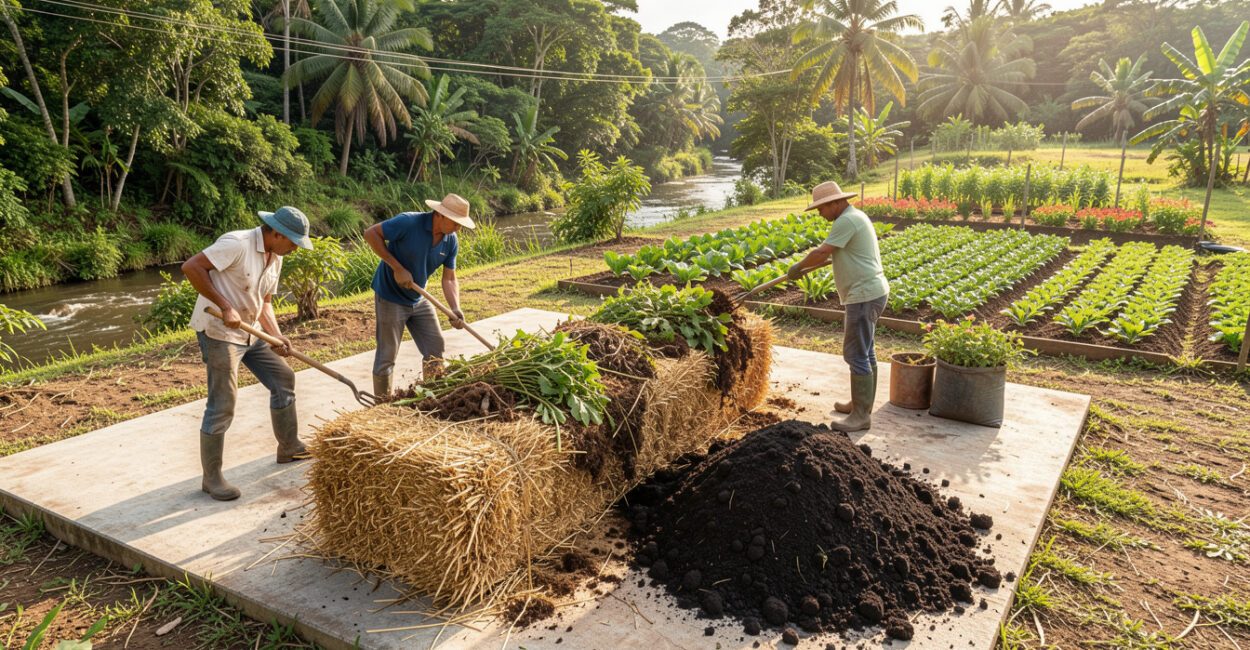
Prunings, manure, and straw can become valuable inputs when the pile gets the right amount of air and moisture. Rural composting turns organic waste into compost through the action of microorganisms, reducing the amount of material discarded and returning organic matter to the soil. The method works at different scales, but needs to be adapted to the available materials and conditions on the property.
The results depend less on following a fixed recipe than on observing the mix: dry, fibrous materials provide carbon, while green waste and manure supply nitrogen and moisture. If the pile smells bad or stays cold, these signs can help you identify what needs correcting.

Before you begin
- Sort waste by type and remove plastic, metal, and other contaminants.
- Choose a spot protected from runoff, with good drainage and room to work.
- Set aside dry materials, such as leaves, straw, or untreated sawdust, to cover wet waste.
- Keep water and a tool for turning the pile on hand.
What is rural composting, and what materials can you use?
To make compost, mix plant-based waste and, when appropriate, manure, while maintaining enough moisture and oxygen for microorganisms to thrive. The process turns these materials into stable organic compost with a uniform appearance and an earthy smell. On a farm, suitable materials include crop residues, leaves, dried grass, straw, fruit and vegetable scraps, coffee grounds, herbivore manure, and shredded prunings.
Examples of usable farm organic waste include dry leaves, straw, grass clippings, vegetable scraps, fruit peels, plant pulp, coffee grounds, aged or fresh herbivore manure, shredded prunings, and weeds without mature seeds. What you can use depends on where the material came from and its condition. Diseased plants, for example, require caution because the pile may not reach conditions that reduce all disease-causing organisms.
Embrapa, Brazil’s agricultural research agency, recognizes composting as a way to make use of organic waste, but the mix should be based on the materials available. To see how this practice fits alongside other management measures, check out these sustainable farming practices for soil and climate.
Plan the site and scale of composting on the farm
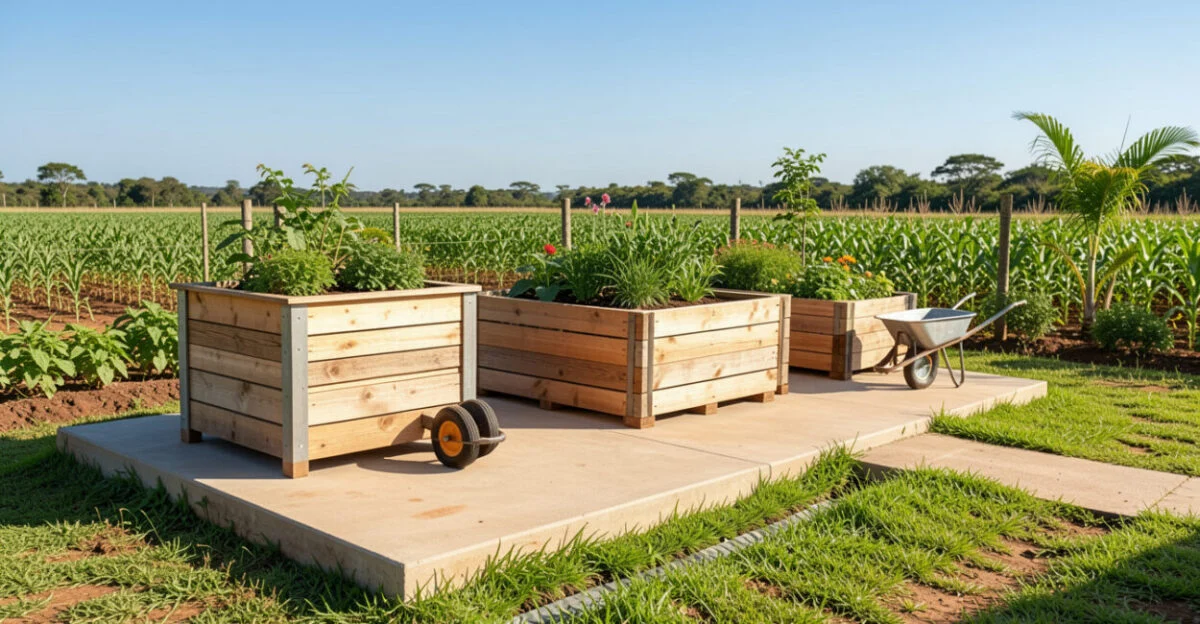
Choose firm ground with controlled drainage, away from areas prone to flooding. Don’t place the pile near wells, springs, waterways, or spots where runoff could reach water sources. An accessible location makes it easier to bring in waste and turn the materials without crossing areas used by livestock or machinery.
The scale should match the amount of waste generated regularly. A small pile may be enough for a vegetable garden; on a farm with large amounts of manure and crop residues, windrows can handle larger batches. Start with a volume you can manage: very small piles lose heat easily, while an oversized windrow can become compacted in the center, restricting airflow.
If the farm uses sensors or digital logs to track activities, agricultural technology for farm management can help organize the dates of pile construction and turning, along with observations. A simple notebook works, too: record the materials used and changes in smell, moisture, and temperature.
Build the pile or windrow with carbon- and nitrogen-rich materials

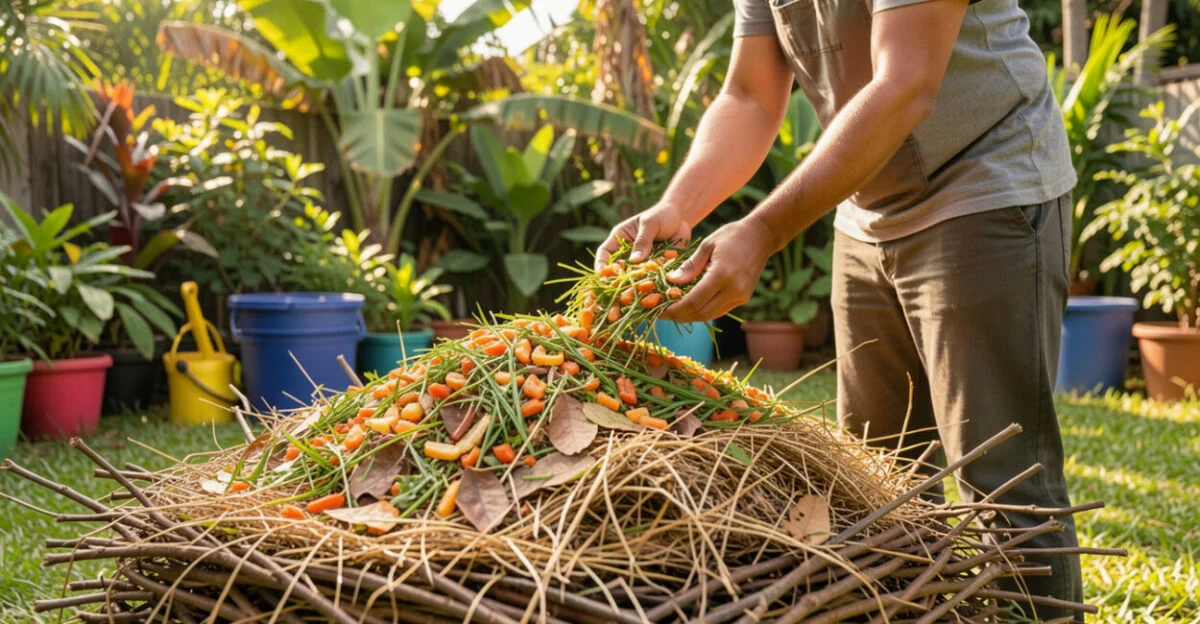
Alternate dry, carbon-rich materials with moist, nitrogen-rich waste. There is no single ratio that works for every farm: straw, sawdust, manure, and green waste vary in moisture, size, and composition. The table can guide your choices, but the pile’s texture and behavior will show whether the balance is right.
Material type Examples Role in the mix Carbon-rich, generally drier and more fibrous Straw, dry leaves, dried grass, untreated wood sawdust, uncoated cardboard Adds structure and helps absorb moisture Nitrogen-rich, generally wetter Herbivore manure, vegetable scraps, fresh grass clippings, fruit peels Provides nutrients for microbial activity
- Prepare the ground and, if needed, lay down a base of small branches to improve airflow underneath.
- Spread alternating layers of dry and wet material. Chop or shred large pieces to speed up decomposition.
- Add water gradually and cover wet material with a layer of dry waste to reduce flies and odors.
- Label the batch and record the date it was built, the materials used, and any steps taken.
Imagine a farm that accumulates wet manure and straw after cleaning the livestock pens. Instead of dumping all the manure in at once, the crew can alternate it with straw and dry leaves, building loose layers. If the mix gets waterlogged, add dry material; if it crumbles and won’t hold moisture, water it a little at a time.
Balance moisture, aeration, and temperature during the process
Aerobic composting is the decomposition of organic matter by microorganisms in the presence of oxygen. The pile should be moist but not waterlogged, and porous enough for air to circulate. CONAMA Resolution No. 481/2017, issued by Brazil’s National Environmental Council, sets criteria for environmental licensing of organic-waste composting facilities; consult the official text to determine how it applies to your property.
A simple way to check moisture is to squeeze a handful while wearing a glove: the material should hold together without dripping. If liquid runs out, mix in straw or dry leaves. If the sample crumbles like dust, water it gradually without soaking it.
Read also: How to Dispose of Pesticide Containers on a Farm
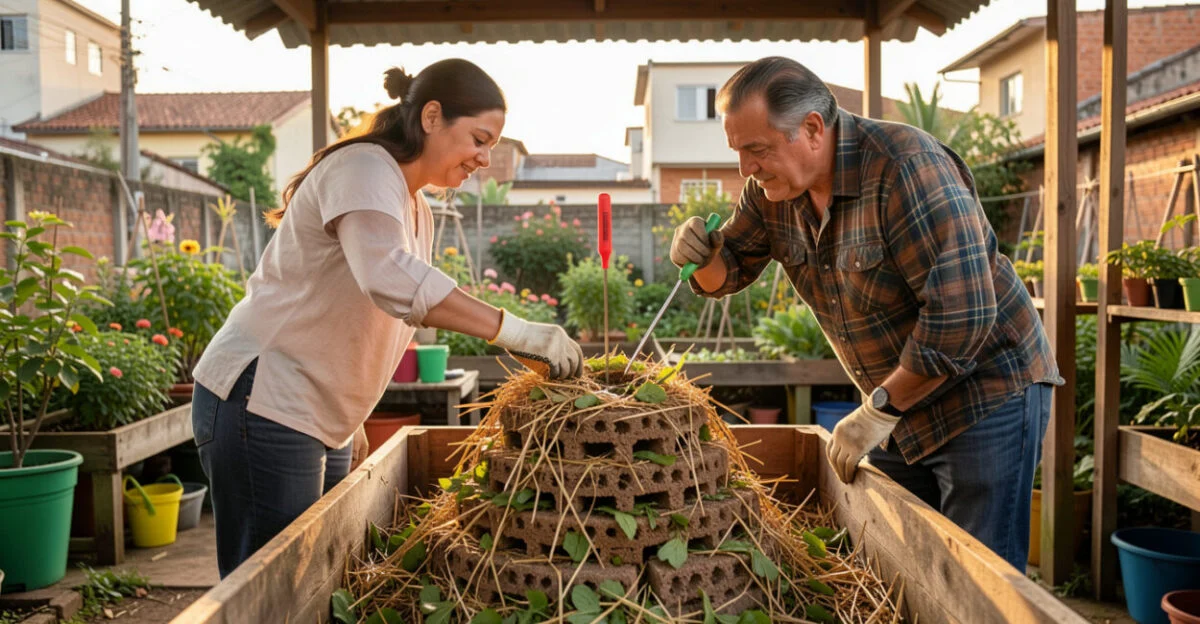
Heating usually indicates microbial activity, but temperature varies with pile size, materials, and climate. A probe thermometer can help track changes in the center. Without one, smell, moisture, and volume reduction still offer clues, but they don’t confirm that the pile has reached specific sanitary conditions.
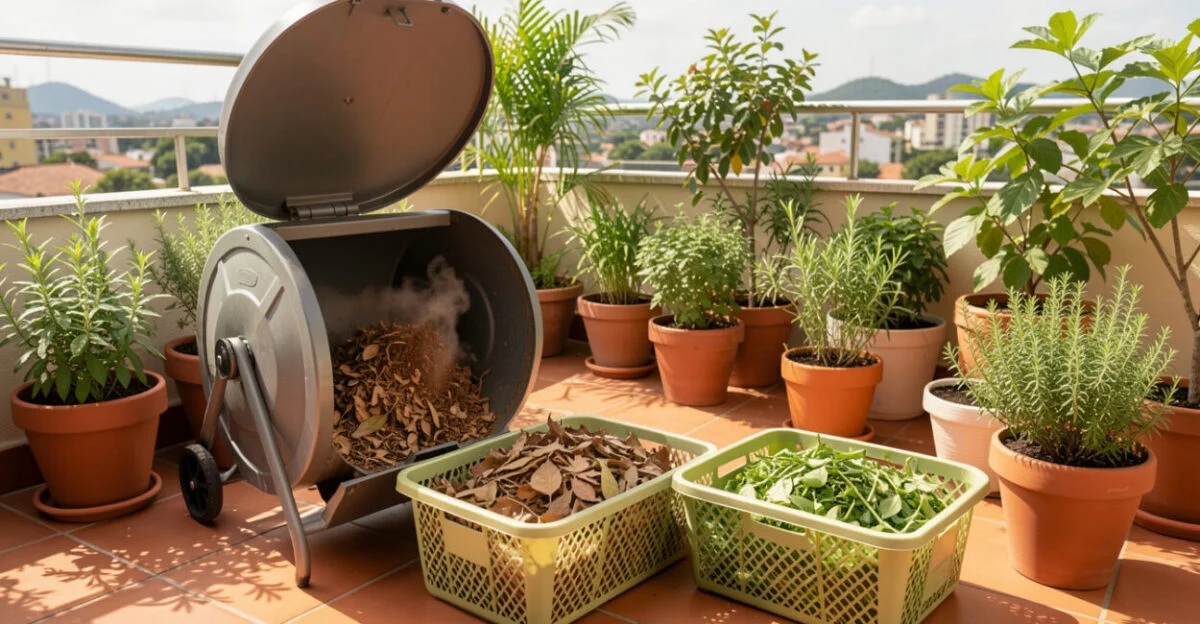
A well-managed windrow stays porous enough for air to circulate, moist but not waterlogged, and contains a mix of different materials.
Turning the pile replenishes oxygen and brings materials from the edges into the center. How often to turn it depends on how the batch is behaving: unpleasant odors, compaction, or excess moisture signal that it needs attention. Turning the pile unnecessarily can also dry out the mix and create extra work.
Monitor decomposition and fix common problems
A rotten smell usually indicates a lack of oxygen, excess water, or too much wet waste concentrated in one spot. Open up the pile, mix in dry material, and avoid compacting the layers. A mild earthy smell or the scent of decomposing plant matter is normal, but a strong, persistent odor calls for corrective action.
If the material is dry and decomposition seems to have stalled, check whether there’s enough water and whether the pile is large enough to retain heat. If it’s moist but showing no signs of heating or change, it may be short on nitrogen or contain pieces that are too large. Mix in suitable green waste and break up the larger pieces.
A common mistake is dumping a load of manure or fresh grass onto the pile and covering it with just a thin layer of straw. The wet mass compacts, airflow stops, and bad odors develop. Spreading the waste in layers and mixing in dry material helps prevent this problem.
Decomposition doesn’t follow a set timeline: climate, particle size, composition, and management all affect how long it takes. If the windrow cools down, microbial activity may have slowed, but that alone doesn’t prove the compost is mature.
Identify finished compost and use it responsibly
Compost is ready when it looks dark and uniform, smells earthy, and contains few recognizable scraps. It should also stay cool after being turned and left to rest. Wood chips or tough stalks may take longer to break down; sift them out and return them to a new batch.
Store mature compost out of the rain and harsh sun, without sealing it in a way that traps moisture. Apply it on top of the soil or work it in, depending on the crop and local technical recommendations. The right amount depends on the type of compost, the soil, and the crop’s needs; a soil test can help prevent applications without a clear basis.
Can you plant directly in organic compost? For sowing seeds and growing seedlings, avoid using immature compost on its own: it can heat up, tie up nitrogen during decomposition, or damage sensitive roots. Use mature compost mixed with soil or other components suited to the crop, and seek agronomic advice if you’re unsure.
Brazil’s Ministry of Agriculture and Livestock (MAPA) regulates fertilizer products, and requirements may vary depending on their intended use and whether they are sold. For personal use, visual signs of maturity are no substitute for testing when you need to know the material’s nutrient levels, salinity, or other properties.
Protect water sources and avoid risky materials
Don’t put plastic, glass, metal, batteries, oil, chemicals, treated wood, or sanitary waste in the pile. Avoid meat, dairy, and grease in open piles, too: they attract animals and can cause odors. Dog and cat waste, as well as waste from unknown sources, is not suitable for compost intended for food gardens unless it has received specific treatment and expert guidance.
Protect springs, wells, and waterways from runoff, and keep the site out of areas where stormwater flows. CONAMA Resolution No. 481/2017 covers composting facilities subject to environmental licensing; whether it applies depends on the operation and the relevant environmental rules. The official CONAMA website lets you look up resolutions, and your local environmental agency can clarify the requirements for larger-scale operations.
For diseased crops, invasive plants with seeds, or materials that may be contaminated, the safest approach depends on the hazard and the management options available. A typical home or farm compost pile does not guarantee the elimination of all pathogens and seeds. Set these materials aside until you get technical advice rather than assuming composting heat will eliminate every risk.
Frequently asked questions
Do I need to cover the pile?
A breathable cover, such as straw or a tarp placed loosely so the sides remain open, can help protect the pile from heavy rain and drying out. The pile still needs airflow.
Can I use sawdust in the mix?
Yes, as long as it comes from wood that hasn’t been treated, painted, or varnished. Sawdust is very fine and rich in carbon, so use it with wet waste and avoid adding it in large quantities where it could compact.
Can I compost in a dry climate?
Yes. Check moisture more often and water in small amounts when the material is dry. A cover also reduces water loss from sun and wind.
Does finished compost need to be sifted?
Not necessarily. Sifting helps separate larger pieces so you can return them to the windrow, and makes the material more uniform for garden beds or pots.
What should I do if flies appear?
Cover fresh, wet scraps with dry leaves, straw, or another carbon-rich material. Don’t leave waste exposed, and check whether unsuitable materials are attracting insects.
Can organic compost replace all fertilizer?
Not in every case. Compost provides organic matter and nutrients in varying proportions, so whether additional fertilizer is needed depends on the crop, the soil, and the available test results.
Artigos Relacionados
 Solar Energy on the Farm: Uses and Installation Planning
 Rural Tourism: How to Create a Farm Experience
 Rural Succession: How to Prepare Your Farm for the Future
 Seedling Production: How to Set Up a Rural Nursery
 How to Sell Farm Products Directly to Consumers
 Agricultural Input Inventory Management: Best Practices for Farms
