
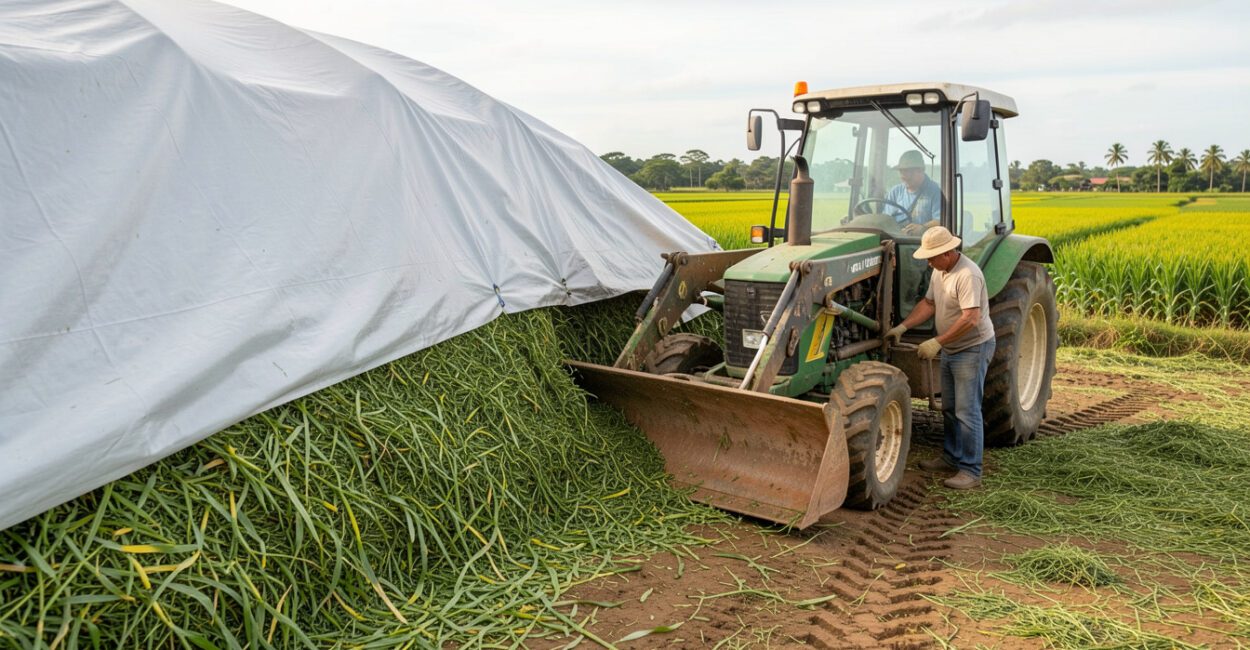
Poorly sealed silage can heat up and grow mold just when pasture quality declines and the herd needs feed most. To learn how to make silage with fewer losses, start by planning the forage crop, harvest, and silo size based on feed consumption. With corn, harvesting at the right maturity and compacting quickly are decisions that can make a big difference in the outcome.
Silage is forage preserved through anaerobic fermentation: microorganisms convert sugars into acids in an oxygen-free environment, lowering the pH and inhibiting spoilage. Simply put, chopped plants are stored and fermented inside a tightly sealed silo.

The process creates a reserve of feed, but it takes organization: the team needs to coordinate harvesting, transport, and filling without leaving the forage exposed for too long. You also need to plan where the silo will be located and how the silage will be removed later.
How to Make Silage: What Determines the Outcome
To make silage, choose a forage crop suited to your herd, harvest it at the right maturity and moisture level, chop it, spread it in layers, compact it, and seal the silo to keep out air. Then keep the seal intact and remove only what you need, moving steadily across the exposed face. The process varies depending on the crop and local conditions.
On most farms, losses start with one of these problems: forage harvested too wet, slow filling, insufficient compaction, or a damaged cover. Fixing these issues is usually more important than adding an additive without first identifying the problem.
The type of silo should also match the farm’s scale and logistics. When planning feed for the herd, consider how the reserve fits into the farm’s overall management, as discussed in livestock management strategies for small acreage.
What Do You Need to Make Silage?
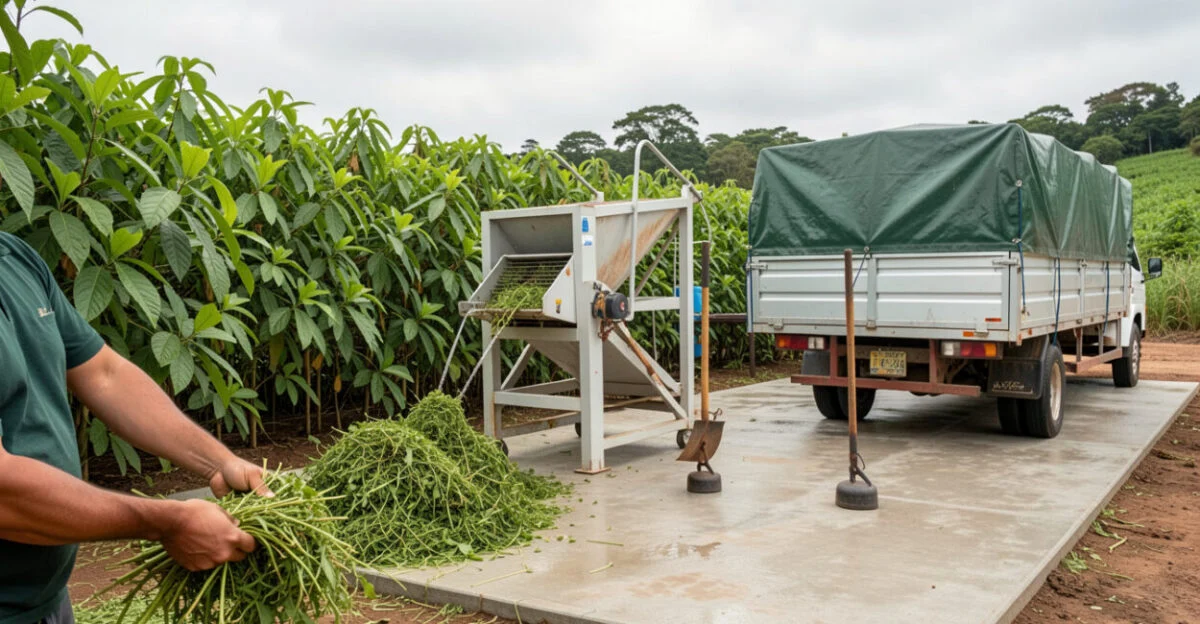
You need forage, a storage structure, equipment to chop and compact the material, and an appropriate cover for sealing. Silage ingredients may include the plant itself and, when a technical assessment recommends it, a specific additive. There is no universal mix that works for every crop.
- Forage: corn, BRS Capiaçu elephant grass, other grasses, or sugarcane, depending on the production system.
- Equipment: a forage harvester set to the desired particle size, transport equipment, and compaction equipment suited to the silo.
- Materials: an intact cover, materials to secure it and cover the edges, and, if needed, an additive recommended for that forage.
- Planning: a well-drained storage area, an available crew, and an estimate of how much silage the herd will consume.
Before you start, check that the forage harvester is working and that the cover is large enough for the entire silo. A disruption in transport or compaction can leave the forage exposed; even a small tear in the cover lets in oxygen and water.
Preserving feed on the farm requires broader planning for harvesting and storage. The same approach appears in guidance on grain storage and loss prevention, although silage requires different handling.
How to Choose a Forage Crop and the Right Harvest Stage

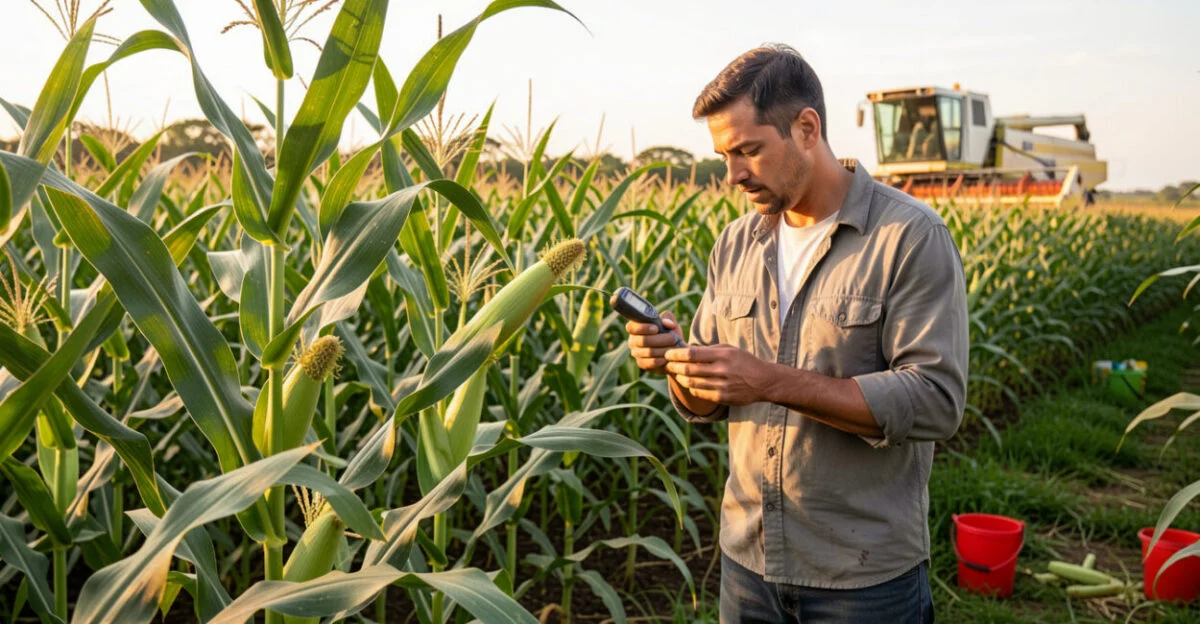
Corn is a common choice because it combines grain, which provides energy, with the whole plant, which contributes fiber. However, harvest timing depends on the hybrid, climate, plant moisture, and equipment settings; grain appearance alone is not enough to make the decision.
In general, the recommendation is to assess the whole plant and seek technical guidance to determine the harvest window. Forage that is too wet can produce effluent and lead to undesirable fermentation; dry forage is harder to compact, leaving pockets of air. For publications and recommendations from the institution, visit Embrapa Maize and Sorghum, Brazil’s agricultural research agency’s unit for those crops.
Forage crop What to watch for Management considerations Corn Balance plant moisture with grain maturity. Monitor harvest timing and adjust particle size. BRS Capiaçu elephant grass Tall plants that can have high moisture content, depending on harvest age. Assess chopping, moisture, and whether an additive or absorbent material is needed. Other grasses Composition and moisture vary by species and regrowth age. Avoid harvesting at a very young stage and adapt the process to the crop. Sugarcane Sugar can encourage undesirable yeast fermentation. Consider a specific treatment and technical guidance.
This comparison can guide your choice, but it does not replace an assessment of the crop. A recommendation for one species may not work for another variety or under different climate and management conditions.
How to Make Corn Silage: Harvesting, Compaction, and Sealing
Making corn silage starts before harvest: check the crop’s maturity, prepare the silo, and organize the workflow so the forage can be chopped, transported, and compacted without delay. Technical guidance should be based on whole-plant moisture and grain maturity, not just a date on the calendar.
- Prepare the site: Choose a well-drained location with room to maneuver. Have the cover and securing materials ready before harvesting begins.
- Adjust the forage harvester: Particle size must allow good compaction without compromising the physical structure of the ration. Follow guidance from the equipment manufacturer and the technical advisor.
- Fill in layers: Spread the forage evenly and keep it moving through the workflow. Thick, uneven layers make compaction more difficult.
- Compact continuously: Use suitable equipment and distribute its passes across the forage. Do not leave loose piles or uncompacted areas.
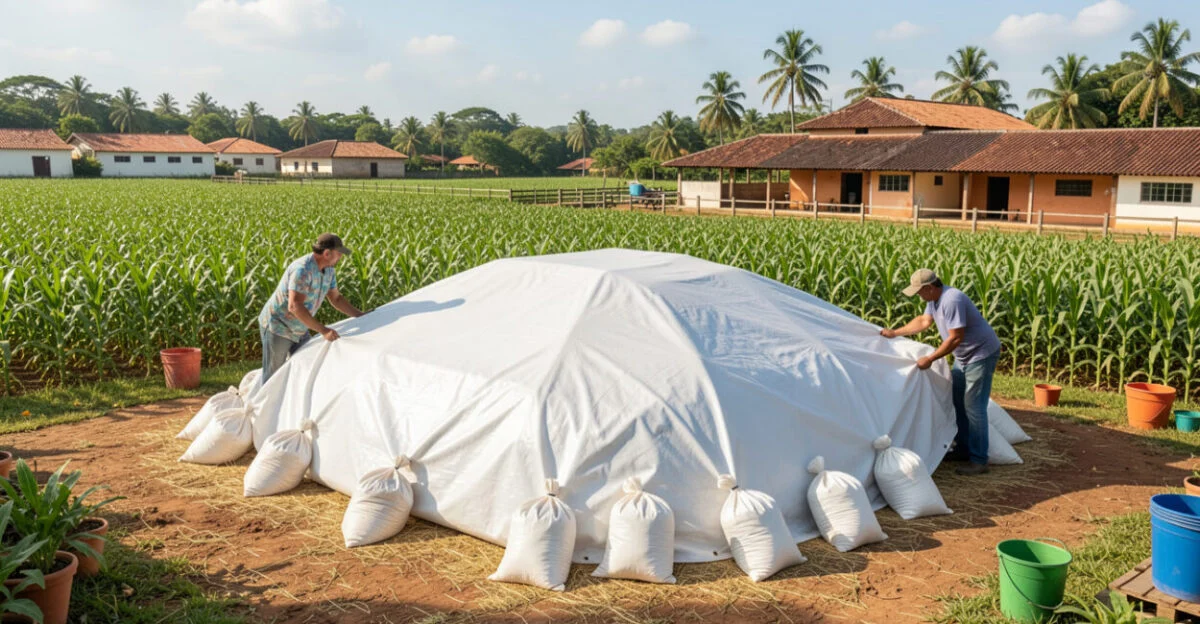
- Seal promptly: Cover the silo, secure the edges, and keep out water and air. Inspect the cover after sealing and repair any punctures.
A common mistake is to speed up harvesting but put off compaction. This creates oxygen-filled spaces that encourage heating and spoilage. The best solution is to coordinate the harvesting pace with transport and compaction capacity.
Consider a typical situation: the crew harvests faster than it can transport and spread the forage. The material piles up, compaction becomes uneven, and the silo remains exposed. Slowing the harvest or increasing transport capacity can prevent a bottleneck from undermining the work already done in the field.
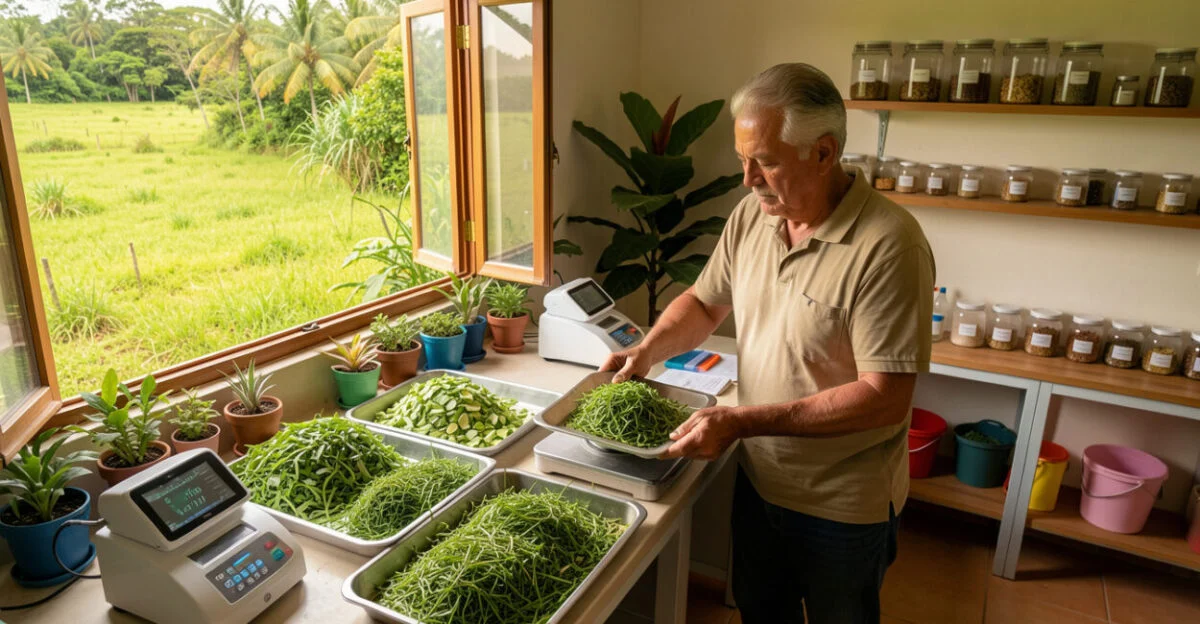
How to Adapt the Process for BRS Capiaçu, Grasses, and Sugarcane
The principle of preserving forage without oxygen applies to all these crops, but moisture and composition affect how they should be managed. Grasses and BRS Capiaçu can reach the silo with excess water; sugar in sugarcane can contribute to losses from alcoholic fermentation. For that reason, do not use the same settings or recipe as for corn without first assessing the crop.
Silage from BRS Capiaçu and Other Grasses
To make silage from BRS Capiaçu, assess the crop’s harvest age and moisture content. Proper chopping and careful compaction are essential. If the forage is too wet, a technical advisor can assess whether to use additives or an absorbent material. Adding cornmeal to BRS Capiaçu silage is not a one-size-fits-all solution: cornmeal changes the mix’s composition, so its use should take the ration and desired fermentation into account.
The same advice applies if you are looking into making grass silage in bags. The bags must be designed for this purpose, durable enough for storage, and tightly sealed without holes; compaction must expel the air. Grass moisture and additive selection determine whether this method is suitable for your farm.
Sugarcane Silage and Additives
When planning how to make sugarcane silage, keep in mind that fermentation can produce alcohol and reduce the feed’s value. Choose an inoculant for sugarcane silage based on the crop and your goal, following technical guidance; the same applies to inoculants for BRS Capiaçu silage. An additive cannot make up for unsuitable forage, poor compaction, or an imperfect seal.
Embrapa Dairy Cattle, a unit of Brazil’s agricultural research agency, provides information on feeding and forage preservation that can help put these choices in context. Review publications from Embrapa Dairy Cattle and compare its recommendations with the actual condition of your crop and herd.
How to Choose a Silo and Store Silage
The silo should allow filling and removal at a pace that matches the volume produced and daily consumption. Trench, bunker, and bag silos can all work, provided the structure is suitable, the seal is reliable, and the removal routine does not expose a large area of the silage to air.
- Trench silo: Makes it easier to compact larger volumes but requires a prepared area, drainage, and access for machinery.
- Bunker silo: Does not require excavation, but needs a suitable base, good compaction, and a cover secured against wind and rain.
- Bags: May work for smaller volumes or specific situations; each bag must be sealed and protected against punctures.
After sealing, protect the cover from tears and standing water. When you open the silo, remove silage across an even face, move forward without creating recesses, and discard spoiled material. If the face is uneven, exposed areas take in air and heat up before the rest of the silage.
There is no single removal rate that works for every silo. It depends on the weather, the density of the silage, the exposed area, and herd consumption. If you are unsure about the structure or have ongoing losses, a technical advisor can assess the silo size and management practices.
How to Assess Silage, Calculate Costs, and Feed It
Well-preserved silage usually has a pleasant acidic smell, a color consistent with the forage, and no visible mold or unusual heating. A rotten smell, mold, and a warm mass are warning signs, but visual inspection and smell alone cannot determine the feed’s nutritional value or safety.
Cost per pound depends on the region, growing season, scale, forage crop, harvest yield, labor, fuel, machinery, additives, and losses during storage and removal. That is why there is no reliable universal price per pound of silage.
To calculate the cost, add production and storage expenses and divide by the total pounds actually used. Illustrative example: if a hypothetical operation costs $1,000 and 11,023 lb of usable silage remain after losses, the calculated cost is $1,000 ÷ 11,023 = about $0.09 per lb. These figures are for illustration only, not a market price reference.
When feeding silage, include it in a ration formulated for the animal’s class and desired production level. Dietary changes require monitoring because silage varies with the plant, fermentation, and storage conditions. For help with feeding decisions, SENAR, Brazil’s National Rural Learning Service, offers resources and agricultural training programs.
Frequently Asked Questions
How long should silage stay sealed before use?
The time depends on the forage crop and fermentation conditions. Follow technical guidance for the crop, and do not open the silo until fermentation has stabilized.
Can an inoculant replace compaction?
No. An inoculant may promote a specific type of fermentation when selected for the material, but it does not remove air from the silage or fix a poorly sealed cover. Compaction and sealing are still essential.
Can moldy silage be used?
Visible mold is a sign of spoilage and can pose a risk to the herd. Do not automatically mix the affected portion into the ration: set it aside and seek a technical assessment, especially if there is heating, a bad smell, or extensive spoilage.
Is a bunker silo suitable for a small farm?
It can be, provided the farm can compact and seal the amount produced and remove the silage without leaving a large face exposed. If consumption is low, compare a bunker silo with bags or other structures sized for the operation.
Before planting or harvesting, estimate herd consumption and choose a structure that lets you compact and remove the forage at the required pace. Then check the crop’s harvest stage with local technical support and organize the crew and equipment before harvesting begins.
Artigos Relacionados
 Beef Cattle Management: How to Organize Herd Care and Feeding
 Marketing Channels: From Farm to Store Shelf
 How to Choose Neutral Colors to Make Spaces Look Bigger
 Home Composting: Feed Your Garden Without Waste
 Neighborhood Store: 5 Ways to Attract Customers in 2025
 Store Manager: The Complete Guide to Excelling in Retail Leadership
