An empty container may still contain residue that can contaminate people, animals, and water. That’s why pesticide container disposal starts as soon as the product is applied: follow the label and package insert, prepare the container according to its type, store it in a safe place, and return it to an authorized collection site within the applicable deadline.
The process depends on whether the container can be rinsed and on the receiving facility’s requirements. Confirming the address, hours, and whether you need an appointment can save you a wasted trip and help you keep proof of delivery.

Before you begin
- Check the product label and package insert, including instructions for rinsing and returning the container.
- Identify which containers can be rinsed and which must not be rinsed.
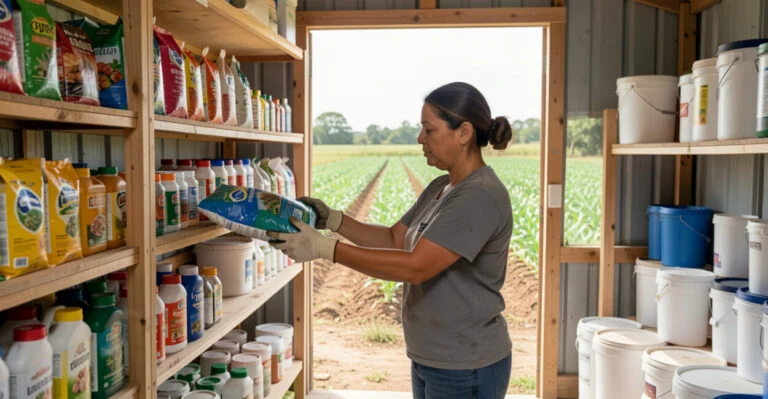
- Set aside a temporary storage area protected from rain, heat, unauthorized access, and animals.
- Check with the collection site about how deliveries work in your area.
How to dispose of pesticide containers after use
After emptying a container, follow the procedure on the label and package insert: rinse rigid containers that can be rinsed immediately after use, set aside non-rinsable containers without rinsing them, and store each type safely until you return it. Take them to an authorized facility, following local requirements, and keep proof of delivery.
Rinsing immediately reduces the amount of residue left in the container and keeps the product from drying on the inside walls. Use the protective equipment specified for handling, and never reuse the container for water, food, fuel, or any other purpose.
Do not burn or bury these containers, leave them in the field, or put them in the regular trash. In addition to the risk of exposure and contamination, these practices keep the material from entering the proper collection and disposal system.
You remain responsible for an empty container until you return it to an authorized facility.
How to triple-rinse and prepare each type of container
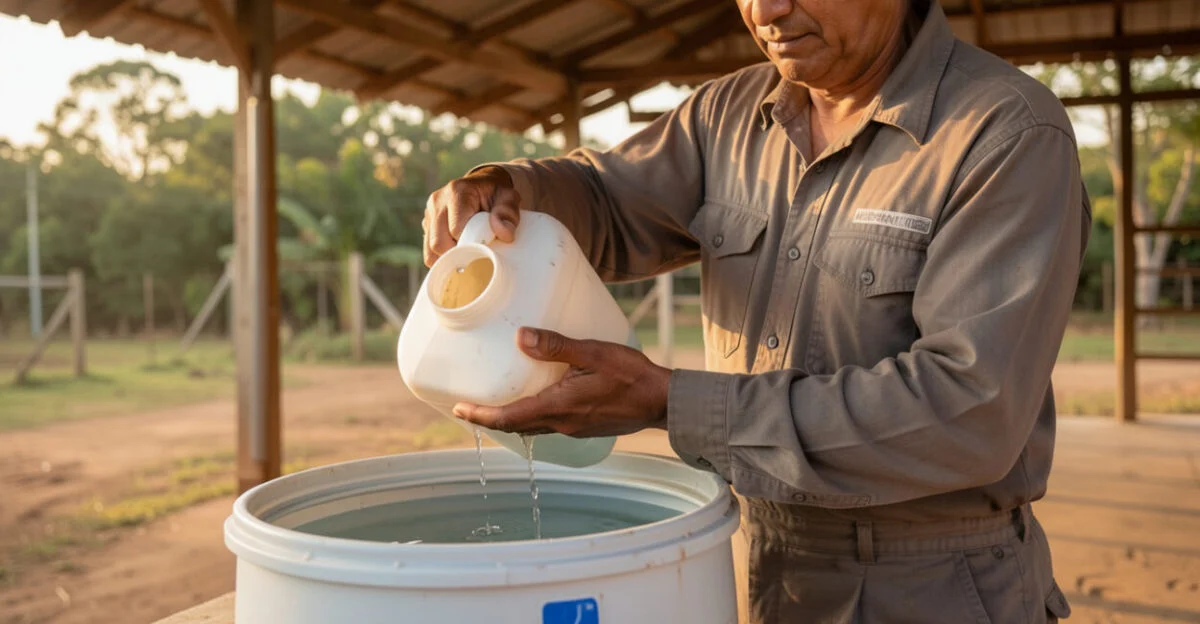
Triple-rinsing means rinsing a rigid, rinseable container three times and adding each portion of rinse water to the spray mixture as directed by the product instructions. This process does not apply to every type of container: bags, cardboard boxes, and containers labeled as non-rinsable must be returned according to the instructions on the label and package insert.
For a rinseable container, rinse it each time immediately after emptying: add clean water until the container is about one-quarter full, close it, and shake for about 30 seconds. Then pour the rinse water into the sprayer tank. Repeat twice more. Use the rinse water in the application; do not pour it onto the ground or into waterways.
After rinsing, let the container drain and render it unusable as directed by the manufacturer and collection system, without damaging labels or other parts needed for identification. Do not puncture or crush containers on your own if the facility specifies a different preparation method. For bags and other non-rinsable containers, keep any residual contents contained and package them as directed on the label and in the package insert.
A common mistake is rinsing a container that should be returned without rinsing. This can spread residue and go against the product instructions. If the label is unreadable or you are unsure which category the container belongs to, don’t guess: keep it separate and check with the manufacturer or collection facility before preparing it.
How to store empty containers on the farm

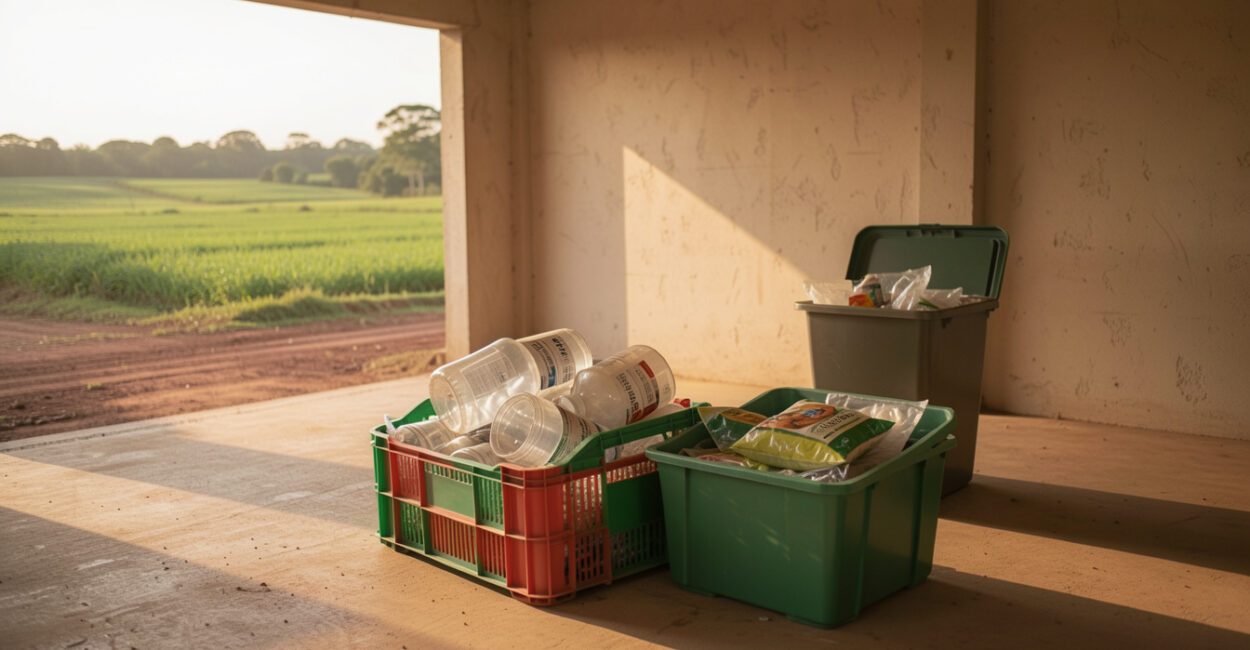
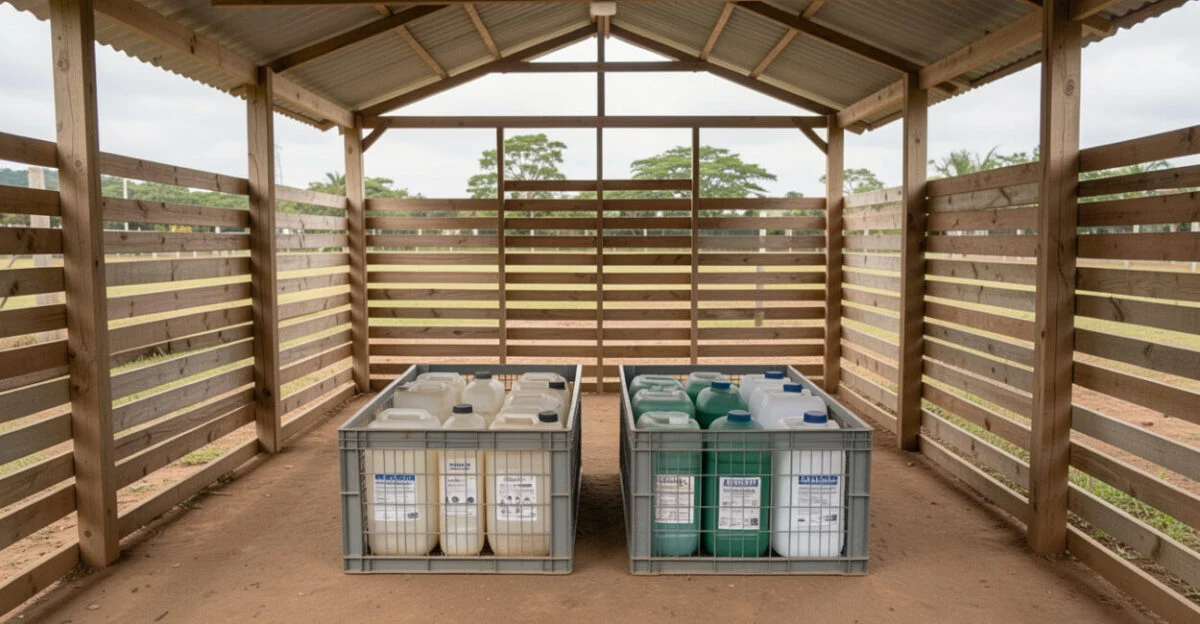
Until you return the containers, keep them in a covered, well-ventilated area with restricted access, away from homes, food, water sources, and areas where animals move around. Protect them from rain and direct sunlight, and don’t leave them loose in a truck bed, in a tool shed, or alongside agricultural supplies.
Keep rinseable and non-rinsable containers separate, and preserve their identification. If a container leaks, is damaged, or has residue outside it, avoid direct contact, keep people away from the area, and follow the emergency instructions on the label and in the package insert. For a significant incident, seek technical advice and contact the appropriate authorities.
Here’s a common situation: spraying ends near the end of the workday, and the containers won’t be returned until another day. The safe approach is to rinse the rinseable containers immediately, separate the others, and move everything to a protected temporary storage area rather than leaving them next to the sprayer overnight.
Safe storage means preventing access, protecting containers from the elements, and keeping containers that require different preparation methods separate.
Read also: Silage: How to Produce and Store Feed for Livestock
Where to return empty pesticide containers
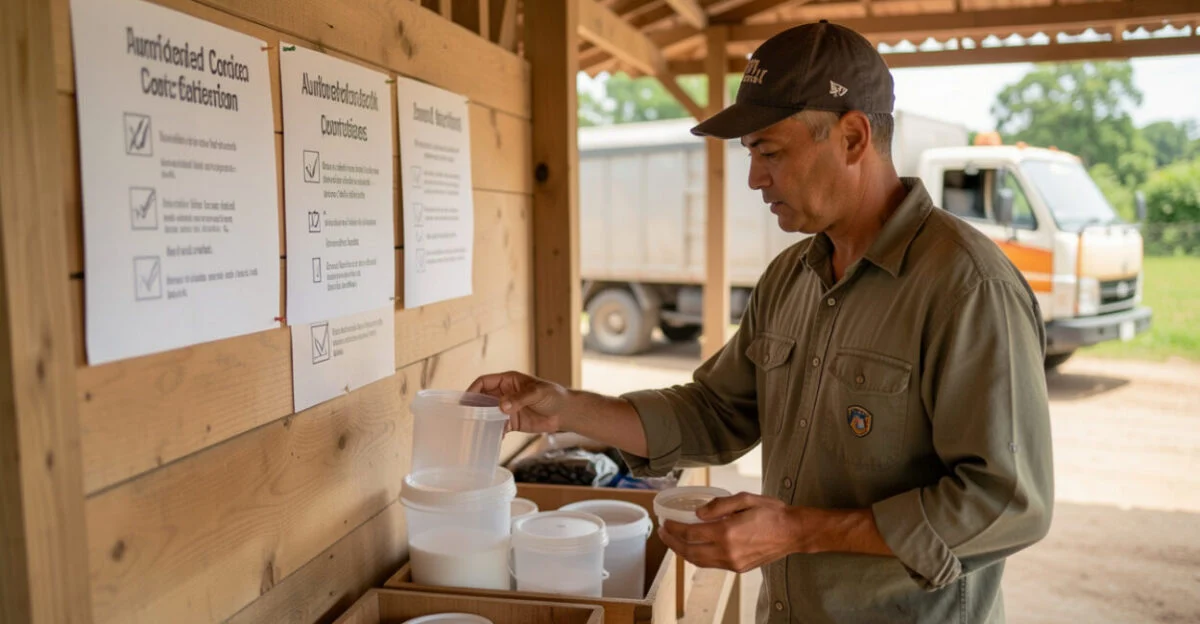
Return the containers to an authorized collection center or drop-off site. Find one through INPEV’s official channels or ask your retailer or local authorities for a recommendation. Before leaving the farm, contact the facility directly to confirm its address, hours, accepted container types, required documents, and whether you need an appointment.
A collection site may have its own operating requirements, such as sorting containers by material or organizing the load in advance. Requirements vary, so don’t assume one facility operates like another. INPEV’s official website is a good starting point for information about the system and facility locations.
Read also: Agricultural Sprayer: How to Calibrate Your Application
If your farm is far from a collection center, ask your retailer or the nearest facility about options in your area. Don’t leave containers at a store or a neighbor’s property unless you’ve confirmed that the location is authorized to accept them.
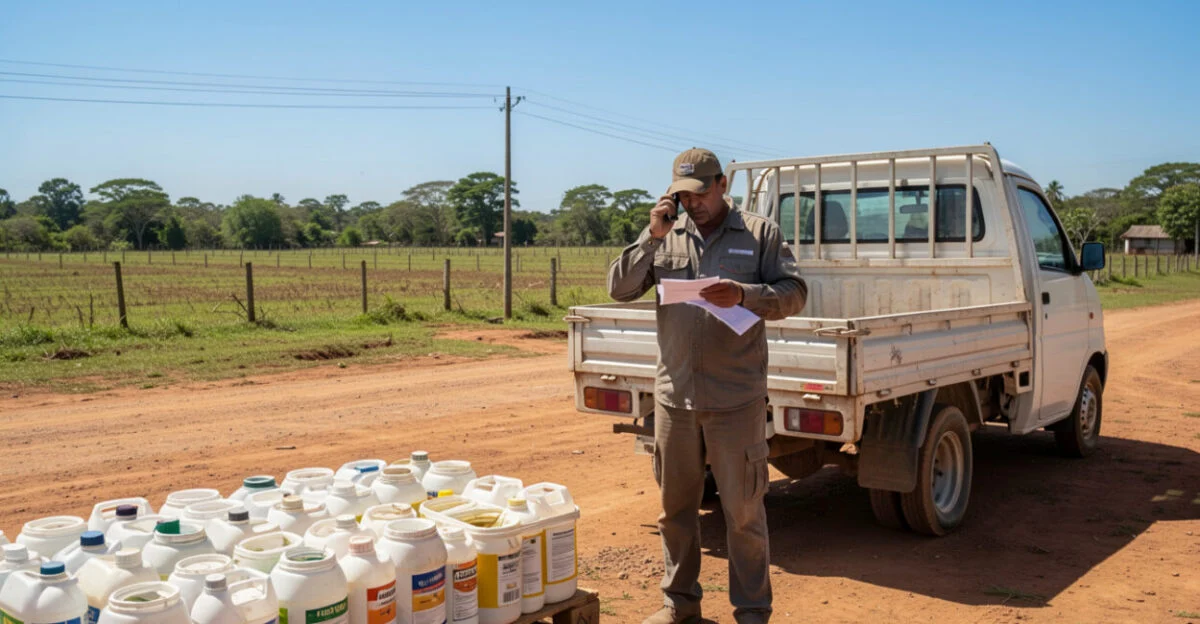
If you search for “INPEV phone number,” check the contact information published through official channels and make sure it’s for the service or facility you need. A number in an old directory may not reflect current hours or requirements.
How to check INPEV appointment, address, and phone information
INPEV is the National Institute for the Processing of Empty Containers (Instituto Nacional de Processamento de Embalagens Vazias), which manages the Campo Limpo system. The system brings together manufacturers and other participants to handle reverse logistics for agricultural pesticide containers. Collection facilities handle local operations; the institute organizes and supports the system, but it does not replace the need to confirm requirements directly with each drop-off site or center.
To schedule an appointment with INPEV, find the facility for your area through official channels and follow the instructions for that location. If the tool doesn’t clearly say whether an appointment is required, call the facility before loading your vehicle. Also confirm that it accepts all the materials you’ve set aside and how they should be packaged.
To make the most of your trip, sort the containers by type, protect them during transport, and bring any documents the facility requires. Keeping farm operations organized is also part of safe fieldwork, a topic related to the work of an agricultural technician on the farm.
Return requirements and what to keep as proof
Anyone who uses the product must follow the instructions on the label and in the package insert, prepare and store containers safely, and return them according to applicable rules. Check current laws and product instructions for deadlines and procedures; don’t rely on general information instead of checking what applies to your situation.
When you return the containers, ask for and keep the receipt issued by the facility. It documents the return and may be important to show that you completed this step. Also keep purchase and application records as required for your operation and property.
Step Action Records to keep Purchase and use Keep product information and follow the label and package insert. Purchase receipt or document and activity records, when applicable. Preparation and storage Separate rinseable and non-rinsable containers and keep them protected. Product instructions and internal records, if used on the farm. Return Take containers to an authorized facility and confirm they have been received. Return receipt issued by the collection site.
An organized approach to managing supplies and soil can be complemented by sustainable agriculture practices, but that doesn’t change the specific return requirements.
What Law No. 14,785/2023 and NR 31 say
Law No. 14,785, dated December 27, 2023, establishes Brazil’s federal legal framework for the research, production, registration, sale, use, inspection, and disposal of pesticides and related products. To determine how a requirement applies to a specific case, consult the current text of the law and relevant regulations. Don’t attribute a specific rinsing procedure or local appointment requirement to the law without checking.
Law No. 14,785/2023, on the Legislation Portal, should be read alongside applicable rules and guidance. NR 31, issued by Brazil’s Ministry of Labor and Employment, covers occupational safety and health in rural work, including measures related to pesticide handling, worker protection, and working conditions. It does not replace product return instructions or applicable environmental rules.
Check the current version of NR 31 on the Ministry of Labor and Employment website, and take the specifics of your work, product, and jurisdiction into account. If you have questions about deadlines, documentation, or requirements, check with the appropriate agency or a qualified technical professional.
The details most likely to vary locally are the receiving facility’s operations: its address, schedule, and acceptance requirements may change. The safest approach is to consult an official source and confirm directly with the drop-off site before transporting the material.
As a next step, sort the containers by type today and check the label and package insert. Then confirm the required preparation, hours, and appointment requirements with the nearest authorized facility; return the material and file the receipt.
Frequently asked questions
Can I put the containers in the recycling bin?
No. Containers must be returned to an authorized facility, even if they look clean or are empty.
Should I rinse bags and cardboard boxes too?
Don’t assume they can be rinsed. Check the label and package insert, and follow the specific instructions for non-rinsable containers. Keep them separate and return them as directed.
What should I do if a container is damaged?
Avoid direct contact, and don’t try to transfer the residue without technical guidance. Isolate the material, check the product’s emergency instructions, and ask the receiving facility what to do before transporting it.
Do I need to schedule every delivery with INPEV?
Don’t assume the same requirements apply everywhere. Check with the center or drop-off site you plan to use to find out whether it requires appointments, what hours it’s open, and which types of containers it accepts.
What should I do if I lost the return receipt?
Contact the facility that received the material and ask whether it can locate the record or issue a replacement. Note the approximate delivery date and gather your farm and load details to help with the search.
Is there an official PDF with return requirements?
INPEV and government agencies may publish guidance, but the documents available and their versions can change. Download materials from official channels, and use the label, package insert, and current rules as references for your product and region.