

Play-based learning is an educational approach that intentionally and thoughtfully incorporates games, play, and hands-on activities to engage students and support their cognitive, social, and emotional development.
Putting this approach into practice requires curriculum alignment, clear objectives, and formative assessment. Effective implementation combines active learning strategies, instructional design, and adaptations for the diverse needs of the classroom. In recent years, public policies and neuroscience research have reinforced the role of play in learning, showing gains in attention, retention, and creativity when play-based learning is used with purpose.

Key Takeaways
- Play-based learning boosts engagement and content retention.
- It requires curriculum alignment and formative assessment.
- It combines social-emotional skills with cognitive objectives.
Foundations of Play-Based Learning
Theoretical Principles of Play-Based Learning
The theoretical foundation of play-based learning draws on constructivism, sociocultural theory, and research on motivation. It values action, productive struggle, and interaction as catalysts for development. By aligning learning objectives with playful activities, teachers create rich opportunities for exploration. This supports long-term memory and problem-solving skills in authentic contexts.
Cognitive and Emotional Benefits
Play-based learning strengthens attention, reasoning, and creativity. Well-designed activities encourage learning to transfer across domains and help students grasp concepts through meaningful practice. Beyond cognitive benefits, play also has a significant social-emotional impact: it encourages empathy, self-regulation, and collaboration—essential skills for the 21st century.
Planning and Instructional Design
How to Plan Play-Based Learning Activities
Planning starts with setting clear objectives and assessment criteria and selecting appropriate game mechanics. Activities should be iterative and allow for ongoing feedback. Map out the resources, time, and space needed to ensure they are feasible. Differentiated instruction is essential to accommodate different learning paces and styles.
Designing Formative Assessments
Assessment should be built into the play experience, using observation, portfolios, and targeted rubrics. Immediate feedback supports learning and helps teachers adjust instruction. Qualitative indicators complement quantitative data to provide a broad picture of student progress. Use checkpoints to monitor skills and learning goals.
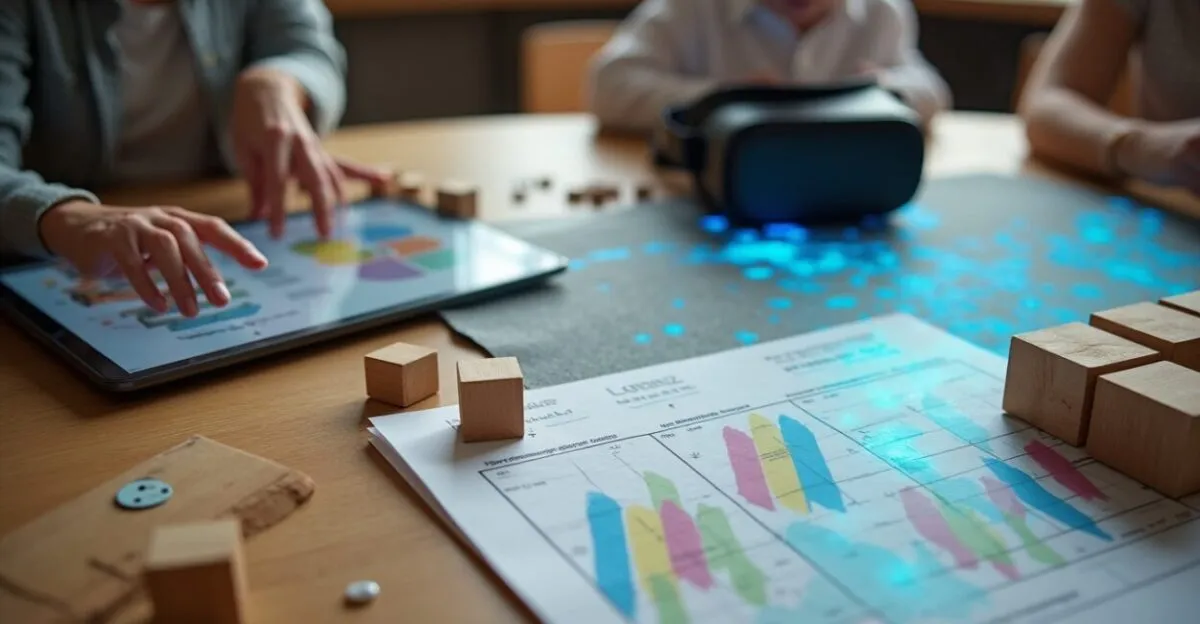
Tools and Technologies (Table)

Digital and Physical Resources
Digital tools such as gamified platforms and simulators expand what’s possible. Analog resources—cards, board games, and hands-on materials—remain valuable for sensory experiences. The choice between digital and physical resources should take learning objectives, accessibility, and infrastructure into account. A blended approach often delivers better results when the tools are well integrated.
Platform Comparison
Here’s a comparison of platforms and resources to help guide your selection based on features, cost, and instructional support.
| Resource | Advantages | Limitations |
|---|---|---|
| LMS gamification | Automated feedback; data | Requires infrastructure |
| Simulators | Realistic context | Cost and learning curve |
| Hands-on materials | Sensory and inclusive | Scalability |
Implementation at Different Grade Levels
Early Childhood and Elementary Education
In early childhood education, play-based learning is central: play helps children build symbolic worlds that support early literacy as well as motor and social development.
In elementary school, structured games and interdisciplinary projects connect content with practice, fostering independence and critical thinking from an early age.
High School and Career and Technical Education
In high school, play-based learning can bring together labs, projects, and career simulations, bridging theory and practice and preparing students to take initiative.
Leia também: The Role of Schools and Families in Shaping Values: Foundations and Concepts
Career and technical education programs benefit from simulations and serious games that replicate procedures, reducing risks and improving retention of procedural skills.

Assessment and Evidence
Measuring Success in Play-Based Learning
Measures include engagement, task performance, transfer of learning, and social-emotional indicators. Rubrics and portfolios document qualitative progress.
Leia também: How to Motivate Adult Education Students to Keep Studying
Systematic data collection makes it possible to make iterative adjustments. Longitudinal studies provide robust evidence of the impact on achievement and overall development.
Research and Public Policy
Applied research and education policies have recognized the benefits of play-based learning in formal settings. Reports from universities and education agencies inform classroom practice.
Institutional guidelines encourage teacher training and investment. For reference, consult major media outlets and institutions such as BBC Education, as well as education standards.
Case Studies and Best Practices (Table)
Real-World Examples of Implementation
Case studies show how play-based learning has been implemented in public and private school systems, with curriculum adaptations and teacher training. Results point to stronger engagement and a more positive school climate.
Document processes, resources, and outcomes to make successful approaches replicable. Collaboration between schools and universities strengthens action research and continuous improvement.
Comparing Institutional Models
Here’s a comparison of institutional models, focusing on teacher training, infrastructure, and outcomes.
| Model | Training | Impact |
|---|---|---|
| Public School System A | Modular training | Improved engagement |
| Private School B | Instructional team | Strong project performance |
| Community Project | Co-creation | Social inclusion |
Practical Recommendations and Teacher Training
Training for Play-Based Learning
Teacher training should cover activity design, formative assessment, and classroom management. Hands-on workshops and mentoring help teachers apply what they learn in their daily work.
Encourage professional learning communities where teachers can share resources and reflect on their practice. Ongoing training is key to sustaining the initiative.
Policy and Scalability
Scaling up requires clear policies, funding, and impact assessment. Partnerships with universities and education platforms can extend the reach and improve the quality of these practices.
Consider piloting initiatives and collecting evidence before expanding them. Scalable models preserve local flexibility while centralizing technical support.
Frequently Asked Questions
What Is Play-Based Learning, and Why Is It Important?
Play-based learning is an approach that incorporates games and play into the educational process to promote engagement, motivation, and cognitive and social-emotional development. It matters because it creates meaningful contexts in which students experiment, collaborate, and solve real-world problems, improving retention and transfer of knowledge. It also fosters 21st-century skills such as creativity and critical thinking. When implemented with curriculum alignment and formative assessment, play-based learning enhances educational outcomes and promotes inclusion.
How Can You Implement Play-Based Learning in a Classroom with Limited Resources?
Implementing play-based learning with limited resources takes creativity: use recycled materials, paper games, role-play, and collaborative projects. Plan activities aligned with the curriculum and use simple formative assessments, such as observation and portfolios. Invite students to co-create activities to boost engagement and adapt tasks to the local context. Partnerships with community organizations and open educational resources can also help. The key is to focus on learning objectives, not technology, and ensure activities are accessible and relevant.
What Evidence Supports the Effectiveness of Play-Based Learning?
Studies have linked play-based learning to improvements in attention, retention, academic performance, and social-emotional skills. Longitudinal research and institutional reports show positive impacts when planning and assessment are consistent. Active learning strategies and neuroscience research reinforce the idea that engaging learning experiences support memory consolidation. For more information, consult academic sources and specialized outlets that document research and outcomes across different settings.
How Do You Evaluate Outcomes in Play-Based Learning Projects?
Evaluate play-based learning projects using rubrics, structured observations, portfolios, and knowledge-transfer tasks. Combine quantitative indicators (task performance) with qualitative ones (collaboration, creativity). Ongoing feedback and checkpoints are essential for instructional adjustments. Document evidence through learning records and gather input from students and families to develop a holistic view. Analyzing this data supports decision-making and makes the case for investing in play-based practices.
What External Resources Can Support Implementation?
Useful resources include teaching guidelines from universities, education platforms, and open materials. Major media outlets and institutions offer resources, research, and training to support activity design. For example, consult education platforms and research institutes for protocols and case studies. Links and partnerships with education organizations strengthen teacher training and access to tools, expanding opportunities to use play-based learning in different school settings.
Artigos Relacionados
 Play-Based Learning: Practical Strategies for Teachers
 Project-Based Learning: How to Get Started Today
 Early Childhood Education: The Importance of Play in Child Development
 Active Learning: Practical Techniques to Engage Students
 Active Learning Methods: Strategies to Engage Students
 Assessing Learning: Modern and Innovative Methods for Students
