
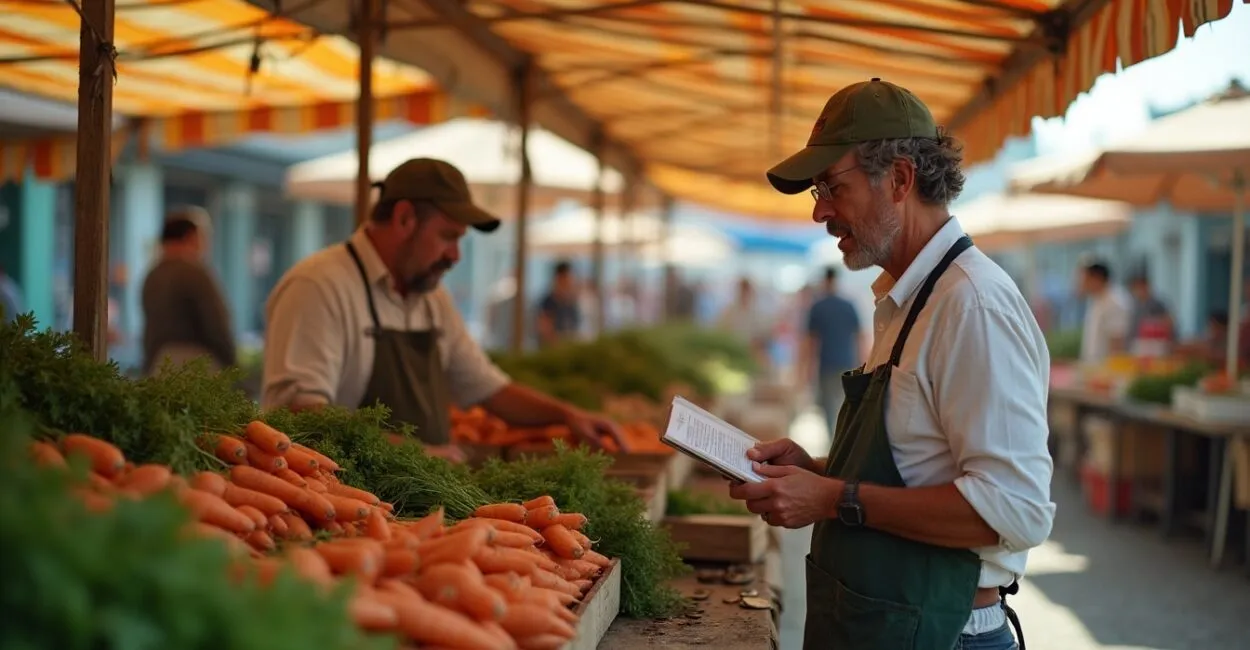
Have you ever felt frustrated to learn that the price shoppers pay at a farmers market seems fair, while growers can barely cover their costs? It’s frustrating to see the people who grow the food lose out to the people who organize the market.
I’ll show you what really goes on at organic farmers markets: middlemen, hidden fees, expensive certifications, and unfair competition. You’ll find real grower profiles, case studies, and practical alternatives to boost direct income—without the corporate spin. Keep reading: I’ll expose the imbalances and share solutions you can demand today.

Organic Farmers Markets: Who Controls the Supply Chain—and Why
You might think farmers markets are local, democratic spaces. But think about it: whoever schedules booths, sets fees, and screens products controls the game.
- Middlemen who “organize” the market and charge for visibility.
- Registration and logistics fees with no clear explanation.
- Selection criteria that favor vendors who already have resources.
These factors show how decision-making power shifts value from growers to organizers. This isn’t a conspiracy theory: it’s the economics of farmers markets.
Why Expensive Certifications Shut Out Small Growers
Organic certifications build trust—but they cost money. Many small growers can’t afford them, so they sell their products as “almost organic.”
- Annual fees and in-person inspections.
- Time and paperwork to keep records up to date.
- Lost sales to competitors who can afford the certification seal.
As a result, smaller growers are shut out or rely on middlemen who “take care of” certification—for a cut of their income.
Read also: Organic Certification: When It Pays Off for Herbs

Case Study: Dona Marisa and the Market Stall That Nearly Closed

Dona Marisa has been selling at markets for 12 years. In 2019, she was asked to pay for a “visibility plan.” She agreed, and her net income fell 27% in three months.
| Month | Gross sales | Fees | Net income |
|---|---|---|---|
| Jan | R$ 4.200 | R$ 400 | R$ 3.800 |
| Mar | R$ 4.000 | R$ 1.100 | R$ 2.900 |
This isn’t an isolated case. Many farmers markets use sales models that prioritize infrastructure over fairness. Here’s the key: simple transparency can change the game.
Read also: Small-scale farmers: pillars of Brazil’s domestic food supply
Practical Ways to Boost Growers’ Direct Income
Ready to take action? Growers can work together to cut out middlemen and keep prices affordable for consumers without losing their competitive edge.
- Form cooperatives to negotiate booth space and logistics.
- Sell directly through CSA (Community Supported Agriculture) programs.
- Partner with local restaurants and community markets.
Working together cuts costs and gives growers more pricing power. To learn how to set up a CSA, consult government guides and academic studies on family farming: Ministry of Agriculture and FAO.

What to Avoid When You Attend or Organize Farmers Markets
- Signing contracts without checking the fees.
- Relying on just one sales channel.
- Assuming a certification seal tells a grower’s whole story.
Avoiding these pitfalls means paying close attention to contracts and diversifying sales channels. Many growers lose their profit margin by putting too much faith in promises of “traffic” that never materialize.
What Works: Growers Who Increased Their Income
Three types of growers stand out: those who add value through processing, those who organize direct sales, and those who join a network. It’s not luck—it’s strategy.
- Food processors: jams and preserves with higher profit margins.
- Subscription sales: predictable revenue.
- Bartering networks: shared logistics cut costs.
These strategies have increased net income by 15–40% when applied consistently. Want practical examples? Read reports from major news outlets about local markets and the solidarity economy: BBC Brasil.
How You, as a Consumer, Can Make a Difference Today
You have the power to make a difference. Buying directly from growers, asking where food comes from, and choosing producers who work together can shift the balance. Demand transparency: market organizers should publish their rules and fees. When consumers insist on it, organizers change their practices. It’s that simple.
Frequently Asked Questions
What Is the Main Imbalance at an Organic Farmers Market?
The main imbalances are middlemen who charge for visibility, unclear fees, and certification barriers. These shift income from growers to organizers. As a result, the final price doesn’t reflect fair pay for farmers, creating inequality in a market that should be fair and direct.
How Can Small Growers Reduce Certification Costs?
Growers can pursue group or participatory certification, share inspection costs through cooperatives, and take advantage of public support programs. Cooperatives spread costs across members, making certification more affordable. They can also strengthen direct sales to consumers and local restaurants, improving net margins.
What Are Real Alternatives to Selling at Traditional Farmers Markets?
Options include CSA programs with weekly subscriptions, online sales with shared delivery, partnerships with restaurants and neighborhood markets, and direct sales from permanent locations. These approaches make income more predictable and reduce fees charged by market organizers, giving growers more control over prices and sales volume.
How Can Consumers Identify Growers Worth Supporting?
Ask about costs and growing methods, and whether the grower belongs to a network or cooperative. Look for growers who explain where their products come from, what’s in season, and how they’re produced. You can also seek out products with participatory certification or clear traceability, supporting fairer practices.
What Public Policies Can Help Level the Playing Field at Organic Farmers Markets?
Helpful policies include subsidies for group certification, logistics support for cooperatives, rules governing farmers market fees, and public food purchasing programs. These measures lower costs, expand access, and encourage direct sales models that benefit family farmers and consumers through fairer prices and better quality.
Artigos Relacionados
 Organic Fertilizer: Recipes and Uses for More Fertile Soil
 Sustainable Investing in Financial Markets: How to Get Started
 Public School Purchasing: Bringing Local Farmers Onboard
 Organic Farming: Profitable Niches for 2025
 Rural Technology: Drones and Sensors That Boost Profits
 Financial Markets in the AI Era: Proven Ways to Boost Workplace Productivity
