
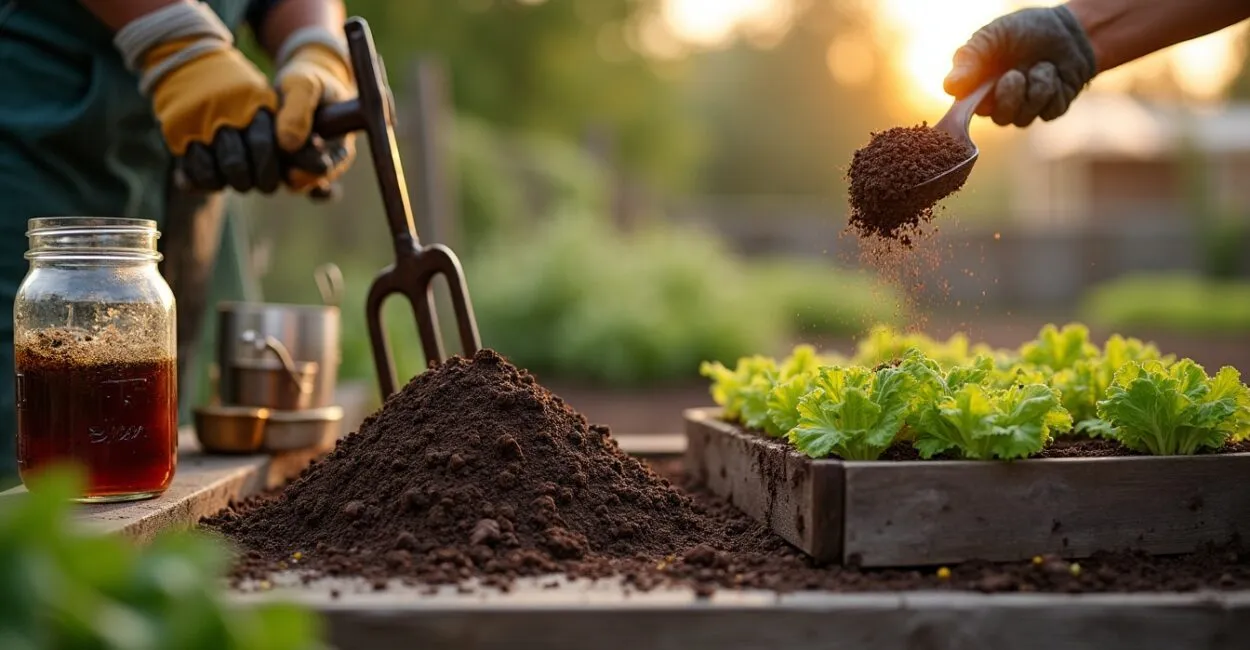
Organic fertilizer is material of biological origin applied to soil or plants to supply nutrients, improve soil structure, and increase microbial activity.
Organic fertilizer is essential for restoring and maintaining soil fertility, reducing dependence on chemical inputs, and supporting nutrient cycling.

This article covers practical recipes, application methods, agronomic benefits, and limitations of organic fertilizer. It offers step-by-step instructions, comparison tables, and technical data for growers, gardeners, and soil managers.
You’ll also find tips for making compost at home, managing manure, using worms, and integrating organic fertilizer into systems for farms and urban gardens to build healthier, more sustainable soil.
Organic Fertilizer Basics and Composting Fundamentals
- Organic matter: plant residues, manure, kitchen scraps, and sludge.
- Nitrogen, phosphorus, and potassium: essential nutrients released from biological materials.
- Microbial activity: microorganisms that break down organic matter and promote mineralization.
- Soil structure: aggregation and porosity improved by humus.
- Nutrient cycling: nutrients are retained and gradually released to crops.
Definition and Basic Composition of Organic Fertilizer
Organic fertilizer consists of biodegradable materials that release nutrients and improve soil’s physical properties. It includes compost, manure, vermicompost, seed meals, and crop residues. Its composition varies by source: manure contains more readily available nitrogen, while dry leaves contribute carbon and improve structure.
The balance of carbon and nitrogen (C:N) determines the rate of decomposition; ratios between 20:1 and 30:1 are usually ideal for efficient composting. Proper incorporation improves water retention and aggregate stability, reducing soil erosion and compaction.
Biological Processes and Soil Chemistry with Organic Fertilizer
Applying organic fertilizer changes the soil microbiome, stimulating saprophytic fungi, decomposer bacteria, and actinomycetes that release nutrients through mineralization. This process gradually increases the availability of N, P, and K while reducing leaching spikes. Microbial activity also produces humic substances that retain water and bind nutrients.
Efficiency indicators include increases in organic carbon and cation exchange capacity (CEC). According to EMBRAPA, Brazil’s agricultural research agency, soils with more organic matter can retain up to 20% more water than degraded soils (Embrapa).
Categories and Types of Organic Fertilizer
The main types are compost, aged manure, vermicompost, liquid biofertilizers, and green waste; each has a distinct nutrient profile and recommended use. Compost and vermicompost are well balanced for gardens, while aged manure suits crops with high nitrogen demands. Liquid biofertilizers (diluted liquid runoff) provide micronutrients and beneficial microorganisms.
In practice, the right type depends on the crop, its growth stage, and the production system. Small-scale urban growers often prefer vermicompost for its nutrient density and ease of use.
Making Organic Fertilizer and Compost at Home
- Gather materials: combine “green” materials (high in N) and “brown” materials (high in C).
- Chop and mix the materials to increase surface area and speed up decomposition.
- Keep the pile as moist as a wrung-out sponge; add water when it dries out.
- Turn the pile every 7–14 days to prevent anaerobic conditions and odors.
- Cure the compost for 60–120 days before applying it to the soil.
Building the Pile and Balancing the C:N Ratio
To start a compost pile, combine green materials (kitchen scraps and fresh grass clippings) with brown materials (dry leaves and sawdust) at an approximate 1:2 ratio by volume. Aim for a C:N ratio between 20:1 and 30:1 for proper decomposition. Chop large pieces to speed up biodegradation.
In practice, few people measure the ingredients with a scale, so rely on observation: if the pile heats up quickly and doesn’t smell bad, the ratio is acceptable. According to the FAO, the United Nations Food and Agriculture Organization, home composting typically takes 8–12 weeks under suitable conditions (FAO).
Fast Composting and Natural Inoculants
Methods such as accelerated thermal composting and the use of microbial inoculants (active manure or liquid humus) can reduce curing time to 4–8 weeks. On small farms, adding irrigation water rich in microorganisms and maintaining temperatures between 55–65°C helps destroy pathogens and weed seeds.
One practical approach is to add aged manure equal to 10% of the pile as an activator, monitor the temperature with a basic thermometer, and turn the pile when it drops below 40°C. This helps improve sanitary safety and speed up compost stabilization.
Vermicomposting: Methods and Management
Vermicomposting uses epigeic earthworms (Eisenia fetida) to turn organic waste into nutrient-rich humus. Keep the bins shaded, maintain a temperature of 15–25°C and a moisture level of 60–80%. Add alternating layers of carbon-rich material and chopped plant scraps to provide a steady food supply.
For urban setups, perforated plastic bins and feeding the worms every 7–10 days ensure a consistent supply. Vermicompost has a higher concentration of soluble nutrients and active beneficial microorganisms, making it ideal for gardens and ornamental plants.
Organic Fertilizer Formulas, Recipes, and Specific Uses

A Classic Homemade Compost Recipe (Ratios and Timing)
Here’s a simple recipe: 50% kitchen scraps (greens), 40% dry leaves (browns), and 10% aged manure. Mix in layers, chop larger materials, and maintain adequate moisture. Composting takes 60–120 days, depending on temperature and how often you turn the pile.
For practical use, apply 3–5 kg of finished compost per square meter in garden beds before planting; for pots, mix 10–20% compost into the potting mix by volume. These amounts can supply nutrients for 3–6 months, reducing the need for soluble fertilizers.
Compost Tea Recipe and Application Rates
To make compost tea, steep 1 kg of finished compost in 10 L of water for 24–48 hours with continuous aeration. Strain it and apply as a foliar spray or root drench, diluted at a ratio of 1:5 to 1:10 depending on the crop’s sensitivity. Compost tea supplies beneficial microorganisms and readily absorbed nutrients.
Read also: Hydroponics: How to Start Growing Without Soil
For practical use, apply weekly during vegetative growth, then reduce applications to once every 2–4 weeks during fruiting. Compost tea contains soluble organic matter that helps stimulate the rhizosphere and improve plant resilience.
Manure Formulas and Safe Aging
Cattle or poultry manure should be aged for 6–12 months to reduce pathogens and ammonia. One safe method is to mix manure with straw at a 1:2 ratio and compost it until the pile’s temperature stabilizes. For direct application, choose aged manure with an earthy smell and uniform color.
In practice, apply 10–20 metric tons per hectare of aged manure as a base before planting crops with high nitrogen demands; in gardens, incorporate 2–4 kg/m² into planting rows to improve nutrition and microbial activity.
Benefits, Advantages, and Agronomic Impact of Organic Fertilizer
Improving Soil Structure and Water Retention
Organic fertilizers increase organic matter and soil aggregation, resulting in greater porosity and water-holding capacity. This reduces irrigation needs and improves resilience during dry periods. In sandy soils, continuous additions of organic matter can increase water retention by 10–25%.
In practice, farmers who incorporate organic fertilizer report irrigating less often and seeing better seedling establishment. Improved structural stability also reduces erosion and makes equipment easier to operate.
Improving Fertility and Releasing Nutrients Slowly
Organic fertilizers release nutrients gradually, reducing losses from leaching and providing a steady supply of nutrition. This benefits perennial crops and agroforestry systems. In practical terms, annual applications of organic fertilizer can reduce the need for mineral fertilizers by up to 30%, depending on the system (Source: Embrapa technical publication).
For example, vegetable growers who combine compost with reduced applications of mineral fertilizers maintain yields without significant drops in crop quality.
Ecosystem Services and Carbon Sequestration
Adding organic matter to the soil contributes to carbon sequestration and climate change mitigation. According to the IPCC, the Intergovernmental Panel on Climate Change, soil management practices that increase soil carbon could sequester hundreds of megatons of CO2eq globally each year if adopted at scale (IPCC).
At the local level, using organic fertilizer can stabilize yields and increase resilience to extreme weather, while also improving soil biodiversity and supporting pollinators around cultivated areas.
- Increased soil organic matter
- Improved water-holding capacity
- Reduced need for chemical fertilizers
- More beneficial microbial activity
- Less erosion and more stable soil aggregates
Comparing Methods, Application Rates, and Limitations of Organic Fertilizer
| Method | Time Until Use | Best Use |
|---|---|---|
| Traditional composting | 60–120 days | Urban gardens and yards |
| Vermicomposting | 30–90 days | Producing concentrated humus |
| Aged manure | 6–12 months | Field crops and soil restoration |
| Compost tea | 24–48 hours (steeping) | Fertigation and foliar application |
A Practical Comparison of Compost and Manure
Compost tends to be more uniform, safer, and more balanced in its nutrient release, making it ideal for gardens and pots. Aged manure provides more nutrients per ton and is suitable for preparing beds and field crops. Growers often use compost as a soil conditioner and manure to meet nitrogen needs.
In practice, combining the two increases nutrient availability without excessive soluble salts. Testing the soil first and adjusting application rates are recommended to prevent deficiencies or excesses.
Agronomic Limitations and Potential Risks
Potential risks include contamination with pathogens or weed seeds, excess salts, and pH imbalances if materials aren’t properly aged. Improper use can increase emissions of gases such as ammonia or methane in anaerobic conditions. Monitoring compost maturity is essential for safety.
In practice, applying mature organic fertilizer and regularly testing the soil and applied materials minimizes risks and ensures long-term benefits.
Comparing Cost and Labor Efficiency
| Characteristic | Organic Fertilizer | Mineral Fertilizer |
|---|---|---|
| Estimated cost per hectare | Variable: R$ 200–1,200/ha | R$ 500–2,500/ha |
| Labor required | High | Medium |
| Environmental impact | Positive (if well managed) | Risk of eutrophication |
Field Implementation, Monitoring, and Recommended Practices
Incorporation and Application Rates by Crop
For gardens, incorporate 2–5 kg/m² of finished compost. For field crops, apply 10–20 metric tons per hectare of aged manure during soil preparation. For container crops, adding 10–20% vermicompost to the potting mix improves nutrition and water retention. Adjust rates based on soil test results and the crop’s specific needs.
For example, for tomatoes in a garden bed, incorporate 3 kg/m² of compost and supplement with compost tea every 15 days during vegetative growth.
Soil Monitoring and Indicators of Success
Test organic matter, pH, CEC, and NPK levels every 1–2 years. Practical indicators include vigorous plants, more fine roots, and increased earthworm activity. According to IBGE, Brazil’s national statistics agency, small-scale producers who adopt organic practices see continuous improvements in soil fertility over 3–5 years (IBGE).
In the field, tracking yields and comparing plots with and without organic fertilizer reveals its cost-effectiveness and helps guide the expansion of these practices.
Best Practices and Integration with Conservation Management
Combine organic fertilizer with crop rotation, cover crops, and residue management to maintain organic matter. Avoid excessive tillage to preserve soil aggregates. In no-till systems, surface applications of compost or mulch effectively protect the soil and provide nutrients gradually.
In practice, integrated management programs that apply organic fertilizer annually reduce costs for chemical fertilizers and improve resilience to climate variability.
Conclusion: Organic fertilizer is an effective tool for restoring and maintaining soil fertility, promoting microbial health, water retention, and carbon sequestration. Methods such as composting, vermicomposting, and carefully managed manure offer practical solutions for urban gardens and large-scale farming. Set application rates based on soil test results, use mature fertilizer, and monitor key indicators to optimize results. Try these methods and keep records so you can adjust your practices and build more fertile, productive soil.
Frequently Asked Questions
What Is Organic Fertilizer?
Organic fertilizer is material of biological origin used to supply nutrients to plants and improve the physical and biological properties of soil. It includes compost, aged manure, vermicompost, seed meals, and green waste. Organic fertilizer works through decomposition and the gradual release of nutrients, increasing organic matter and stimulating microbial activity. This improves water retention, CEC, and soil aggregate stability.
How Does Composting Work to Produce Organic Fertilizer?
Composting works through the aerobic decomposition of organic materials by microorganisms, which convert carbon and nitrogen into CO2, water, and humus. It requires a balanced C:N ratio, adequate moisture, and regular aeration to maintain temperatures between 40–65°C, which help speed up decomposition and reduce pathogens. With proper management, finished compost is ready in 8–12 weeks; timing varies depending on ambient temperature and the materials used.
What’s the Difference Between Compost and Aged Manure?
Compost is made by mixing various organic materials in managed, aerated piles. When properly processed, it tends to be more uniform and free of weed seeds and pathogens. Aged manure is animal waste that has decomposed over an extended period. It contains more nutrients per ton, especially N and P, but must be cured to ensure sanitary safety. The right choice depends on the crop, availability, and agronomic goals.
When Should You Use Vermicompost Instead of Mineral Fertilizer?
Use vermicompost when you want a gradual nutrient supply, increased microbial activity, and improved soil structure, especially in gardens, planting beds, and organic farming. Vermicompost is useful during establishment and vegetative growth. It can reduce the need for mineral fertilizers, but for high-yield crops, growers often combine the two after testing the soil to meet specific nutrient needs.
How Much Does It Cost to Make Organic Fertilizer on a Small Scale?
Costs vary widely. Making compost at home costs little beyond labor and containers, with initial equipment estimated at R$ 50–200. Commercial production may cost R$ 200–1,200 per hectare for inputs and management. Investment depends on scale, technology (such as composting bays or worm bins), and the availability of raw materials. Local cost analyses can help estimate the return.
Artigos Relacionados
 Agroforestry: Techniques for Healthy, Productive Soils
 Organic Farming: Profitable Niches for 2025
 Efficient Irrigation: Reduce Water Use and Boost Yields
 Integrated Pest Management: Sustainable Practices for Pest Control
 Agricultural Traceability: 5 Innovations for 2025
 Food Security: 7 Trends That Will Shape 2025
